I'm surprised at the number of commenters who think permanent DST is favourable to night owls and bad for morning people.
I think it's night owls and delayed-cycle teenagers attending school who will suffer most under permanent DST.
In the Winter, permanent DST means everyone has to get up an hour earlier for work or school's clock time, relative to the sun which regulates their body rhythm.
Someone pointed out virtually nobody sets when they wake by the sun. Fair enough. But the sun does affect how well and how long they sleep, how restored they are, how they feel when they wake, and energy and concentration through the rest of the day.
Night people already struggle with getting up early enough for clock-time social expectations. As it's a struggle already, getting up an hour earlier is going to be harder for them. (If the sun makes no difference, why is it already hard?)
Research (e.g. https://news.ycombinator.com/item?id=30691158) suggests that overall, health will suffer, sleep will be shorter, and educational attainment in teenage years will reduce. Even brain development may be adversely affected.
But there will be more shopping (economic activity), so that's ok.
These problems are best solved by addressing the issue itself - that teenagers need more sleep than our maniacal obsession with starting school early in the morning.
That’s a change that can, and should, be made independently.
So the problem with that is school also serves as a safe daycare for children/teenagers while parents work. Everyone wants to blame the puritanical "if you aren't present 8 hours, it's not real work/school" attitude, but it's not that.
It's economics. People can't work if they have to stay home with their kids.
Right, wrong, or indifferent, that's 99% of the reason for the standard school day/hours. To fix the school problem, we have to fix our out-of-date 8-5 mindset toward work, first.
Which brings us back to why we should adopt permanent standard time instead of DST!
Timezones are an illusion. All you're actually changing when you change the clocks are people's cultural expectations, namely around when it's appropriate to arrive at work and school. Ergo, we should adopt the standard that has people start work and school later, not even earlier than they already do!
It has nothing to do about the children. Its 100% because public school has become glorified daycare and kids need to go in early for their parents to work.
Say you're a parent working for Walmart or Amazon. You have to get to work at 8.30AM so the store can open at 9AM. Your kid starts school at 9AM. How are you going to get your kid to school?
Given the context was explicitly "teenagers", getting to school is generally something kids can be expected to handle on their own. Admittedly having to arrive to early sucks for the few that truly rely on their parents to get there, but at least it only sucks for a few. (My school did start first at 8.30 (I think) and then 9, this is completely normal in many countries)
Of course teenagers can get themselves to school. The problem is with younger kids. They will basically have to go to daycare before school, making their day even longer.
I love that in this scenario, school is literally daycare and we're completely limiting our entire children's growth around the imagined concerns of billion dollar mega corporations. Instead of forcing them to give leeway to the humans they employee, we just legit ruin kids carcadian rhythm
School being daycare or not has nothing to do with this issue. If your child needs to be somewhere at time T, you as a parent typically need to take them there at time T, so you can only arrive at work at some time T + delta.
Now, while companies often have absurd requirements of their employees' time, I specifically chose the Wal-Mart example to illustrate a non-absurd requirement: a site needs its store clerks present at opening time to be able to open at opening time.
Only the far north of Norway has a long polar night, down south the days are short but not much different to many other places. In the north, the winter causes more sleep problems and some low mood/energy. (sources below)
But this is false equivalence as it's studying a different thing. Also it is very difficult to compare mental health studies across countries and attribute differences to single causes as there are so many confounding factors. In Norway there is a good standard of living, a social safety net, cheap healthcare and many other factors that are proven to be beneficial to mental health.
Humans are adaptable but sometime I think it's more accurate to say that humans tolerate different environments. We often don't adapt to them, we cope with them.
> A -permanent- hour change would surely be less harmful than changing said hours twice a year.
If you ask actual scientists who research this topic, you get a different answer:
"The authors take the position that, based on comparisons of large populations living in DST or ST or on western versus eastern edges of time zones, the advantages of permanent ST outweigh switching to DST annually or permanently"
I don't think this article has made that case at all. They are correct that there are negative health effects for people being on the western edge of time zones because their social clocks are earlier than their biological clocks. But this is because people synchronize their social clocks with people in their time zones. But if an entire timezone shifts by an hour, they will naturally adjust their social clocks. As a thought experiment, imagine shifting the time zone by 12 hours, so midnight was called noon and noon was called midnight. People would simply shift their social clocks by 12 hours to adjust.
An actual example of this is Spain, which since WWII has been on the central European time zone, even though it is in Western Europe. According to this article, people in Spain should have more health problems and shorter lifespans, because their social clock is so much earlier than their body clocks. However as everyone who has ever been to Spain knows, the social clock in Spain does not have the same relationship to the wall clock as it does in other countries. In fact, relative to say the US, the social clock in Spain seems to be shifted a good two hours, for example with dinner at 9pm or 10pm. That seems like a very late hour for dinner, but relative to the sun that's more like 8pm.
So maybe moving to different timezone would make more sense? Start using the zone that is closest to where majority of population reside. Or even use more than one zone?
That article mentions the downsides of switching from ST to DST, but doesn't mention the downsides of switching back. It's as biased as it gets.
If you already know what outcome you want it's easy to assemble evidence that supports that position, but it's not science, and this article is one of the best examples of that I've ever seen.
The author of the paper has examined the body of research and come to an informed conclusion, which they are sharing alongside their reasoning. Should the author instead present a case they think is wrong?
I can think of a thing or 50 that Norway does different tk the US that might explain their higher levels of educational achievement and better mental health.
Norway is one of the richest countries in the world – because they have so much oil – and they share the wealth with the people through social security and (mostly) free education and health care.
I think that has much more influence on those factors than light.
The meaning is that permanent standard time is preferable to permanent DST, because it's more important during winter: during summer you get plenty of sunlight no matter what you have on the clock. That is, if we optimize for health instead of shopping.
I disagree on summer time, summer time makes they day on which it's possible to do outdoor activities in the evening come about three weeks earlier than without it. And sunlight around 5am when virtually everyone is asleep is much more useless than having it late in the evening.
1. Comparing the US (or any other country) to Norway is not valid because there are so many confounding variables. For one, Norway sinks in oil money and uses that money extensively to fund great social welfare programs.
2. What matters is relative within a country, not between country. The US had the choice between two time zones, and that's the question at stake here (not how the US compares to other countries, or how other countries deal with short day light periods).
As a seattlite, darkness in the winter definitely effects me. This is why I’d rather have the extra hours of daylight when I’m awake, since it increases the chance of hitting a few hours of light without rain/overcast skies.
If I lived in a society where I got to set my own times, that would work perfectly. Get my kid up at six, force daycare to open and close an hour earlier, and have my meeting schedule displaced an hour earlier (hey, works well for those VCs to Stockholm, but those people are always in the dark in the winter).
They said wake up an hour early, not late, which has absolutely no impact on externally-imposed schedules. You have an extra hour to do X, whether that be exercise, getting baked out of your mind, scrolling instagram, etc.
You can't tell me that a society that burns, on average, five and a half hours daily on useless, mindless activities like television, sportsball, and social media is going to be even mildly perturbed by this. There's plenty of slack in the average person's schedule to move things around.
Compared to what? Anytime I speak to any Norwegian/Swede, they tell me how depression during winter is so widespread basically everybody suffers in one way or another. People in Norway, Sweden, Finland etc go into household lightning overdrive to help this a bit, but real sun is real sun.
Single most important reason why I never moved there, even above short summer.
After 35 I've more and more noticed how the long darkness affects my mental health. I'm not in northern Norway, so the sun rises all year, but during winter it comes up after I go to work and sets before I go home. So it's basically dark all the time. Supplementing vitamin D seems to help somewhat at least.
> The fact that short days and darkness cause so many people problems in the winter tells me that amount of sunlight really matters to us.
For the greatest part of our history we've spent our time outside, not sitting in artificial caves with artificial lights, hiding from the sun. If you want something that tells you why the sun is so important, take this instead.
If that doesn't work for you, remember that having enough exposure to the sun is vital for your body to function properly, both mentally and physically. We'd not be producing "Vitamin D" by being exposed for some time, if the sun wasn't an important factor in our existence.
If lockdown WFH has taught me anything, it's that the times that we've set for doing activities day-to-day is totally arbitrary. I work with people across all timezones now, and it's clear that the way that I set the clock is just a pacing metric for the way that my job and the businesses around me give me the freedom to do what I need to do.
If what you're saying is true, schools should start at 10a. We need to have those conversations.
I'm on one coast, my coworkers are on another, we gotta figure out how to sync our meetings. Same goes with when the supermarkets are open.
Most of us are not farming anymore. It's just about having a consistent meter stick to which to adjust our standards.
Sorry, the "farming" myth is one of my ocd triggers. DST is for golf courses and has never had anything to do with farming. Businesses want more daylight hours after office people get out of work to get those people to spend more money. This is the original trigger that caused the golf lobby to push congress to enact daylight savings.
The problem is the "consistent yardstick" actually. People are accustomed to start work at "8am", and react badly to being told to start work at "7am". So we change the clock so that their yardstick "8am" occurs at solar 7am and people get out of work earlier. And people now are like "lets keep summer time" which is the exact equivalent of "lets always go to work at solar 7am".
> People are accustomed to start work at "8am", and react badly to being told to start work at "7am".
Retail workers and shift workers of all kinds constitute an existence disproof.
"Next week you start at 5:30am, open at 6, finish at noon -- on Tuesday through Thursday, then you come in for 6pm to midnight on Friday. Welcome to Starbucks."
Indeed its hard to generalize across all people. But I doubt many of those you list react favorably to the early times. Either way, they are likely not the ones wishing for permanent DST, because for some of them (like the ones waking up at clock 4:30am) it means they will go to sleep when the sun is still up (at solar 7pm) instead of after sunset.
When I did shift work I loved earlier start times because it meant I had more free time during other stores' business hours to run errands/do chores/etc. Also in my store, earlier times of day were less busy with customers so I could catch up on work. Of course I can't speak for everyone, and not every store is the same (I think early AM is a coffee shop's busy time)
Assuming some location in murrica, you should actually be getting into work at some clock time between 23:00 and 04:00. There is only one time, and it's UTC.
Wikipedia has a very thorough write-up https://en.wikipedia.org/wiki/Daylight_saving_time with 171 sources. What degree of certainty are you looking for? It mentions many examples of business (with emphasis on golf and golfers) who pushed to restore DST for the modern era even after the original energy-saving reasons had become obsolete.
It is kind of weird to me that people are coming out of the woodwork arguing about stability and all sorts of stuff as if a single time setting is somehow worse than changing it twice a year.
Winter in the northeastern U.S. is damn depressing because the sun sets at basically 3:30-4:30pm. If you sleep in on a weekend, you get max 4-5 hours of sunlight (feels like less because the sun is so low and thus long twilights). Kids coming home from school have zero after school time with sunlight.
This is what I particularly dislike about the English winter, and part of why I'm determined to never set foot in an office as part of my daily work again. There's something completely soul-destroying about your work plus commute eating all the daylight hours and more for a big chunk of the year.
There is so, so much research showing that night-shift and living out of sync with one's circadian rhythm literally shortens your life. It weakens your immune system, increases your chance of cardiovascular issues, gives you gastrointestinal issues, etc.
> And yet, somehow, they seem to function as humans
I know various people who work in shifts. It's really bad for your rhythm. It takes months before people find a way to deal with the effects. It's worth it due to the additional money they earn, that's it.
Clearly not. I shared a house with a guy that worked rotating shifts. It was hell, and made me really glad I did not do that.
But I worked blue collar job the first ten years of working, so 7 to 5, and for a while 5AM to 6PM (six days a week). I don't think many people on this thread understand what it means to wake up between 5:30 and 6:00 AM every day (depending on your commute) to get to work.
It’s a statistic. There is a certain (tiny) percentage of people affected. So that’s what is hyped up by the media, and then people think that is almost everybody.
I agree. Changing times on everyone was always silly. If a group of people want to change the time they go to school or work, they should just do that.
I don't like it when the sun comes up early. Unless you have really dark curtains, then you don't get to choose when to wake up. You wake up when the sun comes up. So if you stayed up late, fuck you, here's some bright sun at 6am.
Oh, and you're coming home for the day at 5 or 6p? Fuck you, here's some darkness. I can't understand how anyone would be against DST.
When it is dark at 5pm is utterly depressing in the winter. This change is huge and I really never thought I would see it in my lifetime and am overjoyed.
I'm against DST because I think if people are going to wake up at solar 6am and go to work at solar 7am they ought to call it 6am and 7am instead of calling it 7am and 8am.
"Work is defined to start at 8am so lets have everyone call solar 7am '8am' so we can get everyone to go to work an hour earlier."
Now "high noon" will occur at 1pm and the middle of the night will be 1am. In Ohio (or west edge of any time zone) the middle of the day will be 2pm and middle of the night 2am. Sunburn zone in ohio? 12pm-4pm.
Changing the clocks is basically a form of hibernation. It makes it OK for people to wake up later in winter by forcing everyone to do the same thing.
I guess any form of coordination is going to be more convenient for some parties than for others. The question is whether we really need to coordinate our entire days to such an extent. Many companies already practise a "core hours" schedule which allows individuals to be flexible about when they start work. This seems like the right approach.
I'm not looking forward to having to make normie appointments on Summer time during the winter, though. Making my way to the doctors at 5am in winter isn't going to be fun.
But the sun does affect how well and how long they sleep
Yes, the sun coming up an hour later means less light peeking into the room and more sleep cycle time. Big collective win for night owls.
As it's a struggle already, getting up an hour earlier is going to be harder for them
Times are changing, literally. Nice thing about all this remote work is you can be a night owl on the East Coast while everyone else is a morning lark on the West Coast. For me waking up is never an issue, I just get moving. But the night owl schedule is where everything naturally settles.
I really don't get what you're saying. Move the clock 4 hours forward and you favor some people; Move it backwards and you favor others. You literally cannot make everyone live in their "perfect sleep cycle." If you feel sleepy "at 2am" this changes nothing for you.
In Norway in December people wake up "in the middle of the night" because sunrise is at 10am: Humans can adjust easily to this stuff, it's just that we like to sleep "late" (as defined by the clock)
I didn't argue for any particular movement or direction, and I agree that any change favours some and is worse for others.
I argued that commenters who say permanent DST specifically favours night owls are incorrect about who it favours, because they (most of them) haven't considered the effect of the sun on sleep quality and daytime cycles.
My view is that most solar-affected night owls will have slightly worse sleep and daytime energy and metabolism, because clock-time social requirements will not change (that's the point of changing the clocks after all). Sunshine after will work will make people happier after work, which is reflected in economic activity, but I think the insiduous effects on health are being ignored. There is some scientific research to back up this point of view.
There are early risers here who don't like permanent DST saying "we're not all night owls like you", believing the change is designed to favour night owls.
There are night owls here who say permanent DST will be great for them because there will be less sun in the mornings to ruin their sleep. That implies they have a choice about when to wake, or they are thinking of Summer. They are in the minority even for night owls, because the change applies only to Winter, when most people are already forced by social requirements to get up when it's dark. There is no light streaming in that early in Winter. Permanent DST will only mean that it's dark for longer after they get up.
I mean, as a true night owl, my real problem isn't happening when I wake up: it is that when I go to bed in the morning it is extremely bad for me if dawn has already happened, so I would prefer the sun stay down for as long as possible to give me more leeway.
Yes, unless you have some programmed lights to help you wake up. Sleep normally ends as the sun starts shining. If you don't get that "signal", your body will have a harder time waking up, and be more confused about the right rhythm.
I have lived my whole adult life with black out shades and curtains. I grew up very rural and was used to a pitch black bedroom. As an adult I moved to the most densely populated state in the country, and immediately discovered black out shades.
I think I can say this on behalf of most developers who have ever had to fix DST errors in their code: Thank fucking god.
I am shocked that none of our unit tests failed on Monday. One of the first code reviews I did here I pointed out that his tests were going to break in a few months when DST kicked in because his tests asserted that there was a 24 hour gap between two calculations. He responded this code was temporary and it would be gone by then.
There was another PR on a certain Monday a few months later. Told ya so.
> I think I can say this on behalf of most developers who have ever had to fix DST errors in their code: Thank fucking god.
I think it just means for all American developers it's _more_ likely they'll introduce bugs if they cater to an international audience and there's still countries with DST.
DST has always been a good way to get Devs to think about the timezone database. If people start relying on offsets more that's not a net good thing, until the entire world is done with DST.
I was on on a US Navy ship, and the main display clock in combat control had two times - Zulu and a local time adjustable by an hour offset. This was obviously terrible... when we docked off India we had no way to set the correct time!
India and a few ocean side countries in that region are at UTC+5:30. Nepal (which is not near any ocean but is adjacent to India) is at UTC+5:45.
There is no end to time zone related oddities, including the way DST and standard time switching happen in the U.S./Canada vs. how it happens in Europe.
South Australia and the Northern Territory in Australia are on UTC+10:30 as well. We also do daylight savings per state. So, although NSW and QLD are both on the same UTC+11:00 timezone for the summer months NSW is 1 hour ahead because it has DST but QLD does not!
Agreed. I noticed that a lot of websites only really started supporting Unicode properly once emojis started becoming popular. When Unicode was "just" accented characters, a lot of English speaking devs didn't bother and happily lived in an ASCII-only world.
Major programming languages think it's perfectly sufficient to let everyone sound like Yoda.
To be fair, I snoozed through sentence structure in English class. It wasn't until I was trying to conjugate verbs in another language that it became concrete for me and I had to understand it.
If you have a DSL that retains order of the arguments, you're gonna have a bad time. Full Yoda mode engaged. If you have one that allows named interpolation, you'll sound less dumb. If you have one that allows conjugation, better yet. But at the end of the day there are languages that use different adjectives or number systems[1] based on the object or direct object of a sentence, and so you might not be able to substitute "apples" "people" and "files" interchangeably into the same template, even if you can do things like differentiate "There is 1 file in this directory." from "There are 3 files in this directory." without having to build a Cartesian product of all combinations.
1) In Japanese there are different words for counting different things, but Arabic numerals are acceptable, so you can leave it to the reader to determine which word to use. I don't know that this is true in all other languages with discrete counting systems.
Last time I worked with a product that had translations, we very quickly centered on needing to just translate the whole phrase. And we were only doing a couple "boring" European languages.
GMT is great for client/server interactions. But users have a habit of wanting things to happen at "8 am on Saturday" and GMT is lousy for things like that.
What is the issue with that use case? I am a firm believer in storing all time as GMT / UTC in the database layer then converting to local time in the UI layer according to the current user's attributes.
In this situation, when the user enters "8 am on Saturday", they would do so in their local time, it would be converted to GMT before inserting, and again back into local time when that record is viewed in the UI.
I suspect (as someone who doesn't write code that cares and therefore hasn't thought much about it) that it's easy to write... let's say naive code that occasionally results in the user entering "8AM this Saturday" and getting 7AM that Saturday because their country observes a DST switch.
Don’t time switches usually occur on Sunday morning specifically because things are rarely scheduled on Sunday mornings (even church starts at 10 or 11AM)?
I think you're missing the point of the message you're responding to, perhaps because they accidentally chose an example that is unlikely to cross a DST change.
What I think they're saying is that if you don't take DST into account at all, you might decide that "8am on Tuesday" will be using the current offset from UTC rather than the offset as it will be on the given day, whether by that logic or by adding multiples of 24 hours in similar cases.
I feel like nobody has given a very clear answer, here. For future events, a UTC timestamp is insufficient because it doesn't take into account timezone-db changes (like the US now going to permanent DST). And you can't fix it after the fact, because even if you stored the offset, that's not sufficient to know whether someone is in the US (which is changing) or just somewhere sharing that offset on that date.
If I already have something scheduled for 9am in the US on some day in December, on systems like yours, where you're assuming UTC is fine and complete, it's now going to be an hour off. It's not even the first time the US has been affected - there were lots of issues with alarm clocks going off early/late and similar after they changed the dates of DST.
The ideal way is to store a timezone (like "America/New_York") for the event and the time in local time. If you have efficiency concerns, you can also store a redundant UTC copy but you'll need to remember to keep updating it. Also, you may need to store the user/entity for the event, so you can handle the user themselves changing their location (if you're running an internet alarm clock system).
Be warned, btw, that "GMT" is now ambiguous; Windows 95 called "BST" (British Summer Time) "GMT Summer Time" and it seems to have stuck and so "GMT" means current UK time for many. (Language evolves, even when technical users don't want it to.)
I generally agree there is a problem here... but anyone storing repeatable alarm times in the future as absolute time points in the future is going to be in for issues regardless.
ya.. storing time is hard. in this case since its an alarm, presumably in local time, it should be saved in local time i think.
if it's a log/record of something happening then utc is good.
if its a date without a time, then dont use a full timestamp because any offsets might change the say if you leave it at 00:00.
"Friday 08:00 at my location" is not necessarily the same as "Friday 08:00 London time" is not necessarily the same as "Friday 08:00 UTC+1", but it's very difficult to ask the user which of these they mean in a way they'll understand.
I (very occasionally) work on some software that schedules web content to appear at a certain future time. We had a bug once where during summer, an editor had scheduled an item to appear a few weeks in the future, at 09:00. We displayed this time back to them in our current local timezone (but presumably stored it as UTC), and it looked correct. When that scheduled date came, our timezone had reverted to winter time, and the content appeared an hour late.
We should have displayed the scheduled time in "what the local timezone would be at the scheduled time", or stored the time with a timezone expressed as a location rather than a UTC offset.
UTC is great for timestamps, but for time periods that are meant to be used locally your code will get complicated if you store them as UTC. For example, functions like is_monday?(date) and length_of_period(date, date) are very simply mathematical operations if the time is local. But if you stored dates as UTC then you need a translation and take into account the edge condition that the date occurs during a DST switch.
You're not wrong. I know people in finance and insurance have to deal with these things in perpetuity because they're always looking backward and forward in time. Banks first starting running into the Y2K problem in 1970, because of 30 year mortgages. Which means they've been dealing with 2038 problems for almost 15 years already.
Moving DST is my pettiest reason for disliking George W Bush. Flashbacks to the last few times I had to fix time offsets for some country or state that opted out.
But DST isn't the only situation where time changes. Countries (especially those near the international date line) switch back and forth depending on the current economic situation. Plus if you need to deal with historical data DST is still am important detail.
So your code will still require this logic, it just may be easier to ignore the bugs of a while.
LOL - this is good timing. A bunch of my unit tests just started failing due to the recent DST transition. Luckily our CI build servers are all GMT so it only failed on local runs. But even better if this problem went away altogether.
Unfortunately DST doesn’t just disappear because one country decides to get rid of it. That also creates a lot of weird issues if your program deals with time from the past, you have to know if a specific region, at a given date, was considering DST or not to be accurate with the local time, which can be messy with that type of flip-flop decisions!
I personally am against timesaving switches, but just because the US stops this practice doesn't mean that the issue is gone.
There is nothing to thank for since nothing will change, except for the lack of enforced switches the developers will have to deal with, which may lead to more bugs.
One time I hit this issue was in calculating future time. When the future time does not exist (cause it was skipped), it caused app to fail and require manual cleaning of data.
Important note: "Senator Marco Rubio said after input from airlines and broadcasters that supporters agreed that the change would not take place until November 2023."
After that date we would no longer transition away from daylight saving time. It would not cause an immediate transition. There would be one more transition in the following year to get back onto daylight saving time. So the effective effective date is really march of 2024.
I would say the deadline is much sooner, since it becomes very necessary for some software to correctly recognize future dates correctly well before they arrive.
It's so stupid to delay for years, this should take effect immediately. There is no real sense in pussy footing about, people need to just do the work either way.
If you're rolling your own datetime object for some reason, sure. But to the VAST majority of applications, this is an "update your referenced packages" change.
> What about all the embedded systems out there, which do very important things with timekeeping?
I've written a few of those. Supporting not-DST basically comes down to unchecking the bit in the configuration where it says:
[ ] Confuse the hell out of the users twice a year.
Even if the customer themselves specified precisely how to handle the changeover once upon a time, they still get confused when it happens and the daily report has 23/25 hour entries, or the daily totaliser takes a mysterious 4% dip, or the date changes an hour earlier/later than expected etc.
I've never seen an embedded device with automatic changeover that didn't have some kind of configuration option to switch it off.
> I've never seen an embedded device with automatic changeover that didn't have some kind of configuration option to switch it off.
"Always in Daylight savings time" tends not to be the option that's offered-- either always in the standard zone or always changing.
And, the point isn't that devices can be reprogrammed or reconfigured: it's that there's a lot of them, with uneven levels of support, and difficult to go reach them all.
The day that the time shift changes is constantly in flux, since the 1960s, before most embedded software was written. If you were writing embedded software that changes time zones automatically, unless you were very dumb, you made the date of the change configurable, given that we were on DST for a few years in a row in the early 70s.
So yes it's a lot of work to find them all, but they should all be configurable to just set the next Standard Time shift to be the max(datetime).
> So yes it's a lot of work to find them all, but they should all be configurable to just set the next Standard Time shift to be the max(datetime).
The two systems at my school where time is important are old and are not likely to work correctly with current firmware, and it's unclear whether new firmware will be available:
- Our PA/bell system
- Our automatic gate opener
At my home, most things are smaller problems (I doubt the prosumer switches, etc, that I have can handle it or will be updated, but I set them to UTC) or cloud services that are likely to update. I do have a few old GPS things whose handling of localtime will probably be screwed up forever, too.
That's just off the top of my head. It'll be a big pain in the ass.
If those systems are "very old" and still correct, then that means they are configurable. We changed the dates of start and end of daylight saving time in 2006.
Right it will be a pain to find them. But once you do it should just be a config change. The date of the DST changeover has changed a bunch of times, including being on DST for a few years straight in the 70s.
If it’s not already configurable then it had to be replaced in 2007 when we last changed the start of DST.
Well then to be fair you’d have had the same problem if they just changed the start date again. And the last time the start date was changed we only had 18 months to adjust.
It’s not like these changes are rare edge cases — it happens all the time.
So hopefully as you replace the system you find a vendor who writes good time code!
More than these exceptions, gadgets nowadays like to be IoT's and use internet time servers. The blast radius on things made since 2007 is likely smaller than you think.
It depends on what it asks for. If it asks for “current time in PDT” or “current time in PST” it just returns the same answer.
If it asks for UTC and does the conversion locally, then we’re back to the original problem of being able to update the switchover date which changes all the time and should be updateable.
Interesting, you're right. However does that not present a backdoor by setting up a local time server to proxy changes? It's a hack but ... a solution.
What's the difference between "Don't switch times and set the time correctly to the current DST" and "Don't switch times and set the time correctly the current standard time"?
Daylight savings rules change, somewhere around the world, several times a year.
For example, between 2011 and 2016 Istanbul changed their DST rules 7 times [1]. So I think you'll find a great many systems already have a way of distributing DST rule updates.
Sure, I know all about the joy of adjusting tz databases, etc.
There are a whole lot of things here in the US that have basically never required these updates.
And, well, there's all the problems where people have assumed timezones won't change, and e.g. have stored timestamps of future events in UTC in databases that really semantically are supposed to be at 9AM in a given timezone.
We didn't observe daylight savings here in Indiana until about a decade and a half ago, and we have our own time zone in everything still (go look, you'll find "Indiana (East)" or some such). I can't imagine it'd be too difficult to implement.
This might also affect northern non-tech businesses like ski resorts. They’ll either have to open an hour later (and possibly stay open an hour later), or install lighting.
It might also affect things like outdoor after-school activities that will now have enough light to be held during winter, which in Northern California potentially means extending or shifting the soccer season.
People deal with a random shift of light twice a year now, they cannot deal with no change? It's not like these decisions all need central planning and we must cover every edge case: people figure out what to do in a distributed way.
It's more complicated than that. Everything that calculates differences between two points in time for example would need to be updated to know about when the switch occurred. And more generally, this is an example of why it's complicated - because it's easy to overlook things that could be affected, so there's a great deal of investigation and testing that would need to be done.
Many systems that are in production have no regular release schedule, may go decades without any changes to code, and they have no maintainers.
The delay is for those cases -- where someone may need to be hired to fix it, or an entire system may need to be replaced if it is no longer maintainable.
Sure the actual change might not sound super complicated, but hunting down all the little machines, services, and ancient code isn't easy for all organizations.
Most people don't that though. They use databases, system and apps that implement their own logic for time changes. Maybe you need an OS update. Maybe it's code that is controlled by a third party. There's plenty of logistics necessary to make sure things don't break when the DST rules change.
Yeah that's not gonna happen until October 2024. See GDPR as an example.
The regulations were adopted in April 2016, but they didn't become enforceable until May 2018. Most companies didn't even start thinking about it until March 2018 or later. The first fine was handed out in May 2019.
if it took effect too quickly, you would frequently find yourself second guessing that computerized system telling you when to be somewhere. "Oh that's right, Delta airlines hasn't switched yet but Southwest and Lufthansa have. Oh well, I'll catch the next flight."
Just think of all the phones whose software updates have recently expired. No one catches on right away that their security updates stopped rolling in. But they'll definitely notice when their phone stops matching the time that they talk about on the radio.
A few years' delay would be comparable to the DST changes made in 2005 (which went into effect in 2007 -- they extended DST in the US by a month on each end; moving it from Apr-Oct to Mar-Nov).
Dunning–Kruger effect is very real. There so many systems affected by this on all kinds of timelines and life support that such a change would be catastrophic. Just because it may seem simple to you doesn’t mean it actually is.
Other countries have made these changes on shorter time frames in recent memory. I don't recall hearing about any catastrophes.
In 2011, Samoa changed time zones to land on the other side of the international date line. I don't believe that was years in the making. Even last year, they announced they would no longer observe daylight saving time; they decided that 11 days before they were scheduled to switch their clocks.
In January of 2015, Chile announced they would keep daylight saving time year-round when they rolled forward in April. Then in 2016, they scrapped that. In 2019, they even changed the dates on which daylight saving started and ended. While this was over the course of several years, they didn't go into this thinking about how to make it complicated for the next four years.
Many of the states don't seem to think this is a serious concern, either. Several, including my own (Kentucky) passed legislation to permanently observe daylight saving as soon as Congress would allow it. I don't think the folks considering these measures are underestimating our ability to deal with these types of changes.
The late changes to daylight saving time rules pretty much always mean that for several days to potentially over a month, users will be encountering systems with the incorrect time. Often times they will try to "correct it" by manually changing the system time but then time sync services might undo that, and if not, then once the time zone package finally makes it to the system, it "breaks" again, because the user should not have messed with the clocks in the first place.
The authors of the time zone database strongly encourage long notice periods for changes, as there are plenty of programs that use this data that have a month or more of delay between when an updated database is published, and when end devices will realistically get the update. And that is for people who don't habitually put off updates!
When DST rules were last change we had about a year and a half notice, which is realistically what this bill also provides.
I understand that there are a lot of systems that will be impacted but I don't think we should limit progress based on dependencies. It's the same excuse that's used whenever we try to ween off of fossil fuels.
I've worked on tzdata changes in the past and whether it's announced a month or a year in advance, progress is slow until the very last minute when teams can't put it off any longer. In other words, programmers are serial procrastinators and if you give them 2 years to prepare, they'll spend 1.9 doing nothing and scramble to fix everything in a month.
This might be the first big timestamp change in the US, but there have been a lot of changes like this in the rest of the world so any globally operating company has probably had to do this at least once already and should be well equipped to make this change on a faster timeline.
This is not even what the common wrong Dunning-Kruger interpretation means, even if we don't consider that the whole thing seems to mostly be a statistical artefact.
> The Hill article[1] says it won't go into effect until November 20, 2023.
Way too soon. Stupidly so IMHO.
I went through the last DST law change, and it took quite a lot of work in many IT areas. Unixes weren't too bad, but there was all the JREs, databases, etc.
And that's not getting into all the embedded and industrial gadgets.
Repeat after me, "job security". I just hope we still have some 32-bit machines running in 2038 so that after I've conveniently retired, I can be called back in to consult.
I'd be curious to know, to what extent did that change prepare the world for this change? Was it more common to adapt IT systems to be more flexible, or to do minimal work to change hard-coded values? I imagine it was a mix but the pessimist in me thinks overwhelmingly the latter.
Yes, there were a lot of changes, especially given the concentration of software development in the US.
At the time I was dealing with Solaris a lot, and previously you had to reboot the system for things to become permanent, but there was a tweak made where the system started to stat() the file /etc/localtime to see if it changed, and reload it if it did. So new process would get the new tzdata bits.
Previous the US tzdata bits hadn't change in several decades, over the course of the 1980s and 1990s, when basically the entire computer industry mainstreamed. So things may not be as bad as last time—but I'd still prefer a little extra time.
> One reboot during a seven month window doesn't sound too bad either.
It is on 24/7 systems that had no budget for HA, especially if you had several hundred/thousand systems and things like Ansible and Chef weren't invented yet. CFEngine was the big boy in town and Puppet was an up-and-comer. (Remember this was the 2000s).
> The National Association of Convenience Stores opposes the change, telling Congress this month "we should not have kids going to school in the dark."
Wouldn’t it be more “convenient” to have children go to school at a time that is in line with their natural sleep patterns? From the CDC [1]:
“The American Academy of Pediatrics has recommended that middle and high schools start at 8:30 a.m. or later to give students the opportunity to get the amount of sleep they need, but most American adolescents start school too early.”
Agreed, but my point is that under this new law, schools will be effectively starting at 6:30 (as we've been measuring time in the winter). This means we're bringing school start times in the wrong direction and will have to move them forward by 2 hours rather than 1 to get to a reasonable start time.
This is mostly high schools. School buses take two or three rounds in delivering kids to school, starting with high schoolers, then middle schoolers, then elementary schoolers. There is all sorts of variation to be had. Middle schoolers in my neighborhood seem to start school at 9AM or at least after 8:30.
Unfortunately, that is NOT what the article states. DST (Daylight savings time) ENDS on November 5th (when we change back to what is called "Standard Time"). 2 weeks later, DST (not ST) becomes the law of the land. Which means, as the OP stated, unless they change the implementation date, there will indeed be a 2 week flip-flop.
Even more important note from that article: "The House of Representatives, which has held a committee hearing on the matter, still must pass the bill"
I don't think there's any guarantee that they will even take up the bill, much less vote for it. (Hopefully, I'm wrong, because I would love permanent DST)
There's never a guarantee but being a unanimous vote in the Senate and one of the few bipartisan things that can actually pass both houses, I'd say it's pretty likely it will pass in some manner.
Presumably your state chose to elect some of the senators who voted unanimously to pass the bill because the electorate trusted their judgement. Sometimes making the best judgement that means consulting with interest groups like airlines, who offer an important service millions of Americans depend on. I'm not sure what you're unhappy about here
That requires Restrictions on free speech, which would be difficult to do (1A).
New Zealand has political campaign budgets, and limits on airtime. However restricting private citizens is difficult.
There was a significant controversy in the 2005 New Zealand elections regarding budgets. It is alleged US fundamentalists significantly (for NZ lol) funded the Exclusive Brethren Church to produce pamphlets in support of the National Party, by smearing both the Labour Party and the Green Party. https://en.wikipedia.org/wiki/2005_New_Zealand_election_fund...
Pollings actually shows legislators are exactly in lockstep with voters. For instance, a strong majority of Americans say they would not pay an additional $10 per month in electricity to combat climate change. So legislators faithfully do nothing to combat climate change that would cost voters in any way. You may not like it, and neither do I, but the problem is with the voters rather than the politicians
I went to the ballot and saw someone running for Senator who I had never heard of, against other people who I had never heard of
And the other Senator ran unopposed for a party different from my Presidential ticket pick, but not like that matters because my state is too populated for my vote to have the same weight, or any weight, in the outcome
If you've never heard of your states senators, that's pretty sad. I knew who my state's senators were when I was like 6, or at least the senator for my district.
There's only two of them, you can definitely learn about them.
This does not make the rest of your comment untrue.
I knew at least one of them at least one at one point in time, and I didn't even live in that state then. I would say its pretty sad you're in the same place you were since you were 6.
I guess the point is that we don't know anything about each other and can't make any conclusion really, except that states don't choose anything with any coherent rationale because the individuals are on just as wide of a spectrum of awareness and lack of choice.
For context, BC, Washington, Oregon, and California have all passed state bills to move to permanent DST but need Federal approval per U.S. law. In short, they did get approval from the time zone who will be first to make the change, and the support is pretty overwhelmingly in favor. The North American west coast will change as one to full time DST if this passes the House and is signed by the President.
From some of the industries that would be most impacted by it, and those impacts being ones that would cascade to the people who fly or consume broadcasted media?
I'd kill for a peek into the parallel universe where it was permanent standard time that was likely to get adopted and see how much effort went into researching the ill effects of that choice to convince people with enough FUD to keep daylight time switching going.
Here's the thing: If you're a proponent of permanent standard time, you should be in favour of turning off the switching no matter what. Even if it means daylight time. Because you know what? Your local time zone is changeable. You can lobby to change it. If permanent DST really results in the entire country turning into sleep deprived zombies having spontaneous heart attacks as they arrive at work and crashing into children going to school, then there'll be pressure to change it -- but we will have at least already started the process of eliminating the worse thing: changing twice a year.
I am in favor of permanent standard time, but failing that, I am super happy with permanent daylight-saving time.
Far more important to me is ridding ourselves of the twice-annual insanity of changing clocks. I'd be okay with adopting UTC if that meant our clocks never changed again.
> I am in favor of permanent standard time, but failing that, I am super happy with permanent daylight-saving time.
Ditto. Switching is the issue for me. And it's not because it's all that disruptive to me personally. But it is highly disruptive, and dangerous to shift workers. The fall change in particularly raised hell in the hospital where I worked, since it literally created an hour that occurred twice. Computers can store time in universal time, but a nurse medicates or does a procedure on a patient by clock time, and that duplicate hour and compressed shift increased risk of patient harm, misrecording of data, and overall stress a lot.
At the risk of being pedantic. No, these are not the same. And tracking elapsed is actually harder.
Consider coding these two solutions (for n "patients"), in one you simply keep a timestamp of each and check against current time. In the other, you have many timers / stopwatches in parallel. The simplicity of simply recording the time and checking it against current time absolutely extends to the physical world.
ps yes, you can implement n timers using a single underlying timer, but that of course requires even more book keeping, which was the point of my comment in the first place.
Leap seconds are a problem too, but in entirely different settings, and in a way that is much better encapsulated in the software engineering world. I personally think the world would be better off without them, and that we should just let the clock/calendar drift back and forth, and in the long term off, true midnight. Outside of navigation and astronomy and a few other highly specialized fields, this has no meaningful impact, and would vastly simplify automated time recording. But it's a decision that has to be made globally, not nationally or locally, and requires a LOT of coordination to get right.
It is also fundamentally different in nature, in that leap seconds never create duplicate times in the time sequence. Leap seconds are changes to the sequence of the underlying elapsed time sequence; DST changes are not, but only change the representation and use of time values.
> At the risk of being pedantic. No, these are not the same.
Absolutely agree and that was my point in the comment you replied to.
If you want to measure elapsed time you should not involve absolute time measures because then you will not need to think about leap seconds or DST changes.
I have heard this argument from software developers over and over again - not one of whom has ever actually worked through a shift in an ICU or critical care, or med-surg ward. I doubt if any of them have ever worked ANY shift work that spanned a clock change. The problem is not in the representation of time values in the system, it is in the system-human interface, and the actual work in the hospital that is tied to wall clock time. 2:30AM means something to these workers and patients, and having a shift or day when there are two 2:30AMs, or no 2:30AM f**s things up. That the software is poorly designed to support the change exacerbates the problem, but isn't the actual cause of it.
I think the parent's point was that most medical staff (in my experience) use normal wall clocks to track time. I've never seen a per-patient stopwatch.
I guess I'm naively assuming that there is some sort of patient management software which keeps track of what needs to happen when for whom, to enable things like shift changes without losing information. But I definitely don't have any idea how this part of the medical world actually functions.
The main complaint I've heard about EMR in the US is that it massively increased the bookkeeping overhead that staff had to deal with. Particularly since it tends to fall in the realm of "terrible enterprise software no one asked the users for opinions on."
Some kind of punch clock system for every action would make that even more tedious, I imagine.
Such a system would be extremely disruptive to nursing staff- it may work well with robots though. Most hospitals track care on patients chart, which is computerized, but boils down to free-form text[1] that relies on humans interpreting,executing and updating the chart.
1. Patient care is very bespoke, with all manner of combinations for treatments, including contra-indicated medications. It's similar to why it's hard to automate air traffic control (lot's of human factors at play that require human decision making).
To err is human. Until we develop a language that is perfectly unambiguous,all we can do for now is minimize chances of miscommunication. To continue on the air traffic comparison, sometimes the pilots land on the taxiway[1] despite clear instructions
To err is human, but the solution in that case is to replace human judgment with technology
> Federal officials subsequently issued new rules for nighttime landings and control-tower staffing. Now, when an adjacent runway is shut down at night, air traffic controllers will no longer let pilots make so-called visual approaches to land. Instead, they must use instrument landing systems or satellite-based systems to line up for the correct runway.
Not sure this supports that "unambiguous language" is the problem. To me it sounds like the problem is "humans being expected to perfectly perform routine tasks" - and the solution is to move as much of the task away from the humans as possible. I imagine there are parallels in the medical system (but am not expert).
The big problem with that is you don't know if someone has done the time adjustment. Eg you know there's a handyman who does this twice a year, perhaps he's done it before the 2am official cutover time because his shift ended earlier? Or he'll do it the next morning?
Similarly it's not obvious whether your phone keeps an eye on this for you, if you're not a techie type. And if you are, how do you know what your elapsed time stopwatch does under the hood?
One of my cars gets time from the radio, the other one doesn't, so around this time of year they show different times.
At a healthcare system I worked at, the EMR would be shut off for the repeated hour in the fall. I'm not sure if it was because the EMR couldn't handle it (very possible, since all EMRs are shitty) or if it was the human factor that was the problem.
None of the major Electronic Medical Records system handled the time switch gracefully, and the solution you describe was standard practice with both Cerner and Epic for many years. When we installed Epic at the academic medical center where I worked, we insisted on significant changes and upgrades so that a shutdown would not be necessary. Epic is pretty solid now.
But the system can't solve the core problem - taking an hour out, or adding a duplicate one in, is highly disruptive to nurses already very busy schedules, and introduces multiple sources of potential confusion in patient care.
I'm reporting from a permanent DST country, and let me tell you something. You'll probably leave your home at dark in the morning and will return again at dark.
Waking before light is very demanding for some people's bodies. I can't sleep past beyond 9AM, but waking up at night is a big no no for my body. I can't wake up, I can't function, and it creates all kinds of adverse effects.
Health is more important than changing clocks two times a year.
No, I'm not simply dreading waking up before sunrise. My body can't function until sunrise regardless of the number of hours I sleep. It's built like that. You might not be suffering like me, but I'm not the only one. Half of our office comes in half-asleep during winter hours.
> You'll probably leave your home at dark in the morning and will return again at dark.
That's what happened in my high school years in France, which still changes clocks twice a year. Wake up in complete night, take the bus and wait for classes to start under yellow lightbulbs, then go out in the sun for the first time in the day at noon.
I don't understand why people are afraid that this will bring what was already happening.
Are you leaving at dusk, or at complete darkness? I'm talking about the latter. Leaving at dusk/sunrise is nice and enjoyable. Complete darkness throws my whole body off metabolically.
For many years in Minnesota, I arrived at work in the dark, and left in the dark, from roughly mid-November to late January. And that was in Minnesota. Most of Europe is North of Minneapolis. When I worked in Paris, I walked to and from the office in the dark for many weeks of the winter.
I'm somewhere between Iowa and Missouri latitude wise. As I stated elsewhere, it's more about my metabolism, and the DST keeping me at the same side of the sunrise all year long.
Permanent DST throws me just before sunrise (aka the darkest hour) which wreaks havoc in my body. I'm aware not everybody is affected this adversely, but mine is affected since forever. It doesn't have a switch for that, sorry.
In a sense, yes. I'm a plant. I need to have at least some light to function properly when I open my eye.. sorry stomata.
As a plant which is participating to many international meetings regularly (including a one which spans from USA to Japan with everything in between), I think I know a thing or two about scheduling.
However, thanks for sharing your valuable insight.
I know dealing with international meetings is challenging. In a former life I managed trading Korean equities from an office in Cambridge, MA (in addition to US equities— those were long days!!)
But doesn’t the fact that the scheduling itself requires some form of attention/expertise (e.g. is that time in your timezone or mine? Does DST apply this week? Does that change anything?), reveal that we’ve perhaps made this unnecessarily complex?
If you and me or any group were tasked with scheduling a meeting, wouldn’t it at least hypothetically be simpler to offer availability in terms of UTC (assuming nobody cares where you live, or if you’re a plant, or vampire)?
No problem, I both have a thick skin pretty flexible sense of humor.
Working with international projects for 15 years have shown me that the process can be relatively simple. There are some pretty robust tools and conventions for that, too. So, without further ado, this is how we do it:
0. Agree that we need a meeting for discussing something.
1. Send a Doodle[0] link to everyone involved, knowing two ends of the timezone involved is enough. Take intersection of your logical hours and theirs. Forget DST and other stuff. +/- 1 hour doesn't mean anything. If you're really unsure, give both slots as an option. Send Doodle link to everyone. Doodle handles timezone conversion and availability.
2. Set the slot with the majority vote, create a calendar file (.ics) with that slot. Be sure to set the timezone and time itself right. Mail the .ics file with the meeting announcement. Use UTC in the announcement. Every responsible party knows their delta relative to UTC.
3. ???
4. ???
5. Profit (meeting).
This removes most of the burden, mental calculation and whatnot. Doodle is free for the most part, a good calendar is either provided by your company or your OS already, and rest is handled by the time libraries. This method makes our life much easier, and enjoyable in fact.
*: If the times are too absurd, a person will send an e-mail with a better availability nevertheless. I do it rarely (once a year). So it's not rude.
**: Also there's World Time Buddy [1] for seeing time differences at a glance.
I am not unsympathetic. I am personally not unlike you, in that my natural rising time is around 7:00AM, and my body really, really wants to be asleep in the hours just before dawn. And, I spent years working an international job that had me in meetings as early as 5:00AM regularly; and then took a position in which my commute had to start at 5:00AM. I didn't like it, but unlike you (evidently) I wasn't actually dysfunctional in the pre-dawn hours, and the work was good and what I wanted to be doing, so I made it go.
But for all that, I don't think the fact there are some people in your situation due to their natural clocks and the latitude at which they live, is a good, or even relevant, reason, to not eliminate time switches and move to permanent DST. Some folks that are a couple of sigma from the mean are going to be inconvenienced by anything universal that is optimized for the mean. There aren't going to be airline seats that are comfortable for both 7 foot, 250lb men, and 4'11" 90lb women either.
I may have sounded as a whiny person at first, but in fact I'm not whining about the issue. It's unproductive, and make the focus drift, but I was a bit tired I presume and was unable to form a better argument.
I'm actually pretty dysfunctional if I wake up before the sun shows its light. I'm slow, clumsy, my brain literally doesn't work, etc. The moment it's past dawn and twilight, everything changes in 5 minutes or so. Also waking before dawn really makes my mood bitter, and my productivity during the day really takes a hit. I follow my tasks with personal planning software, and my daily throughput changes measurably. However, let's return to the main argument I want to make.
The thing which upsets me most is that these changes are made amid the growing body of research underlining the importance of sleep, circadian rhythm, and their effect on human development and long term health. Also there is research exploring the impact of these changes on the productivity, morale and health of the general population.
So, while the governments want to increase economic activity and whatnot, they're possibly undermining the overall health of their populations in the medium/long term. Also, I think that sensitive people are much more common and are not a minority, but they're not aware of their situation. Our lives are busy and we can't always have time to tend ourselves properly. I sometimes forget that winter affects me badly, and re-remember when we arrive to the middle of the March with considerable more sunlight and my mood and productivity jumps in a two day envelope. Meditation, being aware of myself and self care reduced the effects, but they're not nullified completely.
So, what I'm trying to say is, from my experience, the mean is not that well defined as you suggest, and governments make these changes without considering the overall advantages/disadvantages of such decisions. If the change is fitting to their agenda with some vague benefits, they do it. The effects of these changes on general population doesn't mean anything for them, unless it reflects to some important statistics badly.
This is why I don't support permanent time, but a DST system of some sort. All the humans have the right to at least wake in a decent mood, and despite all the work we do voluntarily or involuntarily, we deserve to be as healthy as we can be. Policies which undermine the happiness and health of people in the long term are especially bad in my book, because leaving people no choice and forcing them at the same time is a kind of cruelty which makes me very angry.
In e.g. Edinburgh in December, the sunrise is ~08:45 and sunset is ~15:40. And since the sun only really just peeks above the horizon, any kind of cloud cover and it feels like dusk the whole time. Before flex-time, for a few months of the year I would not see any daylight on most days.
Nowadays, I start work at 10am and live in London, so I get to cycle to work in the light, though usually it's already past sunset when I leave work from about mid-October until mid-April.
Where do you live that a one hour shift makes any material difference? Where I am the time of sunset shifts by more about 4 hours. DST is an annoying band aid half arsed effort of a non solution.
Turkey. Normal shift is around 2.5 - 3 hours, however where I live, changing clocks means you either wake up late sunrise/morning in the summer or just at sunrise in the winter.
Permanent DST throws you to 15 to 40 mins before sunrise in the winter, it's the hardest time frame for my body to wake up.
So, with changing clocks, I can always see my surroundings all year long, and with permanent DST, I have to use headlights for ~3 months to be able to drive.
The question is not only “must I ever wake up before sunrise?” but also “for how long must I wake up before sunrise?”
I grew up in a permanent DST north of 60° and there is always gonna be a time when most people are up and about an hour or more before sunrise. However it doesn’t have to such a large part of the winter. This period could be shortened by a few weeks if the government decided to move back to standard (which incidentally most people support—along with most public health experts—but the government doesn’t).
People living closer to the poles support that. People closer to the equator want longer daylight savings. It's that simple. Honestly we should just understand that it's OK if not everyone is awake at the same time.
Could I recommend a sunrise clock? It's like an alarm clock, but with a built in light it gradually turns on over the course of 30 minutes or so, simulating the rising of the sun.
So I recognize that everyone's trying to give you advice and you didn't ask for it, so I'll just say this one thing and then I'll shut up.
They sell things called "full-spectrum" lightbulbs that actually do a pretty good job of standing in for the sun. They're expensive, and use a ton of electricity, but people who've struggled with seasonal affective disorder swear by them.
> No, I'm not simply dreading waking up before sunrise. My body can't function until sunrise regardless of the number of hours I sleep. It's built like that.
Yes [0]. I do photosynthesis too. It's great. No need to eat, no need to take a break. The only problem is getting water, but my colleagues and family knows my schedule and pours some water & coffee while passing through.
On a serious note, human beings' metabolism is sensitive to light. It's part of how circadian rhythm works [1]. Some people are more sensitive, some people are less. I'm on the more sensitive side. Being forced to wake up before sunrise affects my mood and energy.
I work in Europe and have colleagues in the east coast of the US. The dst switches happen a few weeks apart so twice a year everyone gets fucked up schedules for two weeks because meetings move with the time zone of the person who created them. We have specialised tooling to notice if computer programs will behave weirdly because a job is scheduled to run during the hour of the night that happens twice/not at all (obviously one solution is to avoid scheduling jobs in local time but if you need to react with the real world where things are scheduled in local time, this becomes harder).
Literally just had this happen this week: We have a standing meeting between NA and London, and I thought we would have to have a talk when they were showing up “an hour late”.
Turns out we all just forgot the offset changed between us.
It’s great; I have a clock that does “auto DST”. The problem is that it does it on the UK dates or the pre-Bush dates. I’m in the US. I therefore have to set it manually 4x/year instead of the 0x/ever as designed.
It’s less the act of changing the clocks and rather the ill effects of losing an hour of sleep and readjusting for a few days of the year.
> DST is linked to a six percent increase in car accidents. The study analyzed 20 years of data and found that DST is responsible for around 28 deaths each year.
People really shouldn't fly I guess. Because many of us deal with multi-hour time changes on a regular basis. Going to be dealing with a 5 hour one in a couple of days.
I actually find regular changes worse. When I flied across the pond, schedule was constructed around it. Switch to and from DST requires semi-permanent shift in daily routine with is much more annoying.
And that's a big problem for lots of people - I plan on the few days of a long trip to get accustomed to the local time and feel comfortable and well rested.
But just because I'm willing to put up with it when I travel doesn't mean that I want to put up with it twice a year for no apparent benefit.
If I had the option to not have to deal with time zone changes when I travel across the country (or world), I'd vote for that solution. Even if ballistic air travel means I can fly from LA to Tokyo in an hour, the 17 hour (well, 7 hour) time difference means it'll never be a seamless trip even if I can do it in an afternoon. I'm told that if you have the time, taking a cross-atlantic trip to Europe is great because there's no jet lag, you slowly adjust to the time over the course of the travel.
Jet Lag is a well known phenomenon and if you're changing time zones regularly you probably have a system to minimize it. If you did not you'd likely suffer much more from it.
Also flying is optional, but changing from XST to XDT is not.
At the scale of a country or even a city, only a few people fly on any given day. When almost everyone is a little more fatigued than normal, the effects are multiplied.
Taking individual cars, perhaps. But if you put two people in a Prius you’ll save on emissions relative the the same two flying. Based on [1], flying is roughly 75 passenger-miles per gallon. Prius is 45 MPG, perhaps ~40 under load. So if you have more than one person in your group, better off driving.
The argument could be made that if you don’t board, that plane will still fly and consume the same fuel, but of course the numbers only matter en masse anyways.
My grandfather broke his hip when he fell off a step-ladder while changing a wall clock. At the hospital, I learned that this sort of thing is not all too uncommon among the elderly, since "changing the time on a clock" seems like such a simple task that it slides right past the conscious awareness of one's own diminished physical abilities.
Makes sense. I climbed on top of a file cabinet to change a clock today, on the way down I realized I should have brought a taller stool. It seemed like a simple excercise but it can be a surprisingly long way down.
Each of our car clocks have to be changed manually. The clocks on the stove and microwave have to be changed manually. We have 7 wall clocks in the house that have to be changed manually. Our kids have alarm clocks that all have to be changed manually. The sprinkler system has a clock that has to be set manually. Even our garage door opener has a clock that has to be set manually. It is a huge pain every six months.
> alarm clocks that all have to be changed manually
Those are still a thing? We just use cell phones for alarms, and the only clocks that need to be changed are the decorative analog wall clock and the microwave which has to be reset after power outages way more often anyway (when we're not just leaving it blank).
We have a red digital clock on the bedroom dresser. Much nicer to glance at without blasting my face with blue light, especially if I see it’s 4:30am and want to go back to sleep.
We try to limit smart phones in the bedroom in general, spend less time in bed in the mornings.
Yeah I have my microwave set to one time and my stove set to another, so one of them is always correct. However someone else set both of them, I was content to leave them at random times lol
People keep their bathrooms in weird ways. The most memorable one I saw had side-by-side photos of Jacqueline Kennedy Onassis and John Paul II, with little votive candles underneath each one.
It's not typical to have them in bathrooms, but I actually do have a clock that requires manual setting in mine. It's a waterproof clock/radio and it's handy to have in there. Can keep track of what time it is while I'm getting ready in the morning.
Do what normal people do and never update those clocks. It’s not like +1/-1 math is hard, and I can’t imagine trusting a manually adjusted clock if I actually cared about the time
The only clock I don’t change is my motorcycle because I can’t be bothered to use the archaic menu system to update something I never rely on.
That said, it does take me a few weeks usually to update all the clocks as I’ll only do it when it starts to bother me or if that specific clock contributes to me being late/early.
I run around the house updating every clock I can find early on the Sunday morning. I update the clocks on rental cars if they're wrong. I'm not otherwise a super detail-oriented person. Clearly this is some kind of personality test.
That's what I do, and that's a more viable solution than it used to be since I carry a pocket watch (i.e. a phone) with me everywhere I go, and I usually use Android Auto while driving, so my phone's clock is displayed in my car.
But I used to rely on my car's clock to know what time it is, and kept it updated for DST.
So now you "just" need to memorize a lookup table holding information about time when your clocks was first set. And share said lookup table with any visitors. It sounds super convenient :-)
It is convenient. As you can see on this page, I was simply responding to someone else that I also don't change the clocks - like them. Other sibling posters commented similarly.
I'm sure you remember passwords, next to which the number 1 is quite easy to recall immediately. Don't make it complicated when it is easy.
Yes, it's a workaround instead of changing the clocks, but you say that like it is bad. Adding or subtracting 1 over the course of 6 months takes less time than changing the clocks a single time.
In the context of discussion about permanent DST, then the solution would be permanent DST rather than change the clock or adjust time in your head for 6 months.
In the context of this discussion I was stating I perform the same behaviour in the current environment as the GP who stated they do not change their clocks.
In Poland, trains literally stop for an hour when switching to standard time. Since it's during the night, it's not many trains, but still, people literally have to wait an hour, making their travel an hour longer, because of the time change. It happened to me once, I was robbed of an hour of my life due to this ridiculousness.
Granted, time switching doesn't directly force trains to stop, but I imagine the risks related to the time change or just travelers' confusion is the reason why that happens.
Does this mean that trains teleport to their expected position during the switch to daylight savings time? If so, the entire world should be in awe of the technological prowess of Poland (and perhaps a bit dismayed at how they apply that technology).
There's a problem with your proposal: What if there's a station, where the train is supposed to arrive at 2:30? Teleporting would make it skip the station, and I imagine it's one of the reasons why trains don't do that in Poland.
I imagine if the same reasoning was applied to planes, which is weighing against each-other the effects of the transport vehicle stopping and the results of updating the schedule, in this case the latter option would be considered more optimal.
In the US it's normally 0200/0300 to minimize the amount of people actually affected. (When we fall back on Sunday mornings the boozy crowd treats it as an extra hour to keep partying.)
According to the newest ordinance [1] with the "pending" status (not sure what's the reasoning behind delaying this ordinance's effective date until a few days before the first time change, I guess no one knows):
Year 2022 – 30 October,
Year 2023 – 29 October,
Year 2024 – 27 October,
Year 2025 – 26 October,
Year 2026 – 25 October.
Every time it's the same hour 3:00 CET / 1:00 UTC. Which means that the hour 3:00 shouldn't display on the clocks, because the Summer time ended, and so 2a:00 displays instead (the "a" is supposed to be displayed till, and including, 3a:00, after which 3:01 should be displayed without "a").
It’s not even about the manual clock changes honestly for me.
I never thought that changing clocks was the pain.
It’s that everyone gets jetlag kinda randomly.
One hour extra of sleep or one hour less. It’s just random, seemingly comes out of nowhere and knocks me on my ass for a couple of days while my body gets used to doing everything the same but an hour earlier or later.
It’s literally the same as jetlag except I don’t have any environmental clues to help my body understand it’s _supposed_ to be doing something different
It’s not even about the manual clock changes honestly for me.
I think that depends on how many clocks you have. My wife likes clocks and we have one in nearly every room, including 2 that are only reachable with a ladder. That's in addition to the stove, microwave, and even the refrigerator and toaster oven have a clock for no good reason. Plus the rice maker, bread maker and coffee maker also have clocks to allow timed cooking (i.e. have the rice ready by 6pm).
The answer for a few of those is easy: desync them by ±3.5 hours and then let them drift evermore.
If you don't use the 6pm feature it doesn't matter if the time is accurate. I have a rice cooker that's permanently blinking 12s, and two TVs that I have no idea what time they're set to because I stopped updating them for DST and there has been a power outage or two since then.
If you're unlucky and _have_ to have everything in sync then you've chosen your pain, so good luck to you. =)
We use the rice cooker timer regularly, and have sometimes been bitten by not noticing that the clock is off due to DST and the rice is done an hour early (or late). I have a 20+ year old "atomic clock" in my office -- it is always correct since it listens for the DST flag in the time signal - I wish more devices would do that, but I suspect that the low frequency signal (and low power over most of the country) means a bigger antenna than most designers want.
We don't use the bread maker time, but when setting the mode, it shows the estimated completion time rather than duration, so if you want to know how long it's going to take, you need to know what the time is set to.
If there was a way to disable the time completely, that wouldn't be so bad, but I don't like the "set me!" flashing 12:00 all the time on the microwave, and setting it at some random wrong time seems worse than having it exactly an hour off.
I had a massive parenting win this week. Normally it's a chore to get my kids to bed before 10pm, but yesterday I had them both asleep by 9:30pm. It was a damn miracle.
Getting the kids to adapt sucks, but my kids are considerably more cogent when they wake up and it's not pitch black out. I don't see next school year going well if the sun won't come up until well after they've started school.
I notice the same. When does school start for your kids? For my kids it starts at 8:15 and that's enough for it to be bright out in the winter in standard time. I guess I haven't really thought about the fact that it might be dark out for most of the morning in daylight saving time in the winter.
We live in SoCal, which mitigates the problem somewhat.
It used to be that school start time went by the age of the student. So, high school kids started first, elementary school kids started last. Based on studies showing that isn't ideal, Massachusetts schools have started changing that around. So, grades 3 - 5 start earliest now at 7:30, which means getting up around ~6:30 to eat, dress, pack, etc. and get to the bus stop for a 7:10 pick-up. Standard time doesn't make it all sunny all morning, but it gradually rises as we're getting ready. It's really dismal when DST is still in effect. I think geographically, the northeast US should be in the Atlantic timezone, too, so that doesn't really help matters.
I never understood why Michigan was on Eastern time. It’s literally called “the Midwest” and yet they’re on the same time zone as NYC. Little fun fact: Michigan actually has two time zones; the westernmost portion of the upper peninsula is in the central time zone.
I really wish we’d end these shenanigans and just operate everything in UTC. How many human lifetimes have been wasted writing code to handle timezones and conversions? We live in a global economy, it’s time to start thinking like one.
My highschool started at 7:0something. It was dark when we started and we didn’t have much light after either in the winter. They made all sorts of claims about how this was somehow helping prepare us for “the real world”. I’ve worked in tech since my early 20s and these days I wake up around 8am, but when we were going into the office for the past decade I’d almost never get in before 10am, and all of us in software jobs in Silicon Valley get paid more than those making the decisions at the school districts. It’s sad how out of touch they were and continue to be.
My cat does not seem to be aware of the arbitrarily changed numbers on my clock being different than it was last week when she's hungry and ready for breakfast.
Yeah, we even have the technology for clocks to adjust themselves automatically. Which is great when everything goes according to plan. The thing is, sometimes it doesn't. I woke up awfully confused last year when I noticed my cell phone's clock (thus my alarm clock) did not agree with my microwave's clock. The time change was not supposed occur that weekend, but somehow the mobile provider confused the UK with Canada (or so the story went). Even without that error, there was always a risk of someone showing up for work early or late due to the time change simply because they were not paying attention.
I never really cared for the time change. Even though there was a time when I would have preferred one over the other, at this point I would be happy enough to say "good riddance" regardless of which is decided upon.
> Yeah, we even have the technology for clocks to adjust themselves automatically. Which is great when everything goes according to plan. The thing is, sometimes it doesn't.
I’m all for KISS but the fact that we can’t get software to do do this reliably says much more about software quality than anything else. This just isn’t complicated. We’re not talking about calculating across timezones or accounting for leap-seconds or anything like that. Just add/remove an hour on two specific days of the year.
Two specific days times at least two locales, because the UK and North America do it on different dates… and it’s all too likely that there are a few more variations.
There's evidence that accident rates and health issues increase by a significant margin right after the clock change that causes a reduction of night sleep by 1h. The book "Why We Sleep" makes a really good argument about it all, and is a generally great book.
All the comments ignore the fact that until the industrial revolution people didn't sleeps a solid 8 hours a night, as in the past people used to practice polyphasic sleep. People used get up in the middle of night a socialise for a few hours before having their second sleep.
Most people have complete control over when they go to bed, as they choose a particular time to go to bed.
My dog learnt when she would get fed until her first daylight savings shift when she'd get all clingy and whiney for an hour wondering why dinner was late.
I usually realised that DST is on/off a few days after it happens because people complain. Otherwise all my clocks just adjust themself, I wake up whenever my alarm clock ring and that’s it. I never understood the hate for it.
Yeah my sleeping is no where near regular enough to be worried about a forced hour lost or gained.
I think the same logic that gives us different timezones would suggest summer hours (or in the limit, a continual shift) though - so perhaps we should just go the whole hog and have GMT (or whatever, doesn't matter) as a fixed global time!
I think in an earlier life when I was commuting to fairly specific hours, I'd have cared a lot more--both about changing times and EST/EDT. These days I'm really pretty flexible and don't commute so it doesn't much matter.
I read somewhere that one reasoning is with DST, children need to leave for school early, which is relatively unsafe (evening is not a problem because school ends earlier). But I guess the perfect solution is simply shorter work hours across the board :p
I don't get it, why does it matter at all? Isn't it just a perception. If you live in Alaska there are days where there is always sunlight and similarly days where there is no light.
Despite being able to survive in nearly any earth climate, much of human biology evolved in a narrow environmental context.
Yes, humans survive in Iceland, but since a lot of our evolution occurred under near-equatorial sun, people notice that some of the “nice to have” chemical reactions in our body (e.g. our circadian rhythm) are less common when there.
If one’s prefrontal cortex decides to use executive functioning to have the rest of the brain “ignore” that problem, that’s one solution, but many people can’t do that or find it very taxing to do so.
Even that can achieved by changing the time you do things. Like schools can be 1 hour early at a particular time of the year instead of changing time for everybody else.
Honestly I can't think of a single legitimate reason why you would want to hang onto daylight saving time.
Changing the time twice a year has never been a big issue for me. Even with a toddler with a sensitive sleeping schedule.
It changes on a Saturday night. It's almost not noticeable. One day a year you get one less hour; another day you get one more.
I mean if changing the times one hour is so bad, what about flying across 3 or more time zones?
While I know that jet lag _does suck_, if changing the time one hour at the least impactful time of week is so insane, it must make traveling very difficult for some people.
I'm not even campaigning for stopping or DST or ST (I frankly haven't thought about this problem that much because it just hasn't mattered much to me), I'm just surprised it is considered "insane" or a huge deal to many people.
The effects of the shift are more pronounced if you are in the western part of your time zone.
Detroiters go from 6:40am sunrise to 7:40am sunrise, which tends to get noticed while Bostonians go from 5:55am to 6:55am.
Guess where DST was a major political issue in the 20th century (the memory of that and related debates is why the previous generation wanted to ‘let sleeping dogs lie’)
At this point your main clocks, your phone and your computer, change themselves for you. Daylight savings time is no big deal really, it's just something to gripe about.
That said, I'm heavily in favor of ending it. It's stupid. But I disagree that permanent DST is less stupid than time changes. I think the idea of permanently having the clock say an hour later than it is is just as senseless or more so than the yearly switch. Just end this madness and be done with it.
In general, how disruptive a comparatively small change is has everything to do with how stable your footing is. Changes like daylight savings can be very disruptive for anyone who struggles to maintain a routine just to make life livable.
Interesting. Someone I know well with bipolar has very predictable manic episodes around the same date each springtime, but they aren't tied directly to the time change I.e. they happen +/- a week or so each year.
Yeah, but that doesn't explain why permanent DST instead of just ending DST. "People don't like switching clocks, and I've got the solution! Let's make the mass delusion permanent!" Can we just end the madness altogether?
Despite the terminology making it sound like DST is the exceptional state, it's actually DST for almost twice as long as non-DST: out of this year, 238 days of DST to 127 days off DST.
I'm surprised this argument is so hidden in the comments. All things being equal I would prefer permanent standard time, but it's pretty obvious that a very rational way to solve this problem is just choose whichever setting we use the majority of the time.
All of them are delusion. It's simply something we, as society, agreed on, many years ago. It comes to personal preference and for many people more daylight in the afternoon is more convenient.
No they're not all delusion, one is an abstraction, the others are delusion.
Noon is when the sun is 50% done with its cycle from rise to set. We base our clocks on that. Not delusion, abstraction. It is simply a measure of objective reality.
Deciding that noon is at 1:00pm on the longest days of the year so that the sun can set at night instead of evening is delusion. Deciding to make that permanent all year around isn't any better.
Noon hasn't meant high noon in nearly 150 years. With the establishment of timezones in 1883, we shifted from "noon is the highest point in the sky" to "noon is when we decide makes the most sense logistically for your general region". It came with an outcry of the same argument you're making.
Not the same argument. Not all outcry is supported by the same level of reasoning.
Time zones boil down to "for consistency's sake, we cannot have an infinitely granular way of setting time across longitudes" and people chopped the world into slices. At the middle of each slice, noon is supposed to be noon and is denoted with "12:00(pm)". This is a sensible compromise between clocks changing by the second based on GPS coordinates and the whole world having the same time. " noon is when we decide makes the most sense logistically" is not the argument here, it takes the nuance out. Noon is when, at the middle of the time zone, the sun is midway in the daylight part of the cycle. This is the crux of it, not simply "we all decided". We all decided because of something. there has to be a basis in reality, otherwise society is just shared delusion and things go off the rails quickly.
Literally all applications of numbers to time keeping is something we all decided. Society in a lot of ways is a shared delusion.
Hell, the application of 12 to high noon is relatively new. For the Romans, it was the transition between the sixth and seventh hours of the day, but they thought of it as the end of the sixth hour. Because of this, 'six/seis' is the root word of 'siesta', the mid day break in Spanish speaking countries.
Society is not going to "go off the rails quickly" as you suggest just from us moving the numerals we decided in the first place to new temporal locations, locations that we've moved them to and from twice a year for over a century.
You got that backward. Everywhere in the red gets worse during DST. In Ohio, the middle of the day occurs at 1pm on EST, and the middle of the day occurs at 2pm on DST.
That was the point, but on closer inspection, it turns out Oahu is right about where it ought to be, and the pieces sticking out into the next logical time zone are mostly uninhabited. So my anger was in fact irrational.
Somehow our dog adjusted to DST on his own this time. I don't know how, he normally wakes us up at 7:30 am to go out in the morning (right before my alarm goes off)... since Sunday's DST change he's been waking us up when the clock reads 7:30 under DST - I don't know what cue he's using, it's got to be traffic or a neighbor, my best guess is that a neighbor is letting their dog out at the same time every morning and our dog hears it.
> DST has a high cost to anyone who is responsible for creatures that do not understand it - children and pets.
In addition, people who don't think it's a big deal because other people have dealt with the problems is causes for them or they have been statistically lucky in never having had a related problem.
- There's a 3 week span where the US changes to DST but my country don't, meeting times get hectic.
- My dog goes out at 6:30 am in the morning, 6:30pm afternoon and eats at 9:00pm. After DST changes, the poor guy gets all confused, and wants to go out at 5:30 in the morning.
- I do find it harder to fall asleep after the daylight time change. It disrupts my sleeping/resting for at least 2 weeks.
I am happy that the USA got rid of it, HOPEFULLY the Mexican government will as well, and fingers crossed, they also decide to stay with DST, otherwise the timezone differences will be crazy.
Unfortunately, young kids circadian rhythms are pretty backward in that they don't change themselves automatically. They just either get up too early or one hour before too early.
not my experience with my kids or myself as a kid (or myself as an adult). Not saying your experience is wrong. Just suggesting others might not have the same experience
My car finally did it right - when you go into settings, there's a single on/off toggle for daylight saving. No more fiddling to reset the time by exactly an hour, it's as automatic as it can be without knowing which day to do it on its own.
Interesting note, many states already use standard time, such as AZ. But, it is against Federal law, for some reason, to use daylight time. Utah, California, and a few others have already voted to switch to permanent daylight time as soon as the federal government allows it.
The states that have this law waiting for the fed asked it to be reviewed.
I wonder if daylight time will be the new standard but your state can opt for standard time if they like.
This passed the senate today but it still needs to go through the house and president. I hope it’s smooth sailing.
Aside: I’m curious why states care about the federal law here but don’t in the case of THC legalization. I think it’s legal with (at least) a medical card in UT and CA.
Just a wild guess, but it may have something to do with the federal government having the sole power to regulate interstate commerce. Which makes me wonder if weed sold in a state has to be grown in that state.
I feel like the permanent DST option is a bit stupid in principle since as the other guy says it's about switching time zones and time zones should be primarily longitude based, not I-feel-like-being-in-whatever based because that's nonsense.
As an example France and Spain have no business being in CET/GMT+1 at all. France is geographically entirely in GMT, while some of Spain is in GMT-1 even, I mean what the actual fuck.
Time zones should be based on science, and work/school schedules should be flexible enough that people can decide on a company/institutional level when to start. If you want to start later, start later, don't fuck with the countrywide clock and make timekeeping a nightmare you goddamn idiots.
Timezones are based on who you do business with, and who you primarily need to coordinate with. Timezones aren't inherently anything, they're purely a measure that humans use to make our lives more convenient. If you want to argue hard science, you'll have an uphill job of explaining to me why there should be 24 timezones and not 1440 of them.
With that in mind, picture how annoying it would be if you crossed a timezone line on your way to your (or your child's) school. Picture how annoying it would be if half the restaurants, shops, and businesses in your town were in one timezone, and the other half were in another. These issues are what timezones address, just on a governmental level.
Timezones don't try to be "correct", they try to be useful.
> Timezones don't try to be "correct", they try to be useful
This is correct. As engineers we can design the most symmetric and "perfect" system, but at the end of the day, if it's not useful, people will just adopt something else instead.
> If you want to argue hard science, you'll have an uphill job of explaining to me why there should be 24 timezones and not 1440 of them.
There's a good argument against having too many time zones (this article is about continuous timezones, but the arguments are still applicable)
Well actually there are 96 of them in practice, I think it's tracked in increments of 15 minutes since anything less is a bit meaningless.
Of course in reality it's continuous so there are infinite timezones, but the only practical thing we can change are hours so minutes don't get offset and make planning even more of a nightmare. If we used a more sensible base 10 time keeping one could probably do more.
> picture how annoying it would be if you crossed a timezone line on your way to your (or your child's) school
I'm pretty sure this happens in the US to people on a daily basis? It's the unfortunate reality of living on a rotating sphere that you really can't avoid if you cross country/state lines often.
> they try to be useful
I don't see how it's useful to keep west Spain 2 hours late to their actual sunrise time. It must be rather maddening.
Nepal uses a 15 min offset I think, but I wouldn't expect anyone to really use that in a practical fashion.
I'd expect it to be used in say astronomical observations, where this sort of thing actually matters and isn't treated as made up or subject to stupid opinions. Or other kinds of calculations that need the sun's position to match more accurately.
The Chicago suburbs of Indiana are in the Central Time Zone; it would take you an hour on I-90 (assuming no traffic whatsoever!) to reach the Illinois border from the Central/Eastern time zone change point, and even longer if you're coming north on I-65.
The time zone change happens even further afield than the furthest exurbs of Chicago. The places there are well and truly rural.
I'm from western Spain and it's not a problem at all. We just tend to do things later (in terms of numeric time) than neighboring countries. For example, most of us typically have lunch at 14 or even 15, which in solar time is roughly the same as lunch as 12 or 13 in France or Germany.
And of course, it's very convenient to be in the same time zone as most of the EU.
I wish we also switched to permanent DST here, by the way. Daylight at work is useless now that most of us work in offices. I'd rather have it in the evening when I can actually enjoy it.
> If you want to argue hard science, you'll have an uphill job of explaining to me why there should be 24 timezones and not 1440 of them.
Why not just have the time be the current longitude where the sun is at the meridian? The whole world could use the same standard and eliminate a lot of confusion.
We would have to use a unit other than degrees since that would make minutes and seconds (and weather conditions) confusing.
Tell that to China, who should have at least 3 time zones, but have only one - and that's not even "centered", it's Beijing time, which is pretty far east. But yeah, for the people in Tibet and Xinjiang, living in the completely wrong time zone is the least of their worries...
> France and Spain have no business being in CET/GMT+1 at all
Technically of course you're correct (and you'd probably need to include the Netherlands, Belgium and Luxembourg in there), but thousands of people drive across those borders every day. Clearly the timezones need to have borders somewhere, but it's probably easier in practical terms to keep the timezones of adjacent countries synchronised wherever possible. It also makes sense of the very late-night culture of Spain when compared to countries further east, because they're probably eating around the same solar time as the other countries. The one I find weirdest is the western hold-out Portugal.
On the other hand, clock time is entirely a social construct whose whole purpose is to coordinate social and business activity, so it should be specifically designed around social customs in order to serve that purpose.
One requires one entity, the US government, to make a decision. The other requires millions of entities to make a decision. For this case, the government making the decision makes more sense IMO. Every restaurant, coffee-shop, supermarket etc, doesn't have to do anything (they're already on DST). Everything is already happening. Deliveries are already scheduled for opening hours etc... Your suggested way would require millions of not billions of little coordinations.
That said, every old non-updated OS is going to F up once this happens.
The thing is, they'd F up no matter what change was made to the daylight saving rules. At least this time we have the hope that it will be the last time we have to worry about it.
Lol, timezones are made up in the first place. The way we count time is made up. It's just an abstraction layer for coordination with other people.
I'd prefer we did away with timezones all together and just globally switched to utc. The primary function of time is for communication and that would be easier after a transition period.
I think permanent DST makes sense from the biological/physiological point of view. Almost no people go to bed at 20 "solar" time and wake up at 4 -- they have it shifted later, so the "biological midnight" is indeed around 1 or 2 hours after the astronomical one - thus what we call "DST" matches better. This matching also helps against the confusion when writing an email late in the evening (i.e., after astronomical midnight) and use something like "we will meet tomorrow".
The numbers on the clock doesn't have any biological significance, that is all in your head. They did however use to tell you what state the sun was in.
The numbers on the clock absolutely do have biological significance, since my biology is influenced by my sleeping and waking times. These are primarily driven by societal expectations (working 9-5, eating dinner between 6-8, etc.), not the state of the sun. As a result, basically no one is awake to appreciate the 'extra' daylight in the early hours of the morning under standard time, but almost everyone can appreciate the 'extra' daylight in the evening under daylight savings time.
It doesn't have biological significance, but it is more convenient to wrap the date when there is the least activity of people (the same reason why we switch DST between 2:00 and 3:00).
It's such a sign of these tribal times that the perfect is the enemy of the great ... the "if I can't get exactly I want, nobody else should get anything either" behavior.
The problem for me seems to be that everything is regulated to exahustion. Let things be more organic and consensus is easier, over time, without forcing it.
Try to force regulations everywhere and then there will be fights and sterile discussion just for the sake of having a regulation, as if it were a must.
Personally, I'm happy that we get more sunlight after work hours but people who need to get up early (especially children who get up early to go to school) reportedly are frustrated with it.
I'm trying to find a pro-permanent-DST article but not having much success with it.
Here's a more balanced take on the issue with psychologists chiming in:
As others have said, B. is the answer to question.
But to add to that, the U.S. has 4 timezones[1]: Eastern Time, Central Time, Mountain Time, and Pacific Time. Each zone has a "Standard" time and "Daylight" time - that is, for the winter half of the year, California is in the Pacific Standard Time (PST), whereas in the summer (B., in your question), California is in the Pacific Daylight Time (PDT). It's a very petty pet peeve of mine when people confuse they two - when they say "Let's meet at 3pm, PST" to mean 3pm Pacific Time, but it's in the summer ~ so 3pm PST would really be 2PM PDT. I know, I know, it's petty... and normally I don't say anything and roll with it... but on the inside I weep.
[1] Note: 4 Timezones isn't exactly correct. There is Hawaii and Alaska of course, and the U.S. Island Territories too. And then there's Arizona, which is permanently on Mountain Standard Time (MST), so when the rest of the Mountain Zone jump ahead an hour to be in MDT, Arizona is still MST, which is the same "time" as PDT ~ is that a different timezone? Oh... and only most or Arizona avoids MDT - most (but not all) of the Native American Reservations in Arizona do observe MDT. WHY HAVE WE DONE THIS TO OURSELVES?!? ¯\_(ツ)_/¯
Happy to help. Also, when I hear people advocate for "always be on Standard time" vs "always be on Daylight Savings time"... well, I don't think it's a simple matter of which is better or preferable per the individual's preference; when we hear these sorts of positions from people, we should also take into account their location within a times zone. The sun rises/sets about an hour earlier on the eastern border of a U.S. Timezone than on the western border. If you're in Seattle, then you and I are in the same Time Zone, but your sun rises about 20 minutes behind mine (and I'm even on the Pacific Coast! Not even inland!). There was an article on here the other day indicating that living on the Western end of a Time Zone is detrimental to one's health. https://news.ycombinator.com/item?id=30690135
Is there a standard abbreviation for "pacific time" that doesn't specify daylight or standard? When I am telling my coworkers when we are meeting, I only want to distinguish between pacific or mountain (our two office locations). I clearly mean to use the current time, based on the date, so I have no need to specify daylight or standard, and don't want to have to think about which one I am in.
I've seen people just say PT before, but i don't know how standard it is. Pretty sure even on broadcast tv stations when they say a program airs at 8pm ET/7pm CT
Agreed. I don't know how "standard" it is, but it seems be common-enough parlance to be widely understood and avoids my pet peeve. :-). I agree, I see 8pm ET/7pm CT on television a lot (even while I'm in the PT!). I also often just spell out "Pacific Time" or "Eastern Time".
No, the sun rises and sets when it rises and sets. All this means is that at noon the clock says 1:00pm. It's still noon.
People are so disconnected from the world that their abstractions of it become more real to them than actual reality. I don't think it is a good thing.
Why not just make daylight savings time go away and do things "an hour earlier"? You'd literally be waking up at the same exact time, just that the clock will say 6 instead of 7 or whatever. Are we really so far gone as a society that we will go to such great lengths to fool our brains? It's madness.
> People are so disconnected from the world that their abstractions of it become more real to them than actual reality. I don't think it is a good thing.
Goodness. The guy is asking a simple question. People shouldn't have to frame up everything from axiomatic principles before asking for some extremely basic information.
Changing your working hours means a talk with your boss and maybe HR. If we didn’t have DST maybe it would be a box you check when you get hired.
We spend so much on engineering systems that handle DST changes, there’s an increase in sleep deprived auto accidents, people die from heart attacks… All to avoid individuals asking for different hours at work?
Sorry, “changing” time twice a year is not a reasonable substitute for scheduling work appropriately depending on the season.
I'm betting for certain types of jobs schedules are not flexible, and for other types of jobs it doesn't matter. For my job, I skipped an important meeting this morning because they scheduled it at 8am and I didn't want to get up that early. Not sure anyone cared.
No, they're not. They keep the time the same. If they kept the sunlight percentage the same instead, they'd be doing those meetings at a different time each month, as the sunrise and sunset change throughout the year.
That is not true for wast majority of jobs where boss sets time ... and pretty often have reason for it. And schools won't adjust schedule just for you personally.
Nor clubs nor churches and even friends when they do party they set time.
They already change schedules though, we just launder it through the time “change” despite clear evidence of costs in both productivity and literal human life.
Yes, because the rest of society also changes their schedules, in sync. Most people don't have the ability to unilaterally change when they work irrespective of everyone else. If they did, switching between DST and standard time wouldn't matter either—just tell your boss you'll be coming into work an hour "later" in the summer.
Clubs and churches will be based on when people can most likely make it. I think those things will sort themselves out. They already accomodate for things like weather, light, etc.
So then what's the point of any of this? If you live your life based on what the clock says, why change what the clock says in relation to the position of the sun at all?
The last few weeks before the DST switch in the fall are hell for me every year. The sun doesn't rise in earnest until ~7:30, but my job starts at the same time, so I always wake up groggy and feeling terrible. It usually lasts the whole day.
Now I'm going to have that for three months, while the sun rises even later!
I'm not in favor of switching clocks, but I'd rather switch than have permanent DST. This change caught me out of nowhere and I'm already dreading it, I'm going to be miserable all winter!
Won't this have all the same problems of the current DST switch? During the week of the schedule change, employees will be less productive and more susceptible to health problems.
The inherent problem is that we're switching the time by a full hour all at once. We could make the change more gradually, perhaps by a few minutes each week—but nobody wants to coordinate that!
If they did it all at once. But it would be totally reasonable for the company to say shift it 15 or 30 minutes a week or make other concessions like having everyone switch on different days based on a shift schedule or whatever.
They could also tie it to a vacation where people tend to shift schedules anyway. Like “new hours after the new year!”
That sounds extremely complicated to me! Now when I'm scheduling meetings, I have to consider a constantly shifting schedule! Are clients/partners/customers/etc also aware of this policy? What time do employees drop their kids off at school?
If we as a society wanted to adopt this solution (which admittedly requires societal agreement—I think you might need that anyway!), I actually think changing clocks would be the only way to make it work. Most clocks these days are or could be computers, so we could make them adjust themselves by 15 minutes every Sunday, and no one would have to think about it.
I think you’re over complicating it. Lots of businesses already change hours throughout the year (and even the week!). Think of a restaurant or museum. Different hours every day. Or places in tourist destinations that have long summer hours and short winter hours.
For most companies it wouldn’t be hard to say “no meetings before 9am from November to March”.
Your argument is an argument against any time zones at all. It could equally apply to abolishing timezones and switching to UTC time everywhere (or maybe fractional Julian Day/JD numbers).
> People are so disconnected from the world that their abstractions of it become more real to them than actual reality. I don't think it is a good thing.
But then you do the same thing. :D There is never a jump of 1h: the "daylight" time changes gradually, so if you want to move 1h one way in 182 days, you only need to note how today, as you woke up at the same time as yesterday, it's now 7 - 1h/182... And it will be 7-2h/182 the day after, and... That's very confusing.
This is not an argument for DST, but an argument against any "artificial" adjustment (both DST and the one you propose where you wake up at the "same time" but it's suddenly 1h of a difference in wall clock time?).
Basically, it's easy enough for a region to decide on the most suitable timezone (eg. with or without DST of today, or even something entirely different), and keep that on for the entire year. If you end up waking up at night for work and that bothers you, make sure to affect that regional decision when it's being made. If, like me, you care more about having daylight hours after work is done, then vote the other way. Ideally, find work that will have flexible start times (this is generally hardest for institutions dealing with plenty of people like schools and government administration).
"Noon" is when the sun is midway through its daylight cycle. We call that "12:00(pm)" for the sake of measurement.
Switching to UTC worldwide is just as bad as switching to DST, except at meridian.
Time does not change naturally; noon is noon is noon is noon.
I'm not proposing what you think I'm proposing. I'm saying the only sane solution to this is permanent standard time, which is what I think you want too, and that permanent daylight time is not more sane than switching twice a year.
As the other poster replied, time is continuous, and sunrise/noon/sunset changes as you move East or West gradually. There are no 1h jumps like with timezones.
So in any timezone, "noon is noon" holds only for a very limited set of areas exactly at the appropriate meridian. Move 80km/50mi East or West at the latitude of 45 degrees, and you are looking at 1 degree of longitude displacement, or noon being 24h/360 or 4 minutes off.
At the same time, in that same timezone, you'll have areas that have their astronomical noons off by 1h (and even more when timezone is not strictly aligned to the 15 degrees of latitude — in Europe, Western-most parts of Spain are almost 2h away from Eastern-most parts of countries in CET/CEST). But as you cross timezone boundaries, you might go 5km between towns, and have a time difference of 1h even though noon is at pretty much the same time in both towns. Any practical solution is going to be similarly "incorrect" no matter how you construct it.
So in essence, all of this is a convention on what time is most useful for a region: none of it is "sane" or, on the contrary, "insane". It is simply what majority of the people agree to. If you are in a minority that disagrees, yes, tough luck.
Finally, time is there to coordinate events between people. Timezones are there to coordinate our internal biological clocks (and some sunlight dependent activities) to the area we are in. While "continuous" timezones would be most correct, they'd be in conflict with time serving as a coordination tool. And not having any timezones would be in conflict with coordinating our internal biological clocks. Both of these are societal constructs to help with societal behaviour.
So 24 timezones (or 48 with DST on/off) is the middle ground, and while I can appreciate some people will struggle more to acclimatize to one or the other, neither is more correct or more wrong. I personally prefer permanent DST for the same reason others have raised: I like my post-work hours to have some daylight even in the winter, and it seems this is the predominant feeling which is why DST is "winning out".
Basically, all this is to say that you seem to be inventing an argument instead of simply saying "I prefer more daylight in the mornings when adjusted to the wall clock time of the society", which is a fair standpoint to have.
Are you proposing a standard solar time? Which shifts every day? There’s no such thing.
Standard time is just as arbitrary. I’m not a morning person and am much further east than the “center” of my zone, I’d much rather have a brighter/longer afternoon.
I think that's important to state what part of a timezone you currently live in when one states a preference: I am similarly in the very Eastern part of my timezone, and have the same preference.
Perhaps that's most correlated with the choice people might have? Esp since there are studies linked in this discussion that suggest people have better health outcomes (in a few very specific cases, but also winter depression) on the Eastern edges of timezones.
There are still demarcations where we arbitrarily decide to switch over an hour. Seasons change, people live at different latitudes. Noon is not always "noon"
Future historians will write tomes about the efforts early man went through of adjusting the time (as if they had the power) twice a year.
Time is an abstract thing we have let rule us. I love the stories of indigenious tribes where they worked on a task until it was completed, not because some arbitrary shadow on a stick. When it was light, you worked. When it's dark, you don't work. Of course, we have electricity now so we've screwed ourselves with an easy time of day schedule.
It's also much easier to coordinate activities with others with clocks, especially if those other people live in other time zones. "Meet me at sunrise" is a wide window.
Except when part of the world undergoes a change in the clocks weeks before other parts of the world does, so now the world has to deal with the same change twice. So this makes it 4 times a year the world has to deal with the confusion, not just twice. Hell, I'm only familiar with US/UK, so maybe it's even more???
Wow, a website that gives HN a run for its money on "how small can we make a font?" type of styling. Although your linked site actually has style. <ducks>
Edit: otherwise, yes, this is kind of the style I was thinking. However, I was hoping less of a "religious" difference and more of an enlightened "idiots did that?" kind of thing.
In India, there's enough span across the globe that east & west have about 4 of sunrise difference in winters; but all of India has one timezones. Offices, schools, everything has summer opening times & winter opening times. Like Summer 7 to 4, Winter 8 to 5
The one hour switch doesn't bother me that much. I didn't even notice this week when the time changed, because all of my clocks adjusted themselves. A friend had to remind me yesterday when I remarked how it was still light outside.
What bothers me is having to wake up when it's still dark outside. The last few days before the DST switch in the fall are always super rough for me, every year. Going through that all winter, every winter... I'm absolutely dreading this!
Society is already optimized for early risers and all we're doing is making it worse. Maybe there will eventually be a movement to switch time zones, but it would take at least another decade.
Personally, as someone with DSPS (Delayed Sleep Phase Syndrome), I absolutely love waking up and going to work when it's still dark in the morning. It feels so productive and motivating.
On the contrary, when the sun is already blaring, it feels like you're already running late & behind. Not to mention interfering with already precious sleep.
The world is already hyper-optimized for early risers. For once, let those of us who don't naturally fall asleep until well into morning hours enjoy a perk! :-)
I don't understand at all! If you don't fall asleep until well into morning hours, and you have trouble sleeping when the sun "is already blaring"—don't you need to go to bed later and have time to sleep in?
I'm not sure I follow. Bright sunlight strongly triggers my wake response, even if I've only fallen asleep within the last hour or so. And even with blackout curtains or no windows, you'd still be starting your day long after the sun is up.
All I'm saying is that it feels psychologically rewarding (for me anyway!) to wake up and start the day before the sun is blazing. When the time changes in the winter, that perk is gone. Moreover, driving without sunlight in the morning doesn't seem like a big issue; it's presumably preferable to driving at night when ambient light will only decrease.
Excluding shift workers, I don't think I've ever heard someone complain about too much daylight during evening hours--aka the hours during which people are usually living and enjoying life.
Agreed. For me this is a, slightly, better work-life balance. Instead of giving all the nice daylight hours to work on weekdays I sometimes get 1 more for myself.
I suspect you will have a much easier time convincing your employer to have more flexible working hours than convincing the US government to change time zones.
You can compare longitudes within a timezone. China is on one big timezone, and if you're out in Xinjiang "8am" means something totally different from in Beijing. I live in Chicago, which is about as far east as Central Time goes. You could compare to western Kansas. If one of us is "daylight time" by the sun, the other is "standard time", more or less. Or hell, about an hour straight south of me (Indianapolis) it's on Eastern time. Same longitude, same latitude, but one city is ET and one is CT. There's a comparison to look at as well.
> If permanent DST really results in the entire country turning into sleep deprived zombies having spontaneous heart attacks as they arrive at work and crashing into children going to school, then there'll be pressure to change it -- but we will have at least already started the process of eliminating the worse thing: changing twice a year.
What I don't get is why it's so hard for people to just say "ugh, 5pm is already dark so we should start an hour earlier and go home at 4pm" or whatever.
Because there's a social expectation to be available for meetings until 6PM to have more crossover with my Pacific time coworkers. I will not be able to convince any of them to get up at 4AM just because I like my evening time. They will all remain after 1PM ET so that my CA coworkers have time to drop their kids off at school in the morning.
States can already turn off the switching by selecting permanent ST. This bill simply adds permanent DST as another option. It doesn't not force anyone into permanent DST.
I agree, but schools need to get ahead of this, and plan for a later start to the school day, before this takes effect, because we already have firm data on the fact that the school day already starts to early, and permanent DST is going to make that worse. Personally, I'll just shift my 7:AM to 4:PM day to being 8:AM to 5:PM. But my wife cannot do that. She'll be stuck at 7 to 4.
> I'd kill for a peek into the parallel universe where it was permanent standard time that was likely to get adopted and see how much effort went into researching the ill effects of that choice to convince people with enough FUD to keep daylight time switching going.
You don't need to kill anyone. You can just travel to AZ or HI, neither of which changes their clocks for DST.
Read the whole reply. If you want permanent standard time, then one path would be to adopt permanent daylight savings and then change your local time zone to compensate.
It would take more effort up front but eliminates the need to change clocks twice a year
I think it is disputed among public health experts which is better:
1. Permanent Standard Time > Permanent DST > Switching
5. Permanent Standard Time > Switching > Permanent DST
That is it is some believe that the sleep deprivation imposed by permanent DST is so bad that even with all the downsides and health detriments of switching, it is still preferable over permanent DST. I don’t know how wide spread this is though and I think most public health experts agree that permanent standard time is always the preferred option.
Having lived in Permanent DST and switching timezones (but never in permanent standard) I definitely prefer permanent DST. However I do not have fond memories of permanent DST and I wished policy makers would listen to experts and move to permanent standard.
Do you have any sources for those claims by "health experts"?
Timezones and DST were largely instituted in the era of 7-15h work hours (still remaining in plenty of govt institutions), and we are more in the 9-17h realm today, so society has already "timezone-switched" in the last ~100 years (quite a bit simplified, ofc).
I'd be surprised at how come one gets sleep deprived from having a pre-set timezone that doesn't jump around ever for a location? If you go to sleep at 9pm (way past dark time in the worst morning-case) and the sun only comes out at 8am, you'd be sleep deprived if you wake up at 7am (10h of sleep) because it's dark outside?
As for the 09:00-17:00 era. That is largely untrue in most of America. School still starts at 08:00 in most places, industrial and production workers often start at 07:00 and work until 16:00. The largest employer in my town is a production facility and operates between 06:00-15:00 or even 05:30 and 14:30. It is only true of white collar jobs like ours that the 09:00-17:00 is the dominant hours.
School starts at 08:00 because work starts at 09:00 and parents want to drop the kids at school on the way to work.
> The largest employer in my town is a production facility and operates between 06:00-15:00 or even 05:30 and 14:30. It is only true of white collar jobs like ours that the 09:00-17:00 is the dominant hours.
As far as I know where jobs have regulated opening hours (e.g. government agencies, banks) those hours are generally 09:00-17:00. A facility that's already operating e.g. 05:30-14:30 is much more likely to be able to adjust its hours.
I don’t think it is that simple for an industrial or production facility to simply change their operating hours. They are often dependent on supplying logistics, worker availability, commuting options etc. A production facility in SODO might operate between 06:00 and 15:00 because they need to get their production onto a freight that leaves at 16:30. An industry might start at 07:00 because they work with perishable product that arrives with a lorry at 06:30 and it is really important that the lorry doesn’t get stuck in rush hour traffic.
The workers might see this as a benefit because they most often commute by car and they get to beat rush hour. And then you have a worker culture which is really hard to change.
> A production facility in SODO might operate between 06:00 and 15:00 because they need to get their production onto a freight that leaves at 16:30. An industry might start at 07:00 because they work with perishable product that arrives with a lorry at 06:30 and it is really important that the lorry doesn’t get stuck in rush hour traffic.
> The workers might see this as a benefit because they most often commute by car and they get to beat rush hour. And then you have a worker culture which is really hard to change.
Well in that case it doesn't make any difference to them whether we're talking about changing clocks so 09:00 is 1 hour earlier, or other companies changing their starting time to 08:00. So I don't see how this is an argument for one or the other. If your position is that other companies shouldn't be allowed to change their start time (one way or another) because it might affect this production company, surely that's the tail wagging the dog.
I wonder where the preference for DST then comes from? I've replied to that thread with a question of what the population distribution is in regards to West/East sides of timezones, and I also wonder does this apply if we move the timezones even further (another 1h or 2h?). Basically, it would indicate that the modern rhythm is out of whack, though it'd be harder to test that.
> I wonder where the preference for DST then comes from?
For me, I simply want more daylight in the evening.
I don't give a shit about waking up with the sun. I'm going to sleep until 10 or 11 AM on the weekends anyways, so I want the daylight to be shifted later so I have more daylight to do things.
Somewhere else in this thread, someone put forth the idea of a fixed dawn at 7 AM. I'd rather have a fixed dusk at 9 PM. That would mean that the sun might not rise until after noon during the shortest days of the year, but that's fine by me. Obviously, such a system is not feasible (We'd have to change our clocks every day!), but if it was, it'd be my preference.
The way I heard the story—and that story is almost certainly fictional—preference from DST comes from legislators—at a time when they were all upper-middle to upper class white men—that only knew cushy 9-17 jobs and valued their own ability to go home and have a barbecue over everybody else’s ability to wake up with the sun. I bet HN’s demographic aligns pretty overwhelmingly with the preference for an after work barbecue.
But that's not in line with those studies: I'd expect people in Eastern sides of timezones to prefer DST, which certainly includes cities like Boston or New York or Washington D.C. And vice versa, those in Western parts to prefer standard time.
Still, even if we allow for 9-17 employees having these preferences, they'd be waking up in the dark hour (somebody mentioned Sun rising at 8:30 in SF in late December with DST, and 7:30 without, which still precludes most of non-white-collar jobs too, and depending on the commute, some white collar jobs too).
Not questioning you, ofc, just wondering why none of the stuff adds up? :)
As for HN demographics, I am not sure that's true: while they are mostly white collar workers, they also get a lot of flexibility so they could probably just get up a few hours earlier to start working for more afternoon daylight.
I'd definitely choose #3. I don't mind switching, but it's what I'm used to. I'd be OK with dropping it, but if we did, I'd want standard time.
Permanent DST makes no sense to me. Maybe it's my astronomy background, but "noon" means something, something that involves the position of the sun and the earth. We quantize that to timezones for coordination, but it doesn't mean it's meaningless.
If we stop switching, fine, but don't mess with noon. Just change your schedule to 8-4 or whatever. Permanent DST seems like wanting everyone to be above average. Or deciding that everyone would be happier if they're taller, so we're shrinking the foot by 10%.
Most people don't have the privilege of deciding their work hours.
> Permanent DST seems like wanting everyone to be above average.
Not at all. I'd simply rather have more daylight in the evening when I'm awake. To me, any daylight before 10 AM is mostly wasted, as on the weekends, I don't even wake up until 10 or 11 AM. Granted, I do acknowledge how much of an outlier I am.
Simple fact is, most people would rather have the extra daylight in the evening, even if that means that "noon" no longer has the special meaning of "The halfway point between sunrise and sunset" or "The time when the sun is highest in the sky". I'd rather that time be 1 PM.
Can you clarify for me? I genuinely can't see a benefit to switching. All I see is that switching complicates things for everyone. As someone that lives in a place that didn't observe DST to begin with, I'm confused as to why anyone would want to switch.
While the timezone system is really designed with noon as the fixed point at 12PM, what some folks actually want is a fixed dawn at 7AM. A timezone system with fixed 7AM dawn, combined with a work schedule that uses a fixed amount of time, would guarantee these two nice properties:
* You don't have to commute in darkness (assuming it takes you less than 2 hours to get to work, and work starts at 9AM).
* You have as much daylight as possible when you actually get off from work at about 5. Assuming your day never gets shorter than about ten hours. If you're far enough north or south, this whole exercise gets futile very quickly.
There are cultures that actually did this, but DST is a gross hack on top of a civil time system that isn't designed to work this way, and causes more problems than it solves. I support just getting rid of it.
But a timezone system with a fixed dawn isn't even being proposed so that doesn't seem to be one of the options you mentioned as being preferred. That does sound nice but that doesn't seem like anything similar to any of the things being mentioned or suggested.
Of course not, but that's what DST is intended to approximate. It just does a bad job of it due to insufficient granularity. If we did a twelve minute clock shift, with ten evenly-spaced switch days, the jet lag would be a lot less bad.
Since that would also require a lot more work, it doesn't happen, but it's also more obvious what DST is actually doing when you think of it like that.
> what some folks actually want is a fixed dawn at 7AM.
Heh...I'd rather have a fixed dusk at 9 PM. Yes, I recognize that this would mean that the sun wouldn't come up until noon on the Winter Solstice. I'm fine with that.
Back in '08 when the US dates of DST changed, I was working on a Java-based enterprise software product with a relatively large install base. It suddenly became known to a lot of customers that timezone tables are part of the JRE, and simply updating the OS wasn't enough to get proper time calculations in Java. It was a very stressful time getting customers with many different versions of Java across dozens of platforms properly updated. A lot of customers were running ancient versions of Java that were well past EOL, but we still helped them out.
Needless to say, I'm very happy this might finally happen. I do not, however, envy whoever is now supporting that software. I'm sure there are folks that haven't touched their systems since the last DST change.
Considering how frequently time zones around the world change, any OS or software that doesn't auto update them from a standard list at this point deserves to break.
Sure, but I'd imagine on lots of threads discussing exploits, there are a lot of experts commenting, "Considering how frequently systems are exploited, any system that doesn't require Internet functionality shouldn't be on the Internet".
A system with correctly configured firewalls and other access controls which receives regular updates and zero day patches is still more secure than an offline one.
"Auto update from a standard list" - please point me to this standard list. Note - I need to know for a given user at a given location what a millis from epoch equates to in local time, for times that could be before or after this change, so I need timezone conversions AND what dates they were in effect for. I also need some SLAs, and ideally someone I can pay; not much, but enough to feel confident I can get support and/or that it'll be around a decade from now.
The tz database is public domain, and they have HTTP/FTP/rsync APIs. You probably don't even need to implement this yourself, since every modern OS pulls from this already.
Thanks; that is what I was looking for. Last time I had to work in detail with timezones (with the above reqs, plus some others), that didn't exist (based on the date for the RFC).
As to having to/not having to implement this (and rely on the OS) - probably! I just know at the time I last dealt with this, every library I could find packaged their own TZ DB, and they were definitely not standard.
Which RFC? The RFC moving it to IANA in 2012? It's been in development in some way since the 80s [1], the current timezone names in it are from the 90s[2], and it was definitely already the standard timezone definitions when I started using Linux in the 00s.
Yes, moving it to IANA. Maybe the packaged DBs were 'standard', in a sense, but you couldn't just take a file from one and drop it into another; they were configured or serialized in various ways. Regardless, it meant updating a dependency when things changed; I don't know the state of historical timezone information at the OS level at that time, but I do know none of the libraries I looked at made OS calls.
If they switch automatically then they should also account for timezone changes. Otherwise they should offer a manual update option for the user. If a watch doesn't do either of those then I'd call it broken.
Ooof, I remember that. At the time I was writing shipping logistics optimization software for LTL shipping, and many clients were using ancient warehouse inventory systems (lots of data uploads over ftp, etc) that couldn't easily be modified to account for the time change, uh, change. Very painful.
Huh. These days most systems I work with just use a shim into the system timezone tables (I just checked the Qt docs, as that's my preferred way to develop cross-platform apps).
I think the landscape has shifted since the US rules were last changed in 2007. It was awful for pretty much everything that needed to be timezone aware and not just show some local time to a user.
Dates & times were not yet even part of standard C++ (some support started in C++11). Boost got your part of the way there, but it's IANA timezone db support was thin. (It could handle current timezones, but not historical or future). I think MS even support IANA timezone db support on Windows somewhere. Windows' ability to handle historical timezone changes was also pretty limited, and the actually history provided was pretty slim.
While I have no doubt should the DST change be made permanent will cause all sorts of issues with software (I mean, there's plenty of software, especially in embedded that still doesn't take into account the 2007 change), I personally welcome the end of a twice yearly switch. Which direction, I don't really care. I just want the switching to end.
It's probably because Java promises "write once, run anywhere". If you rely on the system timezone tables, you might have a different set of timezones available from one system to another or the rules for the same timezone might differ. And then code would behave differently on different operating systems.
If instead you ship timezone tables with the Java Runtime Environment, then you can promise that (by default) the code will behave the same.
It sucks that it creates extra maintenance burden (and lurking problems people may not be aware of), but that's the price you pay for decoupling.
Yeah, when I read about the Java behavior I figured it was to get cross-platform consistency. All that I can say is that I concluded that the opposite approach (applications should be written to handle what the system tables provide through a shim API like Qt provides) makes more sense. I noticed this recently when I had to install some CA certs into my JRE when a java app didn't use the system ones.
I remember this too. The major difference is things auto-update more frequently, and people have higher bandwidth connections. So it's less of a problem that 14 years ago, luckily.
I am extremely surprised at all the people who are against this, saying that "Making DST permanent forces people to wake up earlier." I am not sure I know a single person whose morning wake-up time is dictated by the rise of the sun. Everyone I know wakes up whatever time that their work tells them to.
I am happy to have more sun after I get out of work. It was a breath of fresh air this week getting out of work and seeing daylight.
I think this is kind of a conflict between those who are morning people and those who aren't. Many morning people would prefer to have that sunlight in the morning. I'm not at all a morning person and I'd rather have that sunlight after work when I can actually benefit from it.
There's a third faction: People who believe that it should be possible for a society to agree on things just starting an hour earlier (or later) where it makes sense, all without literally touching a single clock.
Introducing a (permanent, i.e. unlike DST) offset to solar time just seems like a ridiculous solution to any real or perceived problem.
> People who believe that it should be possible for a society to agree on things just starting an hour earlier (or later) where it makes sense, all without literally touching a single clock.
To be fair, isn’t that essentially what DST systems are? Literally the way that a society arranges to have everything start an hour earlier or later at different times of year is to designate dates where everyone sets their clocks back or forward an hour.
Granted, it doesn’t fulfill your “all without literally touching a single clock” requirement, because a few types of common clocks still require manual adjustment, but the complaints about DST aren’t about the hassle of literally adjusting the clock on your microwave, right? The complaints are about the sudden disruptions to one’s schedule, especially the amount of sleep one gets on two specific nights every year—and your proposal doesn’t solve that problem. And if we instead agreed to change, for instance, the operating hours of every business twice a year, surely the physical changing of signage would be similarly costly.
> To be fair, isn’t that essentially what DST systems are?
Not exactly: DST solves for not having to have seasonal/variable schedules.
Without DST, we lose that, and we do actually get to decide, once, how we want to arrange our lives in this new, linear time – implicitly or explicitly.
Funny enough, for jobs that do schedule around sunrise/sunset (like flying), DST is even more disruptive. Perhaps you used to get a sandwich after your day flight but when DST starts, everything suddenly closes an hour earlier!
The law they passed is exactly equivalent to passing a law that puts us on winter time and starts a new requirement that schools and businesses open at 7am. We're just giving a new name to 8am.
It will all become more ridiculous 20 years from now when popular demand has lead to offices and schools opening at 9am in the winter and people start calling for a new daylight savings time to get more hours of light in the evening.
There are two independent issues that people have with DST.
The first issue is that DST causes general havoc with all kinds of activities that happen at night, by altering the length of the day and creating missing or repeated hours. This is an unintended negative consequence of how DST works.
The second issue is that DST gives day workers jet lag twice a year by altering sleep/work schedules. Here we have a legitimate choice whether we want to change the schedules in the winter or prioritize consistent sleep schedules instead. This negative consequence arises as a result of changing the schedules relative to absolute time, not as a result of DST per se. DST is merely the vehicle for enacting that change.
Another faction would be the developers that have to deal with the time changing. Would just be easier to change at a personal level than changing time itself. Arizona doesn't do alot right but no DST is one big one they do. Times of work/events/appts/etc change, not time itself.
I think you misspelled sysadmins there. My experience is that, at least in the traditional corporate world, it is the DBAs who connect just before midnight to put their precious SQL servers to sleep during the danger time, since who know how the software will behave in the real world. In some places DST dates are often changed in the last minute, wrecking havoc everyone's calendar meetings and inflicting pain on the Exchange servers admins.
That seems a bit silly to me? That's a problem that occurs every years twice; so we should write code to automate it instead of dealing with it by admin hands.
I like it when the US fucks with time zones. The more you fuck with time zones, the more likely US-based developers are to just say fuck it, we'll use a library. The more developers that use a library for time zones, the fewer pieces of software that I have to deal with that get this wrong for my part of the world.
(Did you know Australia has 11 possible time zones of which up to 9 are being used right now? It might even be 12. Most people don't, which is why most programmers fuck it up)
remember this is a industry that thinks run fast a break things is a good motto. is it any wonder that the same people that need reminding that name fields should accept non latin character and that passwords should in fact be more than 8 characters would consistently fuck up something that only comes up twice a year.
I used to work with a system that 'conveniently' silently dropped leading and trailing space in its password field (and also just copied the password into an https-URL without any encoding, so no special characters for you). The guys who committed this crime thought that only weirdos like me have such strange passwords..
There were 7 time zone changes in the world last year, and nobody's systems collapsed, most of us probably didn't even know they happened.
That's because every developer and sysadmin with more than a year of professional experience knows that you never, ever, do your own time zone math. You use your system time utils, and keep them updated so that your code reflects the latest laws.
Of course, I hope people aren't implementing time zone utils on their own unless absolutely necessary.
Though, there are devs that work on those system tools. There are also cases where times need to sync and the changing can cause some issues. Stored times should be UTC but where they aren't it can makes some systems use local time incorrectly for a bit on the rollback. I have also seen network libs in games not use ticks for session starts that would be problematic on rollbacks playing at switchover. There have also been flaws in system time utils previously.
Lots of unnecessary potential edge cases, all for an unnecessary time change of time itself except a few places like Arizona.
> it should be possible for a society to agree on things just starting an hour earlier
How would that ever work? I can't think of a single thing requiring near that level of coordination that we are able to do. Automatically changing peoples closed seems infinitely easier.
I understand some people don't like it, but don't pretend there is another way to move everything around. People are barely willing to do it as is.
Why does it have to be a centrally coordinated shift? This is a decision that can be done in a decentralized way.
Outdoor venues already have seasonally shifting time tables. Schools in some places have successfully shifted from starting at 8:00 to 7:30 or 8:30. Shops adjust their opening hours all the time as well.
Because actions in society have to be coordinated and done in a certain order. What happens when suddenly your kids school starts an hour later but you still have to be at work at the same time? Many many things are based on routines at a set time each day that people plan for. If there’s going to be a seasonal change, it needs to be coordinated to not cause massive inconvenience. That’s what DST does.
The argument is basically "if the state-sponsored babysitters change their hours partway through the year it will be a massive headache for parents". But if such babysitting is so crucial to a functioning society, surely society can become a bit less rigid to accommodate it?
Yeah, and they can decide for themselves what their start times are.
We don't need 300 millon people to experience jet lag twice a year to save some bougy superintendent the inconvenience of scribbling out a number and writing a different one one time.
The people who really dislike the state don't use the state's schools anyway; this is more like "The post office, the courts, and the banks have done this for decades," so other businesses and individuals also find it convenient to use the same time conventions.
To be clear, I think educators should and do serve a much more important role in society than mere babysitters. My choice of words was because so many people are raising the issue of “what about parents with rigid work schedules” as if school only exists so parents can work.
You could force schools and daycare to open and close early. Also do this with public companies. Offer a tax discount on the first hour for companies. I'm sure we can find other solutions.
That would be kind of convenient, but also a bit confusing if you travelled and found the clocks reading a different time than you expected for a particular time of day. The general convention is to have local noon at roughly 12:00, although then you have to deal with zones.
Why? If you know you wake up at 3am to get to work at 4am and get out of work at noon, then go to sleep at 7pm and you do this every single day then who cares that it doesn’t line up with some magical other numbers?
You ever run backups every Sunday at 2am UTC? Does that ever confuse you or the computer doing it’s job? If not, the problem you describe doesn’t really exist.
Ever talk to anyone who works shift work? Sleeps all day, works all night for a few days then has a few days off when they switch to daytime wakefulness? What is their concept of today and tomorrow?
But apparently not important enough to permanently use standard time (along with a one-time effort to shift all business hours back by 1, yielding the same solar start of business as permanent DST).
An hour here or there won't make a difference. An 5-8 hr change will get you laughed out of Congress. They have to answer to their constituents come election time, and they know that. Even if it happened it would be undone within two years.
You’re never gonna convince the world to remove time zones. Switch to UTC and now the idea of the sun rising between 5-7 AMish is ruined because it would be 2 AM where I am now. Since the invention of the sundial, time zones have existed in some form or another. Programmers just have deal with it.
The sun doesn't rise between 5-7 AM-ish in many parts of the world.
First, if you timezone is 'right', on average the sun should rise about 6 am. In winter, it rises later, in summer it rises earlier.
Where I grew up in Germany the sun rose as late as 8:20 am in winter. And funny enough, the latest rise in Madrid in Spain is at 8:40 am in winter. That's because Madrid is on the 'wrong' timezone: it's in the same timezone as Germany, but much further west.
(You are right however, that time zones do roughly keep noon around 12-ish. It's just that the band of variation around the world is quite a lot wider than you might imagine.)
It alone isn’t. But the notion of the sun rising in the mid-AM, midday being at noon, and the sun then setting in the mid-PM is literally as old as the sundial. There’s no way you’re convincing society that “no timezones” is a good thing.
More to the point, you cease to be able to predict what people many miles away from you are doing:
It's 6 AM in London. What time is it in Denver?
The way things work now, it's approximately midnight in Denver, or close enough that the safe answer to the question "What is my business partner in Denver doing?" is "Sleeping" which neatly answers the question of what their likely response will be were I to call them now.
Now, imagine we abolish time zones:
It's 6 AM in London. What time is it in Denver?
It's 6 AM. It's 6 AM in Beijing, in Cairo, in Honolulu, at McMurdo Station, and in Sidney, Montana. I have little idea what anyone in Denver is doing, unless I happen to know that Denver is placed such that their dawn is six-ish hours after mine. But I have no way to express that conveniently, and nobody else thinks in those terms, so I can't build up a database of such information.
> The way things work now, it's approximately midnight in Denver, or close enough that the safe answer to the question "What is my business partner in Denver doing?" is "Sleeping" which neatly answers the question of what their likely response will be were I to call them now.
Memorizing a timezone offset is basically still what you'd need to do. To know that it's approximately midnight in Denver, you have to have that memorized or look it up.
Once you have that 6 hour number, in a single-timezone world, you'd simply say "ok what were people here doing 6 hours ago?" and you'd have your same answer.
Of course people would still publish those sorts of "conversion tables"/offsets, because people would still have that exact problem! But they'd possibly be a bit more precise than historically - with current computer tech, it might actually be more accurate, e.g. using actual GPS coords instead of broad swaths, so it would be like "Denver is 6.24 (or whatever) hours behind your current location." Let alone how much better that might work for cities in single-timezone China, say.
(I'm personally against this idea, anyway, but that particular argument has never satisfied me.)
> Of course people would still publish those sorts of "conversion tables"/offsets, because people would still have that exact problem! But they'd possibly be a bit more precise than historically - with current computer tech, it might actually be more accurate, e.g. using actual GPS coords instead of broad swaths, so it would be like "Denver is 6.24 (or whatever) hours behind your current location." Let alone how much better that might work for cities in single-timezone China, say.
This is keeping (a rationalized version of) time zones in every respect except for how people set their clocks.
In the system you propose, people would operate at the equivalent of 9 AM to 5 PM, except you expect that they'd quote different times (even with fractional hours) to maintain the façade that time zones no longer exist. A business no longer operates nine to five, it's 1:15 PM to 9:15 PM, and people can't just say "Oh, Denver is six hours behind London right now" because Denver isn't exactly ninety degrees west of London.
Ironically, aside from everyone around the world setting their clocks to the same time, that's how time worked prior to the introduction of time zones, so I can't fault you for coming up with that idea.
If we abolished time zones, it wouldn't make sense /ever/ for people in some parts of the world, even when communicating with people close to them. That's worse.
That's already the case for people very far North/South. Summer/winter become their own day/night at the poles... according to the Sun. If you take a walk around the pole, you can cross several timezones and end back where you started while having "lost an hour" every few steps. Of course, in one of those crossings you "gain a day" so, watch your step!
In some areas, standard workdays would span "days". So e.g. a business would need to post its hours as "M-F, 00:00 - 1:00, 17:00 - 24:00". (actually it's even worse as the last 00:00 - 1:00 is on a Saturday)
Or imagine chatting with a friend at 23:00 about plans after you get off work at 1:00 the following "day". "See you tomorrow?"
Or do you reserve "tomorrow" for telling someone at 8:00 that you'll get back to them when you wake up at 16:00 that same "day"?
Today people only have to deal with this when communicating with people many time zones away, but now it's an issue even within a single area!
"Meeting at X" means exactly what it always meant. The only difference made by removing timezones is that you don't need to adjust the time for remote dial-ins. 2PM becomes 2PM everywhere.
I worked in an mission-critical environment with a traditional 12-hour schedule where the option for this flexibility wasn’t mandated.
Staff dreaded working the fall-back shift because they ended up working an extra hour for free. The union brought this up at every round of negotiations, but were told to pound sand by the employer and asked what they would like to give up instead.
I am a morning person, I'm up at 430-5am every day, and I welcome this change 100%
I take my dogs for a walk and go for a jog after in the dark and I love it. I want as much sun for after work/social activities as possible.
I also love coding in the morning and can't stand afternoon glare. This will allow me more time with windows open before the afternoon glare creeps in (I realize this is house dependent, but still)
How will this allow you to do anything you couldn't do before? It's not like Big Clock keeps you in bed, does it? Does your boss force you to sit in the office until a specific time, even if you started an hour or two earlier?
(Small anecdote: in my first job one of my teammates came in at 5am and left about 2pm. I just thought he's a morning person. But when I asked, he admitted that he wasn't one at all; he just tried to avoid our new boss, because that guy was extremely chatty with him.)
Speak for yourself, I'm a night owl and I find it much harder to wake up in the morning when it's dark outside. Permanent DST would only make this worse in the winter.
I'm the same way. If you haven't looked into it, you might want a "sunrise clock" of about 10,000lux if possible. This assumes you don't have a partner who would be bothered by it :-)
Speak for yourself, I’m also a night owl and I wake up when my alarm wakes me up. Then I read on my phone which shines enough glow on me that I can’t get back to sleep. </sarcasm>
don’t care about it one way or other.
Glad that junior devs in the future will have less time related bugs in their code.
I'm a night owl as well but I don't care if it's light or dark out when I get up but driving home in darkness and waking up in darkness is depressing as hell. I like a little sunlight after work to do things, mow the lawn, do some errands, take a walk, etc.
> I'm not at all a morning person and I'd rather have that sunlight after work
Same here - I'm a zombie on autopilot in the morning, and I usually start the day with the mindset of "let's see what kind of problems are waiting for me" (e.g. nasty compliance emails with the subject "ACTION REQUIRED!!!", processes that have crashed or are stuck since X hours, etc..) therefore I have anyway a permanent negative association with the first hours of the day independently if it's dark or sunny or rainy etc... .
On the other hand usually by the end of the day I have stabilized the situation and if I'm lucky I can still go out and enjoy a little bit the sun(set), so the longer that lasts the better for me.
I wonder if HN-people in general (doing mostly IT work?) tend to push working hours towards the evenings/nights and are therefore more in favour of daylight savings?
I am 100% a morning person, but I’m at work inside in the morning. I’d prefer more daylight in the evening when I’m not staring at a screen at work (though I recognize some people start and end their workday later).
I run in the mornings and the change this past week made it ridiculous... I get up at 5:30 and get out for a run by 6:00 and it's not dawn until about 7 AM. I got really used to getting to the nearby beach right on time to see a beautiful sunrise before heading back. Hopefully, it'll pull back soon.
I don't care about whether there's more sunshine in the morning or not (that's why I have blinds!). What I do care about is the fact that DST introduces needless complexity into the task of keeping time.
I know it's stupid, but I just think DST is really unnecessary because of the fact that we have to adjust the clock on our microwaves, ovens, and cars. Not to mention, because not everyone observes DST, it leads to a lot of additional complexity when scheduling international meetings.
Overall, regardless of your preferences, the world would be better if we didn't have to adjust the clock for no reason.
Making DST permanent in this context means never changing the clocks again. So what was once "daylight savings time" is now just "time" and no more clock changes. Just wanted to make sure you were aware, since your view is actually popular and your wish has been granted (if you live in the US).
> DST is really unnecessary because of the fact that we have to adjust the clock on our microwaves, ovens, and cars
While that may make it a hassle, it doesn't make it unnecessary, DST has a real benefit - giving an extra hour of sunlight after you leave work, an hour you couldn't use otherwise as you would either be sleeping or at work. Also being a bit tech-headed here but time sync has been a solved problem in IT for quite a while, NTP and all that :P.
> it leads to a lot of additional complexity when scheduling international meetings
We already have to deal with timezones, does DST really make that difference? Can't you schedule the meeting at 4PM EST and whoever is in that area figures out if it's 4PM or 5PM? Also google calendar and all that.
I think the problem is that people don't understand what "permanent Daylights Savings Time" really means.
If you ask "Would you like the sun to set later in the evening?" most people will say yes. Who doesn't like more sunlight?
If you ask "Would you rather go to bed early and wake up early, or go to bed later and wake up later?" most people will choose to stay up late and sleep in the next day. There might be some disagreement from early risers, but consider when most people choose to sleep during the weekend.
Everyone thinks of Daylights Savings Time as "yay, more sunlight," without realizing it also requires them to wake up earlier, relative to their circadian rhythms.
Only partially! They're heavily influenced by the time the sun rises. Your body's internal clock is actually 24 hours 11 minutes long on average. The only reason it doesn't drift hopelessly out of sync is that the sunrise "resets" it each day! (https://news.harvard.edu/gazette/story/1999/07/human-biologi...)
> Your body's internal clock is actually 24 hours 11 minutes long on average
Wasn't that debunked? Just look at what happened to people who slept in a cave for a few days, they came out of it having no idea of how long they were in there, even if they were somehow conditioned by others who guessed their own time. If the body had an internal clock, their estimation would not be off by 17 days out of 40. That's some serious mismatch.
Wasn’t aware of that study, but I do think it’s still pretty widely accepted science we have some internal timekeeping facilities. But if we indeed do not, that speaks even more to the importance of sunrise time in regulating our bodies!
Given enough time, work schedules will adjust to account for the time being an hour off. Considering this, it would make the most sense to have clocks adjusted to have 12pm as Noon.
Disagree. Having the sun set so early is far more depressing than it rising a little later in the winter. I'd rather have a 7am sunrise than a 4pm sunset.
More people are awake at 5pm than at 7am though. Lots of people won't benefit from more sunlight that early in the morning, but almost everyone benefits from more sunlight in late afternoon / early evening.
> More people are awake at 5pm than at 7am though.
"More" perhaps, but probably not by that much? Schools start around 8, most people need to be in the office before 9, and so on. I don't know many people who are able to get up later than 7:30 or so, unless they work from home. And with permanent DST, the sun won't finish rising until after 8 am.
This is only true for the northernmost reaches of the US on the darkest days of the year. Portland Maine will see sunrise at around 8:15 on the darkest day, Seattle will have it around 8:30. 99% of Americans will still wake up to sunrise year-round
Yeah, but in winter I get up when it's dark and it's dark again by the time I leave work. It's extremely depressing. At least with perma-DST (or BST as it would be here) I'd have some chance of a bit of daylight at the end of the day.
I have black-out curtains, so it looks like the middle of the night at high noon in my bedroom. A sun filled room while I'm trying to sleep would be my version of hell.
This exactly. Having it still be bright out after your work day is so nice. When the sun has already set by the time you're leaving work, it feels like the day has already ended.
Sunlight after work is a nice-to-have. But for people who have trouble getting out of bed in the morning, darkness in the morning means a bad start to the day.
huh? For people that actually experience seasonal affective disorder, the damage is already done by 4pm, your day has already been ruined. People who actually deal with this typically use a SAD lamp first thing in the morning.
I think for folks with any kind of seasonal affective disorder, having a fixed time on the clock year-round is still beneficial. Take more vacation in winter. Push for slightly more flexible work hours or at least a later first-meeting-of-the-day.
>Timing of light and absence of light is critical - early morning light exposure greatly benefits people with SAD.
Of course, you aren't getting that in either system; even in Standard time the sun doesn't actually rise in the early morning. You're still going to need the wake-up light either way.
With permanent DST, you'll actually get more of a chance to witness the sun in general, as there's a greater span of time that it'll be available for use when you're allowed outside at the end of the workday.
Up in the dark, home in the dark just flat out sucks for the 4 months of the year these conditions occur; minimizing the number of people who have to deal with that and minimizing the number of days they have to deal with that should be top priority.
Wouldn't quite a few people like this sleep through the sunrise and be happy to have an extra hour of daylight at the end of the day? I don't see how its any worse for the non-morning people in that group.
Not sure about the morning-person thing, but permanent DST would mean that on the shortest days the sun would rise at 9:18am rather than 8:18am. I'd rather the sun rise at 8:18am to help me wake up. I don't have kids, but if I did I'd rather them be walking to school during twilight rather than the pitch darkness of night.
Permanent standard time would have been much better. I live in Massachusetts. We have a lot of narrow roads with virtually no street lights. In the winter, it's common for snow or ice to accumulate. Having kids walking to a bus stop and waiting on the side of the road in the dark for the entire winter is a safety hazard.
Hard disagree on this one. Sunrises in Massachusetts are very early, the latest is about 7am for this time zone. Moving the time zone would push that to 8am. But it gets light substantially before sunrise — there’s a solid hour of twilight. You’re not sending your kids to school in the dead of night.
Huh? What does sending them to school in an "all-DST winter" matter? I've sent them to school during DST and then during EST. I know how dark it is before the switch over and after. We're not repositioning the earth.
And the sun will set at 5pm instead of 4pm. So what? It's not changing the relative positions of the Earth and the Sun. There's going to be a certain amount of daylight at a given time of year no matter what. How we label the hours is irrelevant.
You are right, the concept of clock time is a social construct. But guess what, you're still expected to show up to work at the same time. Kids still show to school at the same time. How we label the time work starts may be irrelevant, but the time between sunrise, work starting, work ending, and sunset is absolutely not irrelevant.
Work and school are also social constructs and there's no reason we have to maintain some arbitrary start and end time. Why not start "1 hour after sunrise" instead of 9am? It would probably be healthier to tailor our activities to the presence of natural light instead of sticking to an artificial schedule.
One the biggest arguments for dumping the time switch is the difficulty caused by inconsistent switching between North America and Europe. That's a one hour change that everyone knows about well in advance. I'm not sure how those companies are supposed to coordinate anything if all meeting times are now relative to when the sun rises in each employee's location.
They are already relative to when the sun rises in each location. People generally try not to schedule meetings when it's going to be the middle of the night for the other party.
I'm not saying we should do away with the entire system of timekeeping. Just adjust work and school start/stop times to be better synced up with natural daylight.
This is my preferred outcome. Unfortunately change is hard, and coordination is even harder, so it's not going to happen. Permanent DST is the best realistic option.
Things being social constructs always seems to come with an unjustified claim that we’re morally required to get rid of them, as if we’re even capable of that.
Nobody is saying we're required to get rid of anything. It's just that if something is a social construct it means that we just made it up. So if there's a way to change it that works better, it's within our power to change it have it work better. We don't have to just live with the way it currently is. It's not like the gravitational constant or the speed of light or something that is outside human control.
I imagine that waking up long after sunrise could affect our sensitivity to certain light spectrums to the point that "night owls" and "morning people" are seeing completely different colors, but calling them the same name.
In other words, two people who wake up early in the morning might both perceive a certain color of orange as "dark / muted", while people who wake up later in the day might perceive that same color of orange as "bright". On the opposite side of the spectrum, the color blue may appear more vibrant to people who wake up early, because their vision is bombarded with yellow (sunlight) in the morning.
Circadian rhythms and all that. The body reacts to sunlight. It's been shown that auto accidents are more common when people wake in darkness as the brain is still spinning up. It's why we use f.lux to help us go to sleep.
> Everyone I know wakes up whatever time that their work tells them to.
Uh, yes, that's the point - and many businesses and schools will stick to a consistent nominal time (like 8am) which will now be one hour earlier in real terms.
Eliminating DST would mean that. But this bill makes DST permanent, which means that nominal noon will forever be "real" 1pm, which means sunrise will always be one hour later than it otherwise would be.
It's all arbitrary anyway. There's no natural law of the world that something called an "hour" exists and that a day is split up into 24 of them, or that the hour called "12" is the one that necessarily corresponds to solar noon (or midnight).
In the end, almost all persons wake-up time are dictated by the rise of the sun. Not in the sense that you always rise with sunrise - that makes less sense the more north you go, but that the day rythm is highly dependant on the rythm of sunlight. People are strongly opposed to wake before sunraise, so most time schemes try to minimize that, without having darkness way too early. The typical day schedules are arranged with the idea, that the sun is highest not to late after noon. Permanent DST will have an obvious consequence: times will shift. Work and schools will start and end an hour later. You won't get more sun after work. TANSTAFL
Time schedules are heavily influenced by the sun rise in winter. Thats the biggest bareer in the time schedules. People have problems getting up long before sunrise. That is, why traditional time schedules try to minimize this around the year while balancing of course with the sun set times.
Permanent DST most likely will mean that schools and jobs start one hour later and consequently end one hour later.
In large parts of the country for large parts of the year, school starts early enough that parents in student have to wake up before sunrise.
They’ve pushed back start times in decades, I doubt they’ll do it now.
Also many many jobs with standard hours (not talking about 3rd shift, or the guy who makes the donuts) start at 8am, which in most of the country is early enough that you have to wake up before sunrise in the winter.
I totally agree. That extra hour in the evening after work/wherever in the winters is actually quite pleasant, and having it artificially taken away when the clocks go back pretty is pretty gloomy.
I am against it, because there will no longer be a time during which you do something and still viably claim to have never done it. I have never eaten a Tommy's burger with chili-fries (except between the minutes of 1:00 and 1:59 during fall back). I can account for 24 hours of every day (except spring forward) of every year.
All of this could be moot if China pursues/completes its plan of putting artificial "moons" up to provide 8 times the light of a full moon. Then it would be relatively light all the time.
I've been working from home for 7+ years, and I mostly let the sun wake me up. I never would have been able to do that in the winter when I was commuting, but it is very nice.
I am totally in favor of this though, I was ranting about it to a friend on Sunday.
They mean 1 hour earlier relative to the sun cycle, and they are correct. Because the sun strongly influences our circadian rhythm, this is the correct frame of reference, from a health standpoint, not wall time.
If you get up at 8 every day, you're getting up ~2 hours after dawn (depending on date/location). When DST hits, 7 becomes 8, and you're getting up ~1 hour after dawn.
I would love having more sun after work, but I don't know that it's worth the tradeoff of safety. On the shortest days the sun rises at 8:18am for me, so I usually start biking to work shortly after sunrise. On DST that sunrise would be 9:18am, well after my daily standup time. I'd be biking in twilight, if not nautical night. I already hate biking in the dark for safety reasons, I'd probably start driving more.
I don't know what part of the country you're in, but some of us are already making this tradeoff with the current setup. In NYC, a typical winter sunrise is shortly after 7am - before many people are riding to work, myself included. A typical winter sunset is well before 5pm, so the entire evening commute is dark.
When the days are very short in winter to begin with, and you spend a third of them out and about, someone somewhere is going to be out and about before or after dark.
They’re probably in the PNW. In the PNW winter, days are extremely short, there isn’t much you can do to have daylight on two commutes when there’s such short days. We in the Northeast would have much better centered days in DST year round though.
As a daily bike commuter, I have the opposite problem. I never bike to work in the morning before the sun rises (not even close), but in the winter the sun is setting before 5pm which leaves my entire ride home in darkness. Having more light in the evening would help a lot.
It also seems to me like your job starts a bit early in the day, relative to most tech jobs anyway. If I get in before 10 I'm usually the first one there in the morning.
You are supposed be to be lit up like a flashing Christmas tree anyway. I don't know why my fellow cyclists insist on rolling the dice when nearly everyone on the road is texting or having a screaming match with someone on their phone.
I'm all for not changing our clocks anymore, but DST is stupid. If you want to get up earlier and have more daylight in the evening, great, do that. If you want to get up later so it's not dark when you leave in the morning, sure, makes sense. And if you want to change your schedule as the year progresses to adapt to the seasons, I'm with you.
The real problem is that we have this weird idea that our whole society has to operate synchronously. And hey, I get it, some groups of people do have to coordinate with each other. An assembly line won't work if people show up whenever. But most people aren't in that situation and even that assembly line doesn't have to be synchronized with all the other assembly lines in the country. Heck, it might even be a good thing if we didn't all drive to work at the same time...
We have to agree on what time it is so that we can coordinate, and as long as we're doing that, let's agree on something that's not a lie. If we're going to meet at noon, the sun should be straight over head, damnit.
Both standard time and daylight saving time are arbitrary. Sunrise and sunset times shift throughout the year based on multiple factors. It would be unreasonable to try and mandate a time system that always made 12:00 exactly when the sun is directly overhead.
Timekeeping systems are meant to coordinate human activity, yes, but if you're calling daylight saving time a lie... then so is standard time, and all other timekeeping systems, for that matter.
Oh man - this was my position as well for a long time.
And then I realized that you can’t even count on “high noon” meaning much at all, DST or not, because using solar noon is basically the same thing as having arbitrarily many timezones for each unique longitudinal point on Earth.
Now I’m tempted to go full UTC and to hell with all of it
> I am not sure I know a single person whose morning wake-up time is dictated by the rise of the sun.
I try to when I can. But you are right. Most people's lives revolve around work. For most of human existence, our lives revolved around the sun. Now it revolves around a job.
>For most of human existence, our lives revolved around the sun. Now it revolves around a job.
I blame our corporate reality as much as the next guy but tbh even without work most people's lives don't exactly revolve around the sun. Or else the clubs on the weekends would be empty
> I am not sure I know a single person whose morning wake-up time is dictated by the rise of the sun.
So you don’t know why farmers, laborers, gardeners, contractors, garbage men, etc? There’s a long list of jobs where there’s practical reasons to start work when it gets light outside.
Clearly you must understand you are in the minority and most of the world have jobs requiring a set start time.
And once you partner with another you must now hope you both can be afforded that luxury of a job.
Despite working remotely since 2008 I'm married to someone who works at a hospital and must be there by 7am. Getting woken up and trying to fall back asleep is much worse than just going to bed with her and waking up with her to get uninterrupted sleep.
Add on kids to that equation who must be at the bus stop at a certain time and the number of working households who can wake up with the sun is minuscule.
> Clearly you must understand you are in the minority and most of the world have jobs requiring a set start time.
This sounds like internet forum flamebait. "Clearly?" I have a relatively consistent job start time around 9am on most days which I think is quite possibly the median start time of all jobs and is well after sunrise.
> I'm married to someone who works at a hospital and must be there by 7am
I would hypothesize that the majority of people are not married to people who need to be at their jobs at 7am.
For those that do, I imagine sunrise is not really much of a factor anyway, they will probably be getting up before sunrise regardless.
> I would hypothesize that the majority of people are not married to people who need to be at their jobs at 7am.
BLS collect data on this in the 'American Time Use Survey'. According to https://www.bls.gov/careeroutlook/2015/article/night-owls-an... 29% of people are working at their main place of employment at 7am on any given day. 52% are at work at 8am. The time use survey doesn't distinguish though between people who are at work at 7am coming up to the end of a night shift vs those who are at work at 7am at the start of a day shift.
Regardless, it certainly gives the impression that households where at least one working adult has to be at work by 7 are not freakish outliers. The reality of construction, retail, cleaning, healthcare, childcare, transport and many other common lines of work is early starts.
Many of these jobs aren't early directly because they line up with daylight, though - they're early because they need to get started before the rest of the workforce begins its day, because they exist in service of it. So if we all agree 'well, sure, lawyers can put up with a few more dark mornings in December', we're implicitly also deciding 'and baristas can have dark starts from October through to March'.
Probably a good part of these people is just being selfish.
They completely ignore the increased suicide rates and other effects the switching of the clock has. It even affects the cows of farmers. It has negative side effects for millions of people, but NOOOOOO, those poor people who need to get up earlier, they'll be having a much harder time!
My personal pet peeve is when people write the Standard Time acronym when scheduling cross-timezone meetings, despite the fact that it is Daylight Saving Time. (Eg. "I'll call you tomorrow at 4pm PST.")
In the past, I've gotten paranoid that they may live somewhere that doesn't observe Daylight Savings, but I also don't want to seem like a pedant by bringing up their mistake.
I'm curious if this change will make this sort of thing more or less common.
I've never known anyone who wasn't a programmer who even knew the difference between say, PST and PDT. Like, if they didn't schedule it through a computer with up to date timezone code, I would confirm verbally.
I've gotten into the habit of naming the location like "4pm Chicago time". It's a lot less confusing in general because most people here aren't very solid on what the time zones are on the other side of the Atlantic (going both ways), even disregarding any DST-type changes.
When there's an obvious reference city for at least one side of the conversation, I just use that. "Talk to you at 3pm [New York, SF, Tokyo] time." Apart from avoiding any possible confusion about what PST/PDT means, this is also less likely to suffer from typos, and it's more likely that the recipient actually reads it and notices any mistakes. Easier for people from different countries too, if they aren't familiar with each other's timezones.
> I’ve gotten paranoid that they may live somewhere that doesn’t observe Daylight Savings.
Maybe I can help you with that. I’m from Arizona, which does not observe any time change, effectively meaning that we’re on MST for part of the year and PDT for the rest. I have _never_ heard of someone living in Arizona refer to our time zone as MST, MDT, PST, or PDT, but only as “Arizona time” or something to that effect.
My personal pet peeve is giving times in their local time zone when they know full well everyone is going to be in different time zones. Convert it to UTC so everyone can just worry about their offset.
I'd rather people not do that, simply because I wouldn't trust most people to do the conversion in either direction. At least if the person setting the meeting gives the time in their local time time I can be relatively confident that at least they'll be there on time.
I doubt most of my colleagues even know what their offset is – keeping track of that with DST is just not fun. Personally I just Google e.g. "2pm PT in CT," as Google has an info box that handles time conversions and is smart enough to know when you want DST.
I usually write out Pacific Time out of concern that not everyone would immediately recognize PT as an acronym. Most scheduling systems use the full acronym.
This is ridiculous. Why don't they make the regular time permanent? And if people want to have more light in the evening, then they just leave work earlier. Surely that is easier than permanent daylight savings time.
I know people will say it's too hard to change habits and (clock) work hours, but with permanent DST you will have to change that anyway, when people realize how dark winter mornings will be. I predict a lot of people will want to move school start to a later hour then.
There's a pro-DST lobby because more post-work daylight hours is correlated with higher consumer spending. For that reason, permanent DST is more politically expedient in relation to permanent standard time.
> And if people want to have more light in the evening, then they just leave work earlier. Surely that is easier than permanent daylight savings time.
I don't think it's possible to lobby employers to change their shift hours. It is, in fact, much easier to lobby the government to change the clocks.
> I predict a lot of people will want to move school start to a later hour then.
This is probably a good idea, though... good ideas don't really seem to have much bearing on the way we arrange school schedules.
> There's a pro-DST lobby because more post-work daylight hours is correlated with higher consumer spending. For that reason, permanent DST is more politically expedient in relation to permanent standard time.
You're probably overthinking this. Not every government action is a five-level Machiavellian scheme. Sometimes overwhelming public sentiment carries the day.
I wish we could change the phrase “economic incentive”.
At the very essence of Economics it is the focus on actions human beings, fundamentally trade and labor. And it seeks the most optimal level of benefit or utility for humans.
This is an incentive for companies, not necessarily humanity.
Standard time just sucks. If you work or do after school activities, you simply stop seeing the sun in the wintertime during the week. Its set by 5:30pm when things have wrapped up for you, and it rises just as you are getting into work or school. You spend the entire day indoors and don't see the sunlight until clocks change in the spring.
I don't know whether there is such a lobby, but if there is, they fall victim to the same mistake as many other proponents of permanent DST: society is highly synchronized with the movement of the sun. Permanent DST means that timetables are going to be adjusted over time to compensate for it and no one is getting out of work earlier before sunset.
lol what? This gives you an extra hour to enjoy sunlight in the afternoon. Do you think employers are going to move from 8-5 to 10-7 just so you won't be able to enjoy a bit of sunlight?
No, they wouldn't shift the work times to prevent you from enjoying a bit of sunlight. They would shift the work times if people have problems getting awake for work in the morning or are late as they have to bring their children to school, which is probably going to be later than before.
I don't like when people accuse others of living in a "bubble", but this is a particularly egregious example of being deeply out of touch with the lives of most working people.
Why didn't I think of this sooner? Here I was, slaving away until 6-7pm every day, when I could have just got up from my chair and walked out of the building!
Honestly anyone who is passionate about which time to switch to has put way too much faith in the whole academia-to-reality pipeline. Those folks get shit so directionally wrong so often on more important things, I really don't think any academic's model of the consequences of ST/DT will be anything remotely close to complete.
We should all just chill, and be grateful for the relief.
No, I am aware of the lives of other working people, and I have worked jobs with fixed shifts before.
But I also have seen over the last 20 years that flexible time has moved from an exotic perk to a standard contract term in my country, at least for white-collar workers. And we have mandatory works councils, where workers can have a say in certain decisions, for example shift hours. (In the US the equivalent is roughly when a company has a union.)
So it is not being out of touch, it is a political demand. I am just saying what's possible.
In the US, workers don't get to make political demands. Union membership is at an all-time low and most states have stacks of anti-worker laws. So maybe our different perspectives are simply based on the realities of our different countries.
This is ridiculous. Why don't they make the DST permanent? And if people want to have more light in the MORNING, then they just WAKE UP LATER. Surely that is easier than permanent REGULAR time.
Because, aside from that noon should be at noon (roughly, allowing for the obvious error that standard time and mean solar time introduce, but which are present in both perma-standard and perma-DST) and you shouldn't be legislating business hours by screwing around with what the clock says…, it's a bad decision:
> Permanent standard time is considered by circadian health researchers and safety experts worldwide to be the best option for health, safety, schools, and economy, including the American Academy of Sleep Medicine, National Sleep Foundation, American College of Chest Physicians, National Safety Council, American College of Occupational and Environmental Medicine, Canadian Sleep Society, World Sleep Society, Society for Research on Biological Rhythms, and several state sleep societies.
> It is supported by environmental evidence, owing to evidence that DST observation increases driving, morning heating, and evening air conditioning, which all in turn increase energy consumption and pollution.
"Noon should be at noon" is not coherent in a world where we have standardized time zones across broad geographic areas. I don't think I have to explain why standard time zones are clearly worth the tradeoff around the accuracy of "noon".
You are also only mentioning a subset of research on the subject. Increasing ambient light in the evenings is directly associated with reduction in evening crime.
That said, there is clearly a lot of scientific evidence that it would be better if people got up earlier and enjoyed the morning light. In practice, that doesn't seem to be what "most people" actually do. The time that most people engage in activities is in the evenings, after work, not in the morning before work. As such, it seems a clear win to give more daylight in the times people are actually enjoying themselves, rather than condemning most of the country to leave work in the pitch dark.
> "Noon should be at noon" is not coherent in a world where we have standardized time zones across broad geographic areas.
You are ignoring the entire portion of the comment that addresses this complaint: it applies equally to either position, thus, it's a non-argument.
> [less crime during DST]
Well, that's interesting, perhaps, but still one has to weight it against the alternative. It seems a quick Google says things like DST-attributed deaths alone are ~$200M/yr, an order of magnitude larger effect, not to mention the emotional toll. So while I grant that as an argument against… I'm not sure it is enough.
> rather than condemning most of the country to leave work in the pitch dark.
Instead, you condemn the country to arrive at work in the dark.
It was also tried before, and people hated it:
> Polling in November and December 1973 showed strong and in some cases overwhelming support — 57 percent in a Gallup poll, 74 percent in a Louis Harris and Associates poll, and 73 percent in a poll from the Roper Organization.
> […] In a Roper poll conducted in February and March, just 30 percent remained in favor of year-round daylight saving time, while a majority favored switching times again. Louis Harris polling in March showed just 19 percent of people said it had been a good idea, while about twice as many — 43 percent — said it was a bad one.
Even if the data you showed were true (I have seen similar arguments from the pro-DST side), of all decisions were based on optimizing public health outcomes then any kind contact sport among kids/teens would be banned (including soccer, basketball, baseball, football, hockey), sugary soda's would be outlawed, fast food heavily restricted and other dangerous activities like skiing and snowboarding aggressively regulated to outright banned.
We make tradeoffs all the time to give the people the option to do the things they enjoy doing even if it means non-optimal public health outcomes. perma-DST is incredibly popular as most people prefer having the option of extra daylight in the evening.
> I have seen similar arguments from the pro-DST side
You have to be somewhat careful when reading pro-DST articles; yes, the same sorts of arguments tend to be presented, but when I read carefully, they're always vs. the status quo; I've yet to see it vs. perma-standard. That is "we should switch to perma-DST b/c it is better than normal-DST/the status quo." I think that argument is probably correct; the point is that perma-standard-time is better yet.
> of all decisions were based on optimizing public health outcomes […] aggressively regulated to outright banned.
… well… perhaps we shouldn't be giving children concussions & obesity that lead to a long list of health problems down the line …
But aside from that, most of those a parent or the person themself can simply opt out of. I can't readily opt out of society's time-keeping; I'm going to have to use the same system to communicate with the rest of y'all. And AFAICT, perma-standard is a better overall decision, and perma-DST is a local maxima of sorts.
> Noon should be whatever noon's offset from UTC should be.
I presume one wants a fixed offset / a fixed 24h day (modulo leap days). (The length of a day changes during the year. And I mean in the sense of "the time between high noon on one day to the next" changes, not the amount of sunlight, which of course changes. This is what the "mean" in "mean solar time" is: https://en.wikipedia.org/wiki/Solar_time#Apparent_solar_time)
This is ridiculous. Why don't they make AEST time permanent? And if people want to have more light in the DAYTIME, they can just MOVE TO AUSTRALIA. Surely that is easier than PEOPLE BEING ABLE TO SEE MY FACE DURING ZOOM MEETINGS.
1) Permanent DST
2) Permanent Standard Time
3) Status Quo
And the problem is that, at least based on what I've gathered anecdotally from speaking to people and from which side the media pushes, preferences are usually 1-2-3, followed by 2-1-3, followed by 2-3-1, with anyone who prefers the status quo in dead last.
Personally I prefer standard time to DST as well, but we don't really have any power to make that decision.
I could not stand a permanent standard time. The sun would rise at 4:15 in the summer. The sun already rises way to early in the summer, making it even earlier would be unimaginable.
I'm guessing that would be crazy unpopular (for Americans at least) but I'm not sure. I actually had a 30 minute shifted timezone bite me last week, I ended up being 30 minutes late to a conference call with our team in Mumbai
Not everyone has the freedom to choose when to get off work as many have commitments from looking after children and to commute. Given a fixed schedule, I think more people have free time in the afternoon and would like to have that time be in the light and spend the time like commuting in the dark.
I do not see how either daylight or standard time is fundamentally easier than the other. I could just as easily tell people who want brighter winter mornings to just wake up later.
The argument in favor of DST generally goes that people have more spare time in the afternoon than in the morning. So extending afternoon sunlight hours benefits more people.
The government wants everyone to have more daylight hours after work, since that's correlated with higher economic activity.
From the government's perspective, they cannot force all companies to shift their working hours, but they can shift the clock. They're changing the abstraction once instead of changing all concrete implementations.
This change doesn't make a difference for most of us in tech, since we can usually set our own hours. But it does make a difference for shift workers.
But 6am is a made up construct. It's an artifact of the logistics of getting kids to school before the parents' working hours and accommodating those kids' after-school jobs.
If you move school an hour later then typical working hours also have to move an hour later and nothing actually changes.
Our children will say it is unnatural for teenagers to wake up at 7am.
Thats is the reason, permanent DST won't "work". Childrens wake time is highly dependant on the sun. So, if it already makes sense to start school later, then it only gets more so, if there is permanent DST. Which means, most work times have to start later as well.
This would be better for kids, actually. An hour less of school even would be better. Kids are given too much garbage in school rather than concentrating on core education.
What do you mean they can just leave work earlier? There are tons of jobs where the shift hours are defined, eg 9-5 or 8-4 and you can’t simply leave earlier.
I see this as ultimately a conflict between morning people and non-morning-people.
I am not a morning person, and so naturally I welcome this trading away of brighter winter mornings to get brighter winter evenings. But I recognize there are many, presumably yourself included, who prefer the opposite.
I don't have a good solution to suit everyone, and I certainly don't want to gloat at having "won." If anything, perhaps just as workplaces are sorting into remote-first and non-remote-first to address different employee preferences, the same will happen with times of day.
I'm a morning person (I sleep from 9:30 to 5:30), but I generally like daylight saving time. If it's dark when I get up, I get to enjoy the sunrise, and I love wrapping up the day outdoors in the evening.
But I also don't have any kids in school, and I don't have a 9-5 job. Maybe that flexibility makes the difference.
I prefer to wake up at the perfect time to get ready for work. Personal activities happen after work. Most people I speak with seem to have the same schedule. The hour of light from 5:30 to 6:30 is already wasted, really more since I wake up at 7 most of the time.
As someone who lives in the north. During the winter standard time is absolutely brutal. You drive to work in the dark and by the time you leave its dark. At least that's the case for most people. Moving it an hour forward may alleviate this at least a little bit.
This is excellent. With the rise of air conditioning, daylight savings has considerably less electricity savings than it used to. It will also make timekeeping more consistent. I have lived in Arizona for the past few years and it is pleasant to know that you will always be at UTC-7:00.
It will change how the morning feels in winter, but I'm OK with settling on savings time. The bill allows states like Arizona or Hawaii to stay on savings time if they'd prefer it.
> It actually sets "standard time" to what is currently daylight saving time, and deletes DST.
As the current maintainer of the timezone database observed:
    A *lot* of computer software assumes that timezone abbreviations like
    "PST" have their longstanding meanings. This software was obviously
    misguided, but it's out there and changing it will be quite a hassle. I
    don't envy people who will have the responsibility for cleaning up the
    resulting mess where "PST" has one meaning for older timestamps and a
    different meaning for newer ones and existing standards like Internet
    RFC 5322 continue to say things like "PST is semantically equivalent to
    -0800".
I find it hard to imagine that systems which store "PST" and rely on a hard-coded assumption that it is -0800 would be robust to normal changes in time zone rules, which already happen regularly. Like surely those systems would have already broken in 2007 when the rules of America/Los_Angeles changed such that the date of the yearly transition between PST and PDT changed.
Similarly, people thought the world would burn in flames due to Y2K, when dates were going to overflow their bits, kill everyone, and lose banking information. As things happened, the date passed with nary a blip for me or anyone I knew. I suspect this will be similar.
Y2K required hundreds of billions of dollars worth of effort to keep it from being a disaster, and it still actually resulted in some significant issues:
"In Sheffield, United Kingdom, a Y2K bug caused miscalculation of the mothers' age and sent incorrect risk assessments for Down syndrome to 154 pregnant women. As a direct result two abortions were carried out, and four babies with Down syndrome were also born to mothers who had been told they were in the low-risk group."
Arizona only goes by Mountain Standard time (UTC -7:00). If Daylight savings time becomes permanent will Arizona always be an hour off from the rest of Mountain time zone?
I spent a week camping near the California/Arizona border and my phone was absolutely flummoxed by the time zones. It was constantly jumping back and forth an hour.
The weirdest part is that I wasn't even _that_ close to the border, it was 30-40 miles away. I know there is some room for error with phone location tracking but I've never had a maps app consistenly confuse my location with a spot 40 miles away.
I wonder if it has to do with which towers it is connecting to rather than where it thinks you are. I know time sync is important so perhaps your phone just shows you the timezone of the nearest tower and that almost always works well enough?
We were on vacation, driving on 89 from Page to Kanab, which crosses AZ/UT state line. Several times our phones switched to different TZs. It was annoying
Arizona is rough because even though the state is officially MST, some (not all) of the Native American tribes do DST. In some areas it's kind of mess if you let your phone choose its timezone based off of the strongest cell tower.
Arizona the state is in MST, there's Navajo reservations in MDT, and there's even a Hopi reservation that's totally encircled by a Navajo reservation that doesn't do DST.
You are mostly correct but slightly imprecise. There is only one Navajo reservation, the Navajo Nation. It is indeed on Mountain time, not Arizona time, meaning it (unlike anywhere else in Arizona) switches to MDT in the summer.
It makes some sense because the Navajo Nation, though mostly located in Arizona, also has a large portion in New Mexico and a smaller one in Utah, both of which observe Mountain time. I don’t know the exact history, but I assume that when Arizona stopped observing DST, the Navajo Nation chose to keep Mountain time to avoid having two different time zones within their border.
The Hopi Reservation, while indeed an enclave within the Navajo Nation, is a completely separate political entity and so under no compulsion to follow any Navajo decisions. Also, they’re entirely within Arizona, so sticking to Arizona time is logical.
Another thing — I can’t recall having ever heard an Arizonan refer to our time zone as MST. That would be technically accurate, but would be confusing because it would naturally imply that we sometimes switch to MDT. We just call it Arizona time, and think of the Mountain and Pacific zones as a separate thing that we’re aligned with for part of the year.
My impression (not backed by data, but I did grow up in Arizona) is that it has much closer economic, social, and cultural ties to California than it does to the Mountain states, so it would make sense to stay at -7.
Fascinating to me that the one thing the Senate unanimously agrees on, HackerNews finds it incredibly controversial and discusses it for 2000+ comments.
There has been a "daylight savings is the worst thing since Hitler" type post every time change for as long as I can remember, it's the ultimate bike shedding topic. It actually has a lot of parallels to most covid posts, there are a lot of competing benefits and many are angry their preference isn't given the most weight.
I agree that the debate about 'permanent daylight savings' vs 'permanent standard time' is bikeshedding, but the idea of changing the clocks twice a year is patently absurd.
Switching makes sense because the length of day varies by 3-4 hours for a lot of the population over a year. Switching means about a week of unpleasantness twice a year, where not switching would be 30-60 days around the summer or winter solstice are miserable.
We did this before, about 50 years ago. Going in, close to 80% of people supported permanent Daylight Saving Time. After experiencing a single winter, that dropped to close to 40%, and it was repealed. Looks like we may be doomed to repeat the experience.
Its so strange how people on this thread are complaining about the issues you mentioned, but twice every year I see articles on hackernews/other areas about how bad the effects of changing time to DST and back and how detrimental it is for everyone's health. People can't have it both ways.
My gut suspicion is why this passed is people are more angrier and stressed out/depressed than they have been in a very long time and its an appeasement so they don't take their anger out at the polls come November, that and it is an easy thing to change that requires next to no stimulus. I expect more of these appeasement bills to start passing as gas heads to the moon along with inflation.
Both permanent DST and twice-annual clock switching are bad. There is a third, and in my opinion, superior way: permanent standard time.
The majority currently in favor of permanent DST will become a minority come winter, mark my words. And I hope it gets repealed just like it did in the 70's. Permanent standard time or bust.
It kinda feels like a lot of people are unaware of just how far sunrise/sunset shifts over the course of the year in some areas. The only solution would be to decouple all of society from clocks, and that's just not going to happen, so there has to be a trade-off somewhere.
With permanent DST it's gonna rise at like 8:30 am on average at the latest in winter. That sounds way worse then it rising at 4:30 in the summer to me.
Honestly I used to work early and I enjoy going into work before the sun is up. I don't understand why you need the sun up when you're going to work unless you work outside. And if you do your hours would just change anyway no matter what is done.
The problem for outdoor work is that your hours change and no one else’s does, so effectively you’re forced to work 10-6 for safety reasons. So blue collar folks get disproportionately less family time.
I was always against switching the time twice per year, as it tends to mess up the day rythm. But I am even more against permanent DST, as it is a big illusion. People live by the motion of the sun much more than they recognize. Winters are hell with permanent DST. This is why this is a bad idea. Permanent DST only will cause all time shedules to shift over time.
If permanent standard time is not an option, the time shift two times a year is actually a working hack. The shift is messy, but the time is shifted in the part of the year when the sun is up at raising time. That is why it "works".
To me it does matter as it messes up my biological clock. My body will tell me close to a week that I should or should not be sleeping, waking up, lunch or have dinner. The lost sleep and disorientation is real for me.
Besides that, I hate people fidgeting with the clock. Stop DST permanently, please!
While I would prefer standard time year round, I have no problem with the twice annual switch. It is one timezone and not a big deal; it isn't even close to doing the same for say a business trip/vacation given the long duration of the change.
And with fewer and fewer non-automatic clocks to change even that excuse is really tired.
I see it too (work to elect Dems). Especially if gas is over $5 past august. Seeing signs it will cool down though?
Subsidizing gas seems like obvious on paper but fraught with problems especially with inflation (and opposite of what's needed for climate change).
Would love to see federal legalization, or at least decriminalization of marijuana. IDK if only decriminalization would hold up with reconciliation but I think regulating it legalized commerce would.
And sad to say but assuming Roe is gutted/thrown to the states that could galvanize turnout on both sides, hopefully to our benefit. We'll see what games are played with Jackson's nomination too
For sure. I'm talking about direct payments to lower income families.
When you count in the externalities of pollution and climate change the amount we pay is cheap (it's still cheap per mile driven and just in general terms we drive giant cars long distances it's crazy...)
We're already spending billions on health effects, lost working lives, and even more on existing damage from climate change.
Biggest missed opportunity is the failed climate bill. I'm not optimistic about the future.
Yes I know. That's why am I saying if it gets above $5 nationwide that's a symbolic number (despite gas still being cheaper per mile driven but whatever).
I'm saying that could mean a decent chance of Dems subsidizing fuel temporarily, maybe similar to child tax credit mailed out to families under $50k monthly.
I doubt would get R support unless they put into it vast deregulation as well.
And with inflation might not even be a great idea.
We're going to lose anyways unless something unexpected happens.
Isn't California gasoline generally more expensive because it requires a more stringent formulation of gasoline and so only a handful of refineries produce that?[1][2]
I imagine if the whole country used the California standard then gas prices in California would go down.
I don't know how much it would go up in the rest of the country though.
Really we should just ditch gas. The political drama from the last 50+ years over oil alone seems like a no-brainer for anything but gasoline, even if it costs more.
I don’t particularly like any of those, but I honestly think we should bury the hatchet with Venezuela. MBS is the worst and honestly, this is unpopular, but I think Saudi Arabia is more problematic than Iran.
i agree. given those choices i would choose venezuala too. especially if we can get some concessions for democracy/corruption. it is close to our backyard.
I don’t get this at all. Why would people want the sun to go down in the afternoon? In my time zone it sets at 4:30 part of the year! That’s awful, and sunrise is at around 7:00am. We have way more sun in the morning.
There is a whole body of research, comparing the areas on both sides of time zone boundaries. The results unanimously show that living too far west of your time zone's center line, has negative effects on health and economy. In light of this research, permanent winter time would be good for health and economy. Permanent summer time will be worse.
Permanent winter time would suck here, I like taking my kid to the playground after school, I can't do that in the winter because it is long dark by the time I pick him up. Who cares if the sun is up and bright at 6AM in the morning while I'm still sleeping.
When I lived in Beijing, they are on standard time year round , and it was really horrible having the sun rise at 4AM in the morning during summer. Like really? How can that be healthy?
Permanent standard / solar time proponent here: I'm reminded of that quote about people believing you could get a longer blanket if you were to cut a foot off top and sew it onto the bottom.
While true, it doesn't really disprove what the poster above is saying, since they lived in Beijing, the place that China's timezone is roughly centered on.
That's definitely true for Urumuqi where stores open later (11AM instead of 9:30 or 10AM in the rest of the country). But Beijing is pretty far east where the time zone is mainly meant for.
That's what the research supports. People go out more and spend money more when the sun is up after the working day. Kids play more. People exercise more.
Ahh, I think I read the comment I was replying to backwards (which is par for the course when it comes to TZ/DST-type things with me, "is it an hour earlier? or later").
No, you read it correctly the first time around. E.g. from the first link in the dump above:
> we find that an extra hour of natural light in the evening
reduces sleep duration by an average of 19 minutes and increases the likelihood of reporting insufficient sleep.
The health benefits of people staying out longer and spending more money (?) are disputed I believe. The reduced sleep of day starting before sun-up are pretty universally recognized as bad for public health (particularly among teenagers).
Also note that if staying out longer was a goal to strive for, there are number of alternatives to encourage that. Including shorter worker ours, more public spaces, public events, etc. Conversely getting people to sleep longer is much harder with the clock set 1+ hour after the sun clock.
> Also note that if staying out longer was a goal to strive for, there are number of alternatives to encourage that. Including shorter worker ours, more public spaces, public events, etc. Conversely getting people to sleep longer is much harder with the clock set 1+ hour after the sun clock.
This are fantastic points I don't see in discussions around the topic. Goes to show that the solution space for a problem is often constrained by our perceptions of both the problem and what our expectations of a reasonable solution are.
My kid doesn't go to sleep earlier just because the sun sets at 5PM. In fact, he has gotten used to spending most of his evenings in darkness, not being able to go to the park after school to let off some energy makes him go to bed later rather than earlier.
Then might I suggest you ask your local government to invest in better lighting at you local park so your kid can still play at it even when it stars getting dark. Or if natural lighting is a must, you can ask your school district to have shorter school hours during the 2 weeks around winter solstice. If that is impossible you can ask for more outdoors school activities during mid-winter.
But what I gathered is that what matters most for healthy sleep is not going to bed early, but rather to sleep longer in the morning and wake up with the sun. So if we move to permanent DST this behavior of staying up late might become more of a problem because of the early rising.
> But what I gathered is that what matters most for healthy sleep is not going to bed early, but rather to sleep longer in the morning and wake up with the sun. So if we move to permanent DST this behavior of staying up late might become more of a problem because of the early rising.
Permanent DST is the one where the sun rises later, which would mean easier to get more sleep rather than being woken up because the sun is rising too early.
I don't think you understand where we live at all. Since nights get cold quickly here, even in the summer, people are not out at night playing as much as they are in more temperate climates.
Farmers don't care about the clock, neither do the cows. Work traditionally started when the sun came up, and cows got fed then too... since cows still can't read the clock, they still get up and want food at sunrise, DST or not.
Haha! I worked on a dairy farm in my youth. Cows also don't care about what days off your government says you should have. Kids have a recital in the afternoon? Better have someone there to milk the cows. Woke up with a tooth ache? better have someone there to milk the cows.
Almost all 'blue collar' work starts at 7:00 AM. It isn't about farmers. I was a farmer once, my day started at 4:30 AM.
But I worked blue collar after that, my job 7:30 to 5:00, or 7:30 to 8:00 on long days.
Even in my current white collar job, that habit has stuck, and I have been working 7:30 AM to 4:30 AM for the last thirty five years, mostly to avoid the bulk of the commute.
So yes, there are millions of jobs across this country where people arrive at work, and punch in on a clock, at 7:00 AM every morning.
I worked a blue color job where I was at work at 5:30 AM, sometimes 4:30 AM. The fact that it was never light out when I went to work, even when standard time was in effect, didn't bother me much.
> Sounds like you work in an all indoor environment where the sun matters not to your livelihood, unlike farmers.
My (late) grandparent were farmers: they only cared about the time on Sundays to make sure they weren't late for Church services. Otherwise the the cows needed milking when they needed milking (which I helped with when I visited them).
They care even more about Year-round Standard Time:
> We therefore strongly support removing DST changes or removing permanent DST and having governing organizations choose permanent Standard Time for the health and safety of their citizens.
> Who cares if the sun is up and bright at 6AM in the morning while I'm still sleeping.
Good for you that you're still sleeping at 6AM. But some of us wake up at 6AM (or earlier) and would like to have it be brighter to help kick start our circadian rhythm.
And people who work night shifts would be delighted if every locale instantly adopted a +12 hour time offset.
Any change whatsoever to a status quo will delight some and upset others on an individual basis. I assume your point isn't that we should all adopt your preferences. So if not, what is it?
Why can't you take your kid to the playground after dark? In December we get sunrise at 8 but it's not light until 9 or so. Sunset is at 15 but it's quite dark at 14 already. Kids are happily playing with their parents in the snow no matter how dark it is, you can't stay indoors just because you have 5-6 hours of daylight. You just get a flashlight for your head and can play or go skiing in the forest.
Mostly it is just that there are no other kids to play with: yes, we might do it, but if we are the only ones it isn't great for him. But the real big problem is that sunshine in a Seattle winter is a precious commodity: 7/10 even with daylight we wouldn't get to the park because of rain, or its just not pleasant out. The problem with standard time is that 7/10 turns into not going 10/10, it wastes the precious sunlight we do have.
For us that hour does no difference at all, it's still dark when going to school/work and it's dark again when coming home. We have 4 hours and 20 minutes of daylight on the worst days, Seattle seems to have about 8 hours so there the DST hour actually does a difference I guess.
But one hour less in the night has been shown to give a higher death rate that week every year so it's been discussed to get rid of it here too.
> In light of this research, permanent winter time would be good for health and economy. Permanent summer time will be worse.
Only one of these papers (the researchgate one) actually asserts a hypothesis for the root cause of the correlation observed that might (but see below) make this true--later time of sunrise. The others all assert the hypothesis that being further out of sync with the rest of your time zone (which determines what one paper calls "social time") is the root cause. The way to fix that is not permanent winter time but narrower time zones--for example, a good chunk of what is now the Eastern time zone in the US is closer to the Central time zone meridian and should really be in that time zone. But that fix is orthogonal to the permanent summer time question.
Unfortunately for your argument, the one remaining paper (the researchgate one) is looking at variation with latitude, not variation with longitude. Latitude variation is going to be there regardless of what we do with daylight savings time. The fix for anyone bothered by the researchgate paper's findings is to move further south.
> The authors take the position that, based on comparisons of large populations living in DST or ST or on western versus eastern edges of time zones, the advantages of permanent ST outweigh switching to DST annually or permanently. Four peer reviewers provided expert critiques of the initial submission, and the SRBR Executive Board approved the revised manuscript as a Position Paper to help educate the public in their evaluation of current legislative actions to end DST. […] The choice of DST is political and therefore can be changed. If we want to improve human health, we should not fight against our body clock, and therefore, we should abandon DST and return to Standard Time (which is when the sun clock time most closely matches the social clock time) throughout the year. This solution would fix both the acute and the chronic problems of DST. We therefore strongly support removing DST changes or removing permanent DST and having governing organizations choose permanent Standard Time for the health and safety of their citizens.
The researchers may be completely correct, but this is still bikeshedding. It would be a grave mistake to stick with DST/ST switching just because permanent ST is better than permanent DST.
> If we want to improve human health, we should not fight against our body clock
You know what is really fighting against the body's clock? Suddenly shifting your normal wakeup time in any direction by an hour. No matter what your baseline sleep quality is, no matter if your body prefers getting up when it's light or dark, shifting that wakeup time by an hour with no prep will negatively affect your sleep quality.
The effort to abandon DST and move to ST (as positive as it may be) should be separated from the effort to abandon DST/ST switching. If this bill gets rejected in the House because people are so caught up in the DST/ST debate that they ignore the almost unanimous research conclusion that sudden sleep-schedule shifts are bad for most people -- that would just be a complete failure of policy.
This is like arguing over whether jogging or biking is better for your joints when the status quo is sitting on a couch. For most people, regardless of whether ST is better than DST for them, forcibly breaking their sleep schedule is the worst outcome.
I live in Alberta, Canada, and enough people want to get rid of the time zone switching that it came to a vote last fall. I couldn't believe the question on the ballot was do you want to go to permanent DST, instead of asking if we wanted to go to permanent standard time. It was snatching defeat from the jaws of victory.
The people voted against the change, but I really think they would've voted for permanent standard time if it had been an option.
On the upside, local or state governments might be able to alter their time zone to essentially observe permanent Standard Time.
>Seasonal observation of DST was first enacted in the US during World Wars I and II, as an attempt to conserve fuel. The practice was unpopular and promptly repealed after each war; however, lobbyists from the petroleum industry lobbied to restore DST, as they had noticed it actually increased fuel consumption. Petroleum lobbyists joined with lobbyists from golf and candy corporations in the 1980s to form the National Daylight Saving Time Coalition, and they have twice since succeeded in extending the length of DST's observation from six months to seven in 1986, and again to eight months in 2005. The observation of DST has also been found to increase residential energy costs and pollution costs by several million dollars per year.
The big cities in Alberta look to be fairly far west in a timezone so that may have something to do with it. The further east you are the better DST looks on average. And that far north, I can see getting at least somewhat light mornings earlier in the year being a plus.
I admit I haven't read all of these links, but just thinking this through logically, whether we are on DST or ST permanently shouldn't matter one way or another. I can get how shifting back and forth twice a year can have an impact, but just not following the logic on why ST > DST.
The delta is only which number shows on the clock each hour. Whether we choose to start school/work/whatever commitment at 7am, 8am, 9am, etc. shouldn't be coupled to ST or DST.
That is, if we want to start work when the sun rises (on average), there's nothing stopping us from doing that, particularly if it's proven to be more healthy.
That alone makes me question, a bit, the validity of these studies.
But again, maybe there's more context that I'm missing -- which is why I'm posting here, in case there's context that would explain this.
The reason that ST > DST is that bedtime is largely influenced by the sun, yet wake time is largely influenced by work / school. When sunset is pushed back an hour, people get less sleep, and for kids this is massively detrimental to their education. India is doing this experiment in real time because they only have one time zone. Kids in the western half, where the sun sets later, have much worse educational outcomes, and as you move east the education outcomes get better.
The sun sets where I am at ~430pm during the winter in standard time. I don't really see how having the sun set at 530pm instead would have a substantial effect on bedtime. There is so little sunlight in the winter that work/social life are what drive wakeup and bedtime. I imagine this isn't as true in India. Is there any research that accounts for the actual length of daylight available?
Seeking to understand the research is still a valid endeavor. We shouldn't blindly accept research without understanding it's implications and trying to suss out the reason for the observed results.
> We shouldn't blindly accept research without understanding it's implications and trying to suss out the reason for the observed results.
You're not wrong, but (e.g.) this paper has several dozen references, stating at the end:
> In summary, the scientific literature strongly argues against the switching between DST and Standard Time and even more so against adopting DST permanently. The latter would exaggerate all the effects described above beyond the simple extension of DST from approximately 8 months/year to 12 months/year (depending on country) since body clocks are generally even later during winter than during the long photoperiods of summer (with DST) (Kantermann et al., 2007; Hadlow et al., 2014, 2018; Hashizaki et al., 2018). Perennial DST increases SJL prevalence even more, as described above.
If you want to fact check the folks who have this as their careers, you're welcome to pick up studying circadian rhythms as a hobby. But most of us ain't got time for that, so I'm willing to trust the experts and move on with my life.
We just spent two years having to put up with folks being arm chair epidemiologist with COVID, do we have to do it all over again with chronobiologists?
> We just spent two years having to put up with folks being arm chair epidemiologist with COVID, do we have to do it all over again with chronobiologists?
If COVID taught me anything, it's to question the experts. Only in the past half a year or so have the "experts" come around to what the layperson had been saying in 2020.
Presumably because opening/working hours remain the same by the clock when we switch (or when you are on the edge of a zone as in some of the studies) rather than adjust, and they are currently more optimal for one of those.
At any rate, I also strongly suspect it doesn't matter which one is picked but only as long as everything else is adjusted around it.
Would this be due to lack of light in the morning when waking up?
If so, that's a solved problem these days. There's hundreds of ways to have lights that turn on in the morning. Having some kind of wakeup-light (simply two bright Philips Hue bulbs in the bedroom ceiling lamps these days) and taking vitamin D has solved the issues I've had with living far north, where it's dark most hours in the morning in mid-winter.
I wonder how much of the population in US (and worldwide) lives in Eastern/Western part of timezones and whether people's preference is correlated with what part of the timezone they live in. I'd also like to see research if moving an extra hour or two would continue to see gains (not sure how one would do that, perhaps recruiting people with different life schedules).
Eg. I prefer having DST on all the time, but I am at the almost Eastern end of the timezone, so perhaps my preference is affected by my experience too: eg. I already get 1h of earlier sunrise than Western-most parts of the TZ for the same wall clock time, but it's already dark outside at 4pm in winter months so way before work is done, which is what makes me unhappy.
If it turns out majority of the population would prefer DST only because majority of the population lives in Eastern parts of the timezones, that'd be pretty unfair to those living in Western parts of the timezones, which is why I wonder what's the population distribution across timezones.
I'm happy to believe that sleeping for 19 minutes less makes you less productive and less healthy, but does that effect outweigh having an extra 19 minutes of presumably leisure time? E.g. your paper says 3% lower salary, but 19 minutes is probably much more than 3% of a typical person's free time.
> Why would people want the sun to go down in the afternoon?
They don't. They want it to come up in the morning. In many places there isn't enough sunlight in the middle of winter to have it up both in the morning and the afternoon, so they need to pick one.
From a safety point of view, probably sunlight in the morning in more useful because sunlight drives temperature. That means mornings tend to be colder than afternoons, and so are more likely to have hazards such as ice on the roads.
When you go with dark mornings, you are combining the worst road conditions with the worst visibility. When you choose light mornings over light afternoons, then morning is combining the best visibility with the worst road conditions and afternoon is combining the best road conditions with the worst visibility.
Another factor is that commutes tend to fall into a narrower time range in the mornings. The commutes back home after work tend to be more spread out. This tends to make the morning commute more dangerous, which further argues against placing the morning commute in darkness.
You also have the issue with kids who take the bus to school. With dark mornings, kids sit by the road and wait for the bus. So they walk in the dark to the bus stop, then wait there for some indeterminate amount of time in the dark.
Getting darker earlier at night, there are two advantages for schoolkids. One is that school tends to get out before the sun goes down even on the shortest days for most areas. So, many kids who'd have to wait in the dark in the morning don't have to deal with the dark at all in the afternoon. The other is that even when it's getting dark by the time the kid gets home, they don't have to wait next to the road for an indeterminate amount of time until the bus gets there.
I'd argue that evening darkness is somewhat safer than morning darkness when I'm considering winter weather. The temperature of the roads are higher after ten hours of daylight than they are after ten hours of darkness. The coldest and iciest conditions are often found right before dawn.
Another important thing is, that people might be tired in the morning as they are not fully awake yet. This gets worse, the earlier they have to rise vs. the sun raise.
My point is that given equal lighting morning is probably going to be worse for driving because of road conditions.
If we then have to add darkness to one of those, adding it to evening will probably be less damaging because evening has a larger safety margin due to better road conditions.
Adding darkness to morning is taking what is already the hardest case and making it even worse.
Do you have kids? Do you have to wake those kids up for school in the dark and wrestle with your own ability to wake up in the dark? Have you been to school board meetings and listened to other parents who are extremely opinionated about every aspect of their children's schedules.
The simple answer is that while lots of people "want" the sun in the evening, there is a sizable group of people that "need" the sun in the morning.
But that shifts work schedules to later in the morning, which pushes lunch and dinner schedules, and bedtime schedules, and then you're right back where you started.
If your desire is to make sure that kids have light on both ends of the school commute, then adjust your time zone such that winter is optimal. Then just keep that time zone year round. Why bother moving the clocks?
Daylight savings effectively shifts school 1 hour earlier relative to sunrise, which is the exact opposite of what is good for kids (who need more sleep than adults).
School just starts way too damn early. I remember school at like 8:30 in elementary school. My son starts at 7:20. He has to get up at like 6:00 because it takes so long to get him up.
Morning vs Evening Light Treatment of Patients With Winter Depression
"These results should help establish the importance of circadian (morning or evening) time of light exposure in the treatment of winter depression. We recommend that bright-light exposure be scheduled immediately on awakening in the treatment of most patients with seasonal affective disorder."
It really doesn't matter whether we're on daylight time or standard time, schedules will adjust to whatever makes sense for that particular locale. Just stop changing the damn clocks back and forth.
What I can't get past is that we are literally changing the numbers on our clocks. That can't be a less invasive or easier to coordinate solution than a schedule shift for a business would be. If we can pass a law mandating daylight savings time, is that less invasive than passing a law saying that some businesses should shift their hours in the winter?
Even without a law -- businesses can voluntarily have summer hours and winter hours, because they already do, we just change the clocks to pretend that's not what we're doing. Businesses can already ignore or set their own hours voluntarily regardless of DST, and the majority have completely voluntarily decided that in the winter they'll shift their opening and closing times by an hour.
I just feel like -- couldn't they do literally the exact same thing they're doing right now, except without us all having to pretend that time itself has changed? Is it a mental thing, are we just relying on CEOs not understanding how DST works, so we have to trick them into having seasonal hours?
It's a mass coordination problem. Businesses have customers. OK, segments of the business that don't interact with customers could choose to switch working hours. But if I'm retail say, my customers probably expect that I'll be open at 10am for a random store.
Even if we take the perspective that we need complete coordination across the board, it still seems weird to me that our solution to that isn't to regulate that business hours should shift in the winter, it's to regulate that time itself bend to our whims.
It seems like a solution where retail businesses were required to shift hours in the winter would still be preferable to what we have. Because what we have is kind of that already, except also it makes a lot of date math harder and affects non-retail workers too.
If the problem is that we need businesses to shift hours, we can do that through either regulation or social behavior or through other incentives -- we don't have to on top of that also change clocks, do we? Even just shifting public school hours and public transportation schedules alone would probably be a large incentive for many businesses to follow along.
> Even if we take the perspective that we need complete coordination across the board, it still seems weird to me that our solution to that isn't to regulate that business hours should shift in the winter, it's to regulate that time itself bend to our whims.
that's how it works, though. We have a calendar with 365 days, turns out that's not quite how reality works. We could reallocate our calendar to fit reality, but it's easier to make reality fit our calendar.
My counterpoint to that comparison is that people don't have increased heart attacks and crash their cars on leap days.
Our measurement of time is fuzzy, you're right, and we have fuzzy systems to deal with it. But not all fuzzy logic and corrections are equally severe; adding an extra day every 4 years is a much smaller intervention than making a day last 23/25 hours twice a year, and that twice-a-year intervention comes with much larger effects than an extra day in February.
Our calendar/hour system for days/time is a map, and the map is not the territory. However, some maps are still more accurate than other maps.
It's also worth asking whether these interventions are making time easier or harder to reason about: 24 hours a day, 365 days a year is a nice set of numbers to work with, and it's a system that is standardized across most of the entire world if not the entire world at this point. The alternative would be very difficult to reason about or to do math with (if we were even capable of changing it at all), so we introduce some fuzzy corrections so that most of the time the math is easier, and that comes with almost no cost to society.
In contrast, DST/standard shifts make calendar math in the US harder, not easier, and they aren't standardized across the majority of the world, which makes it even harder to coordinate with people in other countries. And the intervention not only doesn't make the math easier, it also comes with large costs to society in the form of sleep-deprived people killing themselves and others every single March.
- We could pass regulations at at a federal level, state level, or even at a municipal level. Lower down would be my preference, federal changes to the clock are both too much of an intervention and also too clumsy of a brush, not every state needs this. But, whatever floats your boat.
- States/municipalities could regulate businesses directly, or they could regulate time shifts for public services, since a lot of businesses already set their hours based on those public services like schools/transportation/etc. Shifting local public school times in the winter/spring would probably cause a shift in local business hours for some segments of the market.
- Or, maybe you don't even need regulation at all, after all many private businesses today could choose not to respect DST/standard time in regards to worker hours. You could already have a business that says that when DST happens we're all going to come in 10-6 instead of 9-5. Most businesses either don't do that or they have flexible hours, which indicates that local pressures and worker preference might be enough to influence business hours even without government intervention. Businesses in this regard tend to make group decisions; I am doubtful that if office businesses all shifted their hours to accommodate worker availability with schools/transportation that retail shops would not shift their hours as well to accommodate shopper availability.
----
The trick here is to realize that federally mandated time shifts are effectively a regulation on business hours; they affect public services, they affect any local regulations that already exist around business hours. If you're opposed to federal regulations on business hours or incentives for seasonal business hours, you are opposed to DST/standard time, even if you don't realize it yet. If you're not opposed to federal regulations on business hours, then there's no real issue with regulating this stuff directly rather than indirectly.
We have a system right now where the federal government shifts clocks by an hour twice a year. That has a profound impact on business hours and on people's schedules. If you're OK with the government having that power, then we can get rid of DST/standard switching and just have the government exercise that power directly. If you're not OK with the government having that power, then you probably shouldn't be OK with it changing everyone's clocks twice a year.
Personally, I think that to the degree that we should be regulating something like this, it probably makes more sense on a local level than on a federal level. I also kind of think we probably shouldn't be shifting hours so much in the first place. However, regardless of whether or not we keep shifting hours, and regardless of whether it gets regulated federally, or locally, or not at all, we don't need to change clocks. If we're OK with the government shifting public services and hour regulations by an hour twice a year, then they can keep doing that. But we don't need to all collectively pretend that they're not doing that and that actually time changed.
This seems like a laughable reason given that traditional business hours are literally the exact same as traditional work hours, so by this argument all the supposed customers are at work anyway and thus not at your store.
Aren't the health detriments the same whether you shift your working hours / schedule or shift the clock?
Aren't they effectively exactly the same thing, especially if they're coordinated? And if they're not coordinated, isn't it a bigger mess in terms of knowing when things are supposed to change?
> Aren't the health detriments the same whether you shift your working hours / schedule or shift the clock?
Yes. I don't personally advise that we do shift working hours, I think that breaking people's internal clocks and wakeup time is harmful. But, if for some reason people really want to do that, we don't need daylight/standard time changes to do it.
> Aren't they effectively exactly the same thing, especially if they're coordinated?
Yes, and that's actually a really good summation of my point. We aren't doing anything magical with time shifts, we are just coordinating business/school times. But we are doing it in a way that is a lot more complicated than it needs to be, and that is in some ways a lot less granular and useful than it could be.
Not every part of the US needs time shifts in order to make sure it's bright in the evenings/mornings. There could be some municipalities/states where having seasonal work times might make sense (again, I don't think that's the case, but I can see the argument for it). Other parts of the US might not need that at all. The time shifts are a really clumsy system for handling winter sunrise times given just how large the US is and how much daytime variety there is across the country.
> And if they're not coordinated, isn't it a bigger mess in terms of knowing when things are supposed to change?
Personally, I don't think we need that much coordination and I don't think the current system really requires that much coordination or that it's desirable for everything to be synced up that way. I don't think anything would fall apart if we all stuck with DST permanently but in one state there was a local regulation that made retail shops open an hour later in the winter, or where school hours were different in the winter than in a few Northern states. I think that would probably be fine? I already have to check local store hours if I get up early and I'm visiting an unfamiliar neighborhood.
To go a step further, I also kind of feel like even that would be a mistake for many businesses (at least non-retail ones), I think forcing people to suddenly get up an hour earlier probably does more damage than seasonal depression for most people, and I would rather buy the remaining people with really bad seasonal depression sun lamps.
However, my point is -- the system is just obfuscating what we're really doing, which is shifting business/school hours. Even if you disagree with me about everything in the previous two paragraphs, even if you think this does need to be perfectly coordinated, and we do need to keep shifting business hours -- even in that scenario, we don't need DST/standard shifts to do that.
The time shift is just an illusion, what's really happening is the government is saying everyone should get up an hour earlier/later. Well, if we're OK with the government saying that, and if (for some reason) we want the government to say that -- then the government can just say that, it doesn't have to also force everyone to pretend that clocks are different. I don't necessarily think we should shift business hours at all, I'm just saying that we don't need to pretend that we have altered the timestream if we do want to shift business hours.
Shifts, etc, are all basically negotiated business by business, school system by school system, etc. The night shift, restaurant workers, school kids, etc, are really pushed around by logistics to match rush hours for office workers.
A split between organizations changing their winter and summer hours and ones choosing an hour earlier or later permanently is not necessarily harmful because it ends up spreading the traffic across more time. Everyone moving in sync causes a very precise traffic jam.
But isn’t it the case that the jobs that are directly concerned with whether the sun is up would also just do the job based on solar time with no regard for standard time? There’s obviously some need for accommodating those people so they can get their kids to school or have some time to go to the bank or whatever, but I find it hard to believe that applying standard time offsets twice a year is the most efficient way to make these accommodations.
How is 8am so much better? If you start work at 8am, you need to be up 1-2 hours earlier to get ready, commute, etc. The only people who wake up with the sun in the winter are folks that roll into work at 10am.
Because it make zero sense for everyone to have to get up an hour earlier. And it makes no sense for kids to stand around in the dark at freezing cold bus stops every morning.
I get the feeling that it's fairly common in US schools to have kids in before 8am, possibly even before 7am!
Is this because of the widespread school transport and the need to stagger the bus usage? In the UK it's quite rare to have school transport, with most kids at high school taking public transport, and at primary school either walking or being driven
I got the feeling from German textbooks at school that early starts were common in Europe too.
Early school hours are often a result of teachers' desires to get out of work early. Many teachers' unions include school hours in their bargaining/contracts.
Yeah, and that is because being a teacher is not just an incredibly mentally taxing job (made worse by the fact that class sizes are way too large) but also involves an awful lot of invisible after-school work: preparing and correcting exams, preparing class material, dealing with IEPs, following up with parents (particularly in financially or otherwise challenged families), organizing after-school and extra-curricular activities, dealing with other bureaucratic bullshit because the administration is understaffed...
Yes, it is commonplace for bussing to be staggered -- they often pick up a route for one school (maybe a high school), then run another route for another school (maybe an elementary school).
"And it makes no sense for kids to stand around in the dark at freezing cold bus stops every morning."
I mean, coats exist. We could make sure everyone has winter wear appropriate for the weather, and then it just won't be an issue. Kids here are out in it and are from a young age here (Norway).
It's easy to focus on abductions and forget all of the other relevant crime, which makes up the majority of it.
Yes abductions are low, but in many many areas crime as a whole is high, and children are often involved or impacted, and likely more so when they are stuck standing around in the dark.
I'm from the US - the midwest. It wasn't a big deal catching the bus when it was cold/dark there, either. We had lights at the bus stops, and half the time it was in front of the house. No big deal. We had coats, too. There are multiple programs to make sure kids have coats in the US, though they don't go far enough.
Most places in the US are pretty safe, by the way, though folks will swear they aren't.
When I was in school, there were absolutely kids who lacked basic necessities, including quality clothing. Clothing was also more expensive back then... but universal schooling means that we're also catering to the poorest of the poor.
Kids shouldn't be forced to start that early anyway. It's borderline child abuse imo. Maybe permanent DST will lead to school schedules that benefit children not adults.
It's actually the exact opposite. Permanent DST means that kids will be starting 1 hour earlier relative to sunrise, which is terrible for educational outcomes.
It's already bad. The issue isn't when you sleep up relative to the sun, but relative to your responsibilities. Some kids have to wake up before 6am not to keep up, which severely limits their options in the evenings and their phyiscal development.
We'd have to change work timing too, then, to facilitate dropoffs and parents who want to watch their kids at the bus stops. And at that point, we are back where we started. Better to just not mess with the time, and stick with standard time.
If you change what time people go to work from 8 am to 9 am then you will also be changing when they get home from 5pm to 6pm. Then you have lost that extra daylight in the evening, which was the entire point of the time change!
> And at that point, we are back where we started.
Except only for people at latitudes where it's worth doing. Those people are precisely where they started, and everyone else has a much simpler year-round standard time.
Because the hours of sunlight are limited, and many people prefer having the sun set in the afternoon over having it rise after the day's routine is well under way. Many people prefer it the other way around. There are some inconveniences both ways, but we'll make it work one way or the other.
Even those of us who prefer DST in general don't like the change in general. (OK, I remember in college extending the party by one hour was pretty cool but the other end wasn't so great.)
>OK, I remember in college extending the party by one hour was pretty cool but the other end wasn't so great.
The magic really goes away when you hit bar-going age and realize that even though the time-change lines up with last-call perfectly, they don't stay open an extra hour.
  Historically, the changing of clocks was
  established by law in 1918 as a fuel
  saving measure during World War I.

  However, there is a common myth that DST was
  established to extend the daylight hours for
  farmers. This is not true. Farmers were
  extremely opposed to having to turn their
  clocks forward and back twice a year.
  Changing hours is actually a disruption for
  the farmer. Imagine telling a dairy cow
  accustomed to being milked at 5:00 a.m. that
  their milking time needs to be moved an hour
  because the truck is coming to pick up their
  milk at a different time! For the farmer,
  plants and animals, it is the sun and
  seasons which determines their activity.

  The 1918 law lasted only seven months. It
  proved unpopular with farmers and other
  folks.  However, after repeal in 1919, some
  state and localities continued the
  observance.

  It took another war, World War II, to
  introduce a law by President Franklin D.
  Roosevelt, establishing year-round DST. This
  “War Time” law lasted from February 9, 1942
  to September 30, 1945.

  From 1945 to 1966, observance of DST was
  quite inconsistent across the states.
  There were no uniform rules. This caused
  massive confusion in the transportation
  and broadcasting industry which pushed for
  standardization. Farmers continued to
  oppose it.

  To address this confusion, permanent DST was
  introduced by President Lyndon B. Johnson on
  April 12, 1966 and signed into law as the
  Uniform Time Act. This established a system
  of uniformity within each time zone.
  Daylight saving time was the law throughout
  the United States and its territories.
  However, states were allowed to opt out of
  the law, and some did.
All I'm going to say is that - after experiencing about a decade of living in AZ and not worrying about toggling time - I'd still be in that camp that support permanently choosing a time.
I live in Arizona as well, and agree. I'd rather everyone else just pick a time and stick with it. Preferably DST so I can be 3 hours back of the East Coast and get 3 hours at the end of the work day there for solid working while no one else is around. And I like having sporting events on at the end of a work day.
You conveniently skipped the last line of that paragraph
> However, critics argue that anecdotes of deaths in the dark could be equally applied to darker evenings, and that the elimination of Permanent DST was politically motivated.
I had the same questions myself. I tried to follow the citation on wikipedia, but that links to a newspaper article that doesn't seem to mention it at all.
Edit: on the other hand, the claim "meta-analysis by Rutgers researchers found that Permanent DST would eliminate 171 pedestrian fatalities (a 13% reduction) per year.", does actually link to a paper: https://www.sciencedirect.com/science/article/abs/pii/S00014...
North America does seem to like their cars, and is quite hellbent on finding any explanation for deaths caused by automobiles that absolves the system from having to take any responsibility or do anything (e.g. build infrastructure, regulate cars, etc.).
Of course, that's not to say that six school children being killed by motorists didn't happen after the time _didn't_ switch, but to pretend that the preceding week or two were materially different in terms of light / dark levels to the degree that driving was significantly more dangerous would mean we have to accept that certain hours at certain times of year are always more dangerous (and we should then enforce more restrictions on when one may drive).
If the idea that not switching to driving an hour later causes more dead children sounds preposterous, then DST seems to be a straw-man being propped up. More likely: there was general unhappiness about the change, and people were motivated to find a reason to repeal the law (and cars and bad car-centric planning came in to save the day). It's very easy to take the wind out of a political movement for change, but not necessarily to put them back in. I've been meaning to read Jessie Singer's new book [1], and this seems similar in that regard. Rather than acknowledge that our society has built things (e.g. bad infrastructure) that cause harm (six children died) we instead point at the problem and any attempt to make change anywhere in the system is looked down upon because that would be interacting with the problem, which makes you responsible for any effect of it down the line [2].
Overall, I think my take-away is that we know that shifting the clocks twice a year causes some non-zero amount of suffering (and doesn't have a large justification for _why_). Rather than "Chesterton's fence" ourselves into inaction, we shouldn't let past reasons dictate our choices here. There's surely a lot of overhead with regard to making this change (my heart goes to anyone who has to work with international date / time APIs), but even with knowing that I still don't think it's a bad idea. A unanimous vote by the US Senate surely says that there's some will towards doing this, since it's rare for anything to be this bi-partisan nowadays...
No, 50 years ago people had different lifestyles, jobs, and hobbies. Technology as we know it today did not exist. It's a very different world today and the chances of a different outcome are large enough to warrant repeating this.
I think they should just make a one time half-hour adjustment and split the difference. Not sure how much of a technical challenge that would present to implement.
Well, as far as technical challenges go, we would all have to change our clocks (or the clocks would have to receive some kind of signal to adjust their time accordingly).
But as others have said, Arizona (sans some reservations and jurisdictions) have been fine so maybe history won't repeat itself. And of course there are plenty of countries worldwide that don't have DST anyways.
I've always hated how DST makes me get up too early. Even after getting over the initial shock, it never felt right. Hope the USA will do the right thing eventually.
But many people don't care about having extra sunshine in the morning and would much rather have an extra hour in the evening. Many probably consider "actual day and night cycles" to be a man made construct anyway.
There's definitely two sides to this but it seems most people want daylight in the evening rather than the morning, so saying "it makes no sense" isn't being intellectually honest, to be honest.
The most likely outcome is, that work schedules shift as people struggle to get up in the winter. Consequentely the amount of light after work doesn't change.
Actually its worse than with the time changes, where there was an effect on the amount of light after work in the summer.
You really think society is going to collectively upheave itself and move to 10-6 in the wintertime just because its tougher to get up an hour earlier? If I were you I would not be a betting man.
Yes, I do. Not in an instant, but over time. That is what happened after introducing DST to some extend. Here in Germany DST was intruduced in 1980. Most stores open up later than they did back then. And they close later. Office hours used to start at 8, now its more like 9. School in some places start later or there is discussion to start later as pupils struggle to keep awake in the early hours in the winter.
You can also see the effect in all places, which do have a significant deviation of their official time with the course of the sun. Take lunch time. Thats often not at 12, but shifted according to the difference. Germany, France and Spain are in one time zone, the meridian is going through the east of Germany. If you look at the day rhythm between those countries, you can see this effect very strongly. Lunch and dinner times are shifted pretty much exactly with the difference in astronomical time.
So I am pretty sure that after introducing permanent DST there are two possible outcommes:
- people shift their time tables to compensate
- if the time tables are not shifted, there will be a lot of unhappyness in the winter and a lot of pressure to change back the time shift.
It's easy to say "oh the research shows we should do this." It's much harder to actually do it. The amount of coordination required to get everyone to agree to change schedule is far to high for it to actually happen.
My understanding is that that the house has no plans to pick up this senate bill. So this was a purely symbolic vote. Nothing actually happened. This bill has not made it into law and most likely never will
>time stays as it is right now
Correct. We still have a couple of years/cycles before this goes into effect. So starting March 2024 we will "Spring forward" permanently
I'm all for either implementation of this (standard or savings); I have no particular skin in the game when it comes down to where daylight hours are positioned. Having lived about a decade in Arizona it literally never negatively impacted my life once.
Since moving I've come to participate in what seems to be the standard dread of moving hours back and forth. I either lose sleep and need to adjust my Circadian rhythm or I gain a one-off hour to... I dunno, lay in bed longer because I've already gotten my sleep?
The worst is being a gaming raid leader (and I'd imagine anyone dealing with globalized scheduling), though, because every time we do this I have to reach out to my gamers in other states/countries who don't play collective clock madness and ask them to adjust to those of us that still do for what appear to be largely outmoded "reasons".
Scheduling recurring meetings that span the United States and Australia is always a calendaring shock. Both countries observe daylight savings time but, being in different hemispheres, they move in opposite directions. And on different dates.
Seriously though! One of my Aussie buddies recently switched over to a recently-opened Oceanic server and while I was lamenting the loss we joked about not needing to step on each other's toes with scheduling.
“Arizona does not observe daylight saving time (DST), with the exception of the Navajo Nation, which does observe DST. The Hopi Reservation, which is not part of the Navajo Nation but is geographically surrounded by it, also does not observe DST.[2] For this reason, driving the length of Arizona State Route 264 east from Tuba City while DST is in place involves six time zone changes in less than 100 miles (160 km).”
It worked fine 46 years ago. People bitched then "about the children" while insisting that schools couldn't start later. That's just crazy. What is different this time? It wasn't bad before, that's what.
Schools can't really start later. Parents need to drop kids off before they start work. I guess we could have everyone start work an hour later too, but I don't see that happening.
This is far from universal, and is a problem we should address wherever it is the case. It's bad for plenty of reasons, with one of the largest being that it prevents us from having schools operate during times that work well for children and teens.
I'm not sure how you plan to solve this. Even if a school bus came to every kids front door the parent would still need to be there to ensure the kid gets on. If both parents need to be somewhere for work the bus needs to show up early enough to give them time to commute.
Uh - no. You don’t have to be there to ensure the kid gets on. You teach your kid how to be responsible and a good person so that they get on without you having to helicopter over them for everything.
That's how my parents did it... it's changed in the past 20 years. Stupid suburban wine moms raised this past generation to be coddled at every opportunity. I hear about parents getting in trouble for letting their children walk a mile or 2 to a park and back... or bike a few miles to a friend... ridiculous. Lots of parts of America (outside big cities) we still don't care.
Uh - no. You don’t have to be there to ensure the kid gets on. You teach your kid how to be responsible and a good person so that they get on without you having to helicopter over them for everything.
Maybe I'm just a terrible parent, but I wouldn't trust my 5 year old to walk to her stop and get on the bus at a specific time every morning without a parent around to push her to do it.
That doesn't say its "normal" by 6-7. It just says that some kids are able to do it as young as that age. And the specific child in the article didn't start until 9.
Plus, I would argue that there is a difference between sending a kid off to school at a given time and leaving them home alone with a specific schedule of "At 8:45 you need to walk to the bus stop and wait for the bus". Which again, I'm not sure I would trust to my 5 year old to do on her own every morning. Not because she can't walk alone, but because I don't think punctuality is something she's mastered yet.
And even the article admits that young kids can do that more because of "social trust than self-reliance". And I don't know how many parents are willing to rely on other adults to help out their kid if something goes wrong.
I would wake up after my dad was gone for work, grab a pop-tart or cereal, take a ~1/4 mile walk outside to the bus stop, no longer able to see my house from the suburban sprawl, and hang out with the rest of the kids at my stop for 5-15 minutes before the bus showed up. Then I eventually got a car.
Don't get me wrong, if I was offered a ride (my parents, friends parents, friends with cars) I'd often take it. But ensuring I got on the bus? When the alternative was that my parents would get a phone call about me being missing? Trust that the lessons I'd get at school were far preferable to the lectures I'd get at home if I skipped class.
> Parents need to drop kids off before they start work.
I see a comment like this in all of these discussions and I'm always confused: did something change in the past ~15 years since I graduated from high school and school buses stopped being a thing? Where I grew up (Texas, which is generally not the most politically enthusiastic place when it comes to school funding) it was required that a school bus be available within a few minutes' walk of every student's home in the school zone. I thought this was a pretty universal part of American life based on every movie/TV show ever.
I suspect HN skews Californian, and as a Californian with 4 kids, none of them have ever ridden a school bus.
In theory the secondary school kids can take the city bus, however to use my junior high kid as an example, that changes a sub 10-minute drive into a 20 minute walk that crosses a state highway plus a 20 minute bus ride, so what actually happens is the school parking lots all back up onto the local streets every morning as each parent drops their kid off at school.
Every other state has figured out how to have school buses. maybe California should figure out how to rise to the standard of everywhere else instead of insisting that the whole country manipulate their clocks so you can take the extreme inefficiency of driving your kids to school.
Could also be more of an urban/rural divide? I grew up in part of California without a "city bus" for hundreds of miles, and school bus usage was pretty widespread. Parents who dropped their kids off usually just did so because it happened to line up with their schedule.
Also your post was a weird reminder of how laisse-faire my own upbringing was, because I was biking to school across and along a state highway in fifth grade.
Huh, interesting -- why doesn't California have school buses? I could imagine it might be hard/unsafe in dense urban areas like SF, but otherwise, why?
I don't know the full reasons, but after some reading: The really short answer is that it's not required by law, but it costs money.
Note that in California the overwhelming majority of schools have a budget that is essentially dictated by the state (the state makes up any shortfall in local taxes up to a certain amount adjusted per-student-day, and most schools are in districts that have such a shortfall). This means that there are only two ways to provide buses: charge students who ride buses (done in some districts) or take money out of the classrooms (not popular with parents nor teachers' unions).
Where I grew up there was a time when they needed to upgrade the bus fleet, so they passed a bond specifically for that purpose. If I understand the law correctly, this wouldn't be feasible in California outside of basic-aid districts (basic-aid districts are those that do not have a shortfall in their general funds, so they only get the "basic aid" for that is earmarked for special-ed &c.).
> Where I grew up there was a time when they needed to upgrade the bus fleet, so they passed a bond specifically for that purpose. If I understand the law correctly, this wouldn't be feasible in California outside of basic-aid districts
You misunderstand the law, all school districts in California can submit bonds to the voters of the district, and this is a routine method of addressing capital needs.
That's one of the things we get right because so many people around the state live in rural areas where school is a very long way from where they live. Many of them live on farms or ranches where their parents need those early hours to work and can't take their kids to school that far away easily.
Many parents don't trust their 5 year to get on the bus everyday. High school can surely be moved back for areas with 100% bus availability (my district has not had buses since covid), but elementary school would be a much tougher sell.
That's a fair point for kindergarteners, but by 1st or 2nd grade kids in my district walked to the bus stop on the corner all by themselves just fine. Also, my district had elementary school start the earliest (and middle/high school would start later) which for some reason is uncommon but makes a lot of sense for a whole bunch of reasons and would seem to mostly solve this problem for parents who need to walk their kindergartener to the bus stop before work.
Do you finish work before 5:45pm? The sun would set earlier than that until mid January in NY, and until mid February in SF. And end-of-work would be the time you start outdoor activity, not finish it, so in practice it would be practical to do outdoor activity in the afternoon for 1 month or less.
In Boston (Northernmost major metro on East Coast) the new latest sunrise would be at 8:13am, with a substantial period of twilight before then. Night will officially end at 6:32am, then astronomical twilight ends at 7:06, then officially sunrise at 8:13am. Point is you’re waking up during the dawn even if you’re waking up at 6:30 to get the kids to school.
Lots of people wake up well before then to go lift/exercise. And looking at obesity rates in America, we could stand to change time to better suit that habit. Some of us also like sitting on our porch with a newspaper and a cup of coffee and some eggs to watch the sun come up.
I mean I had to wake up in the dark anyway during childhood even with this time. The sun would be rising as I got into school and would be set when I got through with my extracurriculars which pretty much took place indoors during the winter. This shift would actually have granted me some sunlight during the week in the winter as a child.
$10 is a lot for a light bulb. If working on computers has taught me anything, it's to not trust fancy new gadgets. I don't want some stupid box to glitch so my light doesn't work. Given what moving away from a natural "rise with the sun" schedule has done, maybe we should go back to that instead of trying to substitute.
Wifi light bulbs aren't fancy new gadgets. The Phillips Hue, for example, first hit the market nearly a decade ago. I'm sure there has been much development of the concept since and $10 is, for most people, very affordable. Especially the HN crowd.
I can't speak to their efficacy personally, can you? Do you know for a fact that they are error prone? All makes and models? Or did you shallowly dismiss the other person's suggestion?
While he was snarky, expressing disdain for technology solutions to every day life problems on a website called... hacker news... is sort of counter-culture here. I get that you have some strong traditionalist views based on this and your other recent commenting, but it's also important to know your audience and that some of those views aren't going to be well received here.
When daylight savings time is implemented, SCHOOLS, EMPLOYERS AND ALL OTHER COMMERCE times are changed. Thus, When it is removed, all places will change time accordingly.
Are we really doing this because it'll be light at 7:35pm?
Sorry, but that's not even close to a compelling reason to do this.
See how easy it is? I can dismiss others' preferences just as easy. Waking up when it's dark out isn't good for people. We should rise with the sun, more or less, and "time" should change to accommodate that.
It absolutely is. And the Sun won't come up until 8:30AM. No one wants their first couple hours of the day to be darkness. Secondly, it's more dangerous for kids walking to school. And lastly we use more energy since a larger part of our day is lived in the darkness for most people.
> No one wants their first couple hours of the day to be darkness.
Why? What are you using the first couple hours of your day for except to get ready for work? Complete waste to do that in the daylight.
> Secondly, it's more dangerous for kids walking to school.
We should be pushing back school starting times anyway. If they're old enough to walk to school, then they don't need their parents to wait for them to leave before going to work, so that typical argument goes out the window.
> And lastly we use more energy since a larger part of our day is lived in the darkness for most people.
A weak argument IMO. Studies are not conclusive on the actual savings, and most of the ones that are out there say they save minimal energy. Besides, I think the mental health benefits of having more useful hours in the evening are worth the extra 0.5-1% energy usage.
You have to understand that most people start work at 8 and many start earlier. For this majority that means they are on the road by 7:30 - which is rush hour. This means they are probably awake by 6:30 or earlier in some cases. So they already begin in the dark. Now imagine that going for even more time, until 8:30?
At least this way you get some Sunlight before you're at work and some when you're done.
The jobs I've worked outside we started the day in the dark often times (construction, landscaping). What jobs have you worked that required perfect natural lighting the entire time? I'm assuming it's a decent minority of jobs.
You're going to work or at work, so it's irrelevant whether it's sunny outside or not. That hour of sun sitting in morning traffic is completely wasted.
Much better to have the hour of sun after work to do things outside.
So you’re saying you’re fine with them leaving work in the evening in the dark, because that’s the trade-off. Not to mention your post-work leisure time will be in darkness.
I'd rather have all my sunlight at the tail end of the day where the time is all mine, vs having to waste some of it when I'm hustling to get breakfast together and get out of the house. Better for vitamin D deficiencies since I can now do something like an after work walk in the last hour of sunlight of the day vs coming home and it being dark already.
> What are you using the first couple hours of your day for except to get ready for work?
Here's 1 day from last week, before DST:
5:00 AM: wake up
5:15 - 6:30: lift
6:30: breakfast, coffee, and paper on the porch, watch the sun rise.
7:15: go shower, dress, pack lunch, get ready for work
7:30: leave for work
7:50: arrive at work
2 things I enjoy, a few hours of "free time", before work. And by the way, showing up at work around 8 is more common than arriving at 9 for most corporate jobs. The tech bubble is real on this site. Guess why? Because we like having some light left in the evening/ending our day earlier, among other reasons.
> We should be pushing back school starting times anyway.
No, learning to get up early forces kids to learn to go to bed on time, that's a valuable skill that teaches discipline. If a kid has to suffer through getting up on 5 hours sleep they probably won't make that mistake again.
> A weak argument
Living a larger part of the day in darkness isn't good for most people's happiness, energy use aside.
> No, learning to get up early forces kids to learn to go to bed on time, that's a valuable skill that teaches discipline. If a kid has to suffer through getting up on 5 hours sleep they probably won't make that mistake again.
You are arguing against many well-documented studies about what school hours work best for kids to learn. "on time" is entirely based on what time you need to get up. The whole point of moving school later is for "on time" to be compatible with the hours that kids are more functional. This is not a matter of discipline; deciding you're going to be up and functional earlier does not change your body or the sun's position in the sky to be compatible with that. (If you want to argue otherwise, argue in published studies refuting the ones that exist, not in replies to this comment.)
Move school hours to start several hours later than they currently do, and then by all means encourage the discipline of getting up in time for school.
You wake up 2 hours earlier than the average American (which apparently is about 7:09am). Things aren't and shouldn't be optimized for your abnormal sleep pattern.
> If a kid has to suffer through getting up on 5 hours sleep they probably won't make that mistake again.
... I don't think you've met kids before. The vast majority absolutely won't learn.
> Living a larger part of the day in darkness isn't good for most people's happiness, energy use aside.
Standard time moves sunlight to the morning, when people are sleeping. Permanent DST should give people the same or more sunlight during their waking hours. You'd have the same amount, waking up at 5am and assuming you don't sleep until at least 8:30pm.
We should try to move sunrise closer to when people wake up. This does the opposite for most people, not just me.
Also, we should teach more people to get up early and go lift/exercise. We have too many fatties in this country. Making it a national habit would be a great thing.
I don't see the raw numbers, but the chart seems to indicate Americans waking up slightly before 7, maybe 6:50am? Not too far off from the source I found of 7:09am, and is still approximately 2 hours after you wake up.
And congrats at being disciplined. The vast vast vast majority of Americans aren't. And changing the habits of hundreds of millions of people is a pipe dream and really irrelevant to this conversation.
From what I can tell most people do not do anything other than get ready for work in the morning. Yes, there are outliers like yourself who actually utilize that daylight, but that's the minority. Most people want a later sunset.
I would also note that in the northern states, children go to school in the dark (and often also come home in the dark) regardless of DST/ST, because we hold school over winter, and we get about 8-9 hours of sunlight a day in the winter.
Better to come home in the sunlight. Even if you have indoor sports after school now you have some time to potentially absorb vitamin D. Not much absorbing you are doing in the morning shuffling to get ready for school.
It's unsafe. A child is more likely to be hit by a car when it is dark. With the current system they can leave for school and come home when there is light.
Shouldn't they just go to school later when it's darker? They could come up with a policy to start school later and get out later in the winter or something. Why does the entire country have to modify their clocks for a few minority use cases?
Is it society's time-keeping system that is at fault, or the school system's start time? Cuz I kinda think organized school systems with rigid start times are a later development.
I have a feeling quite a few people commenting don't live in northern states and thinks there's plenty of light to go around if it were just aligned right.
Basically because of the Gulf Stream influence on climate, I suspect a lot of Americans would be surprised how far north Europe is compared to the US. (And therefore that you deal with darkness in the morning and the evening for a decent chunk of the year.)
Because our politics are in many ways a clown show. It probably polls well when you ask regular people who haven't considered why we do this. That they feel sad because the Sun goes down at 5:00AM when it's cold but don't consider that without this then the Sun won't come up until 8:30AM.
"In a Roper poll conducted in February and March, just 30 percent remained in favor of year-round daylight saving time, while a majority favored switching times again. Louis Harris polling in March showed just 19 percent of people said it had been a good idea, while about twice as many — 43 percent — said it was a bad one."
A poll conducted during the first winter of the first year where the status quo was different, and where institutions hadn't yet made changes to their procedures and schedules to prepare for it is not a true poll of the issue.
Nah, it's an emotional thing for a lot of people who haven't considered it - they just hate that it gets dark early and it makes them sad. I've had this conversation with a lot of people and almost all of them agree it's a good system when they understand why we do it. Especially for people in the Northern parts of the country.
Hmm, I live in the northern part of the country and that isn't my experience at all. But I'm sure you have surveyed a statistically significant amount of the population, not just your little bubble.
I've considered it. I live in the northern parts of the country (WI). I have children that walk to school. Anything other than permanent DST is absolutely asinine to me. Most people do things in the evening. Very few people do things in the morning other than get ready for and go to work/school. Why would anybody choose to have light during that time and not later in the day?
Around the world perhaps, but time zones in the US have been quite static for a long time right? I wonder how many US based systems aren’t well tested/prepared for a possible change.
You’d have to be over 60 years old to have any memory of that, and even then you would have been a kid at the time. Plus your memory gets worse as you age. So why would anyone here have a memory of that experience? The only memories we have are of DST messing up our sleep schedules twice a year for no apparent benefit to us.
But more to the point, the article doesn’t really talk about why it went badly. In fact, the only thing it mentions (kids getting up too early for school) is a very solvable problem and one which should be solved regardless of DST.
It feels like we live in such a post-truth world, even the clock will now be an untruth. Couldn't we just use standard time, and let people wake and sleep when they choose, instead of creating an illusion for them?
All of time is an illusion. I mean yes, time is constant but our units of measurement are 100% made up. TZs are just as much of an illusion as picking DST/Standard year round, clocks are only "true" because we say they are. If you want to live in a world where time is not an illusion then drop all measurements except seconds, measure things in mega-seconds/kilo-seconds/etc, and remove TZ/Hours/Days/Weeks/Months/Years. All of those measurements only make sense on Earth. Once/if we become a starfaring species then this will get even more complicated. Maybe "day" will still make sense if only because we are used to that circadian rhythm but week/month/year? Not worth much in space.
All of reality is an illusion, but I live in it, on Earth, and I am biologically tied to the sun and culturally indoctrinated and tied to conceiving of the day as starting in the middle of the night. Instead of trying to discard the legacy tech debt of billions of years of evolution and thousands of years (maybe more!) of culture that I need to sync with other humans, I think I'll find a solution that integrates with them.
The philosophy is interesting and valuable, truly, but it's not a solution today.
This was already the case: almost nowhere really uses Local Meridian Time. Greenwich maybe. Everywhere else, even when located in the most appropriate timezone to line up solar and clock noon, is _already_ off by anywhere from zero to thirty minutes.
Unless you're extremely lucky (in the sense that you exist in a very particular line of place in each time zone), it is off by an arbitrary and varying amount for everyone everywhere all the time regardless of DST or not.
Clock time is an abstract construction over imperfect measurements and compromises with practicality and it always has been.
[edit to remove under-researched claim about some effects of shifting]
This shows the difference between solar time and standard time. By switching to DST you essentially shift the gradient to the east by an hour.
Other than Greenland I can't see a timezone where that wouldn't mean that the longitude at which the difference is 0 is outside of the actual timezone.
This is a good visualization and gives a qualitative awareness I lacked before. I didn't realize how many timezones in the world are severely "off center" and counter to my own experience. I've lived my whole life in areas that are "barely green" to "slightly pink" in this map. Oddly, most of my travel destinations have also had similar solar alignment, whether in North America, Europe, or Asia. The biggest deviation I have experienced is that of South Korea, which I didn't really notice as unusual during a short visit with jet lag.
It is striking how many timezones are all red instead of being split red and green. In my childhood, people always talked about how different the evening/night culture was in Spain with meals at late hours. This map tells me the difference is less significant than I imagined as far as solar life, and more due to the time standard.
While this topic is beat to death already, I remain torn. On the one hand, centering on solar time is the only logical criteria I can see for adjusting and revising standards. To revise it even further away seems illogical to me. But, the map clearly many cultures already have gone that route. I can imagine many of these deviations came from some legacy desire to synchronize with an adjacent center of power or commerce. I can also appreciate that if we set it far enough out of whack, it illuminates how any standard is inherently arbitrary.
>It is striking how many timezones are all red instead of being split red and green
FWIW, I think that map is from the time when Russia tried permanent DST from 2011 to 2014[1]. They changed to permanent standard time after it proved unpopular.
I took the part a lot of this reply was about out because it was probably wrong.
Regardless, there's no purity to be had here. No matter what, time zones themselves are a compromise for the sake of practicality -- there's no inherent virtue in "the sun is at precisely peak at 12pm +/- a geographic offset."
What does ‘off by an hour’ even mean here? I don’t understand why this whole thing seems to be such a heated topic. Time on a clock is just a concept we all agree on. If we all agree “_now_ it’s 9am and we shall not change clocks from this point on”, then that’s that, _now_ is “9am”, there’s no “off by an hour”.
If time is just a concept, what is the value of DST vs standard time?
The answer is: whatever the clock says, the day rythm of society follows strongly the sun. Permanent DST will shift most time schedules in the long run. Nothing will fundamentally be changed. The disadvantabe is, "noon" will be further off the high point of the sun. Due to time zones, it was not exactly the same in most places, but with standard time the deviation is reduced. Which for example has the practical consequence, that sunrise and sunset is symmetric to noon.
Time on a clock has a relation to the position of the sun. By ancient definition 12PM would be when the Sun is at the highest point in the sky.
Standardized time zones made this sort of squishy, but if you'd average the errors over the area of the timezone it would still be mostly right. At least to the point where you don't feel like lying to a child when you tell them that noon is the middle of the day.
> Time on a clock is just a concept we all agree on. If we all agree “_now_ it’s 9am and we shall not change clocks from this point on”, then that’s that, _now_ is “9am”, there’s no “off by an hour”.
I guess we are arguing about whether we can all agree on what now should be.
Time doesn't have an "off"-ness when it is solely the way people measure the time between sunrise and sunset. If the methods used to measure time is changed, it is changed, but not in the consequence of it being "wrong" forevermore.
Forget this, time zones always add a margin of untruth to our clock systems. Some people end up being a full hour off of nominal time (look at what time sunrise is in eastern Maine)! Let's go back to time calculated per-municipality. That way nobody will ever feel like their time is inaccurate again. \s.
We've opted for colloquial transference (e.g. I had breakfast at 7 => always AM, no matter what timezone) over a standardized measure.
It makes sense honestly, noon "feels like" noon no matter where you are in the world. But the ease of use of e.g. Unix time shows the cost of using timezoned times.
Making solar noon match the numerical rollover from 12->1 doesn't seem like the worst idea in the world, though it would probably make more sense to have 11am -> 12am -> 1pm (noon).
You want truth? The truth is that having every employer who has been using the 9-5 or 8-5 schedule change to some flexible system is never, ever happening.
People literally die more because of these changes. Statistically measurable increase in mortality on these days. Save lives, stop changing the clocks.
Yes, more people die in the few days after the short night in the spring, but then there is a lower average mortality in the few days after that, and overall there is no net difference. Likewise in the fall, there is a slight dip in the day or two after the long night, but it washes out over the next week.
And people only die more because they get run over by drivers at a higher rate. I'd say here the glaring problem is not the timekeeping, but designing our urban infrastructure for cars, so that when a person is just a teensy tiny bit more sleepy, they end up killing people by accident, rather than you know, putting on their shirt inside out and having people point and giggle. Cars pretty much make worse everything they touch, like in this case, the ability to flexibility set a clock however we see fit.
It’s also things like medical care getting screwed up. A tired surgeon is a horrible thing. And a surgeon can’t exactly go make up that lost hour easily..
Interesting, I've never heard that, although it seems like it would make intuitive sense (people more tired than usual from lack of sleep?). I searched around a bit and found a couple of articles that others might find interesting:
I'm too dumb to know what modalities means but simply, a lot of people end up with 1 hour less sleep because they're not tired at the normal time and over a population of 300+ million, more mistakes are made driving and people with poor health experience elevated stress due to lack of sleep. A non-zero amount of people pass away the day of from these issues.
Presumably, being late to work or more tired leads to more car crashes. Super anecdotal but I saw two horrible wrecks yesterday, when I normally see 0.
A bunch of missed healthcare appointments (not everyone uses their phone to tell the time!) happen after the change and diminishes over the following weeks.
I hate to be that guy but if you're dying because the clocks changed and it was too much of a burden for you to re-adjust (like literally everyone else does) then oh well.
Policy decisions based on dodgy, whataboutism-esque figures is, in my opinion, what undergirded the incredibly incompetent COVID response here in the US, and elsewhere.
Yikes. It’s not that someone had a stroke because they found it too hard to change the clocks. It means, measurably, that bad things can happen. Maybe your doctor is a bit more tired because he lost an hour of sleep and his surgery goes a little wrong and you’re dead. Worth it to change the clocks?
> Policy decisions based on dodgy, whataboutism-esque figures
You're arguing that people should increase their exposure to acute myocardial infarction (among other concerns) to account for dodgy whataboutism-esque energy consumption figures from the 1910s and 40s-50s that have been observed to actually increase energy consumption in modern times?
The US observance of DST was done for energy consumption, largely coming out of our 2 world wars when energy was a key issue. That said, in watching a state that relatively recently adopted DST, it actually increased energy consumption[1].
Meanwhile, research has shown that the impact of losing an hour due to DST observation has an impact on the heart[2][3][4].
So this policy appears to be one that literally saves lives while at the same time having the additional benefit of potentially reducing energy consumption at a time when we're dealing with an energy crisis.
Some of the people are talking about how it affects the kids going to school.
Honestly, having grown up part of my childhood in Saskatchewan... daylights savings time was never a thing I had to deal with really. We had our own time zone.
But the few years I was in Alberta during my school years, those days after the hour removal were just dreadful. Having to get up at what was yesterdays 5:30am to take a school bus at what was yesterdays 7:00am in the morning to be able to get there for todays 9:00am... up to 30 minutes early... was pure and unadulterated BULLSHIT.
Half the morning classes I was too tired to ever learn a damn thing properly, even with a good amount of sleep.
Florida is "The Sunshine State", so the name was a little more clever in that context. I can't emphasize enough that I call it a little clever, not a lot clever.
When did virtue signaling become a bad thing? If the goal of the act is to protect people's access to sunshine, why not say as much -- at least the act has a human readable name.
I'll offer no commentary on whether "Sunshine Protection Act" is virtue signaling, but I think virtue signaling is less "talking about having done virtuous things" and more "talking about doing virtuous things with the intent to gain social capital". It's the facade, the ulterior motive that most people balk at. In that sense it has always been a "bad" thing.
Therefore, using virtue signaling as an epithet is a bad faith claim to be able to peek into people's minds and determine bad intent in order to discourage people from publicly supporting a cause.
Virtue signaling is a problem when it injects a moral aspect into areas that are disputed or subjective.
In this case, it frames the issue as the enlightened who want to"protect people's access to sunshine" against the evil forces of darkness.
In reality, there is no moral highground, good guys, or bad guys.
Some people simply like sunshine at different times. It would be nice if we could act like adults and start from this premise. We can try to come up with a solution for how to set our clocks without claiming the preference of the other side is illegitimate or morally bankrupt.
Virtue signalling usually is juxtaposed with being virtuous for its own sake: Those who have to tell everyone how good/enlightened/progressive they are usually aren't.
Virtue signaling the act or virtue signaling the term?
Hollow signaling has always been crap as far as I'm concerned. The term became a dirty word in left leaning circles and a slight pejorative in right leaning ones in the last ~10yr or so which IMO is a shame because it describes a wide variety of modern behavior and there is no good replacement.
When you end up with bills called things like the "Patriot" that whitewash the dangerous capabilities of the laws and at the same time create a name thats immune to criticism.
Obviously ending DST isn't like that, but you have SOPA, EARN IT, etc, etc.
I believe this kind of branding should have no place in legislature.
It's a bad thing when they are passing laws that violate your privacy but call the act "the protect the children act" - I think this is the habit OP was referring to
It's extra funny in this case, because the main point of those opposing this bill seems to be "Won't someone think of the children? They'll have to walk to school in the dark!"
Schools here frequently have a delayed start on winter days because of black ice on the roads. Permanent DST will only make that happen more frequently. Perhaps this will cause the school system to look into a schedule adjustment during the winter months that accounts for the reality that black ice is a problem here during those months instead of acting like it's an unexpected situation that couldn't be foreseen each time it happens.
I would love someone to propose a bill that requires the elimination of hyperbolic virtue signaling from all future bills, perhaps as an additional step in whatever pipeline is used to produce bills.
Just need a hyperbolic virtue signaling name for it!
Aren't there some legislatures that have guidelines on promoting neutral naming of legislation, in order to reduce the marketing or manipulation value of act titles?
It does seem like the "AWESOME Goodness Act" or "CUTE Puppies Act" phenomenon is especially strong here in the U.S.
>Jesus, does everything need to be hyperbolic virtue signaling.
It's a bit ironic given the current anti-Russia everything when Russia is the largest country in the world on permanent DST. If the bill had been subject to debate instead of going through so fast, I suspect someone would have brought up the Russia connection and the whole thing would have died a quick death as "we don't want to be like the Russians".
I guess I'll be "that guy" and say even though it's a disruption I feel a bit sad for the loss of the switch between standard and daylight time.
Yeah it's annoying, but I never found it devastatingly so and it's almost like an extra 2 holidays, I would occasionally get an extra hour once a year (and also lose an hour). I feel a bit sad knowing my child won't get that feeling of dread having to go to school one hour earlier and that boost of going to school one hour later. It feels like the world is become more practical in so many ways, but with it we lose some flavor.
I also love seasons and dislike places that are the climate year round for the same reason - it's a little extra something that breaks up the monotony. At least every time-shift you know that half a year has passed. I really imagine a lot of people will become very nostalgic to having to change clocks throughout the house and then eventually it'll die off and become a completely forgotten relic of the past.
So how long do I have to wait until this goes to the House?
And why will it fail when it gets there, or be stuck in committee forever before reaching the floor, or have some nonsensical pork attached to it? I have no faith in my government to do something as nice as give me a little sunshine in the evening...
How about we just abolish the whole debate by moving the clocks 6 hours and making it permanent. Then nobody can complaint about sunrise versus sunset times because they will have to choose new hours to start and close at anyways and they can make it whatever they want. It shouldn't be necessary, but I find this entire debate ridiculous to the extreme. The clocks don't determine your hours of activity and sleep, you and your business does and they can be changed at any time for any or no reason at all.
I love this. I'd even go as far as to support permanent double daylight saving time. Let's get those daylight hours in the evening where they can do some good!
Dusk is the most dangerous time to drive, and driving is the most dangerous thing most of us ever do. Standard time guarantees most rush hours, meaning most of our driving, will occur during part of dusk. Permanent daylight saving reduces the amount of rush hours that occur during dusk.
I've been remote since pre-pandemic. I had to drive home to the west from an appointment a few weeks ago. I forgot just how bad one of the local highways could be when the sun is low on the horizon at certain times of the year. And one of the worst spots is at a major merge. Just blinding.
I will never understand why we change the clock instead of changing our habits. Well, maybe in a time when we didn't have computers it was simpler to just put the clock ahead or behind an hour, but nowadays it creates a ton of complexity for nothing. Isn't it simpler to just shift our times, for example in the summer start to work at 9:00 and in the winter at 8:00?
Beside, if we have to choose a time, why not choose the solar time and shift all our times one hours, at least the sundial are right...
I don't really think it simplifies things to change every single meeting/appointment/agreed-upon time an hour forward/backward two times a year without changing the actual clock time. If I have a weekly appointment at 11:30 for the whole year, I don't want to be putting that at 10:30 in some months and 11:30 in others. But if you move the clock an hour forward or backward, it can just stay at 11:30 on every day (though the effective time will of course be different).
> Isn't it simpler to just shift our times, for example in the summer start to work at 9:00 and in the winter at 8:00?
You make this sound so simple, but the "our" you're referring to is "hundreds of thousands of employers". Yes, it is simpler to change the time than to convince every single employer to voluntarily shift their working hours in tandem with everyone else. Even one would be practically impossible: everyone would have to sit down and adjust every single meeting by an hour.
"Meeting's at 10am!" "Wait, is it 10am before or after fake-DST?" "I don't remember, did you change it?"
To me that just makes what DST really does transparent. It makes everyone shift their schedules, whether they want to or not.
About the meeting example, I don't think GP meant purple who like DST should change their clocks, they should just change their schedules. If you want more sunlight after work, arrive earlier and leave earlier. After all, that is effectively what DST forces everyone to do.
It is difficult to get every business, school, and workplace to coordinate on changing habits together. If they don't, it causes a lot of problems for a lot of people
I will love it when my sleep schedule isn't disrupted twice a year for no good reason. I can stand waking up in the dark or getting off work in the dark. I just hate having to adjust my circadian in order to reduce candle usage...
The problem with daylight savings is that people generally go to bed later, because the sun influences what time we feel tired. For adults with a flexible schedule this may be OK, but for children it is a disaster, as their school start time does not change.
India is basically doing this experiment in real time with their one-time zone policy. Children on the west do worse from an educational standpoint because the sun sets later, yet school starts at the same time.
This was widely covered in the news a few years back.
I mentioned something similar in a comment last year, but I think there's going to be a lot of moaning about late sunrises in US in December. Roughly 8:15-8:20 am around the solstice in New York, DC, Chicago, and even Austin. Not til nearly 9am in Seattle. The sun won't rise before 8am in NYC for basically all of December and January.
I'd even be willing to guess that the amount of moaning might be equal to what we get now around the clock change.
Enough from these self centered early risers. They go to bed at 7 PM. They live in homes full of "live, laugh, love" decorations. They tuck in their shirts. Enough.
But I think it will be those night owls who must wake up early who will suffer most. Left to my own devices I would wake at 9 and go to bed around 2, but because of work and family scheduled I get up early Mon-Fri. Another hour before seeing the sun in the winter doesn't thrill me. Somehow I think it will bother me more than the early sunsets, but we'll see.
There really isn't a way to make things nice in Seattle as far as time zone manipulation goes. Overall, I think permanent DST is the best option since it means avoiding biannual clock changes while avoiding it being light at 4am during the summer (as would be the case for permanent standard time).
However, my opinion on this bill is that states should be able to decide what is best for them. Currently, they can only use DST switching clocks biannually or go to permanent standard time. They should also have the option to go to permanent DST. Honestly, they should just give states full control over their timezone. Let them go to UTC if they really want to. The only stipulation I would make is that having more than one timezone per state should require approval from the federal government (to avoid making things too complicated) and to put limits on how often it can be changed.
This is the first time I've heard someone express the idea that there is a silent majority of people who would prefer earlier sunrises to later sunsets, very interesting! Intuitively I disagree but I have no evidence and I'm sure at least one person will dislike the change.
For me though, the real pain wasn't any particular time zone, it was the abrupt change from getting out of work with some daylight left to walking out in darkness. Gradual changes are almost always easier to deal with.
I don’t agree at all, and I think many people don’t agree. What has always depressed me the most in the winter is the lack of sunlight in the evening, after work/school. In the morning I don’t really get to enjoy the sunlight anyway. What I really hate is getting off work and finding it already dark.
There is no “right” time, and this fight for pedantic correctness is already lost. That ship sailed when we started using time zones instead of true local time. Many localities are far from their true noon already. We should make policy on the basis of what is actually good for people.
This is exactly right for me too (American here). I much prefer having daylight after work instead when I wake up. I don't care how outside looks like when I'm taking a shower and waking up. I really like this change.
I do wonder if some communities on the border of a time zone will end up shifting from one side or the other due to this, especially if they're in an area where it makes more of a difference in the winter than the summer.
As long as they eliminate the constant inane switching back and forth. Sleep disruption is harmful in many ways and all this practice seems to actually do, old wives' tales about farmers and circumstantial localized benefits aside, is induce it. https://www.ncbi.nlm.nih.gov/pmc/articles/PMC5449130/
I'm bipolar and extremely sensitive to "minor" things like changing timezones during travel. The switch between EST and EDT fucks up my sleep for at least a week, usually longer. This is not going to be a good month.
I am also bipolar, and yes, it sucks. It is the actual soul of suck, to the point that it feels cruel and purposeful. And sure, you can adjust gradually - but add that to the pile of little easy life hacks that I already do to convince people that I'm "functional" and you've got one giant mountain of mental load.
My youngest kid (4 years old) is like this. He wakes up at the "old" time for about a month.
Normally he wakes up between 6am and 630am. 730am is too late for school, so right now I have to wake him up for him to get there on time. And 5am is too early for me. Heh.
You should start trying to adjust it gradually. If you start by just a couple minutes every day in the start of February, you don't even notice it. Also can't wait for it to change.
Adjust gradually how? Between ADHD, anxiety, depression, mania, and medication side-effects, my bedtime can vary by as much as 2 hours.
By the end of the day any willpower I started the day with is usually gone, so going to bed at the same time each day just can't happen with any regularity. I have settle for a 90 minute window.
What I can't handle is my window shifting by 60 minutes, especially when the sunlight changes. Suddenly, it's bright 60 minutes after the sun should have set and everything gets out of balance.
No offense intended, but it sounds like things won't be easy no matter what course this issue takes. Having had many a bi-polar friend, I feel for you, life's tough with mental health issues, particularly BPD.
Eh... life is always difficult, but time changes push things from difficult to nearly unmanageable.
The problem with time changes is the pattern of the day and therefore the energy and mental states tied to that changes. I can no longer predict how I will feel at specific times of day. This means I can no control my energy expenditure. I have to relearn how to cope from scratch.
For example: ~2pm is when my brain starts to get foggy. 4~5pm is going to be hopeless depression until my next medication dose kicks in. When all of this shifts by an hour, my body no longer knows what time it is. It doesn't matter how many timezones I've moved.
Removing EST<->EDT changes gives me a month of my life back each year.
This isn't anything like traveling, because traveling is temporary. I spent the month before making sure my mood will carry me through the trip and end up in a manageable state on the other side. It's like running to jump. I can't stay in the air; I have to land properly so I don't get hurt.
If you have the flexibility with your life to do this, why adjust at all? Just keep your routine the same and get up an hour earlier (clock time) when everyone else is on DST.
I tried starting to adjust it gradually. I changed my sleep time by just a couple of minutes every day in the start of February, and I didn't even notice it.
The point of that 'switching back and forth' between standard time and DST is to let the clock approximate a constant time for dawn, which in turn should lead to the most efficient use of daylight. Permanent DST just ensures very dark mornings around the Winter Solstice period - December and January especially, Nov and Feb to a lesser extent - which in turn means more stress (since it's a lot harder to wake up with no natural light) and lots of car accidents as people commute to work. It's a pretty bad idea all around.
> since it's a lot harder to wake up with no natural light
In much of the world, and presumably some parts of the USA, people wake up in the dark just fine. Yet everyone in the USA has to deal with daylight savings time.
It's fall where I am, we are still on daylight savings for another few weeks, and I woke up just fine in the dark at 7:30am this morning.
But standard time in the winter means darkness by 4:30 PM around the winter solstice period, which in turn means lots of car accidents as people commute to work. It's a pretty bad idea all around, right?
Artificial lighting is less effective than natural light - which is why many people use special high-intensity lights to counter SAD (Seasonal Affective Disorder) in mid-winter. You could argue that shifting that daylight towards the mid-to-late afternoon is a preferable trade-off, but it's not a foolproof argument.
Glad that they're trying to simplify it, though it'ld seem obnoxious to maintain a 1-hour addition to the discrepancy between solar-time and clock-time.
It'ld seem far more sensible to have a system that tries to align clock-noon with solar-noon (this is, noon on a [sun-dial](https://en.wikipedia.org/wiki/Sundial )). After that, if folks want to change whatever times work/school/etc. are at, awesome, folks can change such times -- as a matter of scheduling, without obfuscating clock-times.
I guess it doesn't matter too much. Computers should be able to re-interpret times, such that different folks in the same community could use different time-systems, while computers would automatically interpret between them for users' convenience. Then, folks could pick the time-system of their choice without regard for what their peers use -- much like no-one cares what font-size others use -- rendering the exact choice of standard a relatively low-level primitive-formatting-detail.
I really hope the UK does not imitate this. I moved from France to the UK over ten years ago. According to geography, France and the UK should be on the same time zone, but in practice France is using Germany’s time zone. In France thanks to the perfect combo of DST and the wrong time zone, you’re permanently shifted by either +1 or +2. The net effect is almost never see the sun in the morning when you wake up if you have to abide to standard office/school hours. When I moved to the UK I realised I was much less tired and happier to just wake up with the sun (at least for part of the year).
I know this is hardly a radical take, but I don't care what time it is. I can adjust my schedule appropriately. What I hate is changing the time. It makes us all sicker, causes accidents, and workers in certain professions have to work weird hours to keep up with the changes. It's such a drag on the economy and only seems to serve a small fragment of society.
Which fragment of society are you thinking time changing benefits? The common one I hear is farmers. Which is complete BS. Farmers work by the sun because the plants and animals they care for don't use clocks.
Farmers used to care, when they made broad use of their spawn to assist with harvests and chores. If the spawn gets out of school an hour earlier, that's an hour more labor they can do before the sun sets.
It's also kind of bullshit. Children can do some farm work, but the majority of farm work is going to be done by adults and teenagers.
Farmers have been mostly against DST since the beginning. It was golfers, bug catchers, and 7-11 that wanted it.
And permanent DST has failed when it was tried here in the 70s, in the UK a few years before that, and in Russia as recent as the 2010s. Why do we want to do it again?
the idea that DST happens for the farmers has always been pretty funny to me, because the one province in canada that doesn't observe DST is the province that has nothing but farmland.
It also makes the timezone differences vary as different zones switch on different dates. Hopefully the whole world will come to their senses and we get rid of the changes globally so that timezone differences will be fixed.
Seems like with this law in effect, near the winter solstice in San Francisco what would have been 7:21am - 4:54pm will now instead be 8:21am - 5:54pm day light hours. Is this accurate?
On the one hand, the 6pm night time feels pretty reasonable, but 8:20 for sun in the morning seems pretty early. Although I think I prefer this to having standard time year around.
My favorite option on this topic is to change the clocks smaller amounts way more often to try and achieve good alignment between clocks and day light. I haven't worked it out with precision, but it seems like it should be better than than these hour jumps or not jumping at all.
It seems like everyone I know has a strong reaction to this news. It’s clear that sunlight is both precious and scarce for the modern office worker. Why do most employers still require butts in seats for almost 100% of the sunlit day in winter?
It makes me really sad to see people fight over a ubiquitous resource like sunlight. It’s neither natural nor healthy to spend all day every day inside, let alone against your will.
I don't really understand why everyone seems to think that it's necessary to go to work at the same "time" each day. Why not let "time" stay the same all year but go to work at a different time in winter?
If you think it's hard keeping track of DST changes, imagine what it's going to be like when business hours, daycare hours, train schedules, recurring meeting times, TV shows, and everything else you're used to having at particular times suddenly start shifting randomly and uncoordinatedly.
Or do you mean everyone will shift their hours in unison at the start and end of winter? If so, how is that any different from Daylight Saving?
Because a lot of systems depend on the "time". As a simple example, the software that the workers use to "sign in" and "sign out" for the day depends on it, and needs bi-yearly updates. A lot of automated systems like ATM machines, telephone plans, etc. depend on the "time", and they require less maintenance if the time doesn't need to change twice a year.
I love the title of the bill: "Sunshine Protection Act". This is great news. I am in Australia, and if this becomes law in the States it is more likely to be seriously considered here. We have a situation with half the country on DST and the other half on standard time. It hits a lot of us very hard at the end of April when DST ends.
Following on from this, Queensland is usually considered part of the East Coast of Australia. Which is 30 minutes ahead of South Australia (normally).
Then when the switch over summer, queensland doesnt switch whilst the rest of the east coast (nsw and vic) and south australia switches. Which results in queensland being 'behind' in time compared to SA, even though very far east on the globe (1300km east, 1600km away)
The whole world going to the same time zone, usually proposed in these discussions, doesn't work - sun-time dissociates with clock-time, making words like "night" and "noon" confusing.
However, I would like to see a North American Standard time (NAT): Set the clock at half-way between US Mountain and Central times and apply it to all of North America (with maybe a few extreme exceptions, such as western Alaska and Hawaii). The coasts would be off ~30 minutes more than DST, which I hope isn't too far, and nobody in North America would have to think about time zones again.
Or you could go the exact opposite, and do solar-local time everywhere.
We introduced time zones historically to make train travel easier. Now, we use navigation systems almost every time we travel long distances. It always shows me time of departure, time of arrival, and since they are non-round times and I can't be bothered to calculate the duration, it shows me that, too. If every city was in its own timezone, nothing would change. Just that duration would be slightly different than arrival-departure.
TV programming is basically dead, so you wouldn't have a problem with announcing when a show will run.
The only problem would be when scheduling online meetings. Frankly I rely on calendars for that, too. And often different places already have weird rules like meetings start 15 minutes later, or you should be there 5 minutes early.
The benefit of solar-local time is, I hope, that it will help people live more attuned to nature. You know at 12:00 the sun is at highest, that the daylight is symmetric around noon. People will be encouraged to make longer days in the summer and shorter days in the winter, maybe.
It's interesting to think about the implications. It's obviously not practical on a broad scale, but I wonder if I could try it myself for a little while. We need an app!
I wish we had more exploratory ideas on HN (and in life). People are so focused on finding fault and on avoiding the risk of being shamed that we don't post incomplete, exploratory, creative ideas. I think the GGP was a great post; thank you.
I'd be pretty ok with this, but I'm also biased because I live in central. Calis probably won't like it much because they'll be getting up hours before the sun.
Which production-ready datetime library doesn't use zoneinfo? There should be no need to patch otherwise there would be quite a lot of patching happening each year. The current version is 2021e, meaning it's the 5th iteration for 2021.
Notably Fiji decided to not use DST in 2021/2022 but apparently plans to resume using it afterwards.
Any software using an IANA zone (e.g., America/New_York) shouldn't have any trouble. But any software that uses zone labels like EST might do the wrong thing, since EDT is being renamed to EST but will still have EDT's offset.
Honestly.... California already approved a measure to do this (there are a bunch more steps to make it actually happen). So, this is WAY better than if WA/OR were an hour apart from CA for half the year. Also, Seattle/Portland (etc) would suddenly not be America/Los_Angeles timezone anymore.
I was wrong about California, looks like the voters approved allowing the legislature to vote on going to daylight savings time permanently, but the CA legislature has not done so:
Making DST permanent is essentially forcing everyone to wake up earlier in the day. All we're doing is calling 7 am, now 8 am to get people to psychologically accept this. This is a win for morning people who function better earlier... AND this is a loss for all the non-morning people who will now be forced to work, go to school, etc at a time when they don't operate optimally.
How does that work? I'm not an American, but I've heard the stories about some state that has three timezone because of an Indian reservation and some other stuff. I was under the impression that daylight savings was a state matter. Don't some states currently not observe DST while their neighbours do?
What is the federal government's role in this? Can a state ignore this (almost) law and do DST anyway?
Can you expand on why you don't think this will go into effect soon? This is the first I've heard of this bill but given the unanimous passage in the Senste it seems odd that it would fail in the House.
Also, IIRC, bills must originate in the House, which makes me think something like this has already passed there at some point.
This bill "originated" in the Senate. Bills only have to originate in the House if they raise taxes [0]. All other bills can originate in either the House or the Senate. While there is a virtually identical piece of legislation in the House that pre-dates this one, it has not passed the House yet.
The country of Elbonia passes the bill for the "moon bashing act" and permanently forward the clock by _12_ hours (and not just a laughable one hour), after Elbonien scientists discovered that the cost savings for street lighting alone is equivalent to half of their gross domestic product.
... and i will adjust my clock dynamically, so i'm never too late again.
So are we permanently going to be on "{Eastern,Central,Mountain,Pacific} Daylight Time"? Or are we redefining the time zones "{Eastern,Central,Mountain,Pacific} Standard Time"?
How would this work? Parts of Canada, parts of Mexico, Panama, Colombia, mainland Ecuador, Peru, parts of Brazil, and a bunch of islands are all on Eastern Time. Even if the US changed their own definition of EST it wouldn't change other countries' observations of EST.
Fuck this. Keeping the DST change is still better than keeping DST permanently. We should stay on standard time all year, I'm sick of having 0 daylight in the morning when I get up.
You get up too late. Relax. If I get up later I can't go to the gym and get a good workout, then sit and drink my coffee and eat breakfast before work.
That's not how the work world works. This site is biased because programming isn't the same, but most corporate jobs still need people working at the same time to get stuff done.
To each their own means that people can have differing opinions - not that they can each get their own way. This is indeed a 'society decision' - it's moving through the democratic process...
> Proceeds to complain about personal circumstances
You can't have both sides. Either it's a personal problem for everyone, in which case you are free to complain about your specific issues with it, or it's a societal problem and therefore your specific mental health issues are irrelevant.
How out of date is Congress.gov, which still shows this bill as having last action in March of 2021 and the status is "referred to committee" which is where all the legislation I care about seems to go to die.
Wow, good observation. This is supremely messed up.
Twitter is not a government affiliated entity, it seems inappropriate for public officials to endorse (bless?) a singular non-state-owner platform this way.
How can we trust Twitter not to manipulate information for their own gain and agenda? Oh, wait..
> WASHINGTON, March 15 (Reuters) - The U.S. Senate voted unanimously on Tuesday to make Daylight Savings Time permanent, a move supporters say would make winter afternoons brighter and end the twice changing of clocks.
> The measure still needs approval from the U.S. House of Representatives and the backing of President Joe Biden. On Sunday, most of the United States resumed Daylight Savings Time, moving ahead one hour. The United States will resume standard time in November 2022.
> Senator Marco Rubio said after input from airlines and broadcasters that supporters agreed that the change would not take place until November 2023.
(I searched around after seeing the @senatecloakroom tweet, but apparently the news was new enough that no articles had yet been written)
I’m amazed a group of politicians that can’t agree on basic stuff managed to agree on this. This thread is evidence of the issues at play, the strongly held opinions.
Am I the only person who's only mildly bothered by daylight savings? Like, it's very slightly annoying every once in a while. But I adapt and move on.
You'd think the Senate could vote for something else that's trivial, like giving every child that needs one a lunch. It's not like millions of kids in the US go hungry every summer when they lose a free school lunch. Oh no, wait, they do actually. https://www.businessinsider.com/free-school-lunch-kids-summe...
Richest nation in the world. 22 million children depend on state assistance to eat, because their family doesn't make enough to buy enough food. Something seems wrong with this picture.
Wonderful news! I grew up without time changes in permanent "summer time" and watching the glorious sunrise winter mornings. I already wake up in the dark in the morning in the winter, so a few more precious moments of daylight in the afternoon will be great.
Apparently as per the house majority leader's office they have no plans to vote on this now[1]. May be he was just making a factual statement on what they have on schedule. Cynic in me thinks it is just the usual dysfunction since the republicans were in favor of this in the Senate so the House doesn't want to do anything about it. Really how long does it take to vote on an almost non-event non divisive bill.
[1] https://www.npr.org/2022/03/15/1086773840/daylight-saving-ti...
Did you read the comments on Twitter or right here in this thread? This issue is stupidly divisive for no goddamn reason. Twice a year this bill is introduced. Twice a year it fails to get far. This might be the farthest it has gotten.
My personal feelings are they I am all for this. Give me daylight after work, I am not going to get it before work because I sleep in the mornings and am more productive in the afternoons. But morning people disagree.
Everyone will not be happy no matter what happens here. A compromise might be to switch to regular time all the time and then encourage businesses to allow employees to optionally come in an hour earlier. A really mild form of flex time...
I'm surprised at how positive the response to this has been.
Whenever I've tried to reason through why we change our clocks twice a year I've found that it makes sense to do so (at least in my case).
Also, I've quite enjoyed experiencing the switches throughout my life. They've provided for a mildly entertaining small talk topic, an opportunity to fix my circadian cycles and some measure of excitement when getting to sleep for an extra hour.
That said, I recognize (now that I've seen this HN thread) that a LOT of people disliked the status quo of having to switch.
I just hope that my country won't follow the US in this, but I'm afraid we will.
Socially we need a way to synchronize with each other and we designed our culture around calendars and clocks, synchronized to Earth revolutions - midnight.
Our bodies are designed (evolved if you want) to synchronize with the sun and there the best (healthiest) waking time is at sunrise. When synchronized to midnight, sunrise time varies and that variation depends on latitude.
It is simply preferable to have waking time synchronized with the sunrise. DST is one way to do that and actually quite good: it keeps clocks universally synchronized around the world allows scheduling not to consider sunrise time variations.
Say that sunrise is at a fixed time every day, for example 6am (to avoid changing the entire system too much).
Well sunrise for me might be quite different to sunrise for my neighbour, especially if I live in the valley and she lives at the top of the hill. Every quarter of a degree around the globe (25km east or west, give or take) would have their clocks shifted by a minute. I guess meetings and phone calls would require a location and a time, and we would need to convert the time from wherever we are right now into the time where the meeting is taking place.
The time between sunrises changes every day, would we add and subtract the extra time every day, or would we have a have an extra hour every now and then?
I'm not suggesting things here. Funnily, you use the exact same arguments against sunrise-synced time that are used against DST: coordination problems regarding "local time".
As long as you have the very concept of "local time" you are going to run into some form of the problem where it is difficult to interpret what local time is and how it relates to other times. DST is just one possible difference
To be clear I'm not arguing for or against any specific time system.
In your original post you said "we designed our culture around calendars and clocks, synchronized to Earth revolutions". For me the driving principles of modern time systems seem to be (and I think this might align with what you said)
- each day should have the same length
- people who live or work near each other should agree on the time
- the time on the clock should correspond to the position of the sun, locally
All three principles are important, but the third definitely takes a back seat in many places/lattitudes.
You seem to be suggesting the third should be the most important. Do you think the others are important as well, or are you suggesting that we change our culture so that they are not important to us anymore?
The core thing I am saying is that our circadian rhythm naturally tends to clock to sunrise and syncing our lives with sunrise is the healthiest option. Actually performing that is a bit problematic on various fronts, mostly related to the way we do timekeeping.
Agreeing on location data is relatively easy (with day-to-day precision), because we have well-defined units of distance and reference points. Agreeing on time is likewise difficult, because we have neither: both length-of-daylight and start-of-daylight tend to vary by location and time (heh, recursion).
The time on the clock (the way it works today) cannot really correspond to position of the sun: the further you stray from equator, the less defined this relationship becomes, until you cross polar circles where this relationship breaks completely. People agreeing on time *only* locally is not really helpful with close international relationships.
Essentially, there is no good way around this. Time references like "at sunset" or "a year from now" are just not universally defined. We could base our time references on universally coordinated time which would require local time reference adjustments (work starts at 8:00 in location A, but at 13:00 at location B), or we could keep time references consistent in local, but adjust the meaning of local time. It is the same in the end - you need some logic and context to work out what "at sunset" means.
And this is my gripe with anti-DST. DST is not problematic. If anything, DST is easy, because DST adjustments happen in large chunks and therefore errors in DST handling usually become apparent quick. What if we did DST in 1 minute increments and northern regions had a total of 6 hours DST shift? It would be much harder to spot handling errors, but the underlying mechanism would still be the same.
The problem is not clocks or timekeeping itself, but rather how we communicate and synchronize what an ill-defined time reference actually means.
> It is simply preferable to have waking time synchronized with the sunrise.
This seems like a preference stated like an objective fact, unless I’ve misunderstood. I have been waking up between 11am and noon for years. The only issue I think it causes for me is it can make scheduling things with other people difficult. There was a brief period in my life when I woke up before 6am (about six months in 2016) but at no other time have I woken up at sunrise.
I can understand the concern of other posters about going to DST as opposed to standard time... but at this point, I just want the switching to end. It is such an unnecessary disruption and fixing it seems so trivial.
It's total necessary and a great design. Without this then it would be dark until 8:30 in the morning during winter and the other way the Sun would rise at 4:30AM. These are both bad outcomes so we adjust the clocks so optimize these.
Because having the Sun rise at 8:30 is really late. We waste energy and secondly people are spending 2 hours of their morning in the dark.
Having the Sun rise at 4:30 is bad because it's just too early to get up and makes for poor sleep. Having the Sun set later in the day is better in this case.
For a lot of people it's the difference between having a job and being fired. Try telling your boss that you're coming in at 9:30 because it's just a number.
Is it really such a disruption? People fly across timezones all the time. Daylight savings and return to normal happen twice per year at entirely predictable times, and are modest changes – is it really so hard?
Wrong move (again). The correct move would have been to make standard time permanent.
We tried permanent DST in the 70's and it was all well and good until people realized it meant complete darkness at 9am in winter.
I guess an extra 45 minutes of walking their dog in the park after work wasn't worth trudging through the cold black before their morning coffee kicked in.
Let's see if people will feel differently this time around (they won't).
Such a terrible idea compared to permanent standard time.
There is plenty of light during the summer, so there's no need to optimize for that. The winter is when daylight is scarce, so that's what should be optimized for.
Personally, I have wanted more daylight in the evening hundreds of times in my life, at least. It's the obvious result of average workdays ending at 5 or 6 (or later) and our "free time" being restricted to a sliver of daylight much of the year. But how often have I wanted more daylight in the morning? Basically never.
As a late riser, I have never had a good time getting up before the sun. If you woke me before sunup and asked how much I would pay you to let me sleep until dawn, I would probably try to sell you sell my own mother for the privilege, if it were permanent.
I don’t think they will. There’s no incentive for them to do so, and there’s absolutely monolithic inertia behind “nine-to-five” in most places on Earth.
Ah, there are plenty of employers and industries that don’t have that luxury though. Also, even my 9-5 was not so 9-5 a decent chunk of the time when I was working big corp due to having to work with folks in other countries. It does remove one variable though.
Literally #1 on my list of reasons to get a new job by November is I'm not going to that meeting ever again.
There's the objective set of reasons to do something, and then there's the list your emotional brain actually pays attention to, and this is #1 on that list. Most of our weird behaviors and a lot of our difficult conversations are caused by trying to stuff an emotional decision into a business suit.
People are obviously adaptable to many different daylight schemes. But far more of society is up and running in the mid-evenings than the early mornings on any given day. Let's put the daylight where it can be the most use to the most people.
Why is "daylight when people are awake" what we need to strive for? Daylight when you wake up is helpful. Darkness when you wake up is harmful. Daylight before you go to bed is harmful. Darkness before you go to bed is helpful. It's way more important when the light is.
> It's easy enough to replicate the "wake up in the light" experience in your bedroom
No, it absolutely is not. Light you get from some Walmart alarm clock is the wrong temperature, the wrong CRI, and about 1/1000th of the right intensity.
That's because people don't actually want a portable sun (say, 10-20k lum D65) in their room. If you do want one, you can buy one for less than $100, and plug it into a $10 timer.
Umm no, I get up early and have free time before work and want light then. It's a great time to be outside because it's the coolest part of the day. Yet again society accomodates the people who can't be bothered to go to bed on time.
Or the people that prefer to have a contiguous time span for their leisure, instead of a couple of hours in the morning and then a few more in the evening.
Corn, oat, wheat, oak, maple, rose, and daisies do not sleep, nor do they have the concept of daylight savings or standard time. They will get literally the same amount of light as before, and farmers generally will work from sunrise regardless if their clocks say 5AM or 6AM.
Thanks to the Ent lobby, an amendment has been proposed to this bill to keep changing the clocks specifically within the bounds of farms, orchards, timberlands, and national parks. We must keep American foliage the greatest on Earth.
Oh look another person who goes to bed too early and rises before the sun. Yet again they want society to cater to them even though the rest of society prefers to rise later in the day.
I bet they’ll tell everyone else they’re lazy like my 95yo grandfather did when he woke up at 4am.
/s
Can’t we all just accept that everyone’s body is different and has different preferences. There is a measured Gaussian distribution in rise times for humans like everything else.
Please explain to us, what precisely is "on time" and why do you think that such a time is universal for all people, regardless of background or circumstance? The more detail the better please.
"On time" is obviously whatever time somebody has to go to bed to get enough sleep and get up in time for their schedule.
People don't like going to bed on time because they don't like discipline.
So instead of learning some, like their parents should have taught them, they complain and demand the schedule move because it's "too hard".
When I started working I had to be there at 7 AM every day no matter what so I got disciplined and grew up.
Today's new hires want to come in late all the time and complain that they can't get enough sleep when they should be going to bed earlier instead of going out drinking on a weekday or staying up playing fort nite or whatever.
Spend less time complaining about those whippersnappers being on your lawn and listening to rock and roll. Maybe you too could be fun and enjoy life.
Is it enjoyable for most people to get up and be at work at 7? No. Why tolerate it just because parents generation tolerated it? Old people also tolerated polio. People aren’t more productive at one time versus another, especially if they’re being forced against their will to lose sleep for no good reason.
There is nothing wrong with starting work later- especially if you’re still getting all your work done during the day anyways. Young people who roll into work at a healthy time probably outperform all the curmudgeony old people who are miserable anyways. I start work at 10am and get more done than coworkers who start at 7. It’s just simply false to assume earlier is better. I perform way better now than when I arrived early.
We should be encouraging people to care less about their work and more about having fun. Work is not the purpose for your life. There is nothing wrong with drinking with friends on a weekday or playing Fortnite in the evening.
You could try being less snarky, it's not necessary. Despite what you clearly think, I'm a young person. I think your perception is biased by working in tech (which most people on this site do) with lots of young people. Americans get up before 7: https://www.vox.com/2016/5/10/11639214/how-people-around-the...
So, we should make sunrise closer to that, not further away. My above point stands: young people want to move things later because they like staying out, staying up, etc. They learn to curb this as they get older, but this generation is trying to move time instead of growing up. Peter pan can't stay out all night playing when he has a real job in the morning.
1. I like the snarky tone. I feel like it goes reasonably well against condensation. That whole Peter Pan quip is BS virtue signaling against nothing.
2. It’s a public forum. Lots of people hold beliefs that rising early is somehow “better” or less lazy or something. That belief is more strongly held amongst old people when the 20th century culture pushed it on people. It’s as much for you as for others.
3. Do people get up before 7 because they want to or have to. My point still stands that we shouldn’t force a schedule on people (my argument falls a bit for service workers I admit where time open is actually impactful on revenue).
3. No young people are not trying to move this because they don’t want to learn. There is a natural distribution in times when people naturally rise. I happen to naturally rise around 9, so i like to start work at 10, and thats at the far end, so i've become a strong advocate for this. It’s not natural to put everyone on the same schedule when there is no valid reason. This generation is the first one to truly call BS on applying farmers' schedules to all of society. Why must software engineers start work at 7 and not 9? There is no good reason. It does not improve productivity, it is not required for business.
4. Why is your way the right way? What about if 10am was the natural start of work time? All those 7am’ers are just trying to end work at 3 so they don’t have to work till EOD. SMH they get so sleepy they can’t do the rest of their life past 5pm. They need to learn to drink a coffee and keep working instead of being lazy and going to bed before society is done with the day.
5. This bill is sponsored by Rubio, who i don't think is a fan fav among the young, so idt it should be seen as "this generation" passing the bill. Besides, similar bills have been proposed for generations.
When I was in college I scheduled my classes late so I could sleep in. When I graduated college I moved abroad and taught at a school where I had to show up at 7AM showered in a shirt and tie. It kind of sucked, but I was able to make it work. When I got back stateside, I started a software job where I didn’t need to be in the office until 10 and only had to commute 4 days a week. It was awesome.
Sample size of one sure, but I had no problem developing discipline when I needed it, and was happy to discard it and stay up later when I didn’t. I don’t know what you’re so worked up about here.
OK boomer, thanks for the info. For a moment there I though you might have something novel to say. Enjoy grinding all these axes until your blessed retirement.
Who said I'm a Boomer, anyway? I don't see the problem with pointing out that a reasonable wake up time helps push people to get over their perpetual adolescence.
You're up and down these comments stoking argument apparently intentionally through your own tone and diction (and if not intentional it is a miracle of coincidence). I think it's a little more than disingenuous for you to be saying "but the rules" when your own conduct is what's driving people to the point where the extra effort to converse civilly with you is not warranted.
Boomer is a state of mind, and "reasonable" wake up time is arbitrary and varies case by case. If people have responsibilities that allow for waking up later in the morning then it is hardly adolescent to be able to wake up later, irrespective of when the sun rises.
Very interesting way of expressing your preference.
Personally, I'm agnostic. I prefer to be an early riser most days and it does suit me better on the whole. But it's also great in the summer to have more time in the evening to socialize with my friends who work a 9-5 and are only available on weekdays after work.
Do you have any friends that you would like to socialize with in the summer on weekdays after work?
Yes sometimes we'll meet for dinner. But more often we meet for breakfast before work. This is actually very common in most of the country outside of the tech job bubble that makes up most of this site.
Then meet them for dinner instead of breakfast, when you're more rushed because there is work after your meal anyway. Or simply meet them for lunch instead, as most people in the country do.
And what if it’s less common than you say and you’d just have to accept that you’re in the minority here? Do you think that (right or wrong) could have anything to do with what’s going on?
The amount of sunlight stays the same. The question is whether you want more of it in the morning or the evening, and there isn't a "correct" answer there. Going by general public sentiment I'm willing to bet it's more towards the latter though.
Considering how wide time zones are that is pretty much impossible to standardize on regardless of which clock you pick. Then it becomes a question of which cities you are going to prioritize, and I doubt any politician wants to start that conversation.
Plus, "solar noon" itself shifts by ~20 mins throughout the year due to the Earth's orbit.
>Considering how wide time zones are that is pretty much impossible to standardize on regardless of which clock you pick
With standard time you will still have the rough center of the time zone match with solar time with about +/- 30 minutes give or take on the sides. With DST it may well happen that no part of the timezone actually matches solar time since everything is essentially shifted 1 hour to the East.
An awful lot of us can't "just adjust around that" though. A significant portion of the population work jobs with relatively fixed hours, working something like 8-5, 9-6, etc. So if you don't get off work until, say, 6, and then have an hour commute home, DST is really nice to allow for some sunlight for outdoor activities after work.
Sure, it's easy to say "just leave work an hour earlier" and some people have that flexibility. But far from most, I'd wager.
I would like to see this change in conjunction to moving to a 32-35 hour work week. As a developer it is still often socially difficult to take time during the day to do errands or go to appointments, and so I am constantly reminded of the times when I simply could not take the time off.
I'd love to live in a world where bankers and dentists and optometrists all kept different hours, so the bankers could get glasses, and the dentists take out loans, without having to drop everything to do it. With smart phones this is somewhat more tenable. I don't need to memorize when the dentist is open, so there is less immediate value in reducing the world to a small set of common numbers.
The real Sun and the imaginary “mean Sun,” from which mean solar time is measured, may be as much as 16 minutes apart because during the course of the year the apparent motion of the real Sun against the background of the stars (the ecliptic) alternately slows down and speeds up.
The east–west component [of the analemma] results from the nonuniform rate of change of the Sun's right ascension, governed by combined effects of Earth's axial tilt and orbital eccentricity.
> For me, personally, I like the concept that noon is when the sun is at it highest point or closest, I can adjust everything else around that
Then you must not like time zones, as that is true only in one particular sliver of a time zone. You want true local time, like before the railroads time.
The entire idea of DST is that it provides a nice balance between the two: still reasonably light in the morning in winter, and move some of the very early morning sunlight to the evening in summer.
I think it is wrong to ask the general public what they prefer. Most people honestly don’t know, and if they do, they might prefer the option which is more harmful for their health without realizing it.
Much better is to ask public health experts. Which will look at sleeping patters, at risk groups, etc. I’m particularly worried about teenagers which will be forced to wake up before sunrise and are unlikely to go to sleep earlier under social pressure (including from their own family).
It also varies by where you're located in a time zone and what latitude you are at. Somewhere like Boston, you basically have dark at both ends of the day in the winter no matter how you move things around. And it's also pretty light in the morning and light until quite far into the evening in winter. Boston should really be in Atlantic time based on longitude but it doesn't make sense to be in a different time zone than the rest of the East Coast.
That doesn't mean it optimizes for what is actually healthy though. Most American's clearly want to eat unhealthy, based on our obesity rate. Doesn't mean it's what is healthiest though.
> The question is whether you want more of it in the morning or the evening, and there isn't a "correct" answer there.
The folks at various chronobiology and sleep study societies say otherwise:
> The choice of DST is political and therefore can be changed. If we want to improve human health, we should not fight against our body clock, and therefore, we should abandon DST and return to Standard Time (which is when the sun clock time most closely matches the social clock time) throughout the year. This solution would fix both the acute and the chronic problems of DST. We therefore strongly support removing DST changes or removing permanent DST and having governing organizations choose permanent Standard Time for the health and safety of their citizens.
You've misread the parent. They are saying that on a given day, the number of hours of sunlight is the same whether it's daylight or standard time. The only thing that changes is when in the day the sun is shining.
I grew up in the land of the midnight sun. I am not sure what point you are trying to make. People really don't complain much about it being light until late. It is much more common to hear people complain about the sun setting sooner as fall approaches.
As a computer person, I really could care less when the sunshine is. I prefer my days to be exactly 24 hours. Not 24 hours +/- 1 hour.
Also, where I live there's a max of 16 hours of sunlight, and a min of 8 and a half. In the summer, it doesn't matter what the clock says, it's going to be bright when you wake up and bright when you go to sleep; so much sun. In the winter, it's most likely dark when you get up and dark when you go to bed, not enough sun that fiddling with the clocks is going to be really helpful anyway. Maybe there's a little more twilight in the morning the week after Halloween, and then it's back to morning commute in the dark. And it's pretty chilly, so while sure, I don't want to bike in the dark, I also don't want to bike in the cold, either, even if there is sun.
Why? I would say a large number of computer people owls, meaning they get up late and go to bed late. Permanent DST means you have to get up one hour earlier forever. Seems absolutely terrible to me.
It's also stupid from an astronomical point of view.
I've thought about this, being a night owl myself. I vastly prefer daylight saving time, but doesn't that mean I'm just getting up an hour earlier? Which I should hate, because I hate getting up early.
It's made me realize that my being a night owl is less about the actual time and more about how I'm spending it in relation to the rest of society. There's just something about being awake when others aren't that's preferable.
Absolutely. Fuck mornings. I'd rather not be awake before noon in the first place.
Also, some states would have a real problem with permanent standard time. Maine, in particular really belongs in the Atlantic time zone, as standard time puts sunset way too early most of the year. Having the sun down by 4:00 sucks.
Not for me. I prefer timekeeping libraries to not have to be changed. Ever. If they have to, should be simplified. If simifying, it should be in a way that doesn't cause grammatical issues.
Which this does, because now DST is now the standard time.
Nothing about timekeeping is simple, with or without this change. Not only do some regions already not observe DST (even within the same state/region); some switch to/from DST at different times of year (and this date changes from year to year).
For a timekeeping library (which likely uses a system-level source of data / the IANA tz database) this shouldn't have any effect.
People who live on the eastern extreme of a timezone likely feel quite different than those who live on the western extreme.
Boston, MA and Marquette, MI are in the same time zone. Boston's sunset today is 6:51 PM. Marquette's sunset today is 7:55 PM. It's no surprise that residents of each of those cities would have a different view as to "what should we do about DST?"
I agree. I live in Boston and winters are oppressive in large part because sunset is at 4:30 (or earlier). For Boston at least, I strongly feel we should just move to Atlantic time and just bite the bullet on the difficulties this causes with teams elsewhere. This proposal effectively does that for Boston, but I understand why the people of Marquette would be opposed.
Yes but you're still only 3 timezones away from California if the whole country switches--while potentially being further away from Europe in winter. (I think :-))
for that, time zone boundaries should be straight lines rather than following arbitrary political whims. then you’d only have a half hour variance at most.
And then you'd need to know your exact longitude to know what time it is - doesn't sound workable to me. Although it would make life easier for GPS makers.
the problem isn't going around a city here or there (a few degree minutes), but the crazy meanderings for tens/hundreds of miles in either direction (a few to many degrees). some zone lines are so far off that they're two ideal zones away from where they should be.
We're already on DST 2/3 of the year; it's considerably less disruptive to keep it year-round than to switch to all standard time. Not to mention many of us find DST strictly superior given the common work/life schedule. In the summer, standard time would mean it gets light even more ridiculously early than it already does, so you just lose useful light, rather than having it to enjoy summer evenings outdoors. In the winter it's certainly more of a preference thing, but there are plenty of us who would sacrifice light in the morning for more light after work.
I too am a night owl - but we need light in the morning more than later into the evening. A lot of kids have weird school start times which leads the morning commute being a lot more distributed than the evening one. Walking to the bus alone on dark streets isn't safe for a good chunk of the population.
That'd be the same benefit that forces sugar and caffeine dependencies on adults so they can maintain unnatural working schedules and has contributed heavily to the obesity epidemic, right?
Rising with the sun is much more natural than getting up when it's dark. Most people need time before work, so we need the sun to rise a few hours before work. I learned some discipline and started getting up early without sugar and caffeine, if the young people today would rather complain than do the same that's not my problem.
It didn't come across as sarcastic, but I hoped it was. As it stands, though I can imagine arguments for or against the current school set-up, the idea:
> The benefit of forcing the discipline of getting up early on children is greater than any health impact or inconvenience.
that a particular arbitrary method of instilling a particular arbitrary form of discipline is more important than any health impact or any inconvenience is horrifying to me, and I hope it doesn't find many adherents.
They're fine if they go to bed early. That's the actual discipline part, going to bed early and getting up early is harder than going to bed late and getting up late. But overindulgent parents let kids stay up so they never learned good habits and now they're entering the workforce and whining about it.
Obviously we can't control this, so I see no evidence that "chronotypes" are formed by nature and not by nurture. Lots of other stuff we do is influenced by our social structure and we could probably fix most teenagers and young adults by changing that.
As stated above, I'm a night owl myself and tend to have a pretty off kilter sleeping schedule. A bunch of things have contributed to that - I've got ADD and have been on stimulants for most of my life, I worked as a game dev for a few years which involved months of overtime where we'd often work 12hrs three times a week that played absolute hell with my sleeping schedule and still plagues me to this day - lastly, I'm light sensitive, I can't comfortably see and operate in full daylight.
I can't say for certain where my night-owlish self comes from, but it predates taking stimulants and working at a game dev company - so maybe it's a side effect of light sensitivity or maybe it's a neurological thing... or maybe it's just a natural clock thing.
> Obviously we can't control this, so I see no evidence that "chronotypes" are formed by nature and not by nurture.
Here’s why: The Hadza are hunter-gatherers whose lifestyle is very similar to that of early humans.
The observations were found in people with lifestyles that represent that of early humans. What part of nurture would affect those people? They have no concept of a clock...
It's not wasted then, it's quite useful. Having kids walk to school or to the bus in the dark is ridiculous. In northern areas the Sun won't come up until 8:30AM.
> Having kids walk to school or to the bus in the dark is ridiculous.
I agree. The solution to that is not to have kids go to school stupid early. Studies show that kids prefer to learn later in the day.
Besides, after school activities continue into the dark in the winter. Better to let the kids be able to be outside/playing/doing band/whatever in the evening instead of stuck inside because it's dark with their free time.
I know a kid in middle school that wasn't allowed to literally walk across the street to school (wasn't even a busy road). The bus would pick up the kid, move about 10 feet, and turn into the parking lot.
Supervision and legalities related to it can be boarderline oppressive in some places.
Wouldn't that defeat the purpose of this shift? If we are trying to give workers more daylight in the evening, then we shift the work and school day later, the impact would be nil.
Fundamentally, for this change to satisfy its mandate, the kids have to to to school in the dark during the winter.
Fwiw, I think it's a fine thing. I always found it very romantic to go to school when it is still dark when I was young.
No, we should get rid of any shift of the clock, and then set schedules for work and school based on the sun. The start and end times of school and work should change during certain parts of the year if there is concern about daylight.
I understand you feel that way, but that's more or less the purpose and effect of the daylight savings time shift. That's the status quo. It's exactly what many of us want to see eliminated.
No, changing school and work times only changes school and work systems. Changing the entire clock time adds endless complexity to computer systems and society as a whole. It's like global vs local vars, the scope is too much.
Each school and business choosing a different time to change (and half of them choosing not to at all) is far more complex than changing which timezone a specific lat/long translates to twice a year.
Now, I favor never changing the time of each place and keeping on daylight time, but that's just me.
Okay, but most folks who want to change to permanent DST don't care about the effect on computer systems. They want more light in the evening.
Your proposal would not satisfy the primary goal of the proponents of this policy. It would also still require one or more coordinated, discrete shifts in the schedules of schools and workplaces, which would likely be more complicated for computers and other systems than the status quo.
We shouldn't satisfy their goal. It's not their business to impose this on all of society. We should stick to a standard time and let individuals or groups do whatever they need at the local level. Most other countries do this and they are fine. YAGNI. No need for additional complexity.
The status quo is more complex than what the senate has voted for (it requires transitions, the shifting of schedules twice a year, etc.). The new approach is less complex.
The assertion that the time is "not someone's business" is incorrect. The time is everyone's business. We are going to stick to a standard time after this policy -- it's going to be daylight savings time all the time, although we will probably stop calling it that after we all get used to the policy. Individuals or groups will be equally free to adopt their own schedules both before and after this policy change -- this policy is not a change on that front.
> The assertion that the time is "not someone's business" is incorrect. The time is everyone's business.
You misunderstood my meaning. I understand that everyone is concerned and affected by time. What I meant is it's not in their purview to push such things on the public.
Once again, the rest of the world works perfectly fine without the added complexity, so it should be proven with strong evidence rather than vague arguments that the added complexity is worth it. The rest of the world works perfectly well without DST.
> it's not in their purview to push such things on the public
It is, in fact, in the purview of the public to change the status quo as it pertains to time. We did it in when daylight savings was established, and we are going to do it again now that we are moving to permanent DST. The status quo affects people who don't like it, and they have every right to try to see it changed. There is no reasonable theory of politics that privileges the status quo to the point you seem to be contemplating.
> The rest of the world works perfectly well without DST.
Maybe we are talking past each other. You say the rest of the world does fine without DST. That's not actually true, most countries do have daylight savings. But you're certainly right that many countries do fine without it. For example it is not observed in South Korea. And after this law passes, so will the United States (i.e. the effect of this law is to abolish daylight savings time, by moving the clock permanently to the DST configuration).
We’ve tried this before 70 years ago and within a year we changed it back. It’s a bad idea and we haven’t had a national discussion about it. Once everyone on the east coast and Midwest sees it’s dark until 8:30AM it will be reversed if it even passes.
It’s a silly idea that once thought out becomes clear.
Okay, then see you in three years when this policy is actually enacted to see if that's how it plays out, and until then there's no need for all of the kvetching.
Virtually no parents have to get the kids dropped off at all. The vast majority, afaik, can rely on a school bus to pick them up.
And IMHO, beyond elementary school (and perhaps earlier) there's no reason most kids can't be unsupervised briefly before letting themselves out to get to the bus, or after being dropped off by the bus.
See the whole thing about free range kids, helicopter parents, and so forth.
Because schools don't pick up kids at 8:30. If you look up that stupid article whining about kids waiting for the bus in the dark (which is a non-issue), they were waiting at 7 am
What's wrong with starting at 8? Starting much later than that doesn't leave a lot of time nor night for other activities. And really just pushes back the rest of their schedule and bed time.
Care to add something to that? That link doesn't have any of the data or methods used. It also completely ignores the realities of childcare, normal work schedules, etc as it only evaluated one angle (systems thinking analysis would be preferable) and did not look into the feasibility of it or n-order effects.
Again, anything that looks at this from a systems thinking standpoint? It's just focused on sleep and they don't take a n-order impacts into consideration like burden on parents, loss of job/income, etc. Not to mention some of the links are done by an industry group - the Nation Sleep Foundation (potential for bias). Some of the articles are pure anecdotes and opinions too.
It says as late as 11pm. Another one says some of the later time can be explained by other things like light exposure. This seems to indicate that a 10pm bed time could be attainabke with a wake up time of 6 or 6:30 providing adequate sleep. Some of the studies show that even on weekends without the waking constraint teens are getting 7-8 hours or less. It's also indicative of weak influence when we see the remote learning being called a disaster yet these articles are touting the benefits of the extra sleep associated with them - where is the mitigating impact then?
Also from the articles, “As I often phrase it, multilevel interventions are needed,”. Why not start with the less intrusive interventions? Not all kids require a later start time, and could even be hurt by it. A later start time would have hurt me, for example. We need to make sure we aren't hurting some people in an effort to help others.
Perhaps the strongest evidence is that adults are not affected by the hormone related shift and yet they too do not get the recommended sleep. This points to the idea that environment and habit could be factors.
So far I see no absolute evidence of societal net benefit, largely because the studies ignore n-order impacts and fail to fully explore alternative explanations and remedies.
Don't forget, a lot of this is psychology and is just towing the line. They don't even know why bi-phasic sleep disappeared. I would love to see the data for adolescent sleep times and duration for the past 150 years, but it appears the studies completely ignore this. For knowing so little, they certainly are pushing hard for a specific change (a change that some of the studies don't believe will fix the issues, such as achievement gap, hormone altering light exposures, etc).
Parents have to get their kids off to school before work. Most people wake up by 7:30AM (you may not but the rest of the functioning world does) and need the Sun in the morning.
I went to school in the dark during winter my entire childhood. We played out after dark after getting home too, because otherwise there'd be no opportunity to play outside during winter. It worked just fine.
Where I am, it's light out from 7 a.m. to 4 p.m. during the shortest days of the winter. The thing is a lot of people aren't even awake at 7 a.m. and if they are (I am), they're doing indoor things like making breakfast/showering/etc. So for a lot of people, that hour or two of morning light is really just wasted. In the afternoon though, everyone can take advantage of the daylight.
I wonder what the actual percentages are. It's probably a thing where each group can't believe that there's a significant number of people in the other.
"that hour or two of morning light is really just wasted."
Only for people who wake up late. There could also be benefits to aligning one's circadian rhythm to morning light.
Go out and watch the highways at 7:30AM. They're packed. Most people start work at 8AM. Which means they're probably on the road by 7:30 and probably awake by 6:30.
Thanks! A lot of people here I assume can make their own hours more or less, don't have kids, and sleep until 8AM or so. But the vast majority of people have to be to a workplace by 8AM and wake up at 6AM so they can get themselves and their kids ready. They don't want 2.5 hours of darkness in the morning. Some light before and after work is ideal.
Neither option is great. Permanent standard time might be better, although I assume blackout curtains will be popular with twilight starting around 4am in the summer. There's really not going to be light both before and after work in the winter for many places. Current twilight is about 630am now, so it would be more like 1.5 hours, not 2.5.
I was going to the bus stop in the dark even with DST and I didn't even live in the north. First bell was generally 8 AM and you needed to be at the bus stop well before then obviously, especially if you lived in the earliest parts of the route.
This is a problem of schools and other organizations being stuck to a particular time/number, rather than using the sun to determine when they should start. It's a perfect example of confusing the map with the territory.
Ok, but any situation where you start your day with light in the mornings in winter in the North will necessarily mean that you end your day with darkness in the evenings. Whether we call the time the day starts "7AM" or "8AM" doesn't change this.
The fundamental trade-off is: sunlight when you wake up and you're going to school/work, or sunlight when you're coming back from school/work? Unless you reduce the school/work day, this is unavoidable.
I don't disagree with you at all, I think you missed my point. We should decide when we want people to be in light and dark, and not shift numbers on a clock to match that.
Sure, but it's functionally impossible to make this choice without changing the clocks. Too many events are coordinated - shop opening times have to account for other business start times that have to account for school start times.
Changing the clock is, realistically, the only way to coordinate all the necessary actors.
Otherwise, if schools decided to start at 9AM, they would put a huge burden on parents starting work at 9AM, who no longer have time to drop their kids off and still make it to their workplace.
How is changing the clock the only way to coordinate? Plenty of businesses have different hours at different times of the year. Also other countries do completely fine without DST.
It's functional and deliberate. Many people have to work and commuting, getting the kids ready, getting yourself ready means you need to be up early so you can get to work by 9AM. Sunlight in the morning is far more useful for the functioning world.
Most people don't have this problem though. Most functional people have to wake early to get everything ready for the day. So although there isn't a perfect system, for the vast majority of people having daylight in the morning would be ideal.
Most people begin work at 8AM. I know that probably isn't the norm on this Website of younger skewing skewing people that can make their won hours (that includes me!) but it's true for most the country. Also people with kids - you need to get them ready and off before you go to work. Sunlight is really useful for this.
Computer people probably skew heavily towards night owls and young people. They also probably go outside a lot less than average so I don't really care what their preference is. This is basically an argument of everybody wanting their preferred schedule to line up with maximum sun.
Cool, then show a study which shows what everyone's preference is, or stop antagonizing people-- whose opinions you yourself said you don't care about-- for having an opinion which differs from yours.
Preferably both, but the study which shows you are in the majority would be a great start.
There's your study. Having sunlight when people wake up is good. And if people pass stupid laws that make my life harder for it, I will bitch about it and antagonize them until they change them. Just like pretty much everybody else on this comment page.
I asked for a study which shows people would prefer more daylight in the mornings rather than evenings. Not everyone who gets to work early prefers daylight in the mornings. Some would like later evenings but also happen to get to work early, my mom being an example of it.
Once again, your opinion is just that, your opinion. It doesn't mean everyone else shares it.
Most people arrive at work between 7:45AM and 8:00AM. Which means they are up at 6-6:30 probably. Having some Sun during this time is nice for most people.
> Having some Sun during this time is nice for most people.
Is there a study that actually proves this? That people prefer daylight in the mornings when they're an early riser? I don't think they're as correlated as you and the other person are making it seem to be.
I think it’s the difference between high energy and low every people. Hugh energy people want to start the day actively and early. Low every and low-t people are looking for comfort and relaxation later in the day.
I don't really "get everything ready for the day". I need to take a shower, brush teeth and make coffee. It's your problem if you push everything to the morning.
Move south? Even in winter, there's some time with light left after 5. I guess this is washington catering to yankees again. I shouldn't lose light to accomodate some northerner.
Then shouldn't twilight be starting around 5:30am-6:15am? It seems this would contradict your claim that waking up at 5-6 requires you to spend a few hours in darkness every morning, right?
Huh, I lived in a suburb of Cleveland a few years back where everyone still was walking. Thought it would be more common in densely populated areas. Guess not.
Common in my Bay Area suburb. People will even sell their houses when their kids get to elementary school and pay half a million more to move a mile away, so that they don't have to deal with drop-off.
I agree on permanent standard time, but just because I think it's silly to make the words "noon" and "midnight" permanently lies. Unless someone is at the edges of an extremely wide time zone solar noon and legal noon are generally to be within 30 minutes of each other. Likewise for midnight. With time zones generally set on hour intervals that's as good as it gets.
In a "daylight savings only" world solar noon will instead center around 13:00 and solar midnight around 01:00. To me that's just absurd.
If "people want more daylight hours after work" and it's worth making sweeping disruptive changes to make it happen...
Then just make the workday from 8 to 4 instead of 9 to 5.
No no, instead of making a sane clock and using whatever times we want on it, it obviously makes more sense to make a messed up clock.
What other measuring implements and scales should we move around so the numbers please us better?
Everything is expensive, let's change the way any monetary value is written to be -1 based. Henceforth all prices shall be written on a scale that starts at -1 instead of 0. If a thing cost $4 yesterday, it now costs the same 4 dollars, but the price is written as $3. This will give e eryone more money! I call it permanent wallet saving prices!
If you're a person with a normal day job or who goes to school (i.e. practically everyone), an extra hour of sunlight in the morning is wasted on the job or school; an extra hour of sunlight in the evening is more likely to be on your time.
My seasonal affect disorder kicks in hard when we leave DST every winter. This is the first bit of great news I've heard all year.
No, it is moved from the morning. In return for this "extra hour" you have to pay with waking up in the dark and doing your morning commute in the dark.
I grew up in a permanent DST and I don’t have fond memories of it. Over there public health officials are actually advocating to moving back to standard time because teenagers in particular are sleep deprived. Going to bed earlier is not a realistic option as proven by experience.
> In return for this "extra hour" you have to pay with waking up in the dark and doing your morning commute in the dark
Unless you're a senior citizen who's retired and doesn't like late nights, I don't get why for most people, darkness wouldn't be preferred for those "nothing" activities, so an extra hour of light can then be enjoyed after they get home from work/school/whatever. Otherwise, yeah, you're enjoying the light in the morning... from the inside of a car... on your way to a day of obligations where you're stuck inside usually doing things you have to do rather than things you want to do.
I think most people would rather have that extra hour of light for after they get home from work/school/whatever, so they can actually enjoy the outdoors a bit when they get home.
I always hated the feeling from late fall until early spring of being excited to be done school/work... only to get home and it be dark so basically the only thing I can do is walk inside and stay in there until the next day.
> I think most people would rather have that extra hour of light for after they get home from work/school/whatever, so they can actually enjoy the outdoors a bit when they get home.
People thank that they do, but their brain disagrees. There are numerous other posts on this thread indicating that public health experts agree with peoples brains in that the extra hour in the after noon is not worth the early rise.
> I always hated the feeling from late fall until early spring of being excited to be done school/work... only to get home and it be dark so basically the only thing I can do is walk inside and stay in there until the next day.
So here we have a problem, it can be solved by changing the clock to give you an extra evening hour at the cost of an early rise which leads the sleep deprivation for a large group of people. However it can also be solved in a number of different ways. Labour laws can be passed which mandates shorter working hours and/or winter vacation. Your local government can invest in more public spaces with good lighting and commercial activities close to peoples work places so that you can e.g. jump to a bar with your classmates/colleagues for the last hour of sun during mid-winter. Etc. Moving the clock seems like the radical option here, especially given the detrimental public health effects.
Indeed, however public policy makers must be aware of how this affects majority of people. Having natural noon between 12:00 at the eastern edge of a time zone to 13:00 on the western edge, is much preferable to 13:00 (east) and 14:00 (west). Even though the effects are the same for east on permanent DST and west on standard. They are very much detrimental—as in increases risk of sleep deprivation—for west on DST and public policy makers must take that into account when making decision.
Why not just ditch time zones altogether and have everyone on the same clock?
DST was good enough to implement while in an agrarian society, so why not the universal clock in a global connected society? Just imagine the precision.
I legitimately want a time gradient. Time changes by a few minutes everyday at midnight or whenever so that the sun always rises at 8. Obviously the hardest solution, but everyone who is trying to coordinate with people has a phone so they'll be fine and it's not like this is a technological impossibility. Seems like having a consistent morning routine would be helpful enough to balance the downsides.
Natural time wasn't good enough while in agrarian society. Natural time was good enough in an unconnected society. When it took days to traverse the country, solar time worked. You couldn't really keep pace with the sun. People were academically aware of the difference, but it didn't mean much. The fact that it was daytime for the king of England while it was nighttime for the emperor of Japan didn't matter. That trip would take months regardless. So coordinating events was expressed in terms where even half-day variances didn't matter.
Planes, trains, and automobiles changed all of that. That and modern communication. Today, it matters. Now if I need to talk to someone in Japan, I have to coordinate things so that we're both awake. It matters if it's nighttime to them. Which is why we do have a universal clock. It's just expressed differently based on your distance from the prime meridian.
But, it's not the expression that matters.
Daylight Savings Time (DST) is a very stupid way to deal with a lot of stupid people. Everyone here arguing about making people adjust schedules, etc. That's exactly what DST is. But instead of your local grocery saying "Yeah, we're opening at 5am for these months" we just tell the entire country to change their clocks. Which is the same net effect. It's a fiction we engage in to pretend we're not inconveniencing ourselves. And in some ways, it probably is easier this way. It's controlled, determined, and doesn't require a ton of signage to be changed. We already have to set clocks, so it all works out.
I think a lot of the arguments about the "extra hour of sunlight" are kind of stupid. Because, it's not an hour. It's not going to be pitch black regardless. And most of what people do after work involves walking from the inside of one building to the inside of another. But then again, I wake up between 5 and 6 and go to bed between 10 and midnight.
I'd prefer for it to be on Standard time year round because if you are X zones from the prime meridian, you should be +/-X based on that. But, once again, time zones are really stupid because they don't conform to distance from the prime meridian. Morocco is +1 UTC despite being completely to the west of prime meridian. Most of Greenland is -3 despite spanning 5 zones, with one small section actually observing UTC despite being in the zone that should be -1 and the section that is -1 actually should be observing -2.
Central Time is the most dominant zone going from the westernmost point of Texas to most of the Florida panhandle. Most of Texas should be -7, not -6. And so on and so forth. I bet if you "fixed" this kind of bullshit, more people would be in favor of Standard time year round. Or at least less opposed to it.
That's not really true... with permanent DST, instead of it getting dark on the 21st of December at 4:30pm it will now not get dark until 5:30 in the afternoon. (I am not really that far north, but that's sunset on the solstice for me)
It's also nice for me personally since my circadian rhythm seems to be on 'Summer' time, all the time.
CA, OR, WA and BC were all on the same page wrt to doing this so this just removes one of the blocks from making it happen.
The weirdest thing about DST is that from what I recall of history, it came about at a time when unions were pretty strong. I don't know why the unions didn't just insist on getting off an hour early at a certain time of year.
Though it's possible they were the ones paying lobbyists to get it through Congress in the first place. Sometimes paying someone else to do your dirties is the most efficient way.
People against the twice per year time changes seem to indicate they want no man made interference. So it would make sense if that's the consensus to go with the natural rhythm of nature which is standard time.
noon (n.)
mid-12c., non "midday," in exact use, "12 o'clock p.m.," also "midday meal," from Old English non "3 o'clock p.m., the ninth hour from sunrise," also "the canonical hour of nones," from Latin nona hora "ninth hour" of daylight, by Roman and ecclesiastical reckoning about 3 p.m., from nona, fem. singular of nonus "ninth," contracted from *novenos, from novem "nine" (see nine).
The sense shift from "3 p.m." to "12 p.m." began during 12c., and various reasons are given for it, such as unreliability of medieval time-keeping devices and the seasonal elasticity of the hours of daylight in northern regions. In monasteries and on holy days, fasting ended at nones, which perhaps offered another incentive to nudge it up the clock. Or perhaps the sense shift was based on an advance in the customary time of the (secular) midday meal. Whatever the cause, the meaning change from "ninth hour" to "sixth hour" seems to have been complete by 14c. (the same evolution is in Dutch noen).
From 17c. to 19c., noon sometimes also meant "midnight" (the noon of the night).
---------------------
Of course the meaning of the word centuries ago doesn't really matter much for what people think about the word today, but it's interesting none the less.
Oh my, such a hard disagreement! In my time zone (Eastern), DST means sunset is at its earliest around 5:30PM, compared to 4:30PM in the hell that is Standard Time. I would so rather have a sliver of daylight at the end of my day!
Sunrise at its latest would still be reasonable, around 8:00am, with plenty of predawn lights for kids and early risers.
Just change your waking/sleeping hours then. It's just a number. Set your sleeping hours based on actual daylight times instead of the number on the clock.
Personally I'm happy they just pick one and stick with it.
Most people have a fixed work schedule. If you work for Walmart and the store opens at 8 AM, you can't arbitrarily decide to wake up at 8AM because that's when the sun rises.
Most people start work at 8-9am and sunrise is well before that with plenty of time for commute with or without daylight savings.
There is another much smaller cluster of people who start work at 4-6am because they're in transit or service industry and they are before sunrise either way.
To get to work at 8AM, you can't wake up at 8AM. Sunrise often occurs around 7:30-50AM in northern latitudes even in ST during December and January. With DST, this would mean sunrise occurs at 8:30-50AM.
The winter is when daylight is scarce, so that's what should be optimized for.
Yes but so-called Standard Time was only optimizing that for a small group - the intention was rural children walking to school could do so in daylight. And otherwise it pessimized the use of scarce sunlight by moving forward the time workers left to when it was dark.
Always Standard Time might be better than awful switch but permanent Daylight Savings would offer most people who work 9-5 more sunlight over the year, the actual optimal solution.
Standard time in June means the sun comes up at 4AM. I prefer DST, but either way let's just stop fiddling with the clocks. Maybe we could split the difference and just fall back 1/2 an hour this Fall? (and then just hold it there)
This isn't going to effect the summer months. Only winter when we would revert to standard time. If am getting up at 7am its going to be dark I don't care if it dark for another hour . I would prefer more day light after work
No shortage of sunlight up here in Alaska during the summer, so this will make little difference then. I will actually appreciate having an extra hour in the afternoon during the winter. More opportunities for some cross-country skiing after work :)
An hour of sunlight from 4-5 is useless. Most people will still be working. The tradeoff is that most people have to wake up and go to school/work in complete darkness during the winter.
It's only in the very dead of winter that the extra hour is from 4-5 (which still means it's lighter at 5 than it would have been). In the shoulder seasons you definitely get more light after work.
Speaking as a non-US person, I think this is great so long as it's across every state (can't tell from the Tweet). Here in Aus, whether to have daylight savings is determined by state/territory, which means that for half the year the entire East Coast (except for the biggest state by land area) is an hour ahead.
Why don't we leave the clocks aligned with the Sun, so noon occurs at solar noon, and just have everybody agree to shift their work day to 7:00 to 4:00.
Because on a solar basis, that is exactly what you are doing.
"8 to 5" will now be "7 to 4". And people that normally work "7 to 4" will now be working "6 to 3"
That is all you are doing. You are basically just kidding yourselves. It is so extremely stupid, really. You want more sun in your evening? Get up and get to work earlier. It isn't rocket science.
I'll be waiting two years out for everyone pushing the school day to start at 10:AM, and for a lot of businesses to start at 9:AM instead of 8.
You could solve all these problems by just getting the Networks to stream their programming one hour earlier at night. And leave the clocks on standard time year round.
It is advantageous to have relatively few timezones rather than everyone using hyperlocal time. If you accept that then consider that most timezones are biased towards the point where noon is at 1200 being in the east of the region, leaving the western side with their daylight hours particularly biased towards the early morning. In some sense an adjustment to +1 merely moves the bias so that most of the region has physical noon after 1200 instead of before it, and this tends to strike a better balance because early in the morning is not considered a particularly sociable hour.
This requires essentially every business, person, and entity in existence to change hours all at the same time at least twice a year. It is far easier to just change the clock and know that a store closes at 8 than having to remember it closes at 7 starting this week. I get this is an age old retort, but it's because the common proposals always ignore reality.
-changing schedules is still a change.
-changing a single time is easier than changing infinite schedules.
-the change is going to suck either way because it's a change.
> ... and just have everybody agree to shift their work day to 7:00 to 4:00.
That "just" is doing a lot of work in this phrase. We live in an interconnected society consisting of lots of quasi independent actors organized in families, office locations, schools, businesses, and many other organizations. Coordinating a change in operating hours for _everyone_ is deceptively difficult.
If a person with a school aged kid wants to individually go to work an hour earlier relative to the sun, you're proposing that he lobbies his employer to set work hours an hour earlier, then lobbies his kid's school principal to start the school day an hour earlier so he still has time to drop his kid off, and then lobbies his favorite coffee shop to open an hour earlier so he can still sip his latte while he walks into the office. The employer has to coordinate with all of the other employees, who have to coordinate with their spouses and families and kid's schools, and favorite coffee shops. The principal has to coordinate with all of the teachers and the parents of all the other kids. The communication complexity of this scheme is exponential. Of course, there will be many opinions about how smart and stupid this change would be, so we'd also need a way to incorporate all of this feedback to make a decision that everyone will follow.
It turns out that we've already developed a method to manage the complexity of gathering feedback and making binding decisions in coordination problems like this. It's called the political system. We elect representatives to the government. Those representatives make proposals, debate those proposals, and, sometimes, pass them into binding laws that everyone has (implicitly) agreed to follow.
So yes, you're right that is "all [we] are doing". It's just that when you live in a country of over 300 million people, the most practical way of having everyone "agree" to do anything is by using the pre-established political system and passing a law. It's much more practical to pass a law that shifts the official clocks back an hour than to mandate starting and stopping times for every single organization in existence.
You seem to be under the impression that daylight saving time is a new invention?
Yeah, changing the time of solar noon doesn't change the number of daylight hours, nobody thinks it does. The point is to stop using 1:00 noon 8 months of the year, and 12:00 noon 4 months of the year, just to pick one and stick with it.
which one is easier: Doing what we do every year, and just not changing it back, or getting everyone to agree to changing their schedules independently?
You are right, they are the same thing, but one is unilateral, routine, and easy, and the other is never going to happen.
Thank god. Every change causes hundreds of millions if not billions of dollars in damages.
Case in point-- my pool cleaning pump that was supposed to run for <1 hour managed to stay running all night long because its shutoff time was during the missing hour. Fortunately, I was aware of the potential issue and checked it and stopped it before there was any damage.
This is in spite of prior years effort to fix this specific issue.
This same kind of dysfunction is repeated all across the country from homes to industry. Thousands of tiny cuts, significant increases in automotive accidents, and a measurable increase in all-cause mortality even excluding the auto accidents.
After this is activated the next damage producing time meddling to fix is leap seconds: Without leapseconds it'll take 4000 years for solar time to drift an hour -- and if people still exist care about solar time agreement with some arbitrary clock numbers at that point they can simply adjust all the timezone definitions by an hour at that point and be good again for thousands of additional years.
Like the DST changes leapseconds cause an enormous amount of disruption and failure and as more of our electronic systems depend on precise synchronization the amount of disruption is only increasing.
While the displacement of leapseconds is shorter, they are more rare than DST changes so systems are less likely to be tested against against them. In particular, we haven't had a negative leapsecond before but they're possible and one will almost certainly happen in the not-distant future if we continue to apply them.
Unlike DST whos times are perfectly predictable except for politics, leapseconds also have to be signaled shortly before they apply. This creates a massive amount of additional complexity and avenues for error and security vulnerabilities. With the development of solid state atomic clocks we could reasonably expect to see affordable timing devices that never need to be set in our lifetimes, -- but they couldn't keep accurate time in a world that used leapseconds.
Let's end the debate, assuage the farmers who opposed time changes from the beginning, and honor every other timekeeping system in our earlier history:
From now on, sunrise is 0700. The clock runs from 0700 sunrise to whatever time necessary overnight to arrive at sunrise again, at which point the time becomes 0700. For the part of the year where that duration is greater than 24 hours, the time past 06:59 simply counts up extra seconds until reset.
Now we can have computers and every other carefully regulated timekeeping system on milliseconds since an epoch timestamp, and regular old clock time fits everyone's schedules regardless of time of year, and never needs 'adjusting' again, since its sun-synchronized.
And people said Y2K and the Year 2038 issues were hard...
I recommend you read time keeping on the computer systems. Without NTP and some atomic clocks on the network, computers can't keep accurate time themselves.
And using a moving window / sun synchronization like that is just brave to put it mildly.
Can you explain to me why this is good. It seems like a pain, but I assume there must be a good reason for it. Does it truly save energy? Is this documented somewhere?
“In Sweden, researchers found an average 6.7 percent greater risk of heart attack in the three days after the spring change. Inspired by that finding, a group of U.S. researchers conducted their own study and determined that heart attack risk jumped 24 percent the Monday after switching over to daylight saving time. That risk then tapered off over the remainder of the week.
By contrast, risk for heart attack dropped 21 percent on the Tuesday after the fall time change.”
“A study of 732,000 accidents over two decades has found that the annual switch to daylight saving time is associated with a 6% increase in fatal car crashes that week.”
it's good that it's going away because switching DST to ST or vice-versa is correlated with a huge economic deficit and an influx of health issues.
The severe disruption in schedules is correlated with triggering depressive episodes (great when we're going into winter!) and increase in obesity.
What's more: the fact that we all do it syncronously and it negatively affects our mood means that there's a "DST meanness" wave that washes over cities during autumn and spring.
I really do not care enough to argue for and against either one. Neither should you, because this discussion will be used as a justification to retain the status quo and I do not accept that either solution is worse than the status quo.
I have difficulty articulating exactly how much I dislike any time shifting from beneath me.
I find as I grow older that I’m more OK with it, but I need only remember how I felt as a kid to realise how absolutely insane and arbitrary it is.
Then I remember that after we “spring forward” I always feel like ass for a week, and so does everyone else.
It’s like some kind of weird game theory, nobody is willing to remove it because: “we’ve always done it this way” is a dangerous amount of ignorance to apply to a global population.
The purpose of DST was to give people extra daylight time during the summer when people wanted to do things outside and needed the sun to do it. Like working their fields, etc. It’s not as necessary now that we have electric lighting and farm tractors.
TimeZones and DST are for humans and physical realities, such as the tilt of the earth and circadian rhythms. And they serve to address these things in a universal, coordinated way rather than asking each of us to change our schedules individually.
During DST, we all agree to start our days, open our business, and adjust our schedules one hour earlier, but without changing our individual clock times.
With DST all year long, can we choose to send our children to school at 9:30 instead of 8:30 during the winter? Should the school have a different winter schedule than a summer one? Or should we just wake up our young children well before dawn and drag them off?
> Or should we just wake up our young children well before dawn and drag them off?
We already do this, FWIW. It's terrible for them but I guess we do it out of convenience for the bus drivers and parents. Changing clocks twice a year hasn't and won't address the problem, unfortunately.
This is much better for children imo. During my childhood the sun rose as I got into school in the winter (~7:45am) so I was still waking up before dawn, and was setting or set by the time I got done with extracurriculars and my parents finished working (~5:30pm). In other words, for half the year I would simply not see the sun or have any sunlight hit my skin unless time was explicitly made for that during the limited daylight hours on weekends. It's no wonder so many people are vitamin D deficient when they spend half the year as a troglodyte.
The rule should be that each state can decide which one it wants but can only pick one. Arizona's case for standard time ("spring forward" just puts more of the day in the hottest time) is pretty reasonable.
Sunlight is one of the most powerful zeitgebers and it makes sense to try and optimize the amount of sunlight exposure. However, is there a difference between morning light and evening light in terms of how they entrain the circadian rhythm?
If I work from 9am to 5pm in a dark office building, permanent standard time might allow me an hour of sunshine before work from 8am to 9am, and permanent DST might have me arriving in work while it's still dark but allow me an hour of sunshine from 5pm to 6pm. Which of those light exposure patterns would allow me to wake up easier at 7.30am?
I live in Indiana, where we didn't change time at all until ...was it about 10 years ago? I forget. We were EST year round It was wonderful not to have to deal with DST.
But then we started observing DST and ...glory be, we had sunlight in summer until after 9 pm! That was quite a revelation, and very welcome.
So I'm all for permanent DST. Or putting Indiana in the Central time zone and observing permanent Standard Time.
But that ignores the people on the other side of the Eastern time zone who have a very different experience with when the sun is out.
You also wind up not getting sunlight until close to 9am during winter in some places. Personally I don't mind, but I've heard that some sunlight-sensitive people can really suffer in those conditions. Personally, I'd say keep the winter-time hours all-year round, even if you give up an hour of sunlight during summer just to tack it on to winter mornings.
Surely the idiots wouldn't use summer time permanently. Winter time is needed. Summers are bright day all day long, it's summer time that needs to be gotten rid of
While we're at it, can we please get rid of leap seconds? (which we don't know are going to happen until ~six months beforehand?) Just wait until we are off by a full minute, and then we'd know at least a full decade ahead of time when the next leap minute will happen.
I don't understand the need to have it so precisely align with astronomical measurements (to the nearest 0.9 seconds) when we already do so much roundoff due to time zones, daylight time, etc.
Oh wow, the USA is now repeating Russia's mistake. :)
Russia abolished time shifting more than a decade ago and adopted DST. But then they realized that mornings in winter time were very depressive (too dark) and hence in 2014 switched back standard time.
curious if govtrack is following this development? id be stunned if it makes it out of the house alive, as efforts to repeal DST frequently face stiff opposition from fast food and entertainment lobbies that insist its value.
The bill (which you can read here, it's super short: https://www.congress.gov/bill/117th-congress/senate-bill/623...) adjusts EST/CST/MST/PST etc to be +01:00. If you dig into the bill it's referencing, it defines US timezones based on UTC so this is just adjusting the time +1 hour based on that original bill.
At least in BC we already have legislation to do this as soon as the western states do.
In Alberta it just got voted down by a very slim margin, so if the US made the switch I expect that would be enough to swing it there as well. I expect other provinces would follow suit as well, assuming the federal government didn't just make the decision for everyone (which they probably would if the whole US went to permanent DST).
Question from a dumb American: Does Canada have a lot of laws that only go into effect if the US or nearby US states do the same? I've never heard of that before.
I can't recall any others (edit: aside from obvious things like laws relating to trade agreements or defense cooperation), but this one makes some sense to keep the time zones consistent. Also since I made that last comment I learned that Ontario has a similar plan w.r.t. NY. So it definitely appears Canada will switch when the US does.
For those of you who are interested in the changing shape of the various timezones, moving to standardised offset, the rise and fall of daylight savings, I wrote a blog on the subject a little while back, "Exploring 120 years of timezones"
Background information for all the people talking about what is early and what isn't. (Not that this settles the definition but does show when people need to be starting the work day, and thus the number affected)
I'm completely in favour of not regularly shifting the clock backwards and forwards, but making daylight savings time permanent instead of standard time is so dumb. I guarantee this is because people think they will "get more daylight" or something stupid like that. I guess this is the pragmatic solution to getting people to agree to stop the shifting but damn, we are so far from Star Trek right now.
I see a lot of people arguing for and against DST. But, I can't imagine this is being done for anyone's comfort. DST is associated with higher consumer spending.
Before I get excited about this, is this actually binding in any real way? Or is it one of those governmental things where this vote just allows another vote that allows another session to decide whether or not to have another vote, etc. forever?
And also, if it does happen, how much more likely does it make it that Canada will follow suit? Surely having Canada out of sync with the USA for half the year is untenable, right?
I get up everyday at 6:00 AM, with a large segment of the population whose workday starts at 7:00 AM every day. They have no choice. And just as it was getting to be light a little at 6:00 AM, we just 'leaped ahead' back into darkness.
I would prefer that we just run on standard time all the time. You want more light in your evening? Get up earlier. Go to work earlier, so you get home earlier.
If the Sun is at the highest point in the sky at the noon, and the shadows point to the north wouldn't it be logical to abandon daylight savings?
If the problem is that kids go to school too early or that workers go to work while it is dark, wouldn't it be possible to start school and work one hour later?
What effect will this have on international trades (stock markets) and synchronization with transoceanic flights?
The House still needs to pass it and President needs to sign it, but based on another comment it sounds like they're targeting November 2023. That would mean the last clock change would be March 2023.
To be precise, the bill [0] does not “make DST permanent”. It eliminates DST and redefines the standard time zone offsets. (Possibly an important distinction in software…)
DST is inconvenient, but in the grand scheme of things like critical infrastructure spending, gerrymandering, voter suppression, congressional insider trading, congressional term limits, sensible gun control, regulating the insurance industry, among other things, voting on daylight savings time is an extreme example of bike-shedding.
We've been eagerly waiting for this vote for 8 years. Out of all the hard problems to solve, an up or down vote on letting states adopt full year DST should have been a no brainer.
The EU directive kind of fizzled out because of Covid. It was meant to be decided in 2021, this year we were not going to change the clocks. But the negotiations are stuck in bureaucratic limbo.
I don't really mind moving the clocks twice a year, it keeps things interesting at least, but now that the US has voted to stop doing it I imagine the rest of the world will follow. Or maybe the EU will decide to keep switching, just to be seen to not copy the Americans.
Lots of comments like this in this thread, but no one has given a principle that generates such a ranking. However, there is a principle that recommends seasonal clock changes, quite apart from the (false) folk stories about why the U.S. (never mind most of the world) has them.
I think we should abandon any semblance of practicality and go for the elegance of some sort of continuously variable time system where it’s always noon exactly when the sun is at in zenith everyday and at every spot on Earth. It would be a great excuse for never being on time to anything.
Does this mean that it is final and that come winter I don't have to reset my clocks anymore?
A bit sad because I have always correlated 12pm as the sun being at its highest point (except daylight savings time, but I mentally adjust for that). Now the sun will always be at the highest point at 1pm.
The sun sets about 2 hours later during the summer than the winter (depending on lattitude). DST adds an extra hour. In other words, 2/3rds of the "longer day" effect is from earth's tilt, and only 1/3rd is from DST. Seems like some people misunderstand this.
This is nice to see. A provincial referendum to make DST permanent failed in Alberta last year (49.9% in favour to 50.1% against).
I have no strong opinions on whether we should make it permanent daylight saving time or standard time. To me, the important thing is just picking one and sticking with it.
So who is going to update all the non networked electronic clocks that automatically adjust for standard/DST changes?
This is the problem with Congress... No connection feedbackwise to the ungodly hell made by the legislation they pass. It's always someone else's problem.
We thought Y2K38 would be the next big industry challenge, but I expect a lot of things are going to go wrong with a change with just a year or two of notice.
I love that this is happening, but I'm pretty certain a lot of random things are going to break when the cutover happens.
When they shifted the transition time by a month a few years back I remember it causing grief. I had to get rid of an alarm clock that was hard-wired for the old cutover. There were a few other minor inconveniences. Random things definitely broke.
The way they do it is just so self-destructive. Changing the definition of timezone, not just changing to existing one... That is so lovely corner case to remember forever... Idiots...
I hope this means we'll do it in Europe too. It was supposed to happen last year but then everyone was busy with COVID and didn't have the time for it (pun intended). And now we're all busy with Ukraine... This obsolete switch has to end.
Sorry, permanently from here on in, we will spring forward and fall back, in accordance with the "Daylight Saving Time" custom, or permanently year-round we'll be sprung forward and using the "Daylight Saving Time" clock setting?
And then some cities in Canada are going to have the sun rise at 10am in the winter. There is no win on this one, shift it one way, Group A gets screwed, shift it the other way and Group B gets screwed, flip it back and forth and everyone complains.
While it is (daylight saving) truly one of the most antiquated, and somewhat cuter, activities of humankind, why not just shift everybody (those countries that do this hour change thing) by 30 mins, split the difference, and leave it there?
Since apparently no one likes changing the time but no one can agree whether we should go with standard or daylight time, why don't we just split it right down the middle and have an extra 30 minutes added to our UTC offset like in India?
Let's hope the EU manages to follow; it seems to be in the cards, but politically tricky. This is something that has gained a lot of traction the last decade though; lots of popular support too (parents of young children will rejoice).
Just when you thought your timezone display code was finally functioning. Now what do you call non-DST timezones? Just PST? Will we refer to our timezone as PST (DST) for the rest of our lives?
Let's drop this madness and go to one worldwide timezone.
Something you don't realize but matters to certain people: this will lock the time difference between east coast US & east coast China to 12 hours, which is very convenient, a quality of life change for a variety of things.
Here's hoping Canada follows. I know many provinces were waiting for their southern states to make the switch to stay in sync (BC -> California, Quebec -> New York, etc). So hopefully Canada switches at same time as us!
Will this actually become law then, I’m keen for this to happen everywhere, the downsides of changing clocks is enormous - even just the increase in heart attacks from losing an hour of sleep is non trivial from what I read.
Seconds should be made to have a different duration depending on the time of day and year the second is ticked. This would happen in a way to facilitate a sunrise and sunset to occur at the same time every day of the year.
Thank you. I feel terrible for a week every time they change the clock. I have a hard enough time getting on a good schedule without dealing with this stupid crap twice a year. This will greatly improve my life.
Nothing. The guy who runs tzdata will be busy. Various things that hardcoded DST will break in six months. Hundreds of millions of people won't have a sleep disruption in the fall. Other countries may follow suit. Etc.
Daylight Savings has real effect on the northern states than southern states.
One of the arguments for Day light savings change is that -- it would still be dark during the time kids go to school in winter, early spring and late fall, many places in US will not have Sun rise at 8:00am. No matter how much we may be removed from the nature -- our wakeful hours are directly impacted by Sun rise and Sun set. On the other side, there are discomforts in moving the clock twice a year across the board.
The House undoubtedly will opt to keep standard time permanent.
The committee negotiating a unified bill will settle for a compromise of keeping standard time for 8 months of the year and daylight savings time for 4 months of the year on odd years and reversing the proportion during even years.
There will be intense discussion about whether to do anything special for leap years. After several months of back and forth, someone will point out that there are also leap seconds and leap microseconds, leading to further debate.
What do we think about the impact on our software? I have no clue about how my OS deals with TZ info changes over time or how older systems would behave absent a centralized management system.
Studies have shown that later sunsets lead to worse health and economic outcomes. People who live on the western edge of a timezone earn 3% less and have higher rates of lifestyle diseases than those on the eastern edge, because they go to bed later but wake at the same socially-prescribed time, and therefore get less sleep. [1]
So why make DST instead of eliminating it entirely? It seems earlier sunset would be much more beneficial for society.
Will this mean sending out an update to every single phone and gadget that changes automatically? On the iPhone you can just turn it off, so I would imagine not seeing it in future updates?
Nothing is permanent? What silly thing is this? It is like when Sweden did recently a nuclear waste area until the 30th century. What is the meaning of making it "permanent"?
Absolutely fantastic news. I love later, brighter afternoons. This will also make lives for people in the North a little more tolerable; sunset at 4pm was a killer when I was there.
Man I wish we could get rid of timezones. I know its psychologically impossible for humans to adapt to it but timezones really haven't made sense since clocks became a thing.
I guess it’s some form of nation-centricism that kills it. No country wants to change their dinner time to be 3am. Even if it’s just the number on the clock.
I find it super odd that we keep a record in of all the offsets of time and assume that everyone starts/finishes work and eats at the same regular interval as everyone else would given that the numbers on their local clock says the same as our local clock when we do those things.
This person has clearly never worked remote for an Australian company from western Europe. I've had quite a lot of quite bad misconceptions and missed meetings. Not only was it utter hell and confusion WITH TIMEZONES it ended up making for conversations / scenarios worse if not similar to what described here. Australia doesn't even share the same notion of when a week starts as we do.
It would be nice if the title mentioned which country's senate it's talking about (particularly as the title is made up for HN rather than taken from the source page).
Sometimes the ignorance of lawmakers is just baffling.
I mean there is pretty much a scientific consensus as far as I know that switching to permanent DST is a quite unhealthy choice for the larger part of the population, which happen to already be negative affected by other effects also balanced against them.
Just to be clear I don't know if it's worse then DST switching.
But it's worse then permanent "normal" (i.e. winter) time.
I mean there is a reason this was the normal time, before DST was introduced.
I also want to note here that for some areas in some time zones the negative effects of permanent DST might be less then for other areas (potentially) in other time zone, idk. how this applies to the US.
Yes in absence, because the seasonal switches are rather unhealthy.
Wrt. sources I don't have any english ones at hand without looking them up. But it shouldn't be to hard to find. I mean like I said it's pretty much consensus as far as I know between sleep scientist.
Through like always it's a bit more nounced, like it's not worse for all people, but the larger group of people and it makes effects of social jetlack and similar worse (as it overlaps with them, maybe also because of people will change their action but that's hard to include in a prediction).
EDIT: I'm currently wondering if less healthy working conditions in the US might affect what is worse/better. Also the consensus is wrt. Germany not necessary the US, I was a bit oversimplifying things.
California passed a prop about this, but implementing it has been stalled for a couple years because why? You guessed it: Half the reps want to stick to PST and the other PDT.
Exactly. Lets just wake up when the sun dictates, go to bed when it doesnt. So what if it's 12:37 PM where you are in the world. It's just a label and our circadian rhythm dictates most of this, ignorant of what time society says is "slothful" or "eager" to rise.
I am so ready for permanent DST. More daylight to actually do stuff. Plus it's nice to not have to come out from work and it's all dark in the Fall/Winter.
All I can say is that it must take alot of confidence, for lack of a better term, to look at what time the sun goes down and to decide that you are going to change that.
This extra daylight in the evening is killing my babies sleep schedule - but I'm sure to enjoy it once they're older and they don't need such early naps.
I've never come across a device that supports permanent summer time. You can typically opt out of daylight saving time and stay in standard time, but you can't stay in summer time.
These devices will either need to pick the standard timezone of the timezone to the east and disable daylight saving time, or we will have to change the offset of every timezone in the US, or devices will need to add an explicit summer timezone.
I don't see how any of this is easier than staying on standard time and disabling daylight saving time, which every device that tells time that I've come across seems to support.
Me work with a US-based boss so he changes our call one-hour earlier when it comes. Kinda confusing to me when it comes to the switching happens. Everytime.
does this make the clock flip-flopping permanent, or that we will stop doing it?
personally, i just want to punch the moving clock in the face. it nearly killed me last year when I was just starting to get an exercise routine at the end of winter, and then it sent me back into the dark by an hour, completely fucking up my schedule. i absolutely blame many of my problems on these flip flopping clocks, and I do not think i am alone.
Because it is such an important function, and because light disrupts sleep, it is important to sleep mostly in the dark. If it gets light naturally in time to wake you up when you need to, great. If it gets light earlier, not great.
Can someone explain why they actually care about this? I always see such strong opinions on it but really, why does it matter to you? Most clocks are digital and change automatically these days and otherwise changing your clocks twice a year is such a minor inconvenience. And whether or not the light should be preferred in the morning or vending is probably a pretty even split. Maybe it’s better to get rid of it (I don’t know) but to care about it strongly seems odd. What am I missing?
For 1-2 weeks post-time-change, I used to adjust okay, it was just annoying.
But kids and pets have no clue what's going on, and their bodies are basically jolted into a different sleep schedule since society doesn't have any ramp-up/ramp-down into the new hour difference.
We have basically been fighting to get our kids up (fighting against their own bodies' sleep schedules and instincts) this week. And when the time changes again in the fall, we end up getting woken up "an hour early" since the kids don't care to sleep an extra hour that day.
Personally I enjoy being having the sun up after work. My fitness and general happiness immediately improves when daylight saving starts and drops when it ends. For me the year has eight good months and four shitty months. After this change it’ll be more like ten good months and two mediocre months. Those additional hours of time when I can enjoy the world really do mean a lot to me.
I understand that there are other people with lifestyles that benefit more from sun in the morning, and they aren’t wrong, they are just different.
Yeah but my point is that this is a massive exaggeration. People are acting like a one hour shift in time gives them jet lag when most of them likely adjust their sleep times every weekend and week start anyway without complaint.
Light in the evening is massively more useful than light in the morning. Sports, hobbies, anything involving the outdoors. It's not really useful to have that hour in the morning when you're just getting ready for school/work anyway.
It's not really about the the hassle of changing clocks, or even really about the shift itself, though it is annoying and completely arbitrary. While the time shift itself does matter if you know people in locations that do not observe any DST (like Arizona), its mostly just about the time of day when its light out.
I have yet to meet anyone in my circle who prefers standard time (lighter in the morning) over daylight savings time (lighter in the evening). Admittedly, its a small samples size, mostly made up of engineers who tend to start work later and end later. But there are also many teachers and parents who operate on the asinine schedule of schools which require children to be present and learning as early as 7:30am.
Personally, I am never awake before the sun, whether in summer or winter, so I am much happier when the sun stays up later in my day. When the clock shifts back in the winter, it gets dark by around 4:30 or 5pm, and I find myself not wanting to work as late into the day. In the spring, when the clock shifts forward, I immediately start working later without any specific effort; it just happens naturally.
As someone who suffers from insomnia, the switching of the clocks really messes with my natural circadian rhythm. I find it takes a least a week for me to naturally adjust and it sucks. It's also shown to lead to more heart attacks. https://www.acc.org/about-acc/press-releases/2014/03/29/09/1...
No one cares about physically changing clocks—that's a minor annoyance at worst. I care because I get jet-lagged twice a year for no good reason. I've missed both my morning meetings this week because my body does _not_ like getting up earlier. As I get older it seems to get worse.
I like doing things outside after work, while in the morning I'm always inside working or getting ready for work. Having an extra hour of daylight is a huge QoL improvement for evening activities.
i prefer it being around, if only because i come from an area that, in the winter time, has 8 hours of daylight to kick off the season. it's nicer to have that start at 8:30 am instead of 9:30
If that's true they've already been wrong in recent history. The US changed when they do DST in 2007 and I believe other countries have moved it around recently as well. If you're dealing with timezones (which DST is) you either need the ability to do frequent updates or you need to stop dealing with timezones.
Most people like to get up when the Sun is coming up or close to it. People don't want to wake when it's dark for another 1-2 hours. Without DLST then the Sun would come up at around 8:30 in December and January in northern states. People are up at 6:30, 7AM - waiting around 2 hours would be awful. And a waste of energy in the morning.
The wasting energy argument seems to be the opposite to me. People will get home and not have to immediately turn on lights, saving some energy. Not everyone is awake at 6:30am, so their lights remain off.
WFH affects a very small part of the population. Most working people have to start early for various reasons and have to go to a workplace. Having the Sun is useful for them. Most people start work at 8AM.
You can't just "turn on the lights" for outdoor activities except in very specific cases. Those activities can't really be done in the morning because people have to get ready for school/work during that time. I really don't want to waste perfectly good sunlight getting ready for work. Let me use it when it can actually be used.
why is "turn on the lights" good enough for early risers but not for late-to-beds or night owls?
I would suggest it's because the sun is a far better light, and most people don't have the ability to light up the entire area to make it seem like daytime.
Note: I'm a late-to-bed person myself, so I'm happy about this, but I want to be honest about the fact that my support for it over a permanent no DST is my personal preference being imposed on others. In the US south there's a saying, "don't piss on my leg and tell me it's raining" and I try to honor that here.
> why is "turn on the lights" good enough for early risers but not for late-to-beds or night owls?
I literally say my reasoning in my comment. It's much harder to light up the outdoors for outdoor activities after work/school. I can't use sunlight in the morning for anything other than a wake-up aid.
You edited and added that after I posted my comment, because that was not there when I wrote my reply.
But regardless, I still disagree. You seem to be assuming that early risers don't want to do outside activities, but that is not true. There are plenty of people that go for a run or jog, or morning hike, etc before work. At a previous company we had a rock climbing club called, "Get High in the Morning" :-D
Which probably is the best argument for the status quo of changing clocks; but personally I’ll take permanent daylight savings over permanent standard time every day of the week.
Well, that isn’t actually fair. You and I may not live on a farm, but there is still plenty of “farming culture” even in America and I don’t think it is fair to dismiss their concerns out of hand. I just know that if we’re going to pick a bad optimization, which one I prefer as a city dweller that enjoys the local beaches.
And the way I personally always dealt with it is by having clocks that set themselves and barely noticing when they changed, or in some years, not even noticing at all unless someone else brought it up.
Yeah, to be clear I'm not dismissing their concerns. I'm just saying that now that farmers are just like 3% of the population, optimizing for their use case probably doesn't make as much sense as it used to.
Daylight in the morning does wonders for resetting your circadian rhythm to the actual day, rather than its internal 25-something hour day.
What would naturally happen by making daylight savings time permanent is that people's circadian rhythms would shift forward until daylight savings time basically becomes the same thing as standard time.
It would be really interesting to study this - in Europe the same time-zone covers between approximately 30m behind true time (e.g. in eastern Poland) and 1h 30m ahead (in Galicia) - do Galicians typically get up later than Poles?
China has it even more so - a single time-zone covering what should be five - are people in Fuyuan waking up at 03:00 when the sun rises in summer, whilst people in Zanda sleep in till 07:30?
I prefer daylight in the morning. It's easier for me to wake up and be alert after sunrise, and I feel like a zombie before sunrise. Don't really care if the sun sets at 5:30 or 6:30 p.m.
Watching Americans freak out about post-8AM sunrises is surreal to me. The sun doesn't rise until 8:45 during the darkest times of the year here in the Netherlands and its really not much of an issue.
Whether standard time or summer time is the better choice here is something I hold no opinion on, but the sheer hysteria some people here express is very overblown.
Wasn't there a study or two that living on the western edge of a time zone poses higher health risks, presumably because people have to get up before sunrise to get to work.
This why I, personally, would prefer standard time over DST. I really hate early mornings, and DST causes all mornings to be one hour earlier.
Yeah, this is what makes me mad about this debate. Permanent DST proponents talk about how they like having daylight at the end of the day after work. Well, weigh that mild preference against the very real physiological harm it causes. They want to enjoy their afternoons. I want to work a normal 9-5 job without getting heart disease because of the stress of waking up before sunrise eight months out of the year.
That's funny, I'd also like to avoid the stress of having the sun rise at 2-3am in the summer. It's almost as if there's no right answer here and the current status quo just makes everyone unhappy and unhealthy.
The earliest that sunrise happens in the continental US is around 5AM during DST, so the earliest it would go is 4AM. That is in the extreme north of the country (excluding Alaska, which I'd say is not worth including in the conversation given its unique circumstances), on the eastern edges of time zones. So I don't know what you're talking about. If you read the article linked above, it specifically points out that there are measurable, concrete negative health effects from DST but not from standard time. So no, the sun rising early doesn't really stress you out the same way getting up before sunrise does. Not at all.
I live farther north and not in the US, but since your decisions on this inevitably impact my own country's I still care about what you do, even if I don't get a say in it.
At any rate, yes, the sun rising at 4am would also stress me out. In fact, given that I'm in a position to tell you what it's like in a place where that happens for part of the year, I can inform you from personal experience that it is indeed disruptive to circadian rhythm to have the sun rise even "moderately" early.
I'm sure people in Alaska think you're a great person for telling them they don't matter, though.
Don't need to go to Alaska. Sunrise (with DST) is 5AM with EDT in downeast Maine at the summer solstice and as early or earlier in pretty much every major Canadian city.
Here in Seattle, sunrise is as early as 5:10am or so in the middle of June. However, with civil twilight included, you're looking at a pretty bright sky from 4:30am to 10pm.
We're not even that far north here, but waking up out of a light sleep at 4am can certainly be bothersome.
As a kid, I always enjoyed the time of year when i would walk to school in the dark before sunrise. It had a quiet serenity, and bonus points if it was snowing.
My takeaway is that it's a matter of personal predisposition. Maybe people should move to the east or west end of their timezone based on their light-vs-dark time-of-day preferences. :)
It's mostly because US is a big place (lng/lat diversity) and folks are rather mobile within it's borders. So, it becomes common to hear stories of the Floridian that moved to Seattle and how depressing it is.
Is Hamburg also permanently clouded in Winter like Berlin?
(In Berlin we often have a non-stop gray sky pretty often from somewhere in December to "mid" or so February with just a few days exceptions, especially January is super painful. I honestly would prefer shorter colder but clear-skyed days with snow).
Pretty much. It'd get below freezing some days when it was clear and then snow. But that only happened a handful of times. I think Berlin is probably colder than Hamburg. Most of the Fall/Spring was 8C and raining in Hamburg.
I have lived my entire life in 3 different cities, all of which have regional reputation for "it rains a lot".
I do NOT understand the complaining, I'm sorry. First of all, "grey" isn't dark - grey overcast days are still plenty bright. Blue skies are lovely, sure. But you know what every place I've lived in gets for all that rain? LUSH, GREEN FOILAGE. Grass, trees, everywhere. LIFE.
You know what else comes with all that rain? Temperate climates. It's never too hot or too cold. We don't need airconditioning in the summer (except for a couple of days), nor have to shovel snow in the winter (except for a couple of days).
I look at something like Arizona that people rave about the climate over and I see dusty desolate deserts, where people have to spend exhorbitant amounts of water to keep tiny patches of parks and grasses alive.
I understand comparing tropical oceanfront climates like Florida and California unfavourably - there is a reason we think of these areas as vacation getaway hotspots. But most people complaining aren't from those climates - they are just from other parts of the world that are more "seasonal" and so they expect big snowstorms in the winter, and long hot days without rain in the summer. But all complaints about needing the sun, or the lack of vitamin D, are all subjective personal experiences.
Having grown up and lived with it all my life, I think it's highly offensive how people complain about the rain without acknowledging all the benefits that it brings.
I moved from Indiana to Norway. You just get used to it and it isnt a big deal (sunrise is closer to 10am in December, with sunset around 2 or 2:30pm). Folks with winter depression sometimes struggle more here than they did in Indiana, but the doctors are prepared for this.
Moved from Brazil to Sweden. Yeah, the darkness sucks but you adapt after a couple of winters. What really sucks much more getting a crappy winter with no snow and no sun, that's a soul killer.
It's far more likely they're referring to vitamin D supplements and SAD lamps than antidepressants, though I'm sure antidepressants are used when other things don't work.
Well, then don't take them. I'm pretty sure you aren't responsible for other folks' medical care, though, and that's between them and their doctor. It doesn't matter how you think they should be used if you aren't a professional treating folks - especially considering that not all mental illnesses resolve within a year or at all.
I'm from the Netherlands, and I'll never get used to it.
I don't care about the hour of more or less sleep, I don't even notice it nor do I ever suffer from jet lags.
It's the torturous period from roughly October to March where daylight roughly aligns with the workday or less. Meaning I drive in the dark to work, sit inside all day under artificial light, then drive back home in the dark. Months without daylight, and the little you get to experience is moody, not direct sun light.
The flip side is that we get ridiculous amounts of light in the summer. All the way up to 10:30 PM and even around midnight there's still a hint of faint light.
It's worth mentioning a satirical essay Benjamin Franklin wrote when he stayed in Paris as part of a diplomatic mission in which he basically chastises the citizens of Paris for not waking up with the sun.
Here is a quote of how he suggest to change their lazy manners:
"Every morning, as soon as the sun rises, let all the bells in every church be set ringing; and if that is not sufficient?, let cannon be fired in every street, to wake the sluggards effectually, and make them open their eyes to see their true interest."
To me it bears so much resemblance to people's imminent fear of having a late sunrise.
It will be funny to see what happens with Alaska, they might have just forgotten about the state
Same thing happened in Chile a while back, the entire country was left on "summer time" which then meant that the southern tip of Chile had very, very little sun during the winter during the mornings, the "proper day time" was notoriously "shifted"
When you're as far north as Alaska, daylight savings stops making sense, because the difference in daylight hours over the year is huge.
At Anchorage's latitude, two weeks after changing back to standard time, sunrise is back at the same time it was before the change, and mornings will get a lot darker until you reach midwinter.
In California, the effect of the change is noticeable, because the difference in daylight hours is small over the year, so people who have only ever lived in California or similar are the ones complaining about "having to go to school in the dark" as if that was some weird anomaly or tragedy.
What you're saying is completely irrelevant for people living closer to and above the arctic circle, because Daylight Savings does nothing at those latitudes anyway.
I remember a guide on a trip a number of years back telling that she rather liked the northern latitude (Alaska). In winter you're screwed anyway and in summer you have more light than you know what to do with. I'm sure an hour shift doesn't make things much different. Most of the people arguing are arguing around states where there is sort of enough light most of the year but some people like it earlier and some later.
I'm from the Netherlands as well, and I'm very scared of the talks of permanent DST over here. Which means that the sun would rise at 9:45 if we permanently switch to DST. Our country would be better suited at UTC, instead of UTC+1. Keeping it permanently at UTC+2 would be a special form of hell for me.
The subset of Americans in question doesn't have much in the way of big problems hence why this is getting a "the sky is falling" response rather than a "ok, whatever" response.
Some people will always try to downplay other people's success or misfortune then they stereotype them into a category that isn't themselves but it turns out to represent their unspoken views.
That just means that the problem gets worse as the latitude gets farther away from the equator. It may be pretty unavoidable in such places, but why make it pointlessly worse?
Not really a fair comparison, given that the Netherlands's latitude would put it in the Hudson Bay were it to be in North America. There are no major North American cities as far north as Amsterdam besides Anchorage.
Edmonton, AB is at a higher latitude than Amsterdam and has a larger population. Calgary’s latitude is similar and also has a larger population than Amsterdam.
I really don't like that they picked permanent DST.
Does no one realize that this means that we all have to get up one hour earlier year round? That kids will have to travel to school in the dark for the majority of the year, including in most cases standing around in the freezing cold at unlit bus stops?
It's still better than resetting the clocks. But I really they should have chosen standard time.
Also, this means nothing unless passed by congress as well.
Does no one realize that this means that we all have to get up one hour earlier year round?
9 months after the final change, it'll just be regular time and it'll no longer be early.
That kids will have to travel to school in the dark for the majority of the year, including in most cases standing around in the freezing cold at unlit bus stops?
Why are your stops unlit? I mean, that isn't due to the time, but a basic infrastructure failure. In some areas, though, a neighborhood will communally pay for a streetlight - you might be able to get some installed in your neighborhood.
I'll mention that kids here (Norway) walk to school in the dark and freezing weather. They stand at bus stops, too. Not a big deal.
It affects folks up north more where we leave in the dark and come home in by the dark and it totally sucks. This way us north folks will see an extra hour of light in the winter maybe do more outside stuff after work.
I'm the person you replied to - and I'm in Norway. I'm north. In July, the sun technically goes down but I can read outside at night. In December, there is only about 4.5 hours of sunlight - 10:00 to 14:30. Folks here are not doing anything outside after work because of daylight because most folks work during the daylight hours.
It isn't so bad and you get used to it.
If I go much further north, I'm above the arctic circle and it gets even more extreme.
Daylight savings time, up here, doesn't help with light at all. It merely makes it easier to coordinate time with other European countries.
The northern most parts of the USA are much lower (except Alaska) for folks in Washington or Maine sundown is right around 5 in the winter dark at 530. The extra hour is a big bonus of usable time. Every time we switch i no longer can take my kids to the playground in the daylight after work and it sucks
I'm from the US - the midwest, actually. I'm telling you, you just get used to it and it isn't a big deal any more. People say it is a big deal and it just isn't after a while.
> That kids will have to travel to school in the dark for the majority of the year, including in most cases standing around in the freezing cold at unlit bus stops?
If we cared at all about the children, schools wouldn't start so early. Let's make this change and then mandate a later start time for all schools that get federal funding. That's what we'd do if we cared about the children.
I've seen people suggesting this and it doesn't make sense. So we're going to switch to DST permanently which means we all permanently get up an hour earlier and change schools so they all start (presumably) an hour later? You're effectively doing the same thing as if we just stayed on standard time only with the added inconvenience for parents who now have to figure out what to do with their kids if they have jobs that start early.
I'm saying it's never about the kids. Most schools start too early, and nobody really cares. You're talking about inconvenience for parents, and yes, that's what's driving these decisions.
"It's about the kids" is really "it's about the hassle for adults of dealing with kids' schedules when they are 1 hour earlier." But there is nothing wrong with that in my view.
> That kids will have to travel to school in the dark for the majority of the year, including in most cases standing around in the freezing cold at unlit bus stops?
In my experience kids have superior night vision and rarely care about what temperature it is outside.
Then perhaps school buses can change their protocol so that children don't have to be waiting outside for the pickup. Or maybe there can be some sort of notification system installed. Or some other solution to fix this specific use case without upending everything else with a massive clock shift. This is a technology forum.
The massive shift is moving to DST year round instead of standard time. Our work and school schedules are not adjusted for standard time in the winter, when it actually makes a difference.
Sounds like this is a good case to shift class starting times to earlier in the morning, at least during the darker months. It would be a health benefit to allow children to sleep in longer anyway. And changing school start times is a lot less disruptive than changing the clock itself.
The biggest surprise here for me was that this happened unanimously - does anyone know why or how? Maybe I should be glad that such clear-cut, science-based decisions are still possible, but it's become just so unusual lately...
Hotel Dev Inn, a luxury hotel in Somnath with sea view is well known as a great destination for the tourists as well as devotees visiting Somnath and seeking for a comfortable accommodation with a sense of luxuriousness!!
As an evening person, I want standard time. I can stay up in the evening anyway, I don't need sunlight for that. But in order to get up in the morning and be on time at work, sunlight is very helpful.
This is the stupidest thing I've ever seen. There's a reason why "Standard Time" is called that. Now the words "Midday" and "Midnight" are meaningless.
The measurement of time is a science, and science should not be decided by politicians.
This seems trivial, but if this, then what next?
Edit: I'm getting a lot of replies saying that "midday" isn't precisely the middle of the day, and therefore I am wrong, but even since the invention of timezones, midday is supposed to be "the middle of the day, to the nearest hour". Now it is intentionally skewed, and keeping this forever seems like a huge mistake.
If you are willing to accept that the numbers on the clock don't actually mean anything, we should all just use UTC all the time, with all the pain that that will bring. This is just the first step along the way.
Midday and Midnight are not meaningless and have never been based on the numbers of the clock. Those are terms for "about halfway between sunrise and sunset" and "about half way between sunset and sunrise" respectively.
The measurement of elapsed time is a science. The time of day however is a number that represents how far along you are in one rotation of the planet, relative to an arbitrary 0 position +/- an offset.
The arbitrary 0 position has always been political.
I would say time of day is not completely arbitrary, but it also does not require exact alignment with physical phenomena to have meaning.
For example, if one were to say it is 12pm, people would understand roughly where we are in the diurnal cycle. People will understand it is not night time. People will know roughly where the sun is in the sky.
Rough information is still information. Information doesn't need exact boundaries and discrete rules to carry meaning.
It's not a big deal. The phrase "solar noon will occur at 12:59pm" is perfectly intelligible. The scheduling of human affairs is political. The time shift is completely rational and even points to the fact that we as humans take up nature and put it to work for us. We give it meaning, we humanize nature. There is nothing wrong with this. Nobody is trying to legislate the position of the sun relative to the earth. The terms will retain a perfectly clear meaning in their respective contexts.
Noon isn't solar noon except at three lines through the continental US, everywhere else it's off specifically as a result of using standard time instead of solar time.
Saying on DST vs 'Standard time' is a much smaller additional error than that created by the non-zero width (and political boundary alignment) of the timezones.
Since the USA designs most of the software in the world, support for changing time zones will gradually disappear.
There will no longer be a constant force making people correctly convert UTC to localtime. People will go storing dates as strings. People will just have "+8 hours" hardcoded for their application.
That will lead to people in the rest of the world having constant bugs and trouble every time daylight savings time happens.
That may be part of the push for other countries to drop it too, when lawmakers see that every spring and autumn their computer deletes an hours worth of emails or their fancy web 4.0 microwave cooks their breakfast for 1 hour and 30 seconds.
I've suggested for years that we just split the difference, 'fall back' 30 minutes or what not, and call that done. Not sure why it doesn't get traction.
The US has officially been transitioning to the metric system since the 1970's and the metric system is widely used in official capacities throughout the US and the US government.
Barro is very fond of pointing out that we tried this once in the 1970s and almost immediately rolled it back. Permanent DST means that it's dark between 8-9AM in large swathes of the US. Among other problems, having kids go to school in the dark or twilight hours is unsafe, so schools responded by adjusting their schedules, which is an even bigger problem than DST, because the rest of the economy has a de facto requirement to coordinate with school schedules.
There's tons of research out there that early school start times have a negative impact on students' learning, alertness, and well-being. We should be pushing schools back to a 8:30-9:00 AM start time. My high school started at 8:30, which was much better than my sister's 7:00 AM start time, and this was explicitly called out as a plus when my high school was accredited.
The reason we don't do this is exactly the reason you mention: for the convenience of adults and the rest of the economy. Children don't get a voice, but corporations do. And that's also what makes this the perfect time to do it, when the future of work is in total disarray, nobody knows how they're going to be handling RTO, and large swaths of America is quitting for remote jobs (or just quitting) anyway.
There is a huge difference between the 1970's and now. Light, lot's of it. We have so much more light today then in the 70's, our headlights are brighter, we have more street lamps, and so much more.
We'll also see more northern states adopt permanent DST while southern states adopt permanent ST. Kids already go to school in the dark in the northern states, but they also come home in it too. This change will give them some daylight in the afternoon to go out and socialize.
I like that this is such a wholesome topic we can safely debate on the internet.
There are clearly good arguments for and against the change to permanent DST, so I will safely ignore anyone presenting statements of the "You must be an idiot if you think..." form.
There's no disinformation campaigns to worry about, nobody getting 'cancelled' for their poor arguments on the topic, no fraudulent studies being passed around. At least, for the time being...
For anyone wondering how our bodies synchronize to a 24-hour-cycle of the earth, it is primarily through light detected by our eyes. (A great resource for in depth: Professor of Neurobiology and Ophthalmology Andrew Huberman [0])
Apart from cone (RGB) and rod cells (brightness) which are responsible for vision in general (through the "-opsin" proteins: photopsin and rhodopsin, respectively) we also have a more ancient distinctive third class (subconsciously: not taking part in any vision at all) which was first discovered in the light-sensitive skin cells of the African clawed frog in 1998:
intrinsically photosensitive retinal ganglion cells (ipRGCs), which express their own distinct opsin—melanopsin. Melanopsin cells in mammals are specialized for measuring ambient illumination, contributing to visual discrimination, and driving a wide variety of physiological responses including, but not restricted to: synchronization of circadian clocks to light : dark cycles, regulation of pupil size, modulation of sleep and suppression of pineal melatonin production.[1]
So, even if you are blind those important signalling cells could be still intact. That's why one does not remove the eyes for 'cosmetic' reasons, anymore. This circadian feedback system functions ideally when all three parts of our photoreceptors are working in unison but can still function - albeit to a limited extent - if just one part is available.
To not confuse "noons" we can categorize those in three ways:
(i) solar noon: the time when the sun is at the highest point, at a specific day, at that exact location on earth
(ii) local noon: static time-zones i.e. conventionally set. Normally within +/-2 hours of the solar noon.
(iii) biological noon: adjustable through the light from outside but without any light input it varies from person to person (a "night-day"-cycle could be anywhere from 23.5h - 24.5h long).
There are roughly three time windows in which the photoreceptors of the eyes synchronize our bodies to the outside world, the first and last being the most important ones:
(1) After our physiological temperature minimum, normally about 2 hours before we wake up, naturally. Here the "biological noon" gets set, initially. The window closes some time about that point (I couldn't find a reliable number, anywhere, my guess is about 2 hours in, so about 4 hours after the "temperature minimum" the window closes and one is locked in the "dead" zone, for now).
(2) When the sun sets down. Experiencing the change and reduction in light helps the body to anticipate and prepare for the last window.
(3) In the last phase everything gets reversed, in order to not disrupt melatonin production ("hormone of darkness and sleep initiation") it is vital to not emulate the sun (bright, overhead). The best sources of light are low-hanging warm lights and just enough brightness to feel comfortable. Here, you have to take into account the adjustment period for your eyes. Unfortunately most people aren't used to see adequately and orient themselves in low brightness settings (peripheral vision). Star-gazing could serve as a starting point for some sensibilization.
Those biological insights can be used to balance and fine-tune one's circadian rhythm.
But the most reliable and effective way in getting the system into full gear, is how this elaborate system evolved in the first place: outdoors. Living outside for a couple of days, on some weekends of the months for example, to "reset" can work wonders: a substantial set of people who think of themselves being night owls are actually fooled into it by artificial lights ;) [2]
Does this mean that I will no longer be able to smugly remind people that there is only one 's' in "daylight saving time"? It was really the only reason I could see for keeping the biannual time change around.
It depends on whether you have a prescriptive or descriptive view of the language. Usually, smug people who enjoy correcting other’s speech lean prescriptive.
Even though the prescriptive view is wrong people still have it? ;)
I'd love for one of them to show the original centuries old definition of English that they are prescribing from.
Or put another way, if the prescriptive view is nothing but a descriptive view of language from a few decades back then essentially you have a descriptive view that tries to ignore that time isn't constant.
I'm not a fan of a prescriptive view of language. But at the same time I'm also not a fan of letting morons decide the course of things. Just because people use phrases wrong, or can't be bothered to learn how to spell doesn't mean the "correct" spelling should just change to accommodate them. Why doesn't everyone else get a vote? Otherwise what's the point of spell checkers, or dictionaries, or English class at all?
Having a standard to hold our selves to is not having a prescriptive approach to language. Prescriptive language is what the French do. They have a government office that decides the official rules of French and official documents have to follow them. For example, even though everyone calls a Computer a Computer pretty much everywhere in the world with variation on spelling, the French government has to call it an ordinateur.
The point of language is to facilitate communication. To do so there needs to be a standard. You don't have to legally enforce it, it should be voluntary. Freedom of speech and all that. But I reject the copout that "language evolves, deal with it".
> Even though the prescriptive view is wrong people still have it? ;)
Yup. Some of us do so quite consciously and intentionally, and knowing it is doomed to fail -- so, if you will, quixotically[1].
"Why on Earth would you want to do that?", I hear you ask. I'm glad you did -- let me explain: It's a delaying defence, intended to slow down the enem^W speed of change. We see that slowing down as a good thing, because it increases intelligibility over time. You, as a speaker of English, can with some effort read and understand Shakespeare and (hiss rough contemporary) the King James translation of the Bible... But not much further back; Chaucer is a struggle, and Beowulf just gibberish to you. Icelanders, OTOH, have no more problems with the Viking sagas, written down about the time of Chaucer, than you do with Shakespeare; and had they any litterature written down in the time of Beowulf, I'd imagine it would be no worse for them than Chaucer is for you. To Swedes, on the other other hand, the writings of Gustav II Adolf (not to mention the chronicles of his grandfather Gustaf I Vasa's historian) are Chaucer-level difficult even though they're from about the time of Shakespeare (or less than a century before); actual Chaucer-era writings like the medieval laws of king Magnus are Beowulf-level gibberish; nineteenth-century poetry -- heck, even the 1917 Bible or the prose of Strindberg, who IIRC died just a few years before that translation! -- seem to be as hard to grasp as Shakespeare is to you.
And this shit seems to just be accelerating; kids nowadays have a hard time not just with Strindberg, but with novels I enjoyed in my youth -- written in the 1940s, -60s, or even later! So, in the hope that my grandkids (if ever I have any) will understand what the heck I'm saying to them and I what they're telling me, I fight this hopeless rearguard action, willingly sacrificing myself to the slings and arrows of mindlessly laissez-faire anti-prescriptivists for the greater good of mankind.
So slowing Swedish down to the rate of decay--eh, development -- of English is my primary goal. But, hey, while I'm at it anyway, why not try to improve the cross-time communication power of English, too?
There, hope that answers your questions?
___
[1]: Except I guess the Knight of La Mancha didn't know that last bit. Unless, I guess, if you want to argue that deep down he really had to know that all along.
There are objectively prescriptive (codified) languages.
In Slovakia we have laws giving a certain public institution the responsibility to define what are the proper rules to use the language, including maintaining the dictionary of all the allowed words and their meanings.
Anything beyond that (with the exception of e.g. scientific terms) is objectively incorrect slovak.
Languages aren't logical pre-determined constructions (unless they're intentionally designed, such as Esperanto).
Humans create languages. And they constantly change and evolve, including new words, letters, grammar, etc. Consider Old English versus Modern English [0]. Or even software companies that have become nouns or verbs in common parlance (e.g. "to google").
I get it, sort of. In that case I just tell myself "it's hyperbole for lazy people" and move on. "Could care less", though, that one I cannot reconcile.
This is going to be my headcanon for why people do this (though it's more likely laziness/carelessness). This usage seems to be becoming more and more common, so this will help me pretend it makes sense and move on.
I'll take the bait here and be the one to point out that the usage of literally to mean "figuratively" is recorded in dictionaries at least 100 years old, and there are probably even older examples of that usage.
Literally doesn't mean "figuratively". It either means "literally", or it is used for emphasis, like "really" or "deeply" etc. But it is never used with the express purpose of meaning "figuratively", i.e. "not literally".
That is, no one is saying "I am literally dying to know" to try to communicate the fact that they are not, in fact, dying to know. Instead, the difference between "I am dying to know" and "I am literally dying to know" is one of emphasis. The second is almost perfectly equivalent to "I am really dying to know" or "I am very much dying to know".
By contrast, "I am figuratively dying to know" would imply that you are specifically not dying to know, which everyone understands perfectly well.
If the context is that it's been a handful of minutes, we don't say my usage is wrong; we definitely don't say that "sometimes days means minutes" and fret about how anyone will communicated time. We say that sometimes people exaggerate.
You can still object, if you wish, on stylistic grounds. You can object that you'd prefer we keep "literally" apart from some standard uses of words lest we allow inappropriate ambiguity. But none of that means anyone is using "literally" to mean "figuratively".
There's no such thing as communication without ambiguity while using natural language. In your particular example, any interpretation depends crucially on what "that" might be referring to. It could refer to an animal, in which case you may mean that it seems to be suffering from a mental illness (maybe it has rabies) OR that it is unable to think clearly (it is insane with hunger, or excitement). It could be referring to an action, which may mean that it is either the action of someone suffering from a mental illness, or the action of someone being temporarily unable to think clearly, or it is an absurd action.
These are all literal meanings of insane. Of course, if we add figurative meanings we can increase the ambiguity further.
However, your criticism applies similarly to words like "truly" - if I say "that is truly insane", do I mean that it is insane in one of the literal senses of the word? Or the figurative uses? Am I just emphasizing either of these meanings, or do I feel a need to confirm that I am not lying?
Either way we take it, though, "literally" can never be replaced with "figuratively" without altering the meaning of a phrase. In it's use as an intensifier, it does NOT mean "figuratively", it means "very".
Also, looking on Merriam-Webster, they clearly discuss this and reach the same conclusion. They also mention that this meaning for emphasis appears as early as the 18th century, in the works of Charlotte Brontë, James Joyce, Mark Twain.
That is a silly position. "Literally" has become an intensifier, like so many other words in the English language. It is no different from "truly" or "verily" or "really", and the path it took from its literal meaning to its intensifier status is identical.
Stop dreaming - we didn't allow that level of pedantry even when DST was a thing. "Daylight savings time" might be an eggcorn - but it's more accepted in conversation than "daylight saving time" at this point.
I have an armchair-theory that different pronunciations require different amounts of work, and that the less-effort versions win over time. Particularly certain transitions from one syllable to the next.
Maybe not a great example, but "savings-time" seems to require slightly less work than "saving-time". At least for me.
As uh bahn an bread Bahstunian I'd ahgue dat reginal dieuhlecks ken cause ovahuhl drifs in prahnunciashen ohvah time. Baht thas jus me. Diffrin fraysus will folluh da culltrull kahntexts dey ehmehged frahm.
Maybe the legislators will make things even more confusing by defining daylight time as "standard time"! (Because it will be the, well, standard time.)
Isn't that just changing the time zone and abolishing daylight savings?
"Senate votes"
What does this mean? Does it take effect forever starting from today? Does Senate have authority to actually enact the change or is that some other dude that actually flips the lever?
Executive orders are only the use of powers given the the President previously by Congress or, through the Constitution, the people. The President has no other powers.
The U.S. has a bicameral legislature and a presidential veto, so the House of Representatives would also have to vote for the same bill, then the president would have to sign it. According to the text of the bill[1], it would take effect immediately, but there would be no practical effect until November 6, when DST is scheduled to end.
True, that's the normal process but if the President vetoes the bill Congress can override the veto by 2/3 majority in both chambers.
IIRC the Senate passed the bill unanimously. If the House passes the bill by a large majority it predicts a veto would be overridden. In such cases even if inclined to veto, the President typically acknowledges defeat and signs the bill into law.
It's redefining the offsets from UTC for the zones, for standard time. And also repeals all of 15 USC 260a http://uscode.house.gov/view.xhtml?req=(title:15%20section:2... a.k.a. Section 3 of the Uniform Time Act of 1966. Ergo, the 'D' in all the time zones goes away.
All these arguments about school times etc. My code would be eternally ridiculed if I mocked the Date object to artificially change the time, instead changing the time school started for certain months.
Changing school times cannot happen in isolation. That will also cause work times to shift to match their drop-off and pick-up times. So as work times for parents shift, so would opening hours for restaurants and shops and finally the society as a whole adjust their daily routines by an hour.
The hooray the Senate is saving our daylight I'm glad somebody is. Take care so much what would we ever do if they didn't save this daylight for us. Maybe they can take some and put it in a lock box for when we need it most.
This adds an hour more darkness in the morning. Schools start earlier than most jobs, so the kids are bearing the brunt of this. If I was a kid, I'd certainly be grumpier about waking up and less alert.
Goodness. Just end daylight savings time, problem solved. Oh you don't like waking up at 6, you'd rather wake up at 7? Well I've got news for you, you're waking up at the same time either way it's just that the clock shows an hour later. What time it is is when the sun comes up and goes down, not what number it is on the clock, the clock is supposed to be indicative of where the sun is in the sky, not the other way around.
This is a great idea! Instead of just working from 8 to 4 to leave an hour of daylight after work, let's instead tilt all the clocks so that noon is at 11am.
Why stop with the clocks?
Today I announce my genius proposal Wallet Saving Prices.
Everyone wants more money left over after they buy something, so the obvious way to achieve that is just slide all the numbering systems left by one.
Henceforth all prices shall be written on a scale that starts at -1 instead of 0. If a thing cost $4 yesterday, it now costs the same 4 dollars, but the price is written as $3. This will give everyone more money!
If the numbers don't matter, then why do the numbers 9 and 5 matter so much that we center the new clock on those rather than noon/midnight?
It's probably not going to be a harmful stupid, it's only a small stupid, but it's still stupid.
There will be no explaining this to kids a generation from now.
"Well you see way back, they had this even goofier system where everyone changed all their clocks twice a year...that was ultimately just silly so finally they eventually decided to clean that mess up and treat the clocks rationally. Except they still didn't. They had that DST system for some hundreds of years so we can look forward to the current slightly less dumb system for another 100 or so. It's dumb but it doesn't matter that much, it just annoys programmers and data graphers because the numbers are all off-center by 1 for no justifiable reason, and a little bit more annoying for anyone who knows they actually did go through the bother of making a sweeping disruptive change across the land explicitly to finally clean up this minor stpidity, and did this with it."


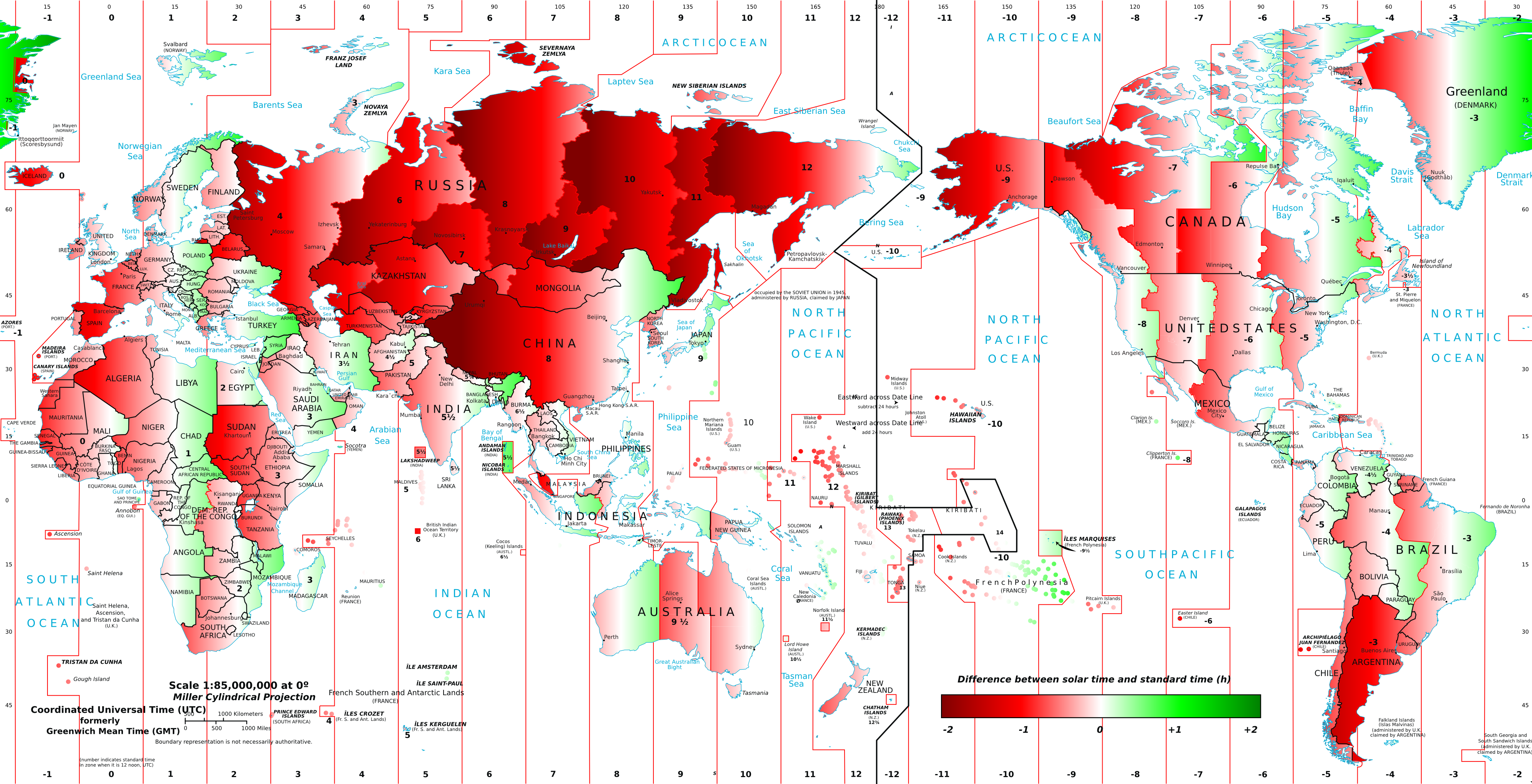
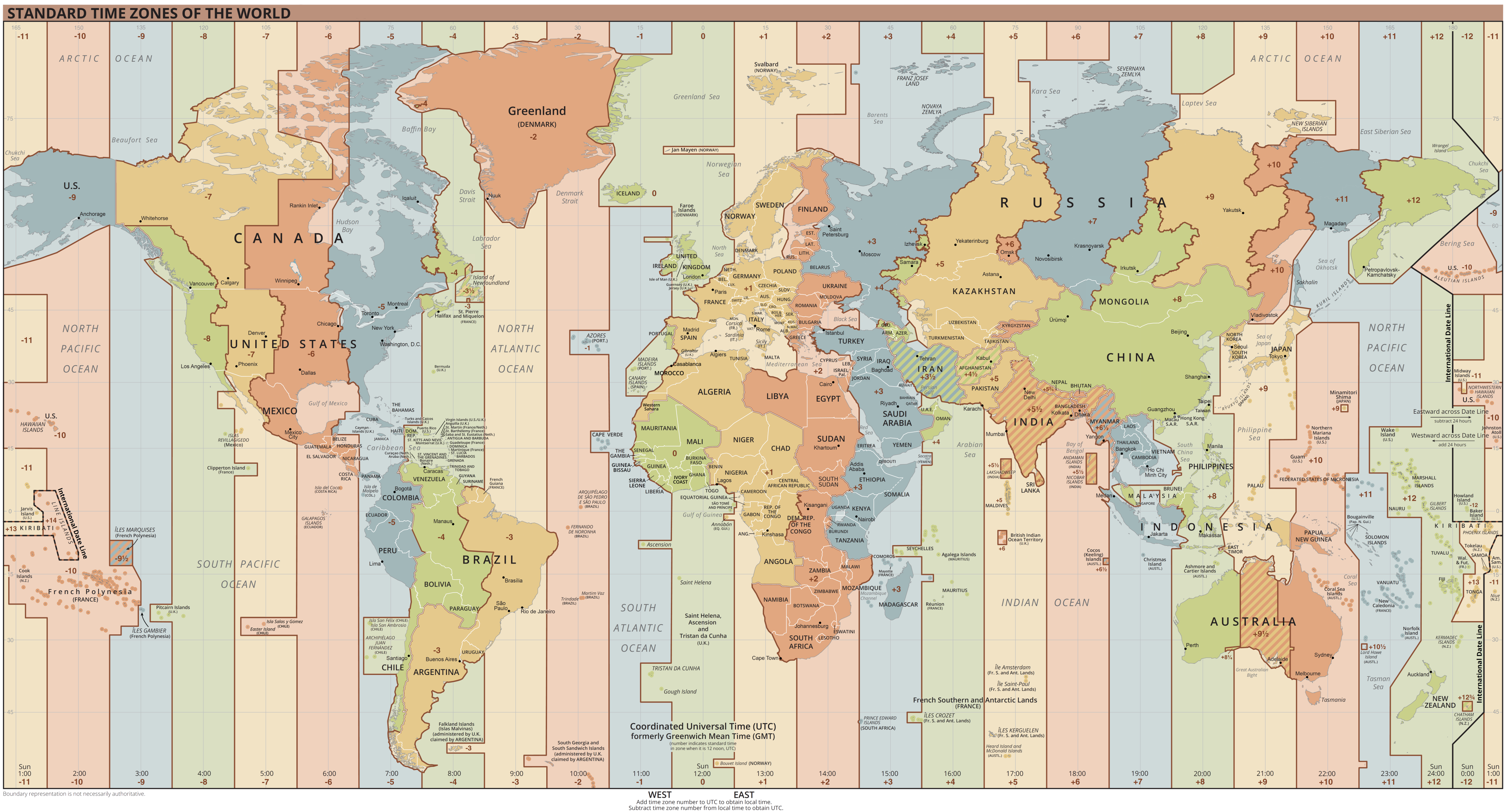
I think it's night owls and delayed-cycle teenagers attending school who will suffer most under permanent DST.
In the Winter, permanent DST means everyone has to get up an hour earlier for work or school's clock time, relative to the sun which regulates their body rhythm.
Someone pointed out virtually nobody sets when they wake by the sun. Fair enough. But the sun does affect how well and how long they sleep, how restored they are, how they feel when they wake, and energy and concentration through the rest of the day.
Night people already struggle with getting up early enough for clock-time social expectations. As it's a struggle already, getting up an hour earlier is going to be harder for them. (If the sun makes no difference, why is it already hard?)
Research (e.g. https://news.ycombinator.com/item?id=30691158) suggests that overall, health will suffer, sleep will be shorter, and educational attainment in teenage years will reduce. Even brain development may be adversely affected.
But there will be more shopping (economic activity), so that's ok.