Not sure if there is a significant climate difference in the UK that makes this construction more problematic, the article mentions moisture but the U.S. building scientists say 2 inches closed cell spray foam will block air and vapors from reaching the wood of the roof. Perhaps the issue is the open cell foam mentioned in the article - it seems that closed cell foam is the recommended type in the USA.
> Not sure if there is a significant climate difference in the UK that makes this construction more problematic, the article mentions moisture but the U.S. building scientists say 2 inches closed cell spray foam will block air and vapors from reaching the wood of the roof. Perhaps the issue is the open cell foam mentioned in the article - it seems that closed cell foam is the recommended type in the USA.
Implementation details matter. From the OP's article:
> At the root of the problem are cowboy traders who apply the foam without a full survey or appropriate expertise – but because of lenders’ caution, this is affecting other homeowners who had similar work.
One potential problem that could occur is ridge rot:
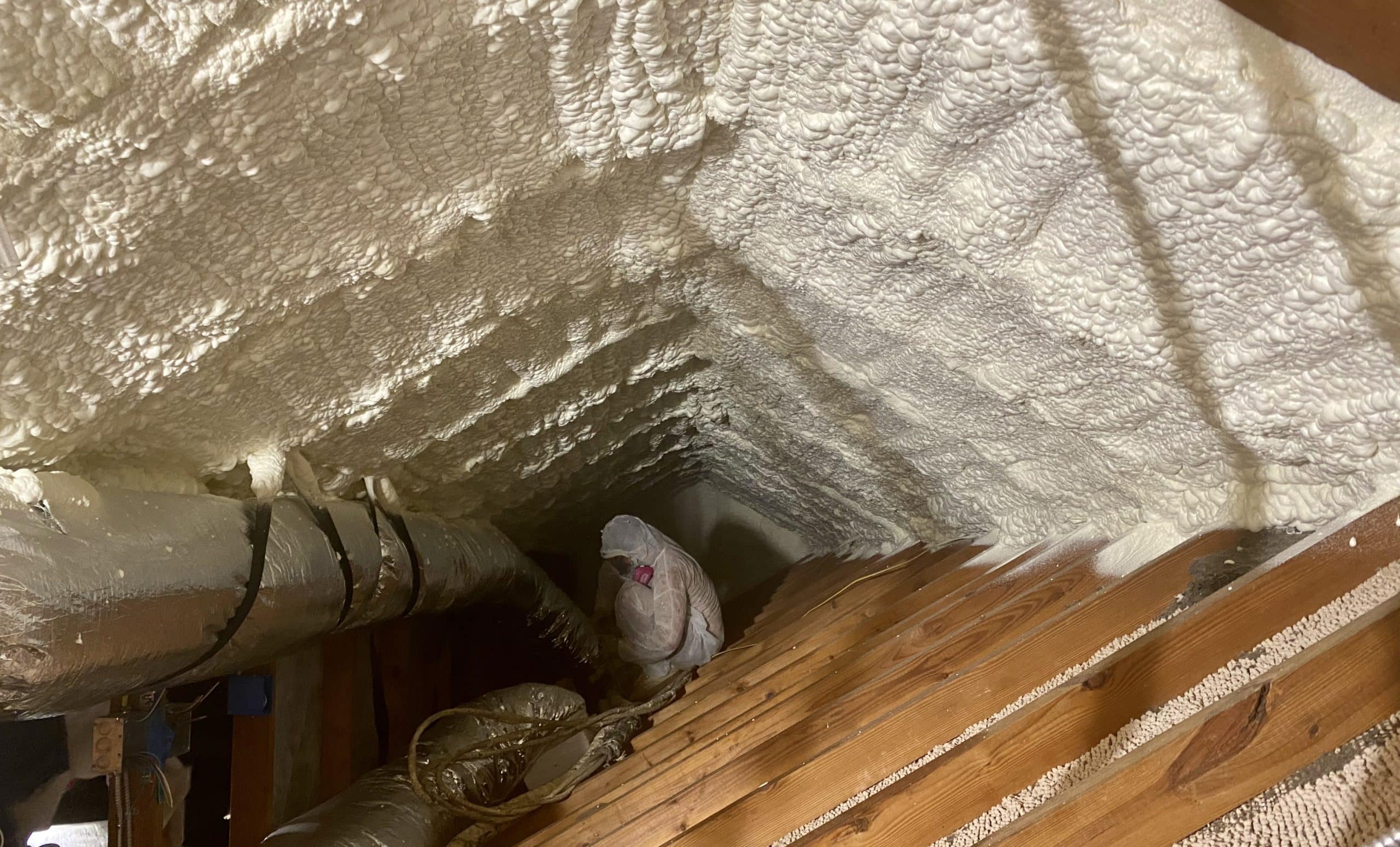
> Lots of attics insulated with open cell low density spray foam (Photograph 1, Photograph 2 and Photograph 3) are having problems – in hot humid climates, mixed humid climates, and cold climates. The problems are moisture related. The attics are “unvented” – open cell low density spray foam is installed directly on the underside of roof sheathing. The attics are humid. Very humid. Unacceptably humid. And the humidity collects at the upper portion of the attics.
> When you spray ocSPF into wall cavities from the interior the ocSPF can act as the air control layer and thermal control layer. It can’t act as the vapor control layer – it is too vapor open. This is a problem when you spray ocSPF on the underside of roof/attic assemblies you can end up with problems (“Ping Pong Water”).
It might be because slate/tile roofs are the most common roofing materials used in the UK and insulation is usually (in my experience) laid between the joists?
You are completely right, a lot doesn't add up. People in this thread seem to just accept the moisture argument without thinking it through or doing research. Lots of people have spray foam and lots of people are happy with it. There is no '25% of wood deteriorating over the next couple of years'.
The reason it's nonsense is that the side covered with foam (especially closed cell) is now protected by waterproof polyurethane. Water isn't getting to that side.
The other side is now insulated from the inside, so that isn't getting things like condensation because the temperature differences should be negligible. If people think about a cheap styrofoam cooler, it's cold on the inside and there isn't condensation on the outside on a humid summer day. The outside isn't cold, that's the point, so condensation doesn't happen there.
Then maybe someone would say if there was a roof leak the wood would get wet and rot, but that would happen anyway. That's a major disaster and foam won't cause any more problems than are already happening.
Water _will_ get through your roof at some point, and it'll sit nice and tight right above your spray foam, for years, decades, and you'll never ever know about it until the problem is too big to handle.
This is especially true for hack jobs on older buildings.
Whereas the traditional warning sign in older UK buildings is for you to know about a problem with your roof by having your ceiling plaster collapse when you least expect it!
I wasn't joking - I've been in two top floor flats in the UK in older buildings (central Edinburgh) that had ceiling plaster collapse due to roof problems.
> Why would water be able to get through your roof with spray foam making anything worse?
Because your roof _will_ fail, they all do, once it does the water will collect between the roof and the foam, because while it's not air tight there will be nowhere near enough ventilation do get rid of it
> Water damage means you have to replace things anyway.
Yes, but if your entire wooden structure rots for 5 years because you didn't detected the leak since it's hidden behind 20cm of foam you are utterly fucked.
It's well documented, feel free to google it if you don't believe me.
You said that already but it doesn't answer any of the questions I asked. Repetition doesn't make something true. There are typically shingles, then a layer underneath, then wood sheathing like OSB. All that is for the cheapest roof.
once it does the water will collect between the roof and the foam
Says who? If water is getting to the wood, why isn't air getting to it? Typical roofs last for 20-30 years.
This idea that foam is bad because seeing water soak through through the entire wood sheathing is nonsense. This is also only dealing with foam on the underside of the roof, which is also not the only place or way it can be used.
but if your entire wooden structure rots for 5 years
Now your "entire wood structure" is going to rot? If you want to know if there is moisture in your wood, go in your attic. This idea that roofs blow off without anyone noticing and huge amounts of water soak all the wood in a house and the entire thing rots without any indication is not reality.
feel free to google it if you don't believe me.
You can feel free to google it because you're the one making the claims.
Not all roofs are "metal plates", most aren't actually. Either way some roofing materials are rated for as low as 20 years, depending on the climate and how good they were installed they might fail earlier
You'll always have a failing shingle/tile here and there, unless you plan on inspecting the whole structure under the foam every year you could very well miss it for many years.
A puddle in the attic or a wet rock/sheepwool panel will be much easier to discover/fix. A small leak under 20cm of sprayed foam will be a nightmare to locate



Not sure if there is a significant climate difference in the UK that makes this construction more problematic, the article mentions moisture but the U.S. building scientists say 2 inches closed cell spray foam will block air and vapors from reaching the wood of the roof. Perhaps the issue is the open cell foam mentioned in the article - it seems that closed cell foam is the recommended type in the USA.