They work for the majority of people of all ages who live in cities where the infrastructure has been properly built to accommodate bikes.
Most people rarely need to haul anything and can use carshare when they do.
I've demoed a multistory house down to the bricks and re-built it from the outside in without a car.
Hired someone to haul off a dumpster several times.
For major materials deliveries, like beams or windows, usually it was the better part of a flatbed truck anyway, so I wasn't going to be doing that in a car. Most of the rest I did with a cargo bike. I only two or three times even bothered to use carshare (e.g. for a load of tiles) even though it's cheap.
I'm not at all proposing that professional builders work this way, but also a relatively small proportion of the population are professional builders. And doing it this way wasn't any kind of a drag for me.
I have been driving my children to daycare for past 3 years. I will be driving my children to daycare for at least 3 more years. Bicycle is not a viable replacement for this use case, sorry. My situation is far from unique, raising children is quite universal human experience.
I mean, maybe? I bike my two children to preschool + elementary on a cargo e-bike, weather permitting, and it's fantastic. Sometimes I take both at the same time, sometimes my wife and I split them up. Works great. When the weather sucks we drive or bus but it handles more than 50% of our trips.
The cargo + electric combo is really amazing.
The bike, a Tern GSD with a big two passenger seat for the kids, wasn't cheap ($6k) but it lets us get away with owning only one car using far less uber'ing, and is way less expensive and hassle than a second car.
(This is in Pittsburgh - it's hilly and we have weather, but we don't have too many bike-hostile drivers in the city)
But you still need a car for the other amount of time. Until that problem is solved, "we bike on a nice day" and it works 50% of the time is not really a counter argument...
Sure it is - it's less CO2, I'm in better shape, it's less wear on the roads, I don't take up parking spaces as much, and it lets us avoid buying a second car. (And it's a lot cheaper per mile)
The perfect is the enemy of the good. E-bikes are good. They're not perfect on their own and that's ok.
Edited to add: and I left off: they're WAY more fun! It's delightful riding around on it compared to being stuck in a car in rush hour traffic. :-) the bike is almost never stopped. and we get to say hi to more people we know as we pass by. Much better experience, even if a big rainstorm sends us back into the car.
I never said it’s not awesome that you cut your car usage in half. I’m saying you didn't eliminate it so it’s not like you could go carless, which was the strong assertion a few comments up.
How is going from 2 cars to 1 car not a positive? And using that single car only when absolutely necessary also not a positive? Nobody is claiming cars should be banned outright. We’re only claiming cars are overused in the US.
I said reducing your car usage by half doesn't eliminate your need for a car. You still have to buy the car. You still have the need for the car. We’re in a thread under “most people don’t need a car”.
No. At best most people use a car more than necessary, unless you live in a dense city, maybe then you don't need a car. But then you aren't most people.
It technically did eliminate their need for -a- car, although they do still need a car.
And frankly that -is- a point worth remembering. I know lots of couples that could be able to get by with a single vehicle instead of two at a significant financial benefit to them as well as an environmental benefit.
I know in my late 20s I was able to ride my -normal- bike to and from Meijer and get 40-80$ of groceries (2008 dollars mind you) in a trip. Back then that lasted the two of us a week, although yes I had to hoof it back for the sake of perishables. And yes I balanced triple bagged items along the handlebars.
But, frankly, if I had the money for even a small 'trailer' that wouldn't have even been an issue. It's amazing how much volume a child trailer has for groceries/etc when there isn't an actual child involved.
Edited to add: maybe the bigger questions are why we have economic and social pressures for single folks to have a car and DINKs (ESPECIALLY SINKs) to have two cars.
I bike a lot because of a game I play (Turfgame.com). On my trips I have noticed that almost every house has space for two cars. If it's winter I see tracks of two cars outside most houses. They also have at least one snow mobile and in the summer there is motorbikes and a special class of car that can be driven by youth (I forget what age though). Every third also have some sort of camper parked on the side of the house. And a lot of them also have a boat since it's close to the coast.
And this in a city that has max 500 m to a busstop frequented at least once per hour but mostly every 5-10 minutes. And bike roads covering the whole town. It's just a status symbol with social pressure. You have to have a House, Kids, Car and a dog/cats or you are a looser.
I also do most shopping with the bike, have baskets on the back of it. Works really nice. The kid bikes to school until the ice shows up, then it's bus time. Bigger things still go in the car and I have a job that involves needing the car to transport handicapped people now and then so can't get rid of it yet.
If the whole family is going somewhere we also choose the car because the bus is much more expensive and usually it also involves shopping for the grandma 60 km away.
Side note but I’m so glad you mentioned turfgame. I was into turf.ly long ago and have always missed it after it went down. I like how this one has a cyclic cadence to it.
I live in a rural-ish area.
School is a solid 15min drive, there are many steep hills and the nearest store is more than a mile away. My kid is at the end of pre-teen years and I bought an ebike, carful to get one that is legal for children to ride in my state. I also bought MotoCross-level safety gear(helmet, gloves, upper body armor, eye pro)
The child takes the bike to school, practice, activities and friends houses when the North East weather cooperates. For me, the closest dropoff event is 4 miles. 1mile to drop off, 1 mile to get home, and the same to pick up. This milage increases rapidly as the base distance increases.
I havent gotten rid of either of our two SUVs (NorthEast Winter sucks), but I have a remarkable reduction in gas usage. Selfishly, I dont have to stop what Im doing to transport the child.
I didnt do this for ecological reasons, but to give my child some freedom and the ability to get out on their own. The ebike is 3 months old and has 350 miles on it already. Those are all miles that didnt come out of my gas tank or go into the environment.
I mean the challenge was that “most people don't need a car”. I’m not saying don't ride a bike and reduce your car dependence… that’s awesome. I’m saying that cutting usage in half doesn't support the “most people don't need a car” angle. Most people still need a car.
I think that is a touchy angle. The statement is probably better as "most people shouldn't need a car"
The touchy part is be ause the logic often goes, because 100% can't get off cars, the necessary infrastructure to allow the 20% who could, won't be built.
It's like public transit, it sucks due to shoe string funding, ridership is low because it sucks, funding is then reduced because ridership is low.
There are about 1.1 billion passenger cars in the work and over 8 billion people. Thus most people don’t need a car.
The requirement for “most people need a car” depends on the definition of most people. Live in a small town in Arizona? Sure you need a car. Live in TriBeCa? You don’t need a car.
I'd be terrified of having a $6000 ebike stolen. I'm already in my third one after having two stolen from my apartment complex, and it's wasn't in a bad neighborhood.
It could happen. I don't leave it parked outside very much - it stays in my garage at home and a lot of my uses for it are short, like dropping kids at school or taking kids to brief activity (this morning I'm talking 10yo to Kung Fu). I use a heavy chain lock with it -- I don't mind a little extra weight since the bike is already 85+ lbs.
I think of and treat this bike as my second car more than as a typical "bike".
(It's kind of funny that with the huge size of cars in the US these days, our car won't fit into the garage, so the e-bike gets to share it with a rack of computers. :-)
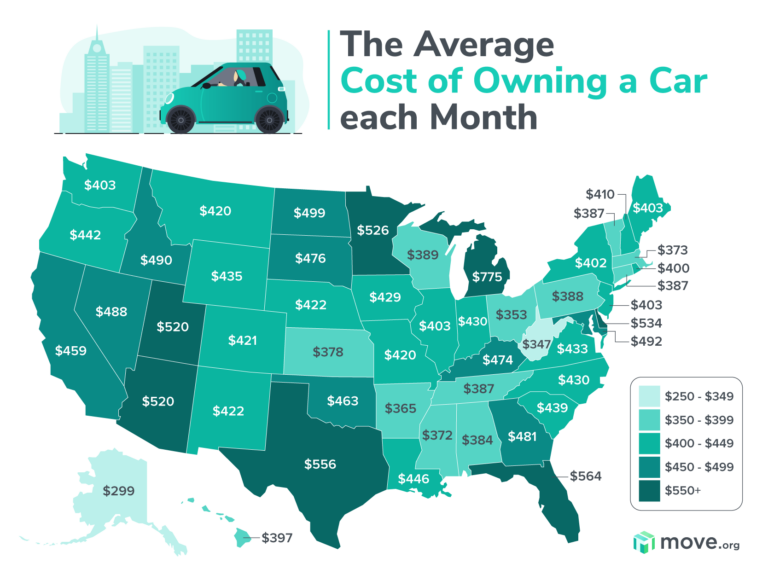
Does that math include repairs, gas, insurance, etc? The average monthly cost of owning a car in California is ~$500.
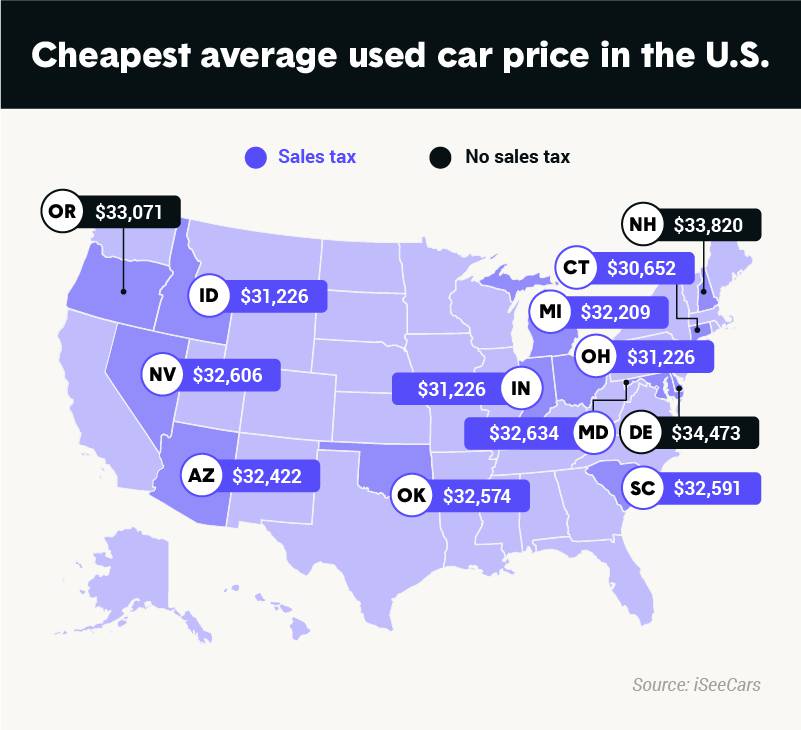
It also sounds like you might be an outlier, the average used car cost is much higher than that[2], let alone new[3]. It's ok to not fall on the average, but it is important to notice when you do.
I chose the expensive one. The RadPower is a lot - a LOT - cheaper. The Tern is a bit nicer but not 3x nicer; just as with cars, there's diminishing returns on price, but I had the money and wanted to get the nicer one.
But at $0.10 vs $0.50 per mile of operating costs, the TCO is much lower than an equivalently priced car. I bought the bike planning on getting at least 10 years out of it. My road bike is 17 years old and going strong, which is better than I can say for any car I've owned
I assume this depends on where you live. Around here, it's very doable. I see a lot of ebikes with 1 or 2 child seats, and carriages for up to 3 extra children or groceries.
I have 1 kid, and we always went to the daycare by bike. Last year, age almost 5, I bought a followme, and it works great. He's 6 now. When we bike more than a few km or when it rains, he gets connected to the followme, otherwise he bikes by himself. My ebike did 2500km in what's now almost a year, easily paying itself by the gas we didn't buy. The car is mostly used for big groceries every 2 weeks.
Most roads have bike paths. On the way to school, 1.5km away, there are still 2 places where we have to cross unsafe car roads. Ironically, one is the school entrance. I think 1 parent in 3 or 4 still come by car, and their driving makes it harder for the others.
Raising children is universal, but the environments differ significantly.
I took my child to daycare by pushing a pram 500m. Later I'd half-carry him, and half let him walk. After he was walking consistently he later started to cycle there himself, as I walked alongside.
In a few weeks he'll be walking to his school himself, again a distance of approximately 400-500m - with only one road to cross.
I've seen children take themselves to school from age seven by bus, tram, cycles, or walking here. It is common-place.
Maybe that isn't possible in America because the houses and the schools/daycares are too distant. But that's certainly not universal.
> Maybe that isn't possible in America because the houses and the schools/daycares are too distant.
I live in a small college town in New England. I bike our toddler to/from daycare, our first grader either rides her bike or walks (about 500m). They’ll be able to walk to school through ninth grade, at which point she can ride a bike or take the bus or hitch a ride with mom. It’s definitely possible in much of America, if you simply choose to do it.
I would argue that the root problem here is: why are there no daycares within walking distance of you? In an ideal world you would neither drive nor bike to it, you would just walk. Surely the large distances that parents have to go to get their children to school are not an inevitability but rather a consequence of bad urban planning.
There are a couple of daycares that are significantly closer to me than the one than the one I drive to. One is 20 minutes walk. However, none of them are viable options for me, for different reasons, which I could go into, but then people here will only start second guessing me, knowing hardly anything about my situation.
Now, suppose I did manage to get my kids to daycare that I could conceivably ride a bike too, and suppose I manage to fit three on a bike, including an infant that’s not even one year old. What then, how do I actually get to my afterwards job? Yep, I still need to drive.
Ultimately, I could probably design my life around the goal of not owning a car. I could move to a place that’s close enough to my job to walk (and hope that all my future jobs are similarly close), and also find a daycare that’s close enough. I would probably have to compromise on housing size, quality and/or cost, distance to my friends and family, my hobbies that require indoor and outdoor space, but why would I, when I can hit a pretty good trade off with everything else, just by getting a car?
I'm not going to judge you, or anyone else, for doing what works best for yourself.
I'm going to say one thing, though: I would appreciate it if car owners were a bit more conscious of the externalities of their way of life. When I walk or bike around my neighbourhood, every car I encounter is a nuisance to me. They are noisy, they are scary, they are everywhere. So it's not just about your comfort, it's also about mine. If I understand that your car makes your life easier, and you understand that your car makes my life worse, maybe we can arrive to a productive compromise rather than think that the other is out to get us.
Thing is, the car-centric lifestyle, when taken to its extreme, is so space-intensive that it becomes the ruination of other lifestyles. The more people drive, the less amenities need to be near them, the more space is taken up by roads and parking, the less walkable the area becomes, the more people drive, and so on, until no one can walk anywhere. We have to be cognizant of that and make sure it doesn't get to that point. Part of that is making sure that e.g. as many people as possible have daycares at a walking distance from them.
Now, if you don't have any daycares at a walking distance, do what you must, I'm not the one who is going to judge (what would that achieve?) But in the grand scheme of things, it highlights a problem. Let's keep it in mind, you know. Let's try to solve it at some point, maybe.
> The more people drive, the less amenities need to be near them, the more space is taken up by roads and parking, the less walkable the area becomes, the more people drive, and so on, until no one can walk anywhere. We have to be cognizant of that and make sure it doesn't get to that point.
But why? You seem to assume it to be universally accepted that everyone wants to live in walkable places, but the evidence in front of you is simply contradicting this. People routinely move to non-walkable places by the millions, with the expectation that they will be driving everywhere, and they don't mind it at all. I think you are so deeply emotionally embedded in your anti-car lifestyle (especially given how you describe them as "scary, noisy nuisances") that it might be hard for you to conceive that people might prefer this to the alternative you describe.
> Part of that is making sure that e.g. as many people as possible have daycares at a walking distance from them.
No, because it is very much unclear that people actually want that more than other things. If you ask people whether they want to have a nice daycare in a walking distance, most will answer "yes", this much is true. However, this is not necessarily compatible with many other things people want, like, for example, big houses, low costs, low noise, low traffic (including public transit and foot traffic), or generally living in a place with fewer people and less churn, so that you can actually get to know your neighbors.
Given all these preferences and constrains, what most people are aiming for is a satisfactory trade-off. Your proposal about making sure that as many people as possible have daycares at a walking distance from them is basically trying to force on them your preferences, and ignoring the trade-off that they choose.
Going back to your description of this vicious (to you) cycle of car-centric lifestyle, I can also describe virtous cycle, where a walkable place pulls more people into it, resulting in more businesses and amenities setting shop there, which pulls even more people, and adds more transit options which are now economical due to existing density etc. Now imagine that someone helpfully tries to "make sure" that as many people as possible have a car parking spot close to where they want to be, and institute parking minimums on businesses. After all, if you ask people whether they want to have cheap and plentiful parking anywhere they need to go, most people will answer yes, just like when asked about daycares within walking distance.
Of course, as you almost certainly realize, you can either have daycares in a walking distance, or free and plentiful parking everywhere, but not both at the same time. Thus, if you understand the mechanics of this, you'll oppose the parking minimums (which, by the way, I oppose too). However, for the same reason, many people will oppose your plans of densification and daycares at walking distance, because they simply don't like it as much as they like other stuff, and they understand that there's a trade-off involved.
> But in the grand scheme of things, it highlights a problem. Let's keep it in mind, you know. Let's try to solve it at some point, maybe.
Yes, let's keep in mind that there are trade-offs, and figure out a way to eliminate it, so that people can satisfy more of their preferences. Often technology helps; for example, cars eliminated huge part of a trade-off between being able to live in calmer, less dense places, and access to amenities. Future technology might help here in other ways.
You do understand that there exist other capitalist countries where being able to walk, bicycle, or take a tram everywhere is the norm for many, many people, and having to hop into a 2-ton gas-powered mobile living room for virtually every last thing would be considered absurd?
I am glad that you live in such a utopia. I drive about 10 km to get my child to daycare. It was the closest that had available room when he was born. There are I think 3 closer ( totally unavailable to me but closer ).
I am nor sure what you consider “walking distance” but I am going to assume there is a greater population density where you live.
Yes, there are areas that are nicely planned for parents.
I have lived in several different towns and know a few more in the area. The town that was 1300 people had plenty of daycare within walking distance (500 m). The town with 150 people had about 1 km to the daycare but we didn't use it, had no kids at the time. The other towns I know: 10k ppl, plenty of daycare within 1 km wherever you live. 500 ppl, two day care at least, all in 500 m. Starting to guess population now but around 500 ppl and I saw at least two daycare when passing through. Surface similar to the other 500 ppl.
Where we live now is planned and built around 1980 and we have five daycare within 1 km. Three of them are less than 200 m away. Many of the younger kids gets walked there by their slightly older siblings that just continue to school after leaving them at daycare. This city have 100 k ppl, we live in the most populated areas of town with mixed single house and bigger appartment buildings with around 10 k ppl.
They all had space for our kid without having to wait or book a place before birth. The state is required to have space for all kids so they keep track of how many births and plan accordingly.
All this in northern Sweden.
I also know a few towns in Germany with similar situations except less bicycle-friendly roads and a lot more population. Didn't have the kid in daycare there though.
I live in a town of 7000 - so the population density is likely far higher here in the UK than where you are. But here there are 3 private day care centres I could walk to, plus a school based one, (for kids from 3yo, that is free).
I am pretty well travelled but I have never been a parent anywhere else. So, I guess I am just ignorant of what is available everywhere else.
I do not think there is anything that is not a private residence within 200 m of me. It is well over a kilometre to the nearest school. It is more than 2 to the closest business. I am having trouble relating to a world that has all these services available a short stroll from my front door.
Oh, and with regards to the poster from the UK with the free daycare, I pay $800 per month for one child ( and have 4 ).
So yes, these places are very much sounding like utopia to me.
Well, can't we at least acknowledge that this is a problem? I don't believe I've said anything beyond that: I think it's a problem that people don't have available daycares that they can walk to and I think we should work towards solving it. Maybe not for everyone, maybe not immediately, but we can't just throw our hands in the air and say nothing can be done every time someone raises an issue.
Not really no. This would strike someone living in the densest urban core as a problem and they'd be right. At the average population density of a mid-sized US city or smaller, the notion is ludicrous based on nothing more than the number of people within a walkable radius of any particular point where a business could be constructed, and this doesn't and cannot change without getting out a drag line and scraping entire suburban regions flat and starting from scratch.
I would argue that the root problem here is: why isn't one parent able to stay home with the children? We shouldn't need nearly as many daycares as we currently do. It's simply a consequence of bad economic and social planning.
People could elect to do that. Overwhelmingly, they do not in the US, I think from a mix of many people find raising young kids tedious and that you would be out-bid for housing, goods, and services that you want by all the two-income families.
I love my kids dearly, but I'm not cut out to stay at home raising them full-time from age 0.25 through 5.
I would argue that the fact that any of us have to work at all is just poor societal planning.
I mean, societies have been a thing for thousands of years already. At this point, I should be able to argue on the Internet that we should behave as if all problems have been solved by now because—-I mean, why haven’t they been?
The fact that so many parents live so far from available daycares that they need to drive to them is not ideal. It is a problem worth solving and there is no fundamental impossibility in solving it: part of the reason daycares are far is because cars exist, but it is unhealthy for a society to let the option to have a car degenerate into a requirement to have a car.
In any case, I never said the problem was solved or that anyone should act as if it was solved. I'm just pointing it out, because we're not going to solve any issue we refuse to even acknowledge.
Counterpoint- I have three children (one still not biking in his own) and have exclusively used a cargo bike to cart them to school since Kinder unless it was exceptionally icy roads.
That said, I live in a very bike friendly city now, close to their school, can afford a cargo bike, etc.
> My situation is far from unique, raising children is quite universal human experience.
And yet your experience of it is totally foreign to me. There are a half dozen daycares within walking distance of my house. My sibling who lives overseas has the same thing.
When my kid hits school age the local primary school is next to the tram line that will take me to my office.
> I have been driving my children to daycare for past 3 years. I will be driving my children to daycare for at least 3 more years. Bicycle is not a viable replacement for this use case, sorry.
In countries like the Netherlands, urban areas in Germany or anywhere else that has a public infrastructure not exclusively focused on cars (aka, the services required for daily life not being mega-sized and requiring a car to get there, but small and distributed) it is a perfectly viable option. Hell I 'member walking to kindergarten. On my own, in the outskirts of Munich. I had never been driven to school by car.
Raising kids without driving them anywhere, but instead teaching them to walk early, walk often and walk far is also easy - and really good in lots of ways - unless you live in one of those awful places with no sidewalk/pavement, in which case move or campaign for one. Raising children without cars is still something of a majority experience in the world and was universal for millennia. They have legs, and are portable until well after you've raised them to use them.
It’s a planning failure that you have to drive to access daycare. Cities have been designed for cars so it isn’t really your fault that you need a car to live in it… but that doesn’t mean it always must be like this.
Many of us drive our kids to daycare on an e-bike. It works great. On days when I have to use our car instead for some reason, the kids complain that they want the bike.
Self driving electric cars are much better than car shares as they'll have significantly higher usage rates and eliminate much of the need for parking spots in dense downtown areas.
If you believe car shares are part of an efficient transportation future then self-driving cars are part of it!
Clearly, you have never been a performing musician.
I'm not either anymore, btw. I gave up that dream long ago. It wasn't because I was broke (I was broke, but that wasn't the reason), it was because I found out that I'm not a good musician compared to the folks who pass through Austin, TX. I wasn't even close.
Most people aren't performing musicians, regardless of whether or not I have been one. I don't follow your logic.
However, in any case, I do have a good friend who is a performing musician (classical). I often go to gigs where he and his collaborators are performing. None of them has a car. They bring their tubas, oboes, bass cellos and the like on bikes. Then they bring them to a bar or someone's house on a bike to have a drink after, and then they bring them back home on bikes.
You are not responsible for transporting children and / or their gear I see.
At least one leg of every trip I make requires a larger vehicle.
Oh, and I commute about 50 km each way ( 100 km total ) on a road heavily used by large trucks. I am not sure how small a vehicle I want to be in for that trip, especially after dark.
OP is suggesting that it's more efficient to change our whole road infrastructure in order to accommodate a partial solution he likes, instead of having an incremental upgrade that's so compatible with the existing infrastructure that you literally can't tell without looking up the model.
I use electric scooters extensively. I love them. I own an electric MTB. I really really wish all city centers would be for pedestrians and bikes only. But for the love of god, I cannot understand people who pretend that ebikes are a full solution to any transportation issues.
Cars are a solution for somewhere north of 90% of trips in places designed for Americans.
I'm not saying that I love it; as a family of four, we average about 6K miles on one of our cars and 3K on the other per year. I'd be hard pressed to cut that usage in half without significant sacrifice and it would be practically impossible to cut it to 25% or less. Winter skiing alone is probably 2.5K of those miles (10 trips @ 250 miles R/T) and there's not a practical substitute to get from here to there for a weekend of the kids' skiing.
> Most people rarely need to haul anything and can use carshare when they do.
Heavy citation needed. I've been remodeling my home for the last 2 years and I'd say on regular (every other week or so) basis I've needed to pick up something from the hardware store that can't be biked home. When I buy groceries for the family for the week, I cannot bike those home. When I need to take a large package to the UPS store a bike doesn't work. When I buy a new lawn mower, that box can't be biked. When I need to go more than 3 miles quickly, a bike doesn't work. Baby (in the winter nonetheless), bike's a no-go. Etc.
It's awesome that you live somewhere where you can make due with a bike and hired labor. But you are frankly out of touch if you think that most people rarely need to transport things that are too big for a bike. And you're conveniently ignoring the fact that plenty of people have trucks, SUVs, hatchbacks, etc. for the cargo space so saying "you can't do that in a car" is neither here nor there.
Most people don’t take 2 years to remodel their own home. Most people don’t remodel their home at all.
A cargo bike is more than adequate to pick up groceries or drop off a package. It might even haul the lawn mower, though I’ll concede a car might work better. But if you buy a lawn mower more than once every 20 years, you need to find a better mower.
Even if someone isn't remodeling their home, they probably still do things like go camping or surfing, take the kids to school, pick their parents up from the airport, go to the local home depot to get supplies for home maintenance or gardening, etc.
Arguing that people should give up cars is arguing for a huge loss of personal freedom.
An argument was given as to why cars were a poor solution to the problem of personal transportation, and you've made it into an argument about personal freedom. The point is we can't design a system that optimises for both efficient personal transportation and widespread car usage (I'd argue we can't design a system for widespread car use at all, but that's by the way). So, as a society we make choices. Each choice we make impacts someone's personal freedom in some way, be that through making it harder to drive somewhere, or indeed making it harder to cycle or walk somewhere. Based on your perspective, any given change you might think is appalling or a very good thing; a curtailment of your personal freedom or a liberation.
So what should we do? My response is we should think holistically about the problem. How should most people get about most of the time? Optimise for that case, whilst allowing for the edge cases. Should is doing a lot in that previous statement, but thinking about efficiency and resource allocation is probably a good route towards establishing a reasonable "should".
Let's not get hung up on "freedom" rhetoric. It's not helpful.
Cars are, by far, the best and most universal solution to most people's transport needs. That's why they're so prolific. Because every other option has an asterisk next to it for certain use cases. If they weren't the best solution, we would be talking about something else.
So society has already made that choice, which is why it's the status quo. It's not perfect, but it's what we have. This discussion amounts to a relatively privileged minority decreeing that what the rest of society has settled on is, in fact, not the best solution, based on a fairly narrow set of criteria that doesn't take other people's circumstances into account.
If you don't want people driving cars as often, alternative transport solutions can take some of the load off. But take it from a guy who's lived in Asian megacities and didn't own a car until his thirties, people still own cars in those places because they either have responsibilities that mandate it, or because they don't want their movement dictated to them by where the train line ends.
>Because every other option has an asterisk next to it for certain use cases. If they weren't the best solution, we would be talking about something else.
This is the most North-american thing I've read today.
Where I live cars are probably the least useful thing for most people's transport need, we take the tram here.
>So society has already made that choice, which is why it's the status quo.
And yet I'd be willing to bet that cars are still commonplace where you live. I also live somewhere that has trams, and even used them myself for many years. They're still not a replacement for a car. And again, this isn't really a point that needs to be defended, because odds are you saw plenty of cars driving around today. Even if you yourself don't use one, you're relying on other people to do so for you. If you're not picking someone up from the airport yourself, you're paying someone else to do so. In a car. Or you're having your goods delivered to you, by car. I think you get my drift.
Cars allow us to do things that wouldn't be possible in their absence. The only real argument here is to what degree we can minimize the need for cars so that more people can opt to go without, but I think that's a losing battle. People vote with their wallets. Not only have they overwhelmingly voted for cars, but global urban density is actually decreasing, and is likely to do so for the next three decades. Trying to take away the freedom that a car provides is going to be a losing battle outside of notable exceptions (Singapore, HK, etc.).
The point isn't that cars aren't useful. The point is we shouldn't optimise for cars. People's individual choices are a poor guide for transport policy decisions. See Braess's paradox, and Downs-Thomson paradox (neither of which are actual paradoxes, just a noting of how individual rational decisions result in a net reduction in utility for all, including the individual).
It's not self-evident to me that we shouldn't optimize for cars. Again, global urban density has been falling for decades, and is likely to keep falling for decades further. There are many, many reasons for this, but at least one of them is that when push comes to shove, many people decide that owning a car is a worthwhile investment, and that additional mobility allows them to live further out. In order to nudge more people into forgoing car ownership, you would need to make cars less useful and less worthwhile, because as long as that advantage is present, people will want them, utilize them, and demand infrastructure for them.
Cars are already optional. I didn't own a car until my thirties. But the things you can do with a car are so much more expansive than the things you can do without a car.
I mean, have you ever tried to move house without one? You're either relying on friends, or you're forking out for a removalist. And that's just one small example. As long as that difference in capability exists (and it always will) we'll have a need for cars or something like them. Remember, cars only really filled the social and economic niche that was occupied by horses, so that need was already there.
You can rent a small van for 2 days, that's it for moving. By small van I mean Fiat Doblo or similar, bigger if you have larger furniture. Super big furniture: can't move that with a car, you need a box truck anyway, you'd rent that.
Definitely cheaper than owning a car 24/7.
And horses were owned by a minority of (generally rich) people.
50% of people didn't have, nor need, horses, unlike cars now.
Cars are great, but again, they should be optional. When did the 3 teens in the suburbs "option" to have to drive everywhere? Never, they didn't, their parents chose for them.
Okay, now try doing that in monsoonal rains like the ones I grew up with as a kid. Between India, Bangladesh, Indonesia and Brazil, several billion people live in heavy rainfall regions close to the equator. Most people in those regions would already know the reality of having to haul goods by bicycle in the rain, and I'd put money on them choosing a car if given the choice.
And that's kind of the point. Can you do this stuff by bicycle or other modes of transport? Sure, many do. Would most people make that choice? Probably not, so you have to take it away from them once they have the means to choose a car instead. That's a tough sell.
The curse of being human is that we need to do uncomfortable things to grow and maintain ourselves all while avoiding things we enjoy but are bad for us. It's a catch 22 if you like.
Imagine how nice it is to get home after the monsoonal cargo cycling, how happy you are to see the family, how nice they are to you drenched and exhausted, how good the food tastes, the cardiovascular perks.
With a car you carry your mood wherever you go, there is no hard reset. You correct your sensitivity to register signals the monsoon would "normally" drown out until everything becomes a stress signal and you need Prozac or Valium to deal with it.
Car owners can workout too of course but it's an entirely different game if you have to fuel it with discipline in stead of necessity.
Errr... Maybe try telling this to the people in developing countries who already do this and more because they have no choice. Think of the lesson you'll have learned if you make it out with your life!
Any plan that relies on humanity to collectively go through some kind of personal growth prescribed by you, the individual, is bound for failure. You can't force people to give a shit, and you'll have a hard time convincing the guy pulling tuktuks through the rain that he actually has a better deal than the local taxi drivers. And he's not even the guy you really need to convince. We can't even convince billionaires who supposedly believe in climate change that maybe there are alternatives to private jets.
If you really want people to drive less, the only thing you can really do is provide alternatives and hope people hop on board, which is how the car originally spread in the first place. Spoiler though, they probably won't in any scalable long term capacity, because despite their flaws, cars are inherently a force multiplier. They just let you do a lot more, and as long as that remains true, people will be willing to pay the price of ownership.
I live a mile from the local school complex. There are zero road crossings to get there (ped tunnel and nice paths) and people still drive. It’s stupid.
Airport pick-ups can be done with car share, taxi, or rentals.
What you’ve argued is freedom to spend a fortune on a car and drive everywhere outweighs freedom to not do so and freedom to walk or cycle. There’s a balance but right now we’re very much on the car side.
I didn't own a car until I was in my thirties. If that's economic slavery, it's not a very effective system. The reality is that a car opens up doors and opportunities that aren't available without one. As long as that remains true, there will be a need for them, or something that fits the same societal niche (e.g. horses).
These comments are quite revealing. The things I see every day are not as obvious as I thought they were.
It is probably awesome to drive around in a well paved place build specifically for mass car use but if you get out of the car its just asphalt everywhere. It's not very exciting when not driving?
If I can't cycle it from the hardware store I have it delivered. The hardware store doesn't have 99.99% of things and its expensive.
People without cars [usually] don't get groceries for a whole week. I did hear people do it but it doesn't sound very appealing/appetizing/healthy/fresh. Someone calculated that if one does 20 min worth of exercise per day the life expectancy goes up by about the same. I live near a store, perhaps I chose to, perhaps we have enough cyclists to make it worth it - I don't know.
Be it Groceries or lawn mowers, just have it delivered.
I've never had to send a package so large but you can just schedule a parcel collection with UPS.
> When I need to go more than 3 miles quickly, a bike doesn't work.
I always point to the (mind blowing) 24 hour cycling distance record: 1026.21 km or 637.66 miles. He didn't just get off the sofa and did that of course. It took quite a bit of conditioning. Could he really be 1000 times more fit? I can't imagine.
I see bike trailers full of babies the year round. I just see a bike with one on the front, one on the back and 2 tiny humans on their own bike in front of it.
People go camping on their bike, there are trailers for your surf board.
kids cycle themselves to school.
There is no need to pick parents up from the airport, if you just let them stand there then they will figure out how to get home themselves in no time. Rent a car, take a taxi/uber?
I suppose it would be cool to own your own airstrip and aircraft and fly the parents wherever they want to go. Of course it would be noisy and take up a huge amount of space. Other peoples personal freedom would have to step aside.
I wonder at what age kids can safely be allowed outside in the destruction derby meat grinder that is car traffic. You cant drive a mile without guts spilled all over the road. Globally we are killing something like one person every 25 seconds and god knows how many animals. In the Netherlands roughly the same amount of drivers, cyclists and pedestrians die in traffic accidents but they are all killed by cars. The odd part to me is that 2/3 of those must be in the city where cars are the least useful.
It probably needs 2 documentary films to show cycling countries how things work in car countries and the other way around. I hear people drive down their driveway to get the mail. Sounds surreal to me.
Last year I wanted to buy some new weights for my home gym.
I was a little proud of myself that I waited until January to do so, because that meant I could collect the box from the post-office, and rather than have to deal with renting a taxi, or dealing with the huge weight on my bicycle, I could put it on a (childs) sledge and drag it home over the ice/snow.
Perhaps that wouldn't work for a lawn-mower, which I guess you need to buy "immediately" if the previous one was unrepairable, and it would presumably only be used in summer. But still for a random life hack "Buy bulky stuff in winter, and use a sledge" is hard to beat!
That’s why I added a bunch of other examples, not just remodeling. I think I painted a pretty standard picture of what a 30s some adult family routine looks like.
Have you tried renting a truck from Home Depot before? There's no way to reserve one in advance. Most Home Depots have one or maybe two trucks, you just have to show up and hope that it's available.
Uhaul is much more reliable, but in my experience renting from them is expensive and very time consuming. Each checkout usually takes me 20-30 minutes, even when I use the app ahead of time (their app is horrible).
Where I live, I'd say trucks make up 30% of the vehicles on the road. It's a big part of the culture here and extremely practical. There are no practical rental options. Lots of places in the US are like that. That's what led me to eventually buy a pickup for myself.
Someone needs to create Zipcar for trucks for those of us not living in dense urban cores.
If you order from a slightly more upscale hardware place they'll do delivery for a reasonable price usually next day. Seattle has a place called Dunn's. Their lumber is somewhat more expensive but it's all premium grade or better and you don't have to sort through 50 2x4s to find 5 good ones. In fact everything I've had delivered was high quality except one piece. I called them back and they swapped it out at no charge to me. Better if you're ordering with a truck you can fit much larger pieces like beams or 20' trex pieces that you can't get in a pickup. Delivery is $75-150 depending on how much of the truck you use last I checked. I stopped getting anything but instant fixed from Lowes or home Depot. For any big project thses places also discount in bulk better. We put in a 1k sqft paver patio. Was half as much buying from a local supplier who delivered for $50 on 5 pallets. No way I could have gotten that in a pickup with or without a forklift. Had a dingo delivered. Sure I could have trailered that but I'd have to rent and return a trailer. It was dropped off by a rental place and picked up a month later included in the rental. 8 minutes of my time. 15 total if you include the phone call to rent. I've spent an hour renting a chipper from home Depot.
Same for metal working. Moving sheet steel by yourself is stupid unless you want to slice up yourself and your vehicle. Deliver trucks have cranes. Even better you can get 24' lengths of tube steel which really cuts down on price. They put the pavers 30 feet from the street sneaking under power line easily.
If your doing a house how many trips are you making with a pickup full of drywall. How much are you racking up in gas in that sucker going to hd?
For startup on home remodeling, if you don't have access to a shop then yeah you are going to want to have a flat bed truck and/or trailer. Car just doesn't cut it, if it does you are mostly buying small tools or the like.
Everything else can be shipped, albeit for higher fees.
For groceries, you do need to have one within a reasonable distance, but a daily trip to the store more than suffices. You waste less, too. Since such a thing became locally available to us I have made almost no trips to the grocery store by car - those I have have been for specialty shops at longer distance, or the rare case of being tired/lazy/already out.
Transportation of large heavy packages and inclement weather are two areas there are no standard solutions, however there are enclosed designs, tricycles, and e-bikes - a small heating apparatus is all that's necessary to hold back e.g. the cold.
I think the point does stand, in that no its not "needed". It's mainly just a giant PITA when a bunch of unsafe half ton steel death traps are the "norm". The long distances between shops are also a function of the car.
On the flip side, no I don't think ride-share should be the only option, but a lot of people would fare much better without a car payment they don't really want or need.
In dense cities, there are multiple grocery stores withing walking distance. What people do is come back from the office (or anywhere else), get off the subway or bus, and on the 2 block walk home pop into the shop for fresh produce. Yes people absolutely get things like fresh bread on the daily.
I buy fresh food daily. Fruits and veggies from whichever stall in the local street market has the best options, bread from the baker, meat from the butcher. Packaged goods from one of the many supermarkets within easy walking distance.
It takes me a few minutes on the way home from whatever I'm doing. Less work than getting into a car and driving 15 minutes somewhere once a week. Plus everything is fresh, we only buy what we need and basically throw away zero food.
Cities can be organised differently, including in ways that facilitate more responsible life choices.
It's not that people can't imagine better ways. I'd love it if there was a grocery store a 5 min walk from where I live. But there isn't. It'd be a 35-minute walk. Some people live further, many miles, from a grocery store.
But that is not an immutable fact of life. It's not "cultural" either. I see the main reason there aren't grocery stores on every other corner to be single family zoning. Not wanting to have "noise" around your house, pushing any kind of business away from your neighborhood, and not wanting "shadows" pushing away denser kind of buildings that can easily support local business. Change the zoning, and the built environment will change, I would argue for the better.
Takes me 5-10 minutes max to get from my kitchen to the supermarket and back home, on foot. The streets are safe due to low car usage so if I needed something else while cooking, I could send my kids on their own from when they were about seven (prior to that I wouldn't worry about their safety but I would worry about them bringing the right thing back and not deciding to stop off in a playground).
Meat tastes considerably better within 48 hours. Milk considerably better within 3-4 days. Eggwhites become runny consistency about 10 days after lay, but the ones you get from the shop are already several days old at best.
What I do think however is that our perspective why and when a car is needed has been heavily influenced by media.
I just had a conversation with someone who lives in the center of Vienna and he was perplexed that I had to find a parking spot because he did not realize that was even driving a car.
So we should not make assumptions on the need of a car in either direction
Agreed. They appear to live in a bubble world where everything "just works". They don't seem to realize that outside of their bubble the world does still need to turn, and that isn't currently going to happen in the nice way they'd like it to (on uhh... bicycles).
The "bubble" is a place where planners worked hard to make things work well.
There's nothing magical about it. Political and technical decisions make the difference between people having to waste time and risk everyone's lives moving around in cars, vs being able to accomplish their daily needs quickly and easily on foot or bike.
The fact that such places exist proves it is possible. They weren't always this way, but they wanted it to be this way, and they made it so. The same can happen almost anywhere, given faith and commitment.
> The fact that such places exist proves it is possible.
No one claimed that it is impossible to exploit the masses for the gain of the few. What I am saying is that you wouldn't have those things without a much dirtier world providing them.
This goes both ways. Suburban and rural living is the minority globally. Car owners are the minority globally. Single family homes are the minority of housing globally. Are you sure it's not you living in a bubble?
The world looks very different depending on where you live. Where I live I could do without a car if I really tried. I know lots of people don't even have a drivers license (at the age of 65). The E-Bike is a good solution for most older people, the younger ones can still use the normal bikes. We have winters with lots of snow and temperatures below -20 C. The road network is built for bicycles, I can get from one side of town to the other without ever following the same road as cars. I might have to cross a road a few times but often that is done on a different level than the cars, I just have to do a little planning. The roads are cleared of snow within a few hours of snowfall unless it's apocalyptic ammounts which happens about once or twice per winter. Then it can take 1-2 days before all roads are useable. But it's still possible to take the main bike roads into the city center and hospital where most of the jobs are.
I guess it's just confusing everyone why you seem to keep denigrating bike advocates instead of the planners, consultants, and bureaucratic systems that made biking so bad for you in your part of the world.
There is a difference between denigrating a thing, and critiquing it realistically. I think that humans riding bicycles is a good thing. I also recognize that we cannot transport goods in such a fashion to keep the world running as we know it.
Considering that the vast majority of US cities were built with cars in mind, we probably aren’t in a position to use bikes anytime soon. And this isn’t just about the availability of bike lanes, but also things like the density of housing, the location of shopping, the infrastructure for big box stores, etc. These things will take decades to change, at best, so improving cars in the meantime is worthwhile.
This is true, but ROI on improving infrastructure and city-planning to revolve more around bikes and other alternative forms of transportation is going to be way higher in the long run if done thoughtfully. Especially as e-bikes continue to get better and more affordable. It's definitely a "porque no los dos" situation.
And while I'll grant you I'm no expert, some things I've read strongly suggest that improvements to city planning that making it more friendly for bikes, pedestrians, and transit commuters also tend to benefit the vast majority of drivers in various ways.
This too is a policy choice. Oulu is colder and snowier than Minneapolis but because they have prioritized a built environment where cold weather cyclists get top priority, more people cycle year round:
A large fraction of humanity is young or old. Like, >50% of people are not really safe to ride a bike on their own, let alone at -25C. There are people who can do it, but as a solution it lacks generality.
Are you serious? My mother is 72 and pretty much bikes everywhere. If you walk or bike around in many European cities you'll see people from 2-90 on bikes. Have a look a Videos from Finland where you see people of all ages biking around in sub - 10 C.
It's also hilarious how - 25 C is being brought up as not suitable for people to bike around. Like how many people in Europe/Northern America actually encounter these temperature even once (let alone regularly that it should determine our traffic policies). These are the same arguments that ICE car proponents make against electric cars, "I might want to make a cross country road trip once every 5 years and so every car with a range of less than 800km on a single charge is not suitable".
The level of risk your mother is willing to take with a body that can’t bounce back from injuries very easily does not generalize to an obligation for others to accept the same level of personal risk.
Sedentary behavior is in itself risk factors for dying. If you break your hip bones, then your health is going to spiral downward because you can't walk.
You need to load your body. A car takes load off of you.
What don’t I accept? You’re reading too much into things. A lot of people don’t exercise enough. But countless millions of people stay at an acceptable weight without walking everywhere. Mostly it involves simply eating modest portions of balanced foods.
I am making a narrow, targeted argument in the context of a thread that has diverged into claims about the viability of bicycles as a primary means of transport, particularly for some sub populations. Fitting that question into a broad explanatory framework for widespread weight issues is outside the scope of that, and would only be a small part of such a framework in any case.
What don’t I accept? You’re reading too much into things. A lot of people don’t exercise enough. But countless millions of people stay at an acceptable weight without walking everywhere. Mostly it involves simply eating modest portions of balanced foods.
Exercise only account for a small portion of our time. The rest is spent on doing daily living. Time spent outside exercise are going to matter more.
Having an environment that encourages walking and biking keeps the population healthier than an environment that encourages sedentary behaviors.
The elderly especially need physical load bearing activities of some kind, or otherwise their bones are going to deteriorate to the point of hip fractures.
Some can, not all, and that too is still irellevant: the on-topic question for this side thread are the risks associated with bikes in particular as a primary means of transport for certain sub populations. look above and you will see that’s the context of my original response.
Cycling is the whole point of this little sub thread. Specifically with respect to the increased risks or lack of accessibility it offers for some sub populations. Besides, public transport is not an option for many people. I have a grocery store 3 miles away from me, and no public transport to get there, but again that wasn’t the topic.
Car travel is risky. For 2020 NHTSA put the number of medically attended injuries at roughly 400x the number of traffic deaths. For 2021 NSC puts that number at closer to 115x or 5.4 million injuries per 47,000 traffic related fatalities.
Harvard puts the number of deaths due to "a result of exposure to ozone and fine particulate matter from vehicle emissions in 2016" at around 7,000 on the East Coast alone.
Meanwhile with bicycles the NSC puts the annual deaths at around 1,300 with about 800 of those (or nearly two thirds) as a result of "motor-vehicle traffic crashes".
Bicycles aren't riskier, society has just normalized automobile hazards. The answer to "bikes are dangerous because you could get hit by a car" isn't "just use a car".
You can't just pull part of my comment out from that part of the sentence. A few words back you will see I was writing about sub populations for whom riding is riskier. Of course you would think what I'm saying makes no sense if you are getting caught up on one phrase and interpret it to mean I'm making a broad, general statement that riding a bike is dangerous compared to cars.
As a cyclist, they sort of can, it requires proper separated bike infrastructure, comprehensively linked.
Still have to deal with cars at some intersections, and on streets that are so narrow that their full width from curb to curb is only one lane, but things move slowly on those streets and good intersection design takes a lot of the risk away.
I lived in Beijing for 10 years, where it regularly gets to -10 or -20C for a few months, and I did commute by bike through those winters, and it is extremely taxing and hard. I don't think you'll succeed in convincing more than say 20% of the population to do that in reality. If you think you have the power to convince more, please go for it!
Yes, I am. What percent of people have dementia or alzheimer's - it's at least 5-10% right? What about Parkinson's? What about cancer? What percent are not able to manage their own lives and need constant oversight (psychological, etc.) What percent are <10 years old? these are huge chunks of humanity.
The problem with that argument is that in places that are setup for it, it clearly works because people do it. So we have to ask whether there is something unusual about the people in those places, or the infrastructure. It apparently isn't something wrong with being young or old, within obvious limits.
I have always, and will always own a Pickup truck. do i need that truck function every day no, not at all
but as an example recently my Air Conditioning went out, the part to replace it was on back order so I was going to be with out AC in VERY hot weather for about a week..
Well I got in my truck, drove down to the local hardware store, bought a couple of portable AC Units and huled them back. I did this on a weekend where no truck rentals were an option, and I did not have to wait for deliver etc.
Over the years there have been TONS to situations where having a truck at my ready disposal to use has really saved me lots of anguish, and inconvenience.
So in short, could I survive with just an ebike, or something sure. However I have no desire to live that style of life, and would find that to be MUCH MUCH less enjoyable, and to be of lower quality of life then if I just continue to drive my Truck instead.



Most people rarely need to haul anything and can use carshare when they do.
I've demoed a multistory house down to the bricks and re-built it from the outside in without a car.
Hired someone to haul off a dumpster several times.
For major materials deliveries, like beams or windows, usually it was the better part of a flatbed truck anyway, so I wasn't going to be doing that in a car. Most of the rest I did with a cargo bike. I only two or three times even bothered to use carshare (e.g. for a load of tiles) even though it's cheap.
I'm not at all proposing that professional builders work this way, but also a relatively small proportion of the population are professional builders. And doing it this way wasn't any kind of a drag for me.