Something to keep in mind is that most homes, if they haven't been constructed within the last 10 years, likely have some non-compliance with the current electrical code. For instance, I needed to install an exterior disconnect which wound up costing me more than a thousand dollars on top of the existing electrical work I needed done. The electrician also needed to replace my existing ground wires because they are supposed to be cables sheathed in green. The electrician also had to disconnect all of the wires from the circuit breaker in order to replace a plastic joint and replace it with a galvanized one.
I understand that these regulations exist in the name of safety, just be aware that any electrical updates to your home will likely involve a lot more work than you initially think. Depending on what you are getting done, the inspector may need to recheck your entire home. And, you're probably going to scoff at a good number of the required changes.
Context Edit: I'm located in Texas, and I ultimately had to have the electrical panel replaced entirely because there was a safety recall associated with it. Even after the replacement was complete the electrician had to come back and redo the wiring connections because the inspector said the PVC joint at the top of the box had to be metal instead.
When I first saw the estimate I made sure to shop around and to get multiple quotes in order to make sure I wasn't being taken advantage of. Thankfully, there were a few things I was able to remain grandfathered in for.
Update: I now know that "fuse box" is not a synonym for "circuit breaker".
> likely have some non-compliance with the current electrical code.
It frustrates me that every year quite a lot of people are killed due to old houses not having whole-building GFCI's.
A GFCI costs only $20 and can be installed inside 10 minutes. So it seems crazy to be letting people die...
Yet typically electrical regs require that if an electrician installs a GFCI, they bring the whole house up to modern standards. Suddenly the $20+10 minute job has turned into a $15k and 3 weeks complete rewire. So most people don't have a key safety device added. And still every year people die from not having one.
Good luck finding an easy-to-install whole house GFCI in the US market.
IMO there should be standardized trip curves so that outlet GFCIs can coordinate with branch breaker GFCIs, which can coordinate with whole-house or other larger GFCIs, etc.
You really don’t want a 5mA GFCI on your house. You do want a 5mA GFCI somewhere involved for a regular outlet, though, especially if it’s anywhere damp or wet.
(And you probably do want a GFCI tripping at a larger leakage current on any outdoor circuit. Leakage on crappy outdoor wiring is very very common and can go undetected for years. And for some reason code allows new outdoor circuits to be run in galvanized steel conduit, and there seems to be little enforcement of the use of appropriate wire nuts and such outdoors. You can buy actual high quality submersible wire nuts, and stainless steel outdoor electrical boxes exist (at absolutely obscene prices), but they’re rare. So even nominally very fancy newish buildings do things like using regular galvanized steel outlet boxes outdoors by the ocean with predictable results.)
(A GFCI outlet does not help at all of your whole outlet box floors. A 100mA GFCI upstream would presumably trip very quickly.)
> Good luck finding an easy-to-install whole house GFCI in the US market.
Not sure I'd want one, to be honest. There are some devices that trip GFCIs and I don't think I'd like my mains to trip that easily. I just use GFCI breakers as necessary. And certain circuits I go with AFCI instead.
IIRC, in the US, code now requires AFCI pretty much everywhere except when GFCI is required.
And AFCI is a bit of a PITA, to the point where electricians advise me against adding anything new to existing circuits in my house (because then the local inspector would require a new AFCI breaker, apparently in other areas the inspectors are less picky and would be satisfied with an AFCI outlet).
Last time I had work done, which was about six months ago, we didn't have to use AFCI for anything other than bedrooms (and maybe others, nothing that applied to the four circuits I was having installed though). Maybe a very recent change?
I agree on them being a PITA sometimes. They're somewhat prone to thinking that electric motors (e.g. fans) are trying to start a fire.
In Germany where I lived for the past decade I have never seen a non-faulty device trip a RCB. The ones that tripped it hat the full 230V on their metal case.
1. Deep freezers are prone (for reasons unclear to me at my level of knowledge) to tripping GFCIs. For this reason they're allowed to be on a non-GFCI outlet in the garage (must be a single outlet receptacle by itself on the circuit).
2. Downstream GFCIs are prone to messing with upstream GFCIs, so you should not put them in series. My RV has it's own power distribution panel with GFCI, so it gets plugged into a dedicated TT-30 RV outlet without GFCI protection.
3. My Tesla doesn't like GFCIs at all. It does a brief ground check before charging and trips the outlet. Known issue, solution is to find an outlet that isn't protected by a GFCI. In a pinch, when I was renting my first Tesla from Turo I stole the freezer outlet in the garage for a few hours at a time to charge the car. When I bought my own Tesla, I put in level 2 of course, problem solved.
I'm all for GFCIs on individual circuits, that makes total sense. Just not on the mains.
1. Deep freezers are prone (for reasons unclear to me at my level of knowledge) to tripping GFCIs. For this reason they're allowed to be on a non-GFCI outlet in the garage (must be a single outlet receptacle by itself on the circuit)
Guess when the compressor kicks on you get sharp current spikes in units that do nothing to prevent that from hitting the grid.
> 2. Downstream GFCIs are prone to messing with upstream GFCIs, so you should not put them in series. My RV has it's own power distribution panel with GFCI, so it gets plugged into a dedicated TT-30 RV outlet without GFCI protection.
I don't know if this is an english word, but in German this known under the term selectivity. You cannot just put any RCD behind any RCD, you must select them specifically to have the downstream one trip first (otherwise, what is the use of having two in a row)?
3. My Tesla doesn't like GFCIs at all. It does a brief ground check before charging and trips the outlet. Known issue, solution is to find an outlet that isn't protected by a GFCI. In a pinch, when I was renting my first Tesla from Turo I stole the freezer outlet in the garage for a few hours at a time to charge the car. When I bought my own Tesla, I put in level 2 of course, problem solved.
Might be an issue with the wiring or the connector (some current is flowing where it should not flow), but it could also just be a broken GFCI.
selectivity is an English word. I usually hear it in the context of describing the bandwidth of a radio receiver system (how well the receiver can select signals of interest and reject others)
Now i'm a little confused, I think i have a global one of these in my house. I don't think there is a power point that isn't protected by one of these earth leakage type devices (I think they are called different things in Australia). They have been standard for a long, long time.
My Vitamix blender keeps tripping the GFCI breaker. (My panel was upgraded a few years back.)
My kitchen's circuits are to code (as far as I know). I've asked Vitamix themselves and on various forums (eg r/homeimprovement) about how to fix this. No joy so far.
There are device testers where you can check if the PE resistance and isolation resistance of your mixer are within spec. If not, it is a broken device.
The grid, wiring, connectors etc can also be tested.
In Germany any company is required to have external contracters carry out these tests every 24 months due to work safety laws, this test is called DGUV and I think there is an ISO equivalent. If you ever have an electrician over that is worth their money they should be able to carry out those tests.
My brand new Samsung fridge has tripped the upstream GFCI since day 1. Called an electrician, and he just moved it off the upstream circuit and called it a day
Filter caps in SMPSs can cause enough fault current to flow to trip your RCD if you have enough of them. The same with MOVs for surge protection that comes standard in many devices now (they are also capacitors when below the threshold voltage). With so many devices using SMPSs and having built in surge protection, the only sensible way forward is having RCBOs instead of MCBs on individual circuits. AFAIK, this is already becoming standard in some countries.
Ive never even heard of a 5mA GFCI. In Sweden afaik 30mA is the standard, and I assume much less likely to be tripped up by tiny faults.
Also, a GFCI install here is a simple and cheap affair. Does not require checking everything else or inspection or upgrading of fuse boxes or consumer unit.
There is a good chance that smoke detectors peep if random small fires break out in your house regularily.
There is also a good reason why you would like to know.
A tripping RCD is annoying, but not as annoying as dying from electrical shock and hurt all the way till you are dead because, guess what, you don't have a device that switches off the circuit if current flows where it should not.
Ah, and it could also kill your friend and make you liable for life. It could start a fire and ruin your whole existance. But yeah duh, so annoying.
Seriously, get an RCD. If it trips find out which part of your house sinks current into the environment in potential "he was killed in his sleep"-fashion.
Where I live RCDs are mandatory in every electrical installation.
Some old houses have exposed wiring in damp places, so there really is electricity leaking all the time. Theres probably some wire with paper insulation touching a plant root under the house, slowly steaming away.
OP is correct that in this case a GFCI would trip all the time.
But on the other hand, GFCI leaks are fairly easy to track down and fix, especially with the right equipment.
Old wiring with exposed conductors (!?!?!?) is a five-alarm fire situation (maybe even literally) and needs to be fixed, it's not a casual 'lol silly house' situation.
I had a GFCI installed in my 1930s built house the other week
The circuit repeatedly tripped, so the electrician uninstalled it. To install the GFCI he would need to spend 1-2 days splitting circuits to find the leak(s) so instead of ~$40 + 1 hours labour it's potentially thousands of dollars
Instead of spending thousands of dollars to fix the wiring, another option would be to spend hundreds of dollars installing GFCI outlets at every outlet instead of protecting the whole circuit with a GFCI breaker (or upstream GFCI outlet)
But if I had wiring that was leaking enough current to trip a GFCI, I'd rather find the fault in the wiring.
When I rewired an old house, the livingroom circuit kept tripping the GFCI breaker. It took a while to find, but apparently at a junction box, the bedroom circuit was connected to the livingroom neutral, so that neutral was connected to 2 circuits and was potentially overloaded.
Yep, that means somewhere there is current flowing through some pipe, some wall, something. And that is bad. 30mA is not much of a threshold, but it has been chosen because currents above that (or currents that flow longer than the 0,03s it should take maximum to trip an RCD will kill people. Not to speak of fire hazards.
So, somewhere you have a thing, that could kill you, a firend, a loved one or whomever. And you decide to ignore it because money. Where I live, if something would happen this could land you in prison.
I mean...this doesn't seem to apply to the GP, but you do understand that there are many, many people in the US for whom the amount of money needed to install that whole-house GFCI would be fine...but the amount needed to track down the faulty wire and fix it to make the house genuinely safe would bankrupt them?
Just FYI I am a certified electrical engineer and I do risk assessment as well, all the time. Certain things are "taking a risk" as in "there is sharp knife in the kitchen", others are just plain stupid like "one of the door knobs in this house is a knife".
So the results of my risk assessment might just look a little different, because I am more familiar with the matter and the potential consequences than you might be.
That might still be worth tracing, you may have a fire risk or a risk of electrocution on your hand there. It really shouldn't happen. Those things are typically 30 or 50 mA and that's a lot of heat (12W worth) at 240V.
so....you just left a significant phase to ground fault in your house wiring? That you live in? That seems like monumentally bad decision making if so.
Standard breakers only interrupt the hot side. Old wiring is full of shared neutral ghosts. It's not great but it isn't as dangerous as randomly dissipating the current throughout the house.
You need a AFCI in most places now. In the 2020 edition of the NEC®, Section 210.12 requires that for dwelling units, all 120-volt, single-phase, 15- and 20-ampere branch circuits supplying outlets or devices installed in dwelling unit kitchens, family rooms, dining rooms, living rooms, parlors, libraries, dens, bedrooms, sunrooms, recreation rooms, closets, hallways, laundry areas, or similar rooms or areas shall be protected by AFCIs.
The latest National Electrical Code requires both AFCI and GFCI protection only in kitchens and laundry rooms, but if you're already doing AFCI, why not do it all everywhere as it is clearly to be required at some point
Main downside is they are expensive. I've recently installed a new 24-slot subpanel and I'm using them everywhere required. At $50 a pop, that's a quick $1200.
See, this is the part I hate. I bet someone patented the design, then the NEC made it mandatory, and now they just rake in the money on something that likely costs <$10 to make. If something is legally mandatory, it should not be patented.
Some countries you have a single one for the whole building, rather than one per circuit.
That dramatically lowers the cost.
The only real downside is that if you accidentally put your finger in the toaster, rather than just the power to your kitchen cutting off, the power to the whole house cuts off. I think thats a fine tradeoff to save $1200.
The bigger downside is nuisance tripping because the breaker doesn't like electrical noise emitted by some device or another in your house. I don't have any AFCIs but I've heard it's pretty common.
You'd rather have one circuit go out instead of the whole house, and if all you have is the one AFCI breaker you're going to have a much harder time identifying what device(s) is the culprit.
I've mostly used them on new circuits, but have put them on a few of my older circuits too. For my small sample size, I've yet to have one nuisance trip.
Yeah I've replaced all of the breakers (to living areas) in my 90s home with AFCI ones. Haven't had any nuisance trips. If I had "nuisance trips" I'd be more worried about my wiring than about my breakers...
I guess you don't know if it's faulty until you try to use it. Manufacturing defects are a thing, but kind of a once every 30 years type thing, so maybe not a big deal to worry about. The reason you install circuit breakers and AFCIs is to avoid a fire in these cases; rare, but worthwhile to avoid.
Of course I should not be plugging in faulty devices. But sometimes appliances that were fine before break down, perhaps some insulation broke down or just the ravages of time.
I would absolutely like that to be safe. And like I said, if it's immediately life-saving, then I don't mind the power to the whole house being cut. But if it's "just" a bad appliance, then, well, I do find it a bit annoying that it reset all my electronics, and I would have preferred it if only that specific outlet was effected.
Also because plugging in faulty devices into outlets is something that ought to be safe. Because with probability 1 it will happen in every house. If the way the house is wired makes the only safe action to shut everything off that's the problem and shitty wiring.
Exactly: it's just like computer OSes. You should be able to run a faulty program that divides by zero or dereferences a null pointer without the whole computer crashing. The computer should flag the error, tell you what went wrong and why, and let you continue with your work and the other stuff going on in other windows.
real downside: many things work poorly on gfci stuff. E.g. A miter saw or welder. I had AFCI/GFCI breakers in my garage per code, but essentially no power tools work with those kinds of circuits.
GFCIs have a simple and well defined function. What is the current through one lead? What is the current through the other lead? Do they differ by more than x amount? If so, trip.
AFCIs are a whole different thing - the plug is trying to predict when arcing is happening somewhere downstream of it and it has very little in the way of 'processing' power to do it, so generally there is a classical filter that is designed to detect the characteristic harmonics of the current waveform that are inherent to an arcing condition. When you experience a sharp upward or downward step in power draw you introduce harmonics, when you have capacitive coupling between SMPS you introduce harmonics, motors often introduce harmonics, etc.
There's like a zillion things that can create AFCI trip conditions and cause spurious trips and frustration for users, and there's very few documented cases of them doing the thing they're supposed to do. I think it's a case of someone being well intentioned but releasing regulatory guidance to use a product that isn't quite there in terms of technology maturity.
Agreed on AFCI circuit breakers! They are now mandatory for all 15-20 amp light and plug circuits on new construction where I live - although breakers for large appliances do not require them. But I have several portable tools (eg a carpet cleaner) which will make an AFCI breaker trip every time. AFCI circuit breakers seem to be more fragile (read the box: much smaller range of acceptable heat and limited number of duty cycles) - I apparently killed one just by tripping it repeatedly. And while a regular 15 amp breaker is a few bucks, the CAFCI breaker I'm supposed to use is $45...
They highlight bad appliance design especially hard, while also being somewhat difficult to pinpoint due to the design of many electrical systems.
Arc detection is also basically somewhat complex RF processing, so there are multiple approaches to it and implementations vary.
Plus (detected) arcs are common with for example brushed motors.
Maybe there's something else the person you replied to would like to highlight, but I wouldn't call them a money grab, just made difficult due to some past choices.
AFCI's are of dubious effectiveness at their purpose (preventing fires). They're kinda snake oil because each manufacturer won't tell you under what exact conditions they'll trip. Somehow the law in the USA now requires them on every circuit, although they aren't used at all in Europe (which has a higher voltage yet far fewer electrical deaths).
FWIW, Google says 540 electrical deaths per year in Europe vs. 200 per year in the USA. Whether that's from lower voltage or more GFCI is anyone's guess.
According to the CPSC, who analyzed some 10s of thousands of fires, something like 50% of them were caused by wire arcing that could be prevented with AFCI breakers. This is the exact reason why the NFPA is moving the NEC towards eventually requiring AFCI on every circuit in the house.
Not an electrician, but an observer of tradespeople at r/electricians.
There are definitely bad feelings about these AFCI breakers. The feeling is that the code mandate for AFCI got out front of the reliability of actually-produced AFCI's, and actually-in-use products like blenders that may have small "arcing". This results in expensive call-backs from unhappy customers who are getting nuisance trips.
I recently installed some new circuits and was able to find them, but strangely it was $20 or more per circuit cheaper to get an AFCI/GFCI outlet and a regular breaker instead of combo breakers.
Is there a site that show what states have adopted what version? looking at my states webpage the official adopted code for my state is NFPA 70 - National Electrical Code, 2008 Edition.
Brushed motors in particular are largely indistinguishable from an arc fault. Lots of home motors (in vacuum cleaners, fans, blenders, food processors, garbage disposals, blah blah blah) use them.
They only need to be installed in specific places... But they ought to be installed for the whole house.
You do want your refrigerator on one. What when your mom is putting a metal saucepan into the fridge of leftovers, knocks and smashes the lamp inside, and the AC lamp power supply kills her though the metal saucepan?
What when a baby puts a fork into an electrical outlet in the living room?
What when floodwater comes in and kills everyone on the ground floor of your house while you are frantically wading in the water trying to move furniture upstairs?
There are plenty of times you want a whole house GFCI.
> You do want your refrigerator on one. What when your mom is putting a metal saucepan into the fridge of leftovers, knocks and smashes the lamp inside, and the AC lamp power supply kills her though the metal saucepan?
Your fridge scenario is.. fantasy. What is the path to ground? There isn’t one.. you can hold onto a live phase conductor all day and not get shocked if the circuit isn’t completed.
Refrigerator only needs a GFI if it is within a certain distance of a sink.
> What when a baby puts a fork into an electrical outlet in the living room?
The NEC requires tamper-resistant receptacles in all dwelling units.
Also re: flooding and GFIs, all basement receptacles need GFI protection due to flood risk.
> Refrigerator only needs a GFI if it is within a certain distance of a sink.
Not anymore. NEC 2023 requires GFCI for every 120 or 240V outlets in the kitchen, regardless of their location or proximity to the sink. This was a big change.
European GFCI's are 30mA, and don't false trip. US GFCI's are 5mA, and frequenty false trip.
lots of info here[1]
TL;DR: The US regulations prevent small electrical faults into things like swimming pools from causing people to drown. The european regulations will stop you getting killed by electricity directly, but won't stop you drowning if you happen to be in a pool while touching some wiring.
This thread is really baffling to this Dutchman. All houses have a house-wide residual-current device here; it is not a topic for debate at all. And indeed, these don't false trip.
US electrical wiring always weirds me out. Cables run through walls without pulling them through hard plastic conduits and sockets that look like something designed seventy years ago. It's probably a matter of perspective, but it seems like such a completely different approach.
Those hard plastic conduit are not providing much in the way of mechanical protection. wires in studs works pretty well, really.
Whole-house GFCI is a good thing, but we should be careful to consider what you get for that. In order for GFCIs to coordinate the whole-house device is going to trip at a relatively high current. This is definitely on the edge of what will disrupt the heart of a person. American GFCIs are often at the device level on the outlet, so they are more error prone in terms of spurious trips but they are also much, much safer because they are substantially more sensitive.
If the system voltage is between 150 V and 300 V, then either double insulation or a separate safety ground with the same gauge wire as the hot conductor is required; the purpose of the safety ground is to keep the equipment case or cabinet from reaching 150 V in case of a fault.
In this case a Class C GFCI may be used to provide fibrillation protection, let-go-protection is optional.
A Class C GFCI is 20mA trip current.
This will not spuriously trip your freezer. If you're having issues with this it's because you're designing your power distribution system incorrectly.
GFCIs also have a lifespan. Ideally they’ll be easily replaced at the breaker panel, but most of the time they are put on outlets. Those outlets could be in a difficult to reach location. They are about twice the cost of a regular outlet/breaker. AFCIs seem to be about three to four times.
My mom doesn’t live with me (the bulb inside the fridge is LED anyway), I don’t have a baby (babies don’t carry metal forks), and I live on the second floor (but the power would be out long before the first floor floods).
I agree that over-zealous GFCI is annoying. BUT, as a new parent, I can assure you that babies will manifest dangerous objects and do dangerous things.
I have twice lost a fridge full of food due to spurious GFCI trips, once when I was a recent graduate and it was a painful experience financially.
I now make sure my fridge/freezer is NOT on a GFCI. I'll take my chances of getting a 120VAC shock from my fridge [which is attention-getting, but very unlikely to be injurious].
Check out the YoLink temperature sensors on Amazon. They are amazing for monitoring our secondary freezer. All their sensors have been great. Temp for fridge/freezers, leak detectors, temp+humidity for basement, they have a motion sensor that is a magnet you can place in the back of your mailbox if you want to know when mail is delivered. Their door sensor can be installed on overhead garage doors by a magnet and a velcro strip for the part that goes on the wall. They also have a 1/4 mile range and the sensor can be inside your fridge/freezer and still connect. App is great, no monthly fee, you get notifications on your phone you can also get a small number of SMS messages for free. All notifications/limits are configurable.
Also funny how fridges are required to have their own circuit, but newer fridges are increasingly vfd/inverter drive, and don’t have surge power draws anymore. They use a few hundred watts continuously and that’s it.
I’d be more quickly to find out my fridge died if the lights in the kitchen stopped working.
Not sure why fridges don’t just have a battery-powered alarm that goes off when the temperature gets too high for too long.
I have a lot of power surges in my area. Recently, the old power shut off, then power back on in 3 seconds thing happened - and the surge was enough to pop my fridge motors and cause a $900 repair.
I upgraded them to not only a surge protector, but this little neat shut off device. It's a device that goes between the fridge and the wall outlet, and basically if for any reason this device loses power - it shuts off the power to the powered device for a minimum of 3 minutes. This way the power can blink 100 times in 3 minutes, and my fridge won't have to eat 100 surges. It will just happily sit off for 3 minutes, and then come back on.
What kind of fridge do you have that draws several hundred watts continuously? I haven’t tested my fridge, but I have a very large chest freezer that never draws more than ~35W. Surely a fridge can’t be 10x worse than that.
I seriously doubt that your freezer max draw is 35W. An Energy Star freezer can only average ~25W across the entire year. I doubt that the peak is less than 1.4x the average draw.
A fridge max power draw is usually during the defrost cycle. My defrost heater measures a bit over 500W.
You’re probably right, but I did watch my freezer plugged into a kill-a-watt for a while, and even when the compressor first kicked on, I never saw anything higher than 35W. Maybe the kill-a-watt is inaccurate, or maybe it doesn’t update fast enough, I’m not sure. Another factor, too: it doesn’t have any sort of auto defrost.
Different models and different designs and everything, but just as another data point, I recall my chest freezer pulling 300W+ when the compressor kicks on, and likely higher transient spikes, as it kept burning out the fuse on my 500W transformer, and I had to switch to a 1kW one.
A shock on 120VAC can absolutely kill. It’s not the volts which kill you, it’s the amps, and it’s specifically why GFCI trip at somewhere between 5mA and 30mA (depending) — it’s because those are not levels as likely to cause fibrillation.
> In the U.K., you just can’t have plugs in bathrooms (aside from the shaver plug),
Disclaimer: I'm not an electrician
My understanding is that is not entirely technically correct.
You can have standard sockets in bathrooms in the UK.
But, and it's a big BUT, 99.999% of bathrooms in the UK are not big enough to be able to place the socket 3m away from the relevant wet "zone" (shower and/or bath and/or sink, IIRC).
However, IIRC, shaver sockets are OK, as are spurs. Irrespective of bathroom size.
You’re correct, bathrooms in UK are zoned and most houses aren’t big enough to meet the distance requirements from the “wet zones” to accommodate a regular socket/outlet.
Shaver sockets are typically going to have ingress protection.
My understanding is a GFCI is an American term for an RCD or an RCBO?
My (UK) fridge is on a standard 30A breaker which itself comes off a single 80A/30mA RCD which was presumably part of the regs at one point. It's never tripped. All the RCBOs I've seen are 30mA too.
(I have some sockets on a 10A breaker downstream of this which have tripped - the house needs a total rewire, total bunch of bodge jobs from the previous owner, including a 13A socket in the bathroom)
Does a GFCI typically have a lower trip that 30mA?
It's funny, In was doing a huge renovation once and during the work my refrigerator had to be plugged into another outlet that happened to be GFCI. We had to be very mindful about making sure power was flowing. Sometimes, certain combinations of things being on at the same time would trip it. It was an old house with only 100A service and who knows what with the wiring.
America has 110 V which is more of a nuisance than a threat when it’s dry. Our GFCIs are specifically for wet applications (like bathrooms) and so are much more sensitive than European GFCIs.
Because they trip much more easily, and they are sinply not needed all the time. Plugging a motorized refrigerator full of perishable food to a GFCI receptacle is a bad idea.
I used to work on residential construction jobsites and the only power on-site would be a pair of GFCI duplex receptacles in the basement beside the panel. Tripping the actual overload breaker was rare (and usually only happened when multiple people were running off a single extension cord), but the damn GFCI breakers on the receptacles themselves tripped all the time, particularly when the table saw was running at full tilt for 20 minutes straight. They're just too sensitive for certain applications. Now, you can buy combined overload/GFCI circuit breakers for in the panel, but they're ridiculously overpriced so no one uses them, and they're probably just as sensitive.
There is no way a pro can install a GFCI for less than $150 in the ideal case where everything else is up to code. Anything non ideal adds cost. While there isn't much labor, you also have to count the time to get from the last job to yours, and other overhead.
While potentially true, this does not speak to the biggest part of their statement, which was that a predicted small cost project becomes an enormous cost project so regularly to the point that the smaller cost projects are altogether ignored, to the detriment of all.
$150, $1000, all of these are smaller than $15,000. One is a surprise laptop breaking and needing replace. The other is a surprise car purchase and cash purchase.
I'm guessing he was talking about DIY. It's not really that hard, I did it in the 3 circuits in my garage. I'm no pro, although I'm fairly knowledgeable in electronics and electricity.
If you have one guy spending 10 mins in every house on a street, he can probably fit GFCI's to 40 houses in a day. But that's only possible if it's a government/power company scheme. Installation could be even quicker and cheaper if it's installed internal to the electricity meter by the power company, and then you don't even need the homeowner home to do it.
Power companies have an incentive to add GFCI's, because ground leakage costs them real money, and those power flows are only 50% measured by the power meter (depending on the meter design). A 100 milliamp leak at 230 volts costs ~$30/yr or so.
I hate the damn things. If a breaker pops, it's easy. You have a box, maybe two if you live in a really huge house. Go there, look for the switch that's not quite lined up, toggle switch, done.
GFCI, you gotta figure out which one popped. If the wiring's not great, it may well be in a totally different room from the outlet that stopped working. On top of it, they seem to outright fail (get stuck in a broken state, start tripping under even very light load, simply stop working at all) much faster than breaker-box switches (I'm... actually not sure I've ever seen one of those fail? I've had several GFCI outlets fail, across multiple houses).
I get why they're good to have, but they're really annoying. And expensive.
> If a breaker pops, it's easy. You have a box, maybe two if you live in a really huge house. Go there, look for the switch that's not quite lined up, toggle switch, done.
FWIW, you can have the same thing with GFCIs. I recently wired my garage for woodworking and installed all GFCI breakers in the breaker box, so a GFCI trip is just like a regular breaker trip (not that either of those has happened with the new circuits). The GFCI breakers cost about $50/ea [1] and protect the whole circuit.
> GFCI, you gotta figure out which one popped. If the wiring's not great, it may well be in a totally different room from the outlet that stopped working.
I once couldn't operate my garage door for a few days. There were no tripped breakers in the box. Eventually, it dawned on me that the circuit was labeled "GFCI" so maybe I should go check the GFCIs in the house, and I found that the GFCI in the upstairs bathroom had tripped. The upstairs GFCI is nowhere near the garage (and in the opposite direction from the breaker box). Since then, I've talked to several people in the area whose houses are wired the same way. I guess GFCIs must have been really expensive in the 80s, when these houses were built.
The moral of this story is that GFCI breakers can save a lot of headache. (Plus, those GFCI outlets are kinda ugly IMO).
Ground fault interrupters are life savers. The minor overhead of figuring out the cause is well worth the price of admission: without them you might not be around to figure anything out.
In the UK, where ground fault interrupters can be part of the sockets it can be hassle, but then again that is strictly optional: in most other countries the ground fault interrupters are always integrated into the circuit breaker at the distribution panel. The upside of that it is that it also protects the wiring.
Wow ok, I've never seen that in the wild. RCDs are required on all circuits including lighting in the current regs (i.e. old installations can not have them and be compliant, but they have been required and socket circuits for a long time; bathroom & outdoor lighting for less; all lighting more recently). Maybe these sockets are for when you have no more room in the panel and don't want to replace it, but need it upgraded due to other work or to pass an EICR to let the property? Not sure.
The university halls that I lived in had those RCD sockets installed. The halls dated back to the early 60s - the sockets + Ethernet were installed in perimeter trunking. I suspect it was the cheapest option available to the university to modernise the electrical infrastructure inside the halls.
It's weird on imported goods here in the UK too. Macs are infamous for the fuzzy feeling of the double not-quite-insulated chassis. My Marantz amplifier (not US made but also sold there) that arrived today is the same. Weird looking plug too, like they had to go out of their way to source a dummy Earth to Earthless kettle lead and the result is bizarre and cheap looking but it's all they could get, because it's a weird requirement.
Grounded outlets became code for kitchens and baths in 1961, although it wasn't that uncommon to see in '50s new construction. 1971 code started requiring them throughout the house.
What are you talking about? GFCIs are integrated into the outlet. Did you mean something about chaining GFCI plug wiring? If it's even possible, such a wiring configuration seems like an obvious building code safety violation.
Edit 1: If you're in Europe, my apologies - I have no experience with the wiring outside of the US. It sounds genuinely annoying and a bad user experience indeed.
Circuit breaker versus GFCI outlets (which also have breakers). I find the former far more convenient—I know they don't serve the same purpose, but the way one interacts with them is similar, except that the GFCIs are scattered all over the place and may require moving things to find.
> If it's even possible, such a wiring configuration seems like an obvious building code safety violation.
Norm in every house I've lived in in the US (except one so old it had knob-and-tube wiring... hahaha) is one GFCI for a set of outlets. Like, if you have a long vanity in a largish bathroom, you might end up with two or three outlets, one GFCI, the others following after it so they trip it, too. The only times I've seen a single one used with nothing hanging off it is when it's the only outlet in the room, or for under-sink outlets for dishwashers and disposals to plug into. This can turn into a real mess if anyone got "creative" with wiring at any point. We've had a garage GFCI kill a couple outlets in the house proper (in a nearby laundry room, not super distant), plus an outdoor outlet probably 30 feet away, all of which were evidently attached to it.
Every GFCI outlet has a line side and a load side designed specifically for protecting additional downstream outlets. it's perfectly safe and legal (and a great way to protect multiple outlets, especially in older houses with ungrounded outlets).
What OP is saying is that one of those downstream outlets can trip the GFCI and if you don't know which GFCI it tripped, then you have to go looking.
Right, that. And it's not like they're intolerable or anything, but they do represent a pretty high percentage of the time I spend messing with my house's electrical system. It's probably light bulbs (I swear, all but the crazy-expensive LED bulbs are blatantly lying about their lifespan, like by a literal order of magnitude) then GFCI stuff after that.
If single phase you'll notice sometimes it has a little extra ground wire connected (now mostly obsolete), for 3 phase it doesn't, in both cases it will say so on the outside (typically: the test current, and usually there is a test button which makes them easy to identify, this test button forces a small leak causing the circuit to become unbalanced resulting in a trip (if it doesn't trip when the test button is pressed the breaker is considered faulty and should be replaced).
For instance, here is an 'Eaton' 3 phase breaker with integrated ground fault protection circuitry:
Note the little yellow 'test' button. That's a 30 mA fault current device, you can have higher permissible fault currents for certain gear that tends to be a bit more leaky which would otherwise cause nuisance trips. These little things are quite the work of art inside, if you ever have a faulty one I would encourage you to pick it apart to see what makes it tick.
Circuit breakers trip when there's too much current going through the circuit (enough to melt the wiring for example), and so protect from short-circuits: hot and neutral touching each other, or a short in equipment.
GFCIs protect against current leaking to ground, by detecting if the current flowing on a hot and neutral leg are different. If they're different, the current must be going somewhere else: to ground, through you, etc. The GFCI breakers do this in the breaker, the outlets do it at the outlet. As someone else mentioned, you can also have other non-GFCI outlets chained to a GFCI outlet, so that upstream outlet is the one that pops if there's a fault.
TL;DR they detect and protect against different fault conditions.
4 people per week in the USA [1]. GFCI devices would prevent almost all of those. There are a very small number of ways to electrocute yourself even with a GFCI installed, but you are unlikely to find one of those unless you have electrical expertise and are suicidal.
There are a few things that aren't practical to protect with a GFCI, such as high voltage grid power transmission cables. But people killed by those I wouldn't think are included in deaths 'at home'.
It frustrates me that every year quite a lot of people are killed due to old houses not having whole-building GFCI's
A whole building GFCI sounds like a bad idea, throwing the entire house into darkness as well as cutting off the refrigerator and HVAC because a contractor plugged in a damp power tool in an outside outlet sounds like a bad idea. Worse if you were out of town when it happened.
There are many ordinary motors that will leak just a bit to ground, enough to trip the GFCI, but no hazard exists — this would mean disabling the whole building, computers, refrigeration, water pumping, etc. just turning on that device. I've actually got one in a treadmill, and also a wood router tool - they trip the garage GFCI every time. At first I was concerned and "what's wrong with these things?". but as far as I could read, there is no issue, just an issue with certain types of motors that is no hazard, but a basic incompatibility.
And yes, being able to kill the entire power to the house merely by plugging a device into one of the outside outlets would be an insane vulnerability, not just by the contractor's accident you mentioned, but also by deliberate action - great way to start a burglary or home invasion, don't even need to find a wire to cut.
> Even after the replacement was complete the electrician had to come back and redo the wiring connections because the inspector said the PVC joint at the top of the box had to be metal instead.
Right. There must be a reliable metallic path to ground.
This is a big problem with PVC pipe retrofits. In older houses, plumbing and conduit are metal and good grounds, and grounding to plumbing used to be permitted. Once PVC pipe came in, you have to assume that no pipe is grounded, and you need extra ground wires and stakes. This can happen due to a plumbing repair. Otherwise, a short to "ground" can energize the structure's entire water system.
In the original article, if your house doesn't have three-prong outlets, it's time for an full upgrade. You're at least half a century behind.
As for training new electricians, "In the past, Reyes recruited workers out of high school and trained them. But he’s reluctant to do it again. It costs his technicians time, it costs him money, and there’s no guarantee that the people he invests in will stick around because the job market is so competitive." Well, welcome to the free market. Maybe you have to pay more.
There are International Brotherhood of Electrical Workers apprenticeship programs not mentioned in the article. Here's Local 6, San Francisco.[1] They require high school graduation, a grade of C or better in algebra and trigonometry, and drug testing to become an apprentice. The apprenticeship is three years.
"Grid Alternatives partners with local organizations, like Homeboy Industries, a gang-intervention program, to introduce former inmates as well as other underrepresented people, to careers in solar. Those admitted to Grid’s training receive “wraparound supportive services” that address barriers they might have to participating, such as helping them get driver’s licenses, open bank accounts, or, for those formerly incarcerated, find attorneys." That may be starting too far down the food chain.
"But this past year, Laney’s program almost fell apart after one of its teachers, Forough Hashemi, announced she would be retiring at the end of the spring 2022 semester. Hashemi had been teaching six classes each semester, essentially holding the program together".
Laney College seems rather disorganized. Their web site says "Fall Classes Start August 24, 2020 – Enroll Now!". If their idea of recruiting is "we sent some letters and nobody responded", that's the college's problem.
> ... and grounding to plumbing used to be permitted
Do you have a citation for this?
I was under the impression that using plumbing as equipment ground was never allowed, but that conductive plumbing has required to be bonded to ground for some time. I was further under the impression that by code, plumbing repairs couldn't leave behind unbonded sections of conductive plumbing.
> ... and grounding to plumbing used to be permitted
>
> Do you have a citation for this?
You could look it up yourself. It's not hard.
Here's a guide to the 1981 National Electrical Code.
See page 297. section 250-23, grounding for alternating current systems:
"grounding electrode conductor ... which runs to building steel and/or water pipe or driven ground rod".
Page 299, "water pipe and/or other suitable electrode" as grounding point for neutral.
Page 365, section 250-81 goes into water pipes as ground in more detail. It usually can't be the only ground. That's in 250-81(a). But back then, there was an assumption that water pipes were a path to ground.
By 2011, use of a water pipe as ground was more restricted. It's still allowed, but you have to attach directly to the metal pipe where it comes out of the ground. See[2], page 238, section 250-51, "Grounding electrodes". (You're allowed 5 feet of pipe from building entrance). Also see 250-53(D)(2), where the risk of future replacement of a metal water pipe with plastic is discussed. Water pipes are now valid grounds only if they meet the general ground rod criterion - six feet of conductor buried in earth. (3m for pipes.) You can see the general progression from "pipes are grounds" to "only grounding rods driven in the ground can be trusted." Which is reasonable enough, given that most new pipe is plastic. At this point, grounding pipes is more about preventing them from becoming energized if something shorts to a pipe. Just as all electrical boxes must be grounded.
I assisted with a few residential electrical-service upgrades last year (in California). ...If the plumbing pipe could be used as one of two paths to ground (i.e. conductive all the way), it was. Otherwise two grounding stakes were installed instead of one.
> by code, plumbing repairs couldn't leave behind unbonded sections of conductive plumbing
I assume that's correct, but I think shady / lazy / amateur contractors can assume the inspector won't check work in the crawl space.
Today it's more like you're bonding the plumbing to ground than assuming it is ground. That way, if something shorts to a pipe, you trip a breaker rather than energizing the water system.
That McDonalds had a big "now hiring" sign out front, advertising $21 an hour. Hm. Not sure if the extra thirty cents would be worth tying yourself to construction's boom and bust cycle.
I agree on the boom bust cycle, but if you're working the chain, once you become a certified electrician it is totally worth getting additional training on non residential things too. I don't know the lingo, but my general understanding from what my friends who are actually electricians tell me, is once you're licensed, its worth going the extra mile and piling on the extra certifications as insulation against market swings.
So for instance, one of the folks I know can do residential but also spent a year in the midwest learning how to wire up windmills. I guess that paid off in the last cycle when they had to pivot back and forth on jobs.
I just hate physical labor as a job, personally, but he makes almost as good of money as I do now, but my back will last past 50.
So I took quick look into what it would actually take to upgrade the main circuit breaker in the house assuming a 100A to 200A upgrade is needed to accommodate both an EV and a heat pump. I thought it was $5000 or so.
As it turns out, $5000 is for pole mounted service. It's range is actually around $15,000 to $25,000 for underground service, as it requires digging the line from the street to the house. Unknown how much cost there if too many houses here need to upgrade as well which would necessitate upgrading transformers feeding this area (most houses here are 100A AFAIK).
This is only true in high cost states.
In most states, it's 10-15 a ft plus some minimum cost that is like 1500 bucks for trenching setup. Maybe 15-20 in the worst case.
To redo my service to single phase 800 amps, which required a new transformer on a pole, new commercial panel, 100 feet of large underground drop (parallel MCM 600), etc, georgia power + electrician total cost was 10k.
If i had wanted to drag 3 phase power to my shop, which was a mile away, they would charge 10 bucks a foot, total cost 55k.
(I convert the large single phase instead with a digital 3-phase converter)
PGE/California electricians is particularly horrible about costing - i've seen combined costs (IE between PGE + electrician) of like 15k for panel upgrades that require 10 feet of trenching
EV or not EV, I really think you want 200A service? It has been the standard for quite a few years, and I cannot imagine only having 100A service in a proper house (would be fine for an apartment or whatnot). Now I am higher electric usage than most, but I hit over 100A several times a day (but have never hit 200A and flipped my breaker).
The actually switching out your circuit breaker from 100A to 200A is cheap (2-3k?). Almost all of the cost is for the utility to run you a bigger line, and they can pretty much charge you anything they want (what is your alternative if you don't like the price?)
Electrical code has completely unreasonable and unrealistic demand factors associated with appliances. Basically "1" for just about everything, as well as 3 watts per square foot of floor area. If you sum all of these things up, I'm well above the 200 amp service delivered to my home.
Reality? I had a peak draw of 23 amps from the grid in the last year. Luckily the NEC has an escape valve for folks who can prove that.
AC and Hot Tub full blast would almost never happen, Hot Tub is more a winter thing.
But A full EV charge can be 6-7 hours, so could easily be all evening. A hot tub could easily be an hour of overlap in there. So someone turns on the Oven? Would def pop 100.
240V circuits are simply both legs of the 120V split phase connected together, so the amperage is measured at 120V. The circuit breakers for 120V and 240V circuits are the same, except 240V circuits use two breakers with the handles tied together[1]. Electric resistive heaters like ovens and clothes dryers are always perfectly efficient, so I'm not sure how you even thought it would be possible to have an inefficient heater.
[1]: The 120V rails in the middle of the breaker panel alternate between each split phase, so if you connect a circuit to any two adjacent breakers you will get 240V. A 120V circuit is connected to neutral and a single breaker.
As well as using a heat pump, a more efficient dryer can be better-insulated, or make better use of the heat produced in drying clothes, however that might be done.
> Do Americans quote large appliance current at 220V or 110V equivalent?
Fist, North America is a 120/240V system, not 110/220. For the life of me i will never understand the confusion over why some people, including North Americans keep referencing 110 volts?
The code is clear, 120 Volts +- 5 to 10 percent?
Perhaps because the "allowed range" is 110 to 125?
If i measure my house right now, it is 121 volts and this is pretty typical.
Your dryer example seems like it is running on gas?
In North America, electric dryers use anywhere from 1800 to 5000 watts.
AC depends on the home size, the location, etc. Mine has a 60A 240V breaker but again the "code" states you can only have an 80% "continuous load" on a circuit so technically this circuit can not pull 14,400 continuous watts.
One thing Europeans dont grasp is the difference in house sizes vs north ameria and so naturally our appliances are larger and more power hungry.
What may take a European washer 2 loads, most north american washer/dryers will do in one. So the "power usage by load" is the same?
Using a device like a range's maximum power draw is dishonest. If a north american range is twice the size of what is available in EU, but not all the elements are in use at once... does that mean something?
(110V: I'm just copying/misremembering, I don't live there. There are places in the Caribbean that do use 110V.)
> Your dryer example seems like it is running on gas?
This is part of my horror. You can't imagine that an electric drier might only use 600W? Try [1]. From the EU site of all rated driers [2] (click "Models distribution") 23% of driers on sale are this efficient. A further 44% with A++ rating are around 900W. (Note the measurement is of the energy needed to dry a load of clothes to the required standard, the maximum power draw is related but not a criteria.) The worst one is still only 2300W!
From a 2013 news article "Europe's Clothes Dryers Consume Half As Much Energy As America's" [3]:
> The study, which was funded by the Super Efficient Dryer Initiative (SEDI), concluded that Europe's heat pump dryers can dry the same amount of clothes as North American conventional dryers using only about half as much energy. The catch is that European heat pump dryers also took about twice as long to dry a load of laundry as North American conventional dryers.
I'll add that American driers appear to be cheaper to buy.
> house sizes ... naturally our appliances are larger and more power hungry
That explains the AC -- though I can still criticise the waste of energy heating/cooling two, three or four times as much space per person -- but it doesn't explain the drier. Do you wear twice as many clothes as I do?
Almost all big appliances are 220.
Fridges are 110, but the big guys
* EV Charging
* Electric or Induction Oven
* Electric Dryer
* AC
* Electric Water Heater
are all doing to be 220. The amps will vary, and most will not peg the required wire 100%, but may for example do a big pulse to startup (ACs are famous for this).
>It has been the standard for quite a few years, and I cannot imagine only having 100A service in a proper house
100A service is fairly normal here for smaller homes. As heating here is primarily done by natural gas furnaces rather then electrical heating. Which make sense; gas is way cheaper to heat with here then electricity. And it saves a dollar for the developer.
I don't know about larger homes though; I'd imagine that they'd have 200A circuits but it wouldn't surprise me if they didn't unless the builder specifically requested it.
I think my house has 2x200A. It was zoned multi family but the previous owners had a separate service for an electric car, and there’s still bits of electronics in the attic from where they tried to do crypto mining.
I’m sure their equipment overheated. The roof is not insulated and the attic fan is pushing against a louver that’s the wrong design. It gets hot up there without any equipment.
Yah in most cases 2x200 is the step up from 200. The reason being is your wire that runs your 200A service isn't big enough to carry 400A, so you would need to tear it out. Why tear it out a perfectly good wire when you can just run another?
My house is a really big house built in the 50s. It was initially 2x100A service as I don't think 200A service at home was really a thing. It had 2 meters and everything. Sometime in the 80s they tore out the feed from the pole and put in a proper single 200A line, and just left the second meter as defunct.
When I got the exterior siding of my home replaced, we also wanted to have our electrical meter box replaced because it was falling off the side of the house.
The work we originally thought was needed was just a new meter box. Turned out we needed a new wire run from the meter all the way to our water line, a new pipe for the underground wiring, two additional grounding wires.
The utility said it wasnt their problem as the meter itself is their property but the housing, the way it attaches to the house, and the connection to the transformer was our responsibility to pay for.
Nearly $2000 to get a simple meter box replacement. Edit: Because this work was to be done in tandem with the siding replacement to avoid expensive rework, we didn't have much of an option in shopping around as most electricians did not want to deal with coordination with the utility around disconnect and inspection.
> Nearly $2000 to get a simple meter box replacement.
If it’s so simple, why didn’t you do it and save $2,000? Part of that price is uncertainty due to scheduling/coordinating with the siding contractor and utility.
Everything after the meter, including grounding conductors, are premises wiring aka your responsibility.
Having your electrical service properly grounded sure beats being electrocuted.
I manage electricians, and my jobs get charged $110/hr for a journeyman in a service van.
Because while it is simple, the power is out while I do it. When it is just a single circuit no problem, but if I'm missing one part that means several more hours while I track it down (home depot might or might not have it). A real electrician will have the parts on the van, or at least know where to get the missing one. Not to mention there is probably power to the box, while I can work on live circuits I prefer not to. (or if there is no power, that means there is no power for days because I work on weekends, then the inspector comes on Monday, and only after that does the power company reconnect).
There are some jobs that I can do, but I hire someone else to do anyway.
The work was complete within 4 hours, coordination was easy with the siding contractors as I managed it. Called them up and they were here in 20 minutes to put the J-Block in right after the electrical guys removed the old meter box.
Getting the work done properly was important to me. After the replacement, the random occasional 2-3 second power outages went away and it looks great.
My point was mostly to concur with parent that often you do incur unexpected work when updating legacy electrical, and that adds a bit of cost. To a homeowner, a box swap seems simple but can wind up costing thousands more than you expect.
Most residential wiring really is as simple as it appears at first glance.
The problem is that there are a few cases where it isn't, and the issue is being able to know when that's true. This is where the skills and experience come into play.
In case I need to cite some authority, I've been wiring my own homes (with permits) for > 25 years, and was licensed by New Mexico to install my own 6.7kW solar array a couple of years ago. I'm not an electrician, however.
Concur. I have an electrical engineering degree, and a copy of the NEC. However, in many situations I end up deciding that it will take me so long to figure out the correct interpretation of the code for my situation that I may as well pay someone who takes one look and says "ok this needs to be done like that...".
Most jurisdictions in the US allow homeowners to self-perform electrical work. Electrical inspectors tend to be a lot more picky and thorough with homeowner performed work since homeowners are notoriously bad electricians.
I did all the wiring in my basement (except connecting to the panel), and the inspector did a cursory inspection, both rough-in and final. He looked at maybe two of the outlets (none of the lighting fixtures), and then on final just used a receptacle checker. Now as a DIYer with OCD and a fear of burning down my house, I had tried to be VERY careful, but it was the first electrical work I had done. Either I'm an electrical prodigy or he was lackadaisical.
Most of the mistakes homeowners make when doing electrical work are related to NM cable strapping (not enough straps typically), pigtails that are too short, junction boxes that arent properly secured, and inaccessible junction boxes.
He probably just checked to make sure you strapped the NM cable within 8-12” of the box (depending on if you have cable clamps or not) and then a strap every 54”. If you get the small details right they won’t be so harsh while inspecting.
If you are careful and follow the rules, it’s pretty straightforward to wire branch circuits in a house. Grounding and bonding a service entrance panelboard to ground rods/natural gas piping/water piping is not as straightforward as it seems.
You don't say where you are, but that certainly hasn't been my experience. Where I am, in Oregon, USA:
* I own a house that was built in the early 20th century. As was typical of the time, the house has a small number of fused circuits, which do not have a ground wire, and where the wire gauge is thinner than would be required for a modern circuit of the same capacity. Just the same, it's perfectly legal to:
* Add new outlets to existing circuits without changing the fuse to match the wire gauge of the circuit or adding a ground wire. It has to either be a NEMA 1-15R receptacle (no ground plug) or a GFCI receptacle with a label that says there's no equipment ground.
* Replace the fuse boxes with modern breaker boxes without re-wiring the house to have grounded outlets. The only limitation is that the new breakers would have to be smaller than the existing fuses so that the wire gauge meets current code for the breaker size.
* I have a 1998 house which has several pairs of circus on opposite phases which share a neutral wire. This is legal still, but requires that the circuits are connected to dual-throw breakers, so that it's not possible to have one circuit hot with the other dead. But this house doesn't use dual-throw breakers like it should. As far as I know, that wasn't even code when the house was built. But electricians can still add new circuits without fixing that.
* Some years ago I was remodeling a 1956 house. Initially, the inspector asserted that we would need to replace a staircase whose width and pitch did not meet current code. But he was mistaken. Even though we replaced the stair treads, because we didn't make any changes to the structure of the staircase, the head county building inspector agreed that we didn't need to bring it to current code.
Multi-wire branch circuits (your second point) will likely always be legal, because they're fundamentally safe from an engineering point of view.
Requiring common-disconnect (but not common-trip) breakers I think was a requirement since before 1998, but because it only needs common-disconnect, a listed handle-tie between the two breakers will suffice. (In other words, this should be a quite inexpensive situation to remedy. $8 for 3 of them at Home Depot for one particular common panel: https://www.homedepot.com/p/Square-D-QO-Circuit-Breaker-Hand...)
Yes, I agree with both points. When done right, they're slightly safer and more energy efficient, because there's less current flowing on the full length of the neutral line. I've even seen installs where the inspector was okay with a handle-tie made with a scrap of copper wire, although I'm not convinced that was actually code.
The handle-tie would get you common-trip too, wouldn't it?
No. Over-current trips do not flip the breaker to the off position. Instead, it trips internally and the handle moves ever-so-slightly and becomes “rattle-y” for lack of a more precise term.
If you have a breaker in your hand (now or at a home center), you can slap it briskly against your thigh and it will “trip” allowing you to see how the handle will look when tripped. To a cursory glance, it will appear on (but you will notice the handle can be moved about 1/8" more than normal).
That small movement is not enough to induce a trip or disconnect on the handle-tied breaker. (The requirement is only "Each multiwire branch circuit shall be provided with a means that will simultaneously disconnect all ungrounded conductors at the point where the branch circuit
originates." That's to allow for safe servicing.)
I feel like some of this should be "grand-fathered" in. Perhaps you were a victim of an upsell. Any electricians that can verify?
For example, I needed a new fence. I got a few quotes and most were DRASTICALLY high priced as they wanted to move my fence to comply with current code. An older, more experienced worker had no problems with permits and said I was grand-fathered in because it was already existing. I even self-checked with the city. He was right.
I made sure to shop around and even asked my neighbors who had the same houseplan about the electrical work they had to get done in the past. The previous owners had neglected to replace some components that had been recalled decades ago, so that obligation ultimately fell to me.
I did manage to get a few things grandfathered in, like being able to keep a three pronged outlet for the dryer. But ultimately I made peace with the fact that the house's electrical system was in a neglected state and the fixes simply had to be made.
Sometimes it'll be at home owners discretion. For example, I have a Pushmatic panel. The thing sucks. So even if it's grandfathered when I have other work done, I'm still getting rid of it ASAP.
Most things are grandfathered in. In my experience, sometimes even if it's not something your inspector should technically let pass, they will if it's existing construction and things were made no worse than before.
And even if you're touching that part of the system, you can usually replace like-for-like without bringing it all up to current code, even if the current condition is non-compliant, you can generally put it back to the same level of non-compliance, even if it's with entirely new parts. (I'm not arguing that that's a good idea to elect as a property owner, but rather that NEC does not require "you touch it, you have to fully modernize it". This will likely invite an argument with the AHJ's inspector, if the work is subject to inspection.)
Where do you live? In a lot of municipalities any out-of-code work can remain unless they are actively touching that part of the system. For instance, if you had ungrounded outlets in your house, but were just getting a drop for a ceiling fan you wouldn't have to install grounds as part of that work. So they must have been having to touch all those components anyway.
Almost for sure that's what happened to the OP as he was having an external disconnect, so the entire panel got depowered + likely big lines were run for whatever he needed the disconnect for. There's sometime exceptions for Solar now that don't require full upgrades, but some cities don't give a fuck.
The US is way worst about this than most other places though. Here they inspect your insulator, lead-in wires, meter, and distribution panel and then ask what if any problems you are having (they is the power company) every four years. Mostly the electrician/contractor does the work and there's no inspection of that.
Most of the time the main box is good enough. Fuses are still legal. There are a few boxes that are safety hazards, but if you have one you should replace it even if not planning any other work (some circuit breakers don't trip when overloaded!).
Hello, Federal Pioneer 15A Stab-Lok blue breakers (old style, without the holes) here. I can personally confirm their potential for not tripping when overloaded, along with the smouldering outcome...
In most countries, I don't think you're required to update your home every time the electrical code gets a change. However, many electricians will try to sell you on this unnecessary work.
You are normally required to update anything an electrician touches or could impact.
So if you are having a new socket added in your kitchen, then all the other sockets in the kitchen on the same circuit will need updating, and the breaker for the kitchen.
But you probably won't have to have your living room rewired.
I’m having a new service entry cable, meter box, and main breaker panel put in next week. By its nature that should impact every single circuit in my house. But my electrician isn’t touching anything besides what I listed above, and I know that there are multiple other things around the house not up to current code.
You may live in a place where the law doesn't require that. Or you may have found an electrician willing to turn a blind eye to that stuff. Or you might be about to get a far larger bill than expected when the electrician 'discovers' that midway through the job, and now isn't legally allowed to put it back as he found it.
I’m in NY, US and and the proper permit was pulled for the job, as well as hiring an independent inspector to check the work when finished. My particular electrician has been doing business for ~30 years so I doubt he’s risking violations over things like that, plus he would have to be colluding with the inspector. He already did an inspection of the work needed and planned it, it would be impossible for him to suddenly notice other things that need to be done.
The price I’m paying for this job lines right up with the national job average pricing you can find online. If it was common to require doing all of that extra code updating I would think the average price should be much higher.
Maybe I’m wrong but my thought is that it isn’t so black+white and some electricians may push upsells harder than other more honest ones.
would you mind sharing a link to that resource. Is there a union rate webpage or something of the like where you can dial in your region and type of work etc like an online calculator or is there just some table printed somewhere online?
You have an electrician and AHJ that understands the NEC correctly. In this case, there are explicit exceptions written in code (210.12(B)), but that's an exception to a new part of code. In the general case, replacing like-for-like is permitted, so long as the original met code at the time of installation.
And every time I see a video online of a dance floor or stadium collapsing or people getting electrocuted by accidentally touching ungrounded electrical devices I'm reminded why. That's not to say those things don't happen here, just at a lower frequency. Safety standards are written in blood after all.
Structure collapses are extremely rare, which is why they are always news. I am not unhappy with the state of regulation when it comes to building structures that have the potential to kill hundreds or thousands of people at a time.
However I think many locations in the US way overdo regulation when it comes to residential building codes. When you buy a house, you get a professional inspection. If it comes up dangerous, then you are armed with the knowledge to make a risk decision that’s right for you.
I don’t need spacecraft level engineering on my car; similarly i don’t need skyscraper level engineering on my house.
Presumably you pull out a report and do a rundown of all the not to spec electrical work before any guests enter the house? Or are you making the safety call for them too?
The general rule in most places is that any circuits that aren't modified as part of the new work don't need to be brought up to modern code. The main service panel is the main thing that ends up needing to be upgraded incidentally, since all circuits depend on it, and that can easily be more expensive than the actual work being done. But that only needs to be done once, and many old houses will want it upgraded anyway to allow for more circuits to be added than the box was originally designed to accommodate.
However, I think the 10 years is a bit pessimistic. At least in the US, the code hasn't changed that much in the last 20-30 years, and many of the changes are at the periphery where they are easy to modify like GFCIs, and tamper resistant outlets, etc, so I wouldn't be afraid of making modifications to existing circuits for houses in that range. Older than that you start running into (AA-1350) aluminum wiring (35 years or older) or two-conductor wiring (65 years or older), and you'll want to take the policy of not touching those old circuits unless you plan on completely replacing them.
Generally (in the USA) if you touch something in your home, you need to bring it up to code. You touch a wall, well now you need to make sure that wall has a socket in it, for example.
Doing an addition? Well, now you need to ensure the entire house has fire/C02 detectors wired together with it.
> Generally (in the USA) if you touch something in your home, you need to bring it up to code. You touch a wall, well now you need to make sure that wall has a socket in it, for example.
Sorry, is there a requirement that every single wall should have a socket? ...that's what extension cords are for.
Yes, there are also requirements for example that kitchens have an outlet every N feet (I forget the exact number) in order that the short cords supplied on toasters, kettles etc can reach every part of the counter surface without an extension.
I said addition, not finishing a basement. But if your basement had a wall that wasn't up to code and it was part of your finishing, you'd have to bring that wall up.
> shop around and to get multiple quotes in order to make sure I wasn't being taken advantage of
But you were taken advantage of. It's just that with the level of collusion in North America regarding electrical work and plumbing you are not going to be able to avoid it. I've seen the weirdest requirements which only a particular person with a particular license was able to perform and doing it yourself would be an automatic fail on an inspection even though the work was identical. I've also had some of these people make outright dangerous suggestions because they knew how to read their rule book but they didn't actually understand enough of what caused the rules to be written in that particular way to see when an exception to those rules needed to be made (case in point: someone wanted me to ground a 60' windmill tower at the house instead of at the base of the tower, which in case of a lightning strike would lead the lightning into the house).
Really, don't get me started, I've seen way to much of this to have anything but really bad memories of electrical inspectors, I'm sure there are good ones but I just haven't seen any. What I have seen is a bunch of little people with a lot of power to inflate costs resulting in no change or improvement.
How much code compliance you need to do depends on the work being done and your local inspector.
I replaced a panel that was rusted out (there was literally a hole rusted through in the back due to water intrusion in the wall) in a house that was built in the 1940's, re-wired with circuit breakers sometime in the 80's.
The electrician said I didn't need to replace any breakers, just the panel. I asked the local inspector if I had to put AFCI's and GFCI's everywhere required by modern code, he confirmed that it was highly recommended, but not strictly required for existing circuits, only for new circuits. I also didn't need to install a cutoff before the panel.
Since I was buying new breakers anyway, I ended up putting AFCI/GFCI's as required by code.
> The electrician also needed to replace my existing ground wires because they are supposed to be cables sheathed in green.
Where was that? In my (medium-aged) American house and in some newish romex cable I bought last year, the ground wires are all bare copper cables, no green sheathing at all. I've had electrical work done in the last couple weeks, and no one even mentioned them.
IIRC (not an electricial) bare copper and green-sheathed wires are both acceptable for ground wires.
> ...likely have some non-compliance with the current electrical code.
When I build my own residence from scratch, I'm going for a more industrial loft aesthetic vibe where all utilities are run outside the walls where they are easily accessible to frequently modify them as I please. I want to be able to frequently update to code without making a giant, expensive mess, followed by a validation inspection from a licensed electrician. How we build residences today is not compatible with my desires for a sustainable, durable, maintenance- and repair-friendly implementation.
The rules around this are fairly complex and there are individual state and even county- and city-level compliance codes, so I can only be fairly hand-wavy in a general sense.
For commercial or industrial work above a certain scale and complexity, you probably won't even be able to find a licensed electrician to validate work done by non-licensed personnel for sign off to send up to an inspector. I wouldn't consider a 1MW+ (or anything starting off with a 480V three-phase service) data center appropriate to install with non-licensed staff. There are gray areas the smaller and more residential scale you get. I've seen some pretty awful work funded by apartment complex flippers using non-licensed personnel, for example.
Once you are talking about common residential (anything less than 300A, where the average US house is usually around 100-200A, dual single-phase 110V service) though, it depends more upon finding a licensed electrician who agrees to a proposal to validate your work. This is not very popular because it is considered like a mechanic called in to inspect a shade tree mechanic's work or your relatives you only see around Christmas time proposing to pay you to inspect their attempt to clean up after a ransomware attack. But it does happen.
Assuming you can find and convince such a licensed electrician, you can do practically anything in such a residential context. It's a lot of work, and if you're a decent software engineer you aren't really saving much money. It would be the sort of thing to do if sloppy electrician work that doesn't meet the standards of r/wireporn or r/cableporn for example just drives you bonkers, and you happen to really like nerding out over strictly interpreting the intricacies of NFPA 70, National Electrical Code (NEC) with others, and you simply like having the satisfaction of knowing your electrical subsystem that well. If you squint hard enough, the NEC almost takes on a life of its own like source code, which appeals to a lot of technical types, so it isn't hard to find engineers and technicians of different stripes in aerospace, mechanical, civil, etc. doing this kind of DIY.
Code compliance inspections are required, but unless you are lighting up new service for example, enforcement varies pretty dramatically between locales. Again, I've seen some pretty shady disasters waiting to happen from flippers, but the city is none the wiser because no permits were pulled.
Not just electrical -- pretty much any system or major structure in your house. We had to have a few minor repairs done to our roof, but due to newly passed regulations (and a 45° roof pitch), the roofers needed to also install roof anchor points (beefy D-rings basically) for their safety before they did anything else. Anecdata, sure, but plumbing, sewer, foundations all have similar stories.
> I understand that these regulations exist in the name of safety, just be aware that any electrical updates to your home will likely involve a lot more work than you initially think.
If it's been without issue for decades it likely will remain so if left as is. Once someone modifies it the risk of fire, electrocution, etc increases dramatically. That's why it needs to be brought into compliance as a general rule.
I had electricians install a new panel and they had lots to say about the new regs. GFCI has been replaced with AFCI, and from what I can tell, it's not that much more protection, but it is a LOT more finicky and will trip for unnecessary reasons.
I kind of wonder if some of these safety devices will get people killed because they will fall tromping down to the basement or garage to muck with their panels.
Required to sheath ground in green? What on earth for? That makes ground less effective since you want any incidental contact with ground to ground the object touching it.
They aren't just about electrical safety directly, but also about not potentially confusing people in the future.
If the cable was black, then someone may not have known that it was an earth cable, and might have cut it, which would leave your electrical installation unsafe.
Thats the reasoning why using the wrong color for a wire can make it illegal.
The part of the wire that is connected to the grounding object has no sheathing, but the length of the cable is insulated. The old cable was the same way. The coating was black and looked identical to the other wires running through the wall. I assume the justification for the code is that it makes the ground wire visually distinct.
Bare ground is allowed in lots of cases.
The requirement is that insulated ground wires must be primarily green (IE green with yellow stripe is okay), but this is actually not new.
They must be > 6 awg to pull black and use green tape on the ends.
See 250.119.
This has been the case for a very long time though, at least since 2007 NEC.
I don't have handy copies around for before then.


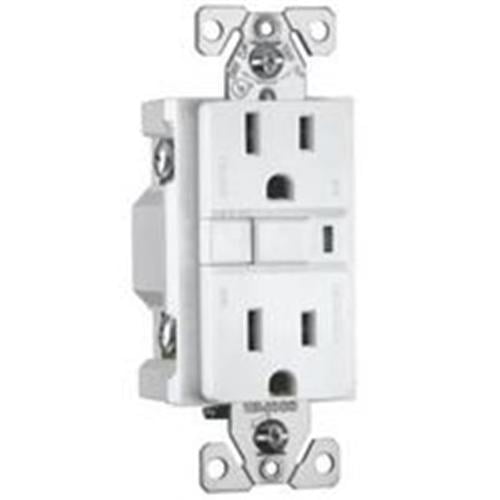
/cdn.vox-cdn.com/uploads/chorus_asset/file/21847995/iStock_1169476062.jpg)
I understand that these regulations exist in the name of safety, just be aware that any electrical updates to your home will likely involve a lot more work than you initially think. Depending on what you are getting done, the inspector may need to recheck your entire home. And, you're probably going to scoff at a good number of the required changes.
Context Edit: I'm located in Texas, and I ultimately had to have the electrical panel replaced entirely because there was a safety recall associated with it. Even after the replacement was complete the electrician had to come back and redo the wiring connections because the inspector said the PVC joint at the top of the box had to be metal instead.
When I first saw the estimate I made sure to shop around and to get multiple quotes in order to make sure I wasn't being taken advantage of. Thankfully, there were a few things I was able to remain grandfathered in for.
Update: I now know that "fuse box" is not a synonym for "circuit breaker".