Well EU is one reason to not unlock the phone. Due to their law banking app requires some google safety net which means if we root our phone our bank app wont work. And many app which uses safety net might not work. (I know magisk might make it work but its icky when the opponent is Google).
Regarding unlocking I think Chinese phones like Xiomi, Oneplus are better. We just need to provide phone number (so that distributor can't abuse it so I think its fair) and using fast-boot we can unlock it. And we can go back if we want so AFAIK warranty doesn't gets void due to unlocking as long as we can re flash stock firmware.
Pixel phones are also better for unlocking but they come with premium price.
Unlocking your phone does not fail safetynet. Installing a custom ROM _can_ cause a safetynet failure, but it is possible for ROM developers to pass it. In other words, for most phones, safetynet shouldn't be a major barrier to unlocking.
Rooting, on the other hand, does trip safetynet unless you take extra steps to hide it.
SafetyNet is, of course, anti-user and unacceptable. Random developers on the Play Store have the audacity to demand that you use a Google-approved OS on your phone if you want to use their apps. But "Google-approved" just means "proprietary". For example, GrapheneOS is leaps and bounds more secure than any Samsung ROM, yet Samsung's ROMs are Google-approved, and GrapheneOS is not. Google also releases vanilla AOSP builds for Pixel phones without Google apps, but these are not "Google-approved" according to SafetyNet, either.
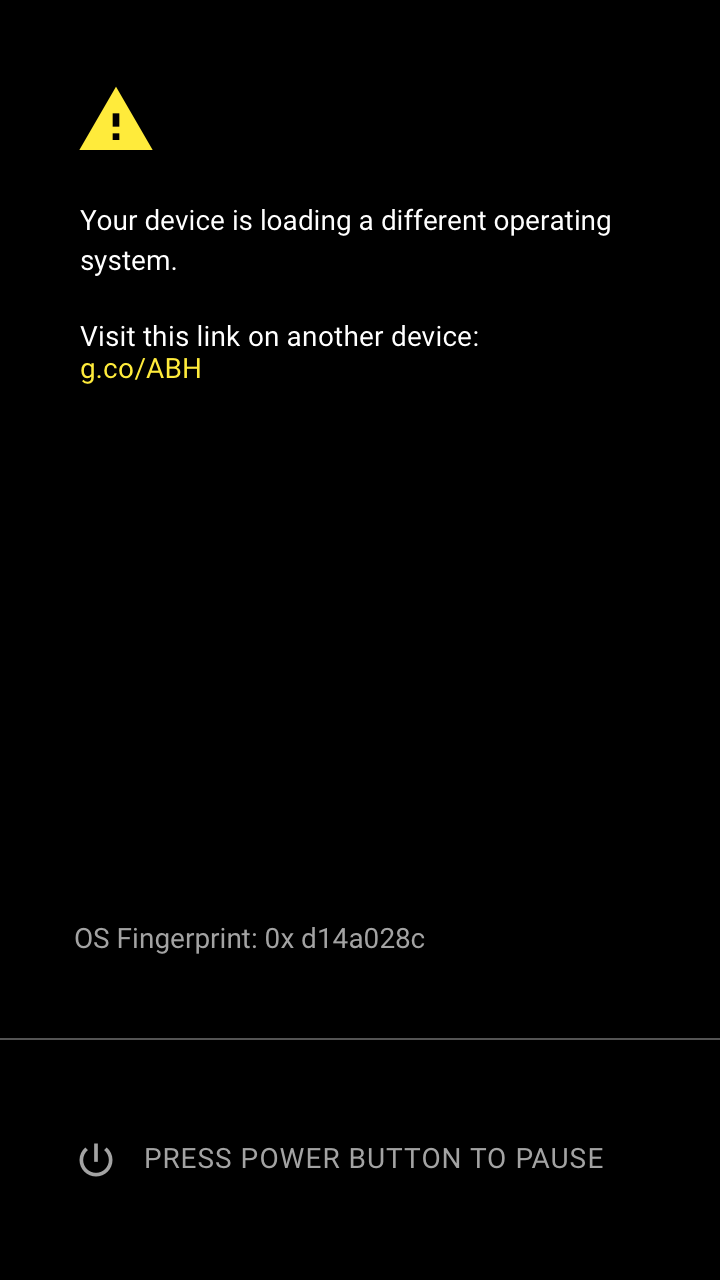
Besides, no corporation should get to influence what OS you choose to run on your device. As the user, you should make the decision whether to trust a custom OS or not on your own. That's how it works on PCs. You are warned of the risks at every stage of the process of installing a custom ROM, from the moment you enable "OEM unlocking" in developer settings. You're even greeted with a non-hideable warning to remind you that the OS is not OEM every bootup [1]. (I think this is good, by the way. It also protects those buying used phones, which is another silly argument I've heard in favor of SafetyNet. IMHO, if you continue using a phone that warns you every bootup that it's unsafe, you deserve to be hacked.)
Google says they're doing all this for the sake of user security, but I find it very suspicious that it also happens to make de-Googling your phone much harder (if you rely on apps that rely on SafetyNet, like most Android banking apps).
If you have a rooted phone, you can try to use Magisk Hide. That worked for me on various banking apps (but not Google Pay).
An alternative solution is to use another device with the stock ROM (e.g. an older/used/slightly-cracked phone) for banking purposes. Then it can be locked down to reduce the attack surface (e.g. uninstall non-banking apps, stored in a secure place, bluetooth disabled, remove SIM, turned off when not in use, etc.)
An older device may not have the latest OS security updates, but it'll still be reasonably secure if you reduce the attack surface. Most of the exploitable security issues will be updated via the Play Store, and due to the Android's heterogeneity and security protections, OS/driver vulnerabilities are difficult to exploit.
> EU ... law ... banking app requires some google safety net
AFAIK it's not the law. The law only says the banks should adopt adequate safety measures, and they do safety net as it's easy and customers don't care, as there is usually a backup plan of just using the website (apart from a few novelty banks like N26).


Regarding unlocking I think Chinese phones like Xiomi, Oneplus are better. We just need to provide phone number (so that distributor can't abuse it so I think its fair) and using fast-boot we can unlock it. And we can go back if we want so AFAIK warranty doesn't gets void due to unlocking as long as we can re flash stock firmware.
Pixel phones are also better for unlocking but they come with premium price.