It's so easy for humans to anthropomorphize animals and believe that they have thoughts, feelings and inner lives similar to that of humans. We do it every day when looking at cute cat videos on the internet and imagining that the cats are laughing, or smiling or crying based on superficial similarities with human emotions. I think it's so tempting for our species to project our inner words onto the animal kingdom.
I think that's why so few biologists are willing to consider this area, it looks like they are projecting their biases and ways of thinking onto their subjects of study, which wouldn't be conductive to their research.
Konrad Lorenz in "King Solomon's Ring" wrote about the fact that some birds, in the process of grooming each other, would emit sounds that are typical of their chicks, rather than grown ups.
This looked remarkably like something many people do while cuddling partners.
Lorenz concluded by pointing that we must not be too quick in thinking that animals "behave like humans", and we should rather realise that "humans behave like other animals".
The stance that they don't have 'inner lives similar to humans' could be seen as going against Occam's Razor—for some definitions of 'similar' of course (we wouldn't expect them to have linguistic thoughts for instance, but it might be fair to say their experience of temperatures is similar). This is the same basic inference we use to determine that other humans also have inner lives: we observe correlations between our inner state and external states of ourselves and others—others appear to be the same sort of thing on the outside, and we understand how external changes are dictated by internal changes in ourselves (e.g. facial expressions changing with emotions). It would be adding unnecessary complexity to say that what causes all of the similar external changes in others doesn't have the same internal 'stuff' driving it as in ourselves. What justification is there to think I would be set up in one way completely differently from everyone else? For (many) animals, you also have external behaviors that map roughly to external human behaviors driven by certain internal emotional conditions (e.g. when presented with a threat, or when feeling relaxed, etc.). I think it's a better hypothesis (not proof of course), that animals also have similar inner lives (again, for an appropriate definition of similar...).
Probably the bigger thing here, though, is that questions about 'inner lives'—if we're talking about subjective experience—are outside the purview of biology anyway.
We don't have any more evidence that other animals are conscious than we have that other people are conscious. As far as evidence is concerned, your cat is no more conscious than I am.
Are logfiles enough to count as an inner life? We have clear evidence of those.
I think it's the other way around. We have plenty of evidence that humans are doing something different than most creatures and have trouble articulating exactly what it is.
I don't think we do. The only evidence I have that other people are conscious is by analogy; because I assume that whatever conscious is, I am, and other people seem like me.
You've skipped my point though, I'm saying that your definition of conscious isn't a useful articulation of the difference, so of course it doesn't yield a satisfying result.
Then compare the life's work of Picasso to the life's work of most cats. Art is evocative. Cats poop a lot.
It's not just animals, humans will anthropomorphize even robots which we know for sure aren't conscious. I remember how, not that long ago Boston Dynamics posted a video of a man kicking a robot dog and a lot of people were really unconformable seeing that.
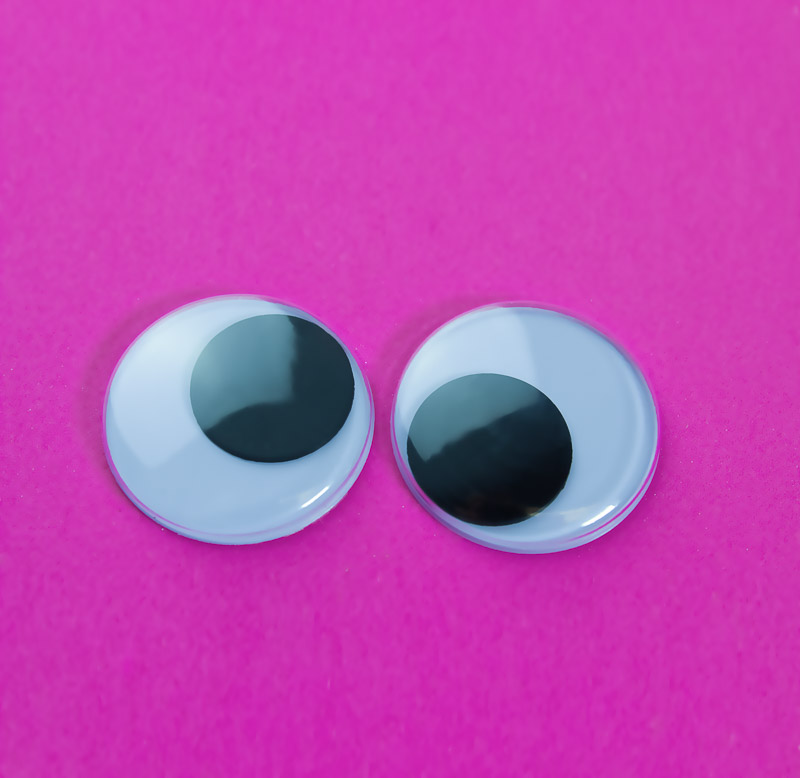
This is entertainingly illustrated with googly eyes [1]. Stick a pair of them on virtually any inanimate object and you'll find people naming it, addressing it and contemplating its existence.
Not just animals robots, humans will project emotions onto other humans. We see a photo of someone's face, or look at someone who isn't making any particular expression, and imagine an emotion based on transient artifacts captured at a single point in time. See also: "resting bitch face" and all the memes featuring baby's faces.
What you say about anthropomorphizing animals is true, but it doesn't mean biologists are not examining the ideas. Maybe we don't yet have the power to explain consciousness clearly enough in humans, and perhaps it will always be limited.
I think human hubris plays a role, by keeping a strong mental barrier between the behaviors of our species and all other vertebrates. Obviously there is something by virtue of our much larger brains, but we don't really understand enough about how we or other animals think, yet. We are inclined to disbelieve there may be more in common than we think.


I think that's why so few biologists are willing to consider this area, it looks like they are projecting their biases and ways of thinking onto their subjects of study, which wouldn't be conductive to their research.