Unlike the author, I think I still like computers, but only in their essence. I like programming, the detective game of debugging, learning new paradigms, getting lost in abstraction, the thrill of watching powerful automation doing it's thing.
But I don't like what computers and the internet have become. Without constant mindful adjustment, all my devices inevitably become attention grabbing pushers of just-so packaged bits of media. I don't let that happen, but that's clearly their essential inclination. Keeping this at bay feels like swatting away the tentacles of some persistent deep sea creature.
I feel everyone's attention span eroding. I feel people packaging themselves for social media, opening their self-image and self-worth to the masses. I see a flood of undifferentiated information, the spread of hysteria and belligerence, the retreat of quietude, humility, and grace.
This is all downside, but lately I'm losing the upside. While I still love the technology underneath it all, more and more I feel like I'm working in the service of something that's driving humanity collectively insane.
Now, there was a lot of crap on the web back then, but it was still text maybe with some blinky graphics. On today's rich media sites you sometimes can't even select the text. E.g. try copying the address out of a location that Google shows in response to a search (on mobile at least). Text is the basis of civilization--surely deemphasizing text represents the downfall of it.
I think I'm beginning to understand why vaporwave is a thing. It harks back to a simpler time when we all looked forward to jacking into cyberspace with our Ono-Sendai decks, but the Mac (or Windows 3.x/9x PC for true pedestrians) on our desk with NCSA Mosaic and a 28.8kbps modem brought us close enough. Before trolls (unless you hung out on USENET), before 4chan, before everyone tried to sell you an app, and sell your data to some advertiser.
Neal Stephenson wrote a pretty interesting essay on the societal implications of deemphasizing text. In the beginning was the command line: http://www.cryptonomicon.com/beginning.html
I'm getting pretty good mileage out of using uBlock Origin's "Advanced user" mode and by default filtering everything (other than the initial HTML). Then as needed I can allow images, JavaScript, third party content, etc. progressively. The base experience though is much like the 90s web experience. Of course there are sites with almost no content in the the initial HTML file.
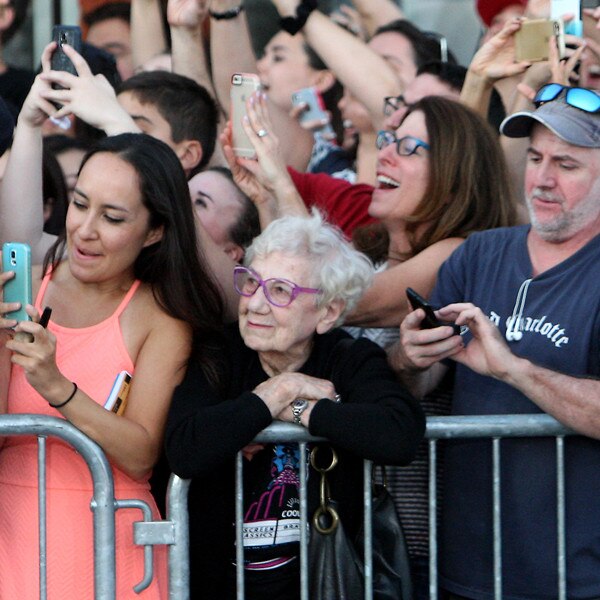
Yes Werner Herzog mentions the collective insanity of humanity in conjunction with text messaging in one of his documentaries. Games and text messages and social media have captured peoples brains. People are drawn into their devices mentally and emotionally in a way that barely makes them present in the actual world, even when they are walking to work or dining with friends or driving. There is something so magnetic about these devices that draws in almost every person who encounters them in a way that is not healthy.
Because it's all happening in real time to humanity as a whole it's hard to see the bigger picture of how we are changing. I think of it as probably being like how people responded to the invention of fire. It just made perfect sense and took over the world and happened to everyone together. Being present in the midst of this historical change is an opportunity to know something very deep about human beings, who we are.
The biggest thing about these changes from my perspective is that people are devolving into something that looks like a collective autism. Like they are obsessed with the fact that something is happening somewhere else at all times and the device has opened a window to seeing it. And yet when you look out that window into the collective digital consciousness of pictures and texts and advertising you see that there is actually nothing happening at all that isn't exactly what you would expect. People doing things. But always somewhere else.
The main thing I don't like is when I am walking downtown and people are literally just wandering mindlessly as a herd texting on their phones not even looking up at traffic as they cross the street. They navigate by being aware of other people's direction and path but oblivious to their own. For example, I will be crossing the street and another person who is texting will walk just a few steps behind me texting, looking at their phone, never looking up at traffic and trusting that if they follow my path they will end up on the other side of the street. I don't even know really how to describe that experience but I am sure everyone else has it too. It's like people have been reduced to herd animals walking collectively while immersed deeply in their devices... because there isn't possibly anything at all happening in this present moment that is worth paying attention to. And I am not talking about one or two people walking around in this way. It's practically everyone.
Honestly, am I the only person who notices this? I wonder.
My pet theory: the digital world is just real enough for us to inhabit without feeling alone, while removing a few crucially difficult elements of in-person interaction. Because we can't escape the reality of being social animals, we gravitate toward the easier social world - the digital one, and thus we end up checked out of the physical world way too much.
I've been disturbed, above all, by the following dynamics that are missing from the digital world:
Social awkwardness is alleviated by asynchronicity, there's no such thing as awkward silence online, and you can carefully craft everything you put out there.
One can avoid various flavors of vulnerability and ennui. Hiding your face from others means no one can see your exhaustion, dissatisfaction, denial, boredom, etc. - and because you see yourself more clearly when reflected through the eyes of others, a lack of that reflection makes self-deception that much easier. And on the flip side, avoiding seeing these things on the faces of others allows us to escape the difficulty and obligation that empathy imposes on us.
This would all be great if we didn't need these and other hardships of the analog world to truly flourish, but we do. So existence in the digital-social world becomes akin to slow carbon monoxide poisoning. It fools your system just enough that you don't realise that you're actually suffocating - the ill effects pile up while the alarm systems (loneliness, need for intimacy) stay mum.
If I may I would recommend the work of Sherry Turkle[1] from the MIT. There are several talks from here on youtube, and I particularly like her conversation on the good life project podcast[2].
You aren't the only one noticing it. It seems to me that these devices tap into a collective unconsciousness, and this I observe to be anxiety or general human fidgety. I wonder if these devices entrance us the same way books and text entrance us. Books create realities that only exist in mind, perhaps these images, feeds, videos are the same thing, but in a modern way? our devices entrance us to a state of mind not so different from reading a book (which is more healthy nevertheless), and i think because human consciousness is merely a feedback loop, we seek for things that reflect the mind well, so hence mirrors, text, photos, videos, and these devices.
I love to put my phone down.. but at the same time it takes me from boredom. For instance, I'm in a strip mall while the wife shops. There's nothing else for me to do but reflect on philosophy (that is read hackernews and reddit shitpost).
Nothing wrong with being bored. Try just sitting there and think about things rather than pull out your phone as soon as real life is boring. Your attention span will thank you.
I don't understand why people are so uneasy about being bored, is it the fear of missing out or is it addiction of always having a jolt of dopamine for each new "like" they receive?
The Internets form a global AI with humans as the neural nodes. The isolation from the "real world" that you observe in so many people is isomorphic to nerve tissue being isolated from environmental factors. The bulk of nerve cells in your body are transmitting and processing signals that originate far from their surrounding tissue.
This is literally what I'm trying to convey in my personal statement for university. I'm thinking of studying computer science at uni (I'm in my last year of high school) and this is precisely my dilemma: how to keep my interest alive by focusing on the beauty of programming itself, automation, the abstract creative nature of it, while ignoring the overwhelming downsides: drowning in this virtual world that is out of touch with reality, in this mass of useless information, useless innovations, profit-driven apps, addiction to smartphones, etc. Consumerism as it was in the 60's, applied to everything digital.
I'd be more than happy to discuss this further with anyone as it's something that's preoccupying me a lot right now as I try to decide what to pursue in my studies.
Another thing that helps me cope with this tech world: hoping to be able to contribute to or work along standards such as those of Calm Computing (https://www.calmtech.com/), or TimeWellSpent (http://timewellspent.io/). Through things like these, and through the pessimistic view I have right now of the tech world, do my best to contribute to it in a beneficial way, more "ethical way." Basically, I'm motivated to work in tech to try to "shift" it a tiny bit, to fight the enemy from inside.
What you're seeing is the information equivalent of an endless, free salad bar with everything a human being could possibly eat available in unlimited quantities. There are high-quality veggies and hideous junk foods, clean water and toxic booze, fresh foods and spoiled. Go ahead, eat anything you want, as much as you want, whenever you want.
Whether this will be heaven or hell for you ultimately depends on whether you can carefully and deliberately develop "consumption" habits that support you in the long run. With proper care, the more options the salad bar offers, the better your chosen subset will get.
I largely agree with that sentiment, but it is difficult to separate oneself from the rest of a society that has made unhealthy choices. The market is driven by the masses and we participate in the market. The salad bar may be unlimited, but there sure are larger areas of it dedicated to serving the tastes of everyone else.
Yes, it's a perspective that I have to work to maintain. It's hard to constantly have to seek for the high-quality veggies and reconvince yourself that what you're doing is worth it.
> how to keep my interest alive by focusing on the beauty of programming itself, automation, the abstract creative nature of it, while ignoring the overwhelming downsides
Focusing on the thrill of programming while ignoring the downsides is how we got here. Maybe you meant "focusing on the beauty... while ameliorating the downsides". Anyway, you seem much more self aware than I was at your age, so I'm sure you'll do fine. :)
> focusing on the beauty... while ameliorating the downsides
That's a great way to put it, thanks.
The second thing that worries me about doing compsci is the fact that I'll have to dedicate a huge portion of my life to staying in front of a screen. It bothers me a bit but for now it is outweighed by the advantages.
This also bothers me. There's something soul-sucking about screens once you spend more than 4 or so hours in front of one. And because I can't really put my finger on what it is about screens that has this effect, I can't come up with even a sci-fi version of a solution to this problem.
The closest I've come to even an inkling of a solution is the idea of a high-refresh-rate e-ink display and doing everything in a fullscreen terminal, because somehow my kindle doesn't have the "screen" effect on me. But I'm really not sure if this would actually be helpful, let alone plausible.
But you're a programmer, so you must manage no? I've actually thought about the e-ink display. I would immediately buy a very simple, lightweight e-ink laptop that allows me to do simple tasks.
Hacker News recently added a feature that would help you out there. You can 'favorite' a comment now by clicking on its timestamp and then clicking the 'favorite' link. You can easily check all your favorited comments on your user page.


Unlike the author, I think I still like computers, but only in their essence. I like programming, the detective game of debugging, learning new paradigms, getting lost in abstraction, the thrill of watching powerful automation doing it's thing.
But I don't like what computers and the internet have become. Without constant mindful adjustment, all my devices inevitably become attention grabbing pushers of just-so packaged bits of media. I don't let that happen, but that's clearly their essential inclination. Keeping this at bay feels like swatting away the tentacles of some persistent deep sea creature.
I feel everyone's attention span eroding. I feel people packaging themselves for social media, opening their self-image and self-worth to the masses. I see a flood of undifferentiated information, the spread of hysteria and belligerence, the retreat of quietude, humility, and grace.
This is all downside, but lately I'm losing the upside. While I still love the technology underneath it all, more and more I feel like I'm working in the service of something that's driving humanity collectively insane.