That's what we do here (Czech republic), we don't take meds until the fever goes over 39°C (above 40 you are looking for trouble). You lay in bed and drink enough to compensate for sweating. My grandma would make you onion tea.
Interesting, my user experience with them is top notch (Prague). MacBooks, iPads, musical instruments, mountain bikes, really expensive stuff generally. The delivery slot is kinda long ("in the afternoon"), but the tracking info is spot on, they always call and so far I have never lost anything with them.
> The delivery slot is kinda long ("in the afternoon")
At least they tell you the day, not like in Germany. Gets put on the post today, then usually it either gets sorted overnight and delivered the next day, or there's another working day in between. The tracker used to say which it's gonna be after that overnight sorting (so if you check at 2am), but in the last year or so they've switched to telling you it's e.g. after the weekend some day and then surprise show up on Friday for example when you hadn't planned for anyone to be home, wasting the deliverer's time if you didn't decide to work from home that day spontaneously
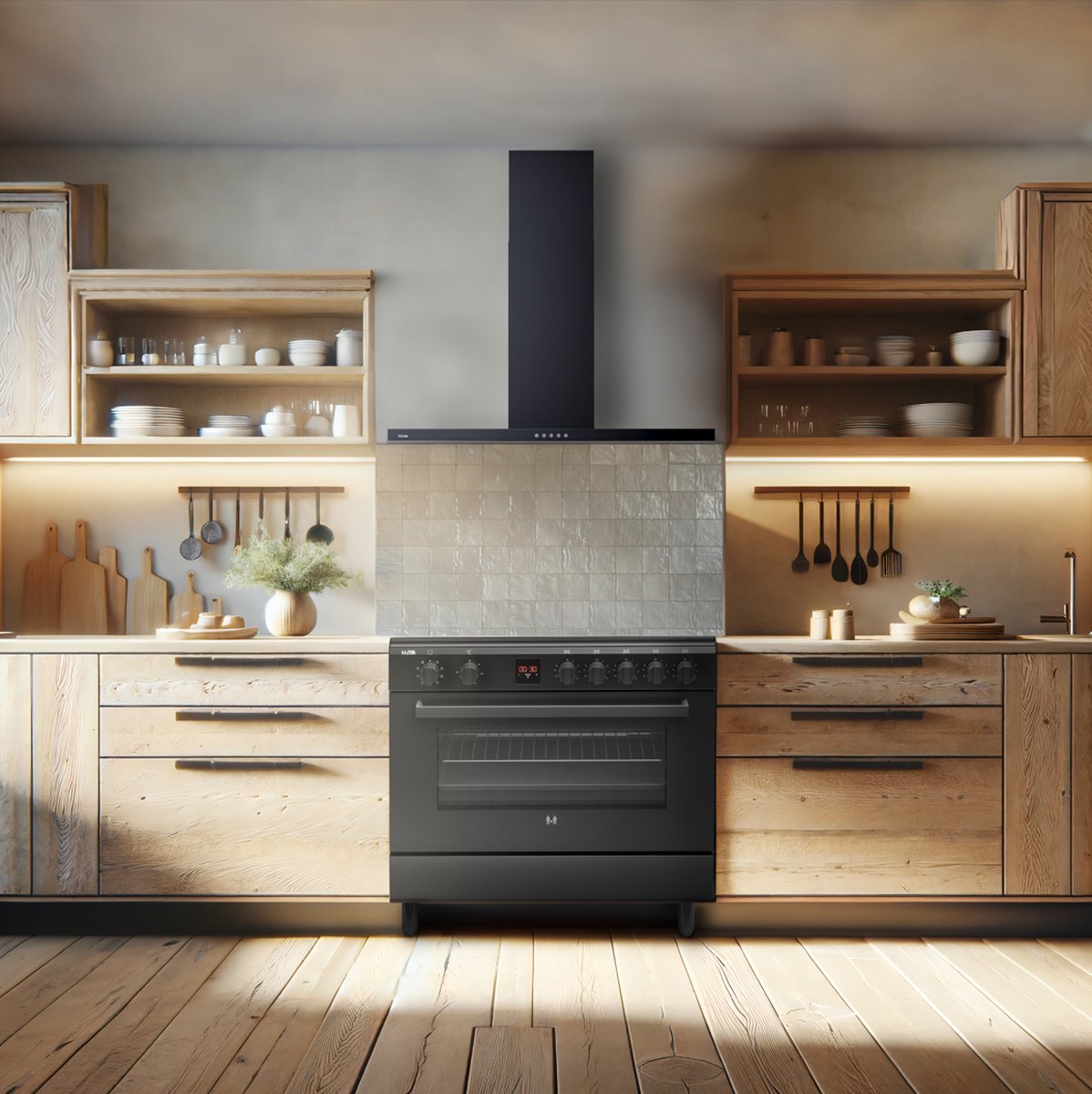
I spent (5y ago) so much time searching for induction stove with physical knobs. The touch interface at my previous place was driving me crazy, a slight misalidgment and the stove would beep like it’s end of the world. Luckily Miele produces some at the premium price (or was at the time) but I considered it an investment in my mental health.
A touch interface on the stove seems like the canonical example of a straightforwardly bad idea. Sure, let's use a capacitive touch interface to control the most dangerous appliance in the kitchen, one which also happens to frequently be the most humid spot and also the most likely to feature splashed oil! What could possibly go wrong?
My favorite design issue with those: capacitive burner controls on the cooking surface mean you can spill something on them and be unable to turn the heat off to clean the thing keeping you from turning the heat off.
Have you encountered any that work like this? In my small sample (n~5, Europe), all capacitive cooktops turn off whenever you spill something on the controls.
Which, while better than buning your house down, is still needlessly annoying.
What I really want is for the controls to not be on the cooking surface at all but that only seems to be available for stovetop + oven combinations which have their own annoying limitations.
> I actually love that I can easily wipe everything when it's dirty. I'd hate cleaning knobs and most of the tactile buttons.
the knobs on my manually operated range pull right off their posts and go soak in the sink with some soap and hot water once a week while i spray the range's control surface with whatever spray cleaner and wipe it off with every other flat surface in my kitchen.
after ten or fifteen minutes of soaking, anything left on the knobs fall off with a dry rag that goes in the cloth washer afterwards.
I’m in full agreement with everyone here who hates touch screens, and I also spent a long time looking for induction ranges with physical knobs (IIRC there was only one model in the universe with them), and was so mad that I had to get one with touch buttons…
But I gotta say, the ability to just simply wipe the whole stove surface with a towel and be done has more than made up for the touch buttons sucking.
With physical knobs: Take knobs off and soak them, use a towel and wipe a circle around the nub that’s left, try not to leave a circular streak pattern, put knobs back. Or just wipe the knobs with the towel and get close enough on the surface.
Touch buttons: wipe the whole thing in big strokes, you’re done.
I clean the whole surface after every use now, because it’s just so damned easy.
I think that was the one model in the universe I was referring to. I don’t have the layout in my kitchen to put knobs in the front, my stovetop has to fit in a pretty well-defined area. Knobs in the front would have been totally ideal.
Yep, every knob I've ever had on a stove works this way and makes them trivial to clean. In the meantime, during regular use they're guaranteed to never stop functioning because they got wet or oily.
Oh, and on exactly over what surface we usually lift or holds lids that most certainly have at least some condensation... You know when taking a peek or stirring it for a few seconds...
Totally agree. The controllability of my Nef induction hobs was excellent, but the controls were horrendous. E.g. going from a level 9 rapid heat-up to a level 2 simmer is seven distinct touches. Each with an annoying beep. Related to this is the lack of a single-tap hob-off for an individual hob.
For medical reasons [1] I had to transition from the induction hob to a ceramic hob, and had to choose the Nef equivalent because it had the same physical footprint. So now I have the same crap controls with much worse response time to the control inputs themselves. The ceramic hob also can't detect when a pan has been removed so will leave a hob dangerously hot but not glowing. I've got used to it now but it is very frustrating and still catches me out sometimes.
[1] I have an implanted defibrillator whose sensor is nulled out by an inductions hob's magnetic fields.
A lot of people don't realise that you can push both the up and down button at the same time to set a hob ring to zero intensity. So level 9 to level 2 is actually just three presses.
Love it. Removable magnetic buttons with flat flush surface underneath that’s just as easy to clean as a touch surface. The only downside is the possibility of losing the knobs.
Fortunately by last year the this Café (GE) double oven induction range was available here in the US: https://www.cafeappliances.com/appliance/Cafe-30-Smart-Slide... I have a few quibbles (mainly, that only one of the burners is properly sized for a 12" skillet) but overall I like it.
I don't mind the touch buttons for operating the oven and timers--in fact, they're nice and easy to clean (with a handy "lock screen" feature so you can spray and wipe down the front panel without everything going nuts) but I'm pretty sure trying to fine tune the burner settings using a touch slider while keeping an eye on multiple pans would have driven me nuts. I also have haven't had problems with the knobs getting dirty or being hard to wipe down if they do, to address a point raised in another reply.
Price splits the difference between the entry level ranges and the snobby brands (Miele, Thermador, etc).
I'm currently using Miele with touch controls but it's really good at filtering out false inputs. I have no problem whatsoever even with my messy cooking.
Too bad you have no way of telling how good controls are in a product before you start using them.
I spent like $5k on a Wolf gas range because it was the cheapest one on the market that simply had five knobs for the controls and absolutely nothing else. No computer, no screen, no shitty fake buttons, not even a clock. Worth it.
I think you'd have to get a plug-in one, which depending on your local voltage might not be ideal. The commercial ones made by Buffalo have one big knob but are pricey. Tefal make a £100 domestic one with actual buttons.
Of all things, it's a novel kind of stove with the distinctive feature that you can place a piece of plastic just next to the food and it will work fine... Why no designer wants to exploit that feature?
Yeah, that's also how my long journey with induction cooktops started.
My main grief with the induction cooktops was the ergonomics: Most touch surfaces on those cooktops require at least 2 touches: select the flame, then adjust the power. I don't know, that completely breaks the interaction for me. I want something to directly adjust the heat on every single one of the flames, especially when something starts to boil over or fries too fast. In addition, touch often wouldn't register on those, so I have to press longer or harder, both of which is even more inconvenient. No, even more: it outright sucks.
Well, and after years of searching, friends recommended me the AEG models, like IKE64450XB (here in Europe). And honestly, I was happy with the touch surface ever after: It reacts quickly enough and I can modify every flame at an instant.
I don't even get a penny for this, I'm just satisfied. So, yeah, touch can be good, like on a smartphone, even on household devices.
On the other side, it's really hit or miss with these touch UIs: I also have an combined washing machine + dryer from the same brand and there I need to press each touch surface for at least half a second, and not touch the metal case of the machine, otherwise the touch wouldn't register. Then, the UI would sometimes hang, but still register touches, playing them back once it has caught up.
We are family of 2 adults and 1 child. We spend very easily 400 (and more) per month. We don't buy any processed food. We cook at home. 90% of time. Some weekends we go out for a single lunch or dinner. We live in Czech republic. We rarely buy "bio" (or "organic" depending on where you live) food.
> So, I wish Andrej et al the best and I'm rooting for them but I'm not optimistic they'll build a high-growth, high-revenue sustainable edu business around AI as the primary value differentiation.
I don’t have an X account and as such might miss additional information from subsequent replies but there is nowhere in the post mention about building a high growth/high revenue business? Maybe Andrej just enjoy teaching and sharing knowledge and want to bring like minded, well off people together rather than creating an unicorn?
Or do you mean by your post that it is not (or is very hard) to even reach non negative revenue to keep it sustainable on its own?
I considered including an aside mentioning I think lifestyle-type edutech startups are entirely doable, especially for those who can survive long periods before meaningful revenue without outside investors beyond friends/family (which probably includes Andrej). I posted a related reply here: https://news.ycombinator.com/item?id=40987394
no, GP just assumes "high-growth, high-revenue" business is the goal, when in reality Andrej is probably worth 9 figures already and has a bigger mission than making "VC-level returns"
I have exact lens setup. The mentioned telezoom rarely leaves my camera unless I need a portable camera that’s when the 40 shines. I have no problem with resolution since I use Z6 II.
I switched to 24-200 during workshop with Pinkhassov as he is a strong proponent of superzooms.
That’s actually a nice side effect of all the *rumors pages. The rumors of future products keep me of buying the current products. I keep on using my previous products while saving money and planet and being excited about what future holds.
On the contrary, I think that the reliable update cadence in modern electronics means that people should generally all but ignore future product roadmaps.
When you actually need to get a new device, just get whatever the up-to-date thing is.
OK, ok, I suppose that it's reasonable to check the rumor sites to see if you should delay by a month or two. But not any longer than that.
It's much harder with PCs, where you can get, for instance, new Thinkpad's with anything from 11th gen Core i all the way to new Core Ultras. And, now, ARMs as well...
I was inline to buy a 128GB M3 MAX, know that I know the M4 exists and already shipped in the iPad, it lets me know that the whole M4 pipeline has already started and what the perf numbers are, absolutely means I will be waiting. I survived yesterday without it, I can survive tomorrow. And now I can budget in the AMD Epyc bridge that covers that span.
I think Apple has been pretty good about hitting the right cadence with processor perf increases. They are making up for lost Intel time. The M6 is going to make us loose our minds. Apple is going to bring back "this is a munition" ads.
Both the M3 and the EPYC will be useful for far longer than the time it takes Apple to have the M4 on their next-gen laptops. Computers last a lot longer than they used to. I have a 10 year old Mac Mini that’s still comfortable to use, and, while an M3 Mac is a beast, it’s not that much faster than an M2 (or an i7) to create a qualitative change in my workflows. What is possible now was already possible last year. It’s just faster now. I get a higher return on investment with better keyboards and screens.
> The rumors of future products keep me of buying the current products.
For myself, I like to think of it as applied procrastination. I could buy that new thing I want today.. but something better will come along in time, so I can afford to put it off a while longer yet..
> The rumors of future products keep me of buying the current products.
Spot on!
Back in the nineties, Intel managed to push competing RISC architectures (UltraSparc, MIPS, DEC Alpha, PowerPC) out of the market using nothing but promises that Itanium was going to blow them all out of the water.
And apparently Apple is okay with procrastinating and cannibalizing current sales of M1, 2, 3 if it helps prevent some Snapdragon (or Ampere) sales.
>And apparently Apple is okay with procrastinating and cannibalizing current sales of M1, 2, 3 if it helps prevent some Snapdragon (or Ampere) sales.
sales of what
i actually can't think of a single competing product. admittedly i don't keep up with laptop news but still, i haven't heard of anything yet that can meaningfully compete with the m1 from four years ago
Microsoft just announced some lackluster arm laptops that they claim can compete with M-series chips. The question is what windows programs are gonna run on them...
Some people have been running Windows 11 for Arm on a VM in Apple Silicon. It has an automatic transcoder that translates most x86 code at start. It seems to run many apps well. Microsoft claims these new machines have a better transcoder. This might work.
For me at least, the best possible outcome of this is that Windows handheld gaming devices become more power-efficient. That might be an advantage over Linux-based handhelds for a while, unless Valve decide that Proton needs to also be an architecture emulator. The chip efficiency wins must surely be tempting in this form factor.
> The rumors of future products keep me of buying the current products.
You may have heard of the 5-minute rule - "Will doing this take me less than 5 minutes? If the answer is yes, do it now." An adaption of that to reduce impulse purchases is - "Do I really need this product right now? If the answer is no, don't buy it."
And on the flip side I am generally hesitant to buy first-release Apple hardware. Over the 20 years I've been buying Apple kit I've generally found it to be exceptionally robust but newly released hardware has had enough bugs (either hardware or OS) that I just sit back and let other users find the issues first. But I do simultaneously have the same issue: if WWDC is coming up within a month or two I'm not going to be buying any hardware because there's a good chance that something new will be released or the hardware I was going to buy is going to get a refresh or a price drop.