If all "legitimate" platforms ban hate speech, then users wanting to engage in hate speech will all go to some platform that radically allows all speech with disproportionately this undesirable speech. They will intermingle disproportionately with those spreading sexual abuse images, drugs, insurgent propaganda and instructional material, and other undesirable material. Facebook likely makes the problem worse by forcing these "hate speech" and "disinformation users" to be completely surrounded by people with repulsive content, instead of having their repulsive content critiqued and shamed by other users.
Having people with bad, hateful ideas out in the open I would argue is preferable to concentrating all these bad thoughts together with people that will reinforce that it is normal.
>Trying to stop sexual abuse and child pornography isn't weird moralization.
How does moderation of content prevent sexual abuse or CP? If anything I'd argue it creates more, because those that seek the images instead have to produce their own if they cannot find them.
The internet itself is unmoderated in any useful sense for content, yet it has lived longer than most of these cheesy "moderated" products that seek to impose their morality on you.
It looks like you're getting downvoted, but I think this is a good point and worth thinking about.
I believe one key difference here is group identity perception. If you like thinking in business terms, you could say "branding".
Facebook, Reddit, HN, Twitter, etc. all must care about content moderation because there is a feedback loop they have to worry about:
1. Toxic content gets posted.
2. Users who dislike that content see it and associate it with the site. They stop using it.
3. The relative fraction of users not posting toxic content goes down.
4. Go to 1.
Run several iterations of that and if you aren't careful, your "free" site is now completely overrun and forever associated with one specific subculture. Tumblr -> porn, Voat -> right-wing extremism, etc.
Step 2 is the key step here. If a user sees some content they don't like and associates it with the entire site it can tilt the userbase.
The web as a whole avoids that because "the web" is not a single group or brand in the minds of most users. When someone sees something horrible on the web, they think "this site sucks" not "the web sucks".
Reddit is an interesting example of trying to thread that needle with subreddits. As far as I can tell, Reddit as a whole isn't strongly associated with porn, but there are a lot of pornographic subreddits. During the Trump years, it did get a lot of press and negative attention around right-wing extremism because of The_Donald and other similar subreddits, but it has been able to survive that better than other apps like Gab or Voat.
There are still many many thriving, wholesome, positive communities on Reddit. So, if there is a takeaway, it might be to preemptively silo and partition your communities so that a toxic one doesn't take down others with it.
I personally see it as "plausible deniability" as the cynical actual distinction for what gets people to share blame. Not actual affiliations or whose servers it is run on. Any number of objectionable sites are run on AWS and you basically need to be an international scandal or violating preexisting terms to get booted. Like some malware to governments merchants. Amazon's policies did not care if it was legal just if you were doing so unauthorized. A wise move when international law is really like the Pirate code.
The interlinking between the pages themselves and common branding are what creates the associations. Distributed twitter alternatives like Mastodon can even share the same branding but it is on a per network basis and complex enough to allow for some "innocent" questionable connections.
The internet is very moderated, on the contrary, in terms of UGC.
Traditional, non-social, websites have single or known-group authors. When one of them is defaced or modified we call it "hacking" not "unmoderated content." We assume NASA's site has NASA-posted content. We assume Apple's site has Apple-posted content.
Sites with different standards for what they'd publish have been around for decades (for gore, for porn, etc) but many of these still exist in a traditional curated-by-someone fashion, or are more open to UGC but still have some level of moderation.
The internet is not moderated in any useful sense for content. Drug markets like white house market, and before that silk road have perpetuated for years. Tor and other darknet websites host content that is nearly universally disdained by governments and even most individuals, which I hesitate to even name here what that heinous content is (you and I both know some examples).
> We assume NASA's site has NASA-posted content. We assume Apple's site has Apple-posted content.
Trust in identity is not the same thing as useful moderation of content. That's useful moderation of identity.
>Sites with different standards for what they'd publish have been around for decades (for gore, for porn, etc) but many of these still exist in a traditional curated-by-someone fashion, or are more open to UGC but still have some level of moderation.
Those sites _choose_ to moderate their content, that doesn't exclude others that don't.
>The internet is not moderated in any useful sense for content. Drug markets like white house market, and before that silk road...
You mean the Silk Road that the US government "moderated" out of existence, along with other Tor marketplaces over the years? The same ones that suggest White House Market's existence is also likely to be limited?
I suppose in the sense that Gabby Pettito was moderated off the internet, Ross Ulbricht was moderated off of the internet and into a cage permanently for the heinous crime of facilitating voluntarily peaceful trade. Tor marketplaces were definitely not gone for years, the same content just moved under new banners. You can literally find the same content and more on WHM today as you did under Ulbricht's banner before he was kidnapped by government thugs.
>I suppose in the sense that Gabby Pettito was moderated off the internet, Ross Ulbricht was moderated off of the internet and into a cage permanently for the heinous crime of facilitating voluntarily peaceful trade.
Oh hello, strawman.
>Tor marketplaces were definitely not gone for years, the same content just moved under new banners. You can literally find the same content and more on WHM today as you did under Ulbricht's banner before he was kidnapped by government thugs.
And the only reason that happens is by virtue of Tor making it difficult to track the source of those sites and their operators. That doesn't mean that "moderators" (governments, etc.) aren't putting forth their best efforts to track them down and shut them down. It is nearly inevitable that WHM will see a similar fate to Silk Road, AlphaBay, DarkMarket, etc.. They're being shut down as quickly as they can be.
Glad to know you finally admit that being kidnapped by a 3rd party is not really what most of us think as "moderation", and thus you have made a straw man. Although in the strict sense I guess it is true that moderation could merely mean some 3rd party entity came along and violently kept me away from communicating. If you don't like me posting cat pictures on reddit, you could crack my skull or lock me in a cage and steal my PC and you would have "moderated" me but I wouldn't call that reddit moderation.
... wow. Talk about going from 0-100 entirely too fast.
I was talking specifically about sites such as Silk Road and others being taken offline (which is exactly what you were talking about, too), not once did I mention his arrest nor did I allude to it. Glancing at your username, I seem to recall previous comments from you in threads about drug use being legalized. On the broad topic of drug legalization - again - you and I agree, but you would do well to prevent your biases from creeping in and causing you to misunderstand posts and/or lash out at others.
I apologize, maybe you are not familiar with the details of the silk road. Ross Ulbricht was the administrator and creator of the silk road, allegedly. It's quite probable that without his arrest, it would have persisted even if on newly acquired hardware. I would argue his arrest was integral in these violent thugs "moderating" silk road away like the mob "moderates" away their competition.
Instead, after his arrest the content ended up on new platforms rather than the Silk Road platform.
> biases from creeping in and causing you to misunderstand posts and/or lash out at others.
Yes my bias is in complete, unrestricted free speech. Every single piece of content, regardless of how damaging or vulgar anyone thinks it is and regardless of if it portrays even the worst of crimes. I admit I am colored by that bias.
> lash out at others.
What are you talking about? You feel attacked because your poorly constructed argument was laid open. Your case is pretty clear. Even if the system of the internet has no useful filter of content (whether that is true or not), if a third party such as DEA comes along and decides to seize equipment and throw the operator in jail, you consider that content moderation. And I'm willing to admit from a practical perspective, that could be considered a form of moderation by a violent third party.
---------------
Edit due to waiting on timeout to reply below:
His arrest is hand and hand with the shutdown. It was integral. You can't say you weren't mentioning Ulbricht's arrest when that arrest WAS, in part, the takedown of Silk Road. The very fact that you said you weren't speaking of the arrest lead me to say you "may not be familiar" (note the uncertain words, that your bias clouds you from understanding did not speak in certainties.)
>s, and then angrily respond to them as such.
I think you're projecting. If there's any anger, it must be yours.
>Yeah, again, you're injecting your own biases as you create assumptions about my comments
Your comment appeared to be a rebuttal to my statement that "The internet itself is unmoderated in any useful sense for conten." If it wasn't actually a rebuttal but actually an agreement, I apologize for misunderstanding you were actually supporting that argument.
>See how I used "moderated" in quotes in my very first response? That suggests that I'm using the term rather loosely.
>If something's illegal - even if you and I think it shouldn't be - then it's typically going to be removed at some point, even if it takes a while because something like Tor makes it difficult. And in that sense, yes, the internet is "moderated" for that content. That's all I've said/argued, and I truly don't understand how that is so difficult for you to grasp.
The illegal content has only progressively proliferated since the advent of the internet, and we've yet to see an effective mechanism to moderate the content of the internet as a whole. Virtually every category of content has not only not been removed but increased.
>That's all I've said/argued, and I truly don't understand how that is so difficult for you to grasp.
Yes and I'm arguing that this is incorrect, it hasn't been moderated. At best it has passed from platform from platform but no effective mechanism has managed to censor the internet as a whole.
Sometimes I wonder with all this speak of anger, misinterpretations, and clouded judgement is just you repeating to me what your own psychologist told you.
Yeah, again, you're injecting your own biases as you create assumptions about my comments, rather than stopping to ask what I mean before you fly off the handle. See how I used "moderated" in quotes in my very first response? That suggests that I'm using the term rather loosely.
All I've said was that that's how illegal content is moderated on the internet - it is removed. Silk Road was removed, AlphaBay was removed, DarkMarket was removed, many others have been removed, and many more will continue to be removed even if Tor makes that a slow process. At no point did I bring up whether or not I thought it was "right" to remove them, or to treat Ulbricht in that manner (again, you're assuming I don't know what happened). I said "moderating" with quotes, for lack of a better word.
If something's illegal - even if you and I think it shouldn't be - then it's typically going to be removed at some point, even if it takes a while because something like Tor makes it difficult. And in that sense, yes, the internet is "moderated" for that content. That's all I've said/argued, and I truly don't understand how that is so difficult for you to grasp.
>It's quite probable that without his arrest, it would have persisted even if on newly acquired hardware. ... Instead, after his arrest the content ended up on new platforms rather than the Silk Road platform.
For implying that I don't know what happened, you seem to be forgetting that other Silk Road staff started Silk Road 2.0 after his arrest, but that was also shut down.
>What are you talking about? You feel attacked because your poorly constructed argument was laid open.
Nope. You allow your biases to creep in to your poor interpretations of other people's comments, and then angrily respond to them as such. My initial response was simple, but your strongly held beliefs have clouded your responses.
The "internet" isn't liable, so moderate is in the form of transparent traffic shaping. When disruptions are small, costs are either absorbed in aggregate by infrastructure owners (and user attention) until traffic is literally moderated away with routing.
Maybe so (that sounds believable, anyway). What he's saying is that the other 1% is unmoderated because there's no central authority [1]. The problem here isn't that people will share bad things if you don't stop them, the problem is that you're in a position of being held responsible for something outside your control. If it's illegal, it should be reported (or found by law enforcement whose job it is to enforce the law) and if it's offensive, offer some user-side filtering.
[1] this is starting to change, though - Amazon took Parler offline completely at the hosting level. Although they eventually found another hosting provider, it's not unimaginable that in the near future, service providers will collaborate to moderate the underlying traffic itself.
No the argument is that if you outlaw all jobs under $15, then you've just outlawed employment for anyone who can offer less than $15/hr in value, and relegated that person to unemployment and cut their ability to climb the wage ladder.
I am, almost word for word, citing the Cato Institute.
> First of all, one consequence of federal minimum wage hikes can be job or hours loss for low‐ wage workers, as we’ve seen, which can create poverty. Second, a lot of people who earn the federal minimum wage or just above it are not poor, or will not be poor in the longer term (think of working students, or second‐ earners in relatively affluent households working part‐ time).
EDIT: Before you reply with what I know you will, the reason the first and second argument above are lumped together are because the are both essentially myths (for example, see the original article), and the Cato Institute cites no actual data that either are, generally speaking, true.
>one consequence of federal minimum wage hikes can be job or hours loss for low‐ wage workers, as we’ve seen, which can create poverty.
If the minimum wage has no effect on unemployment, then why stop at $15? Make minimum wage set at 20 pounds of gold per hour. Lets maximize our wealth.
1) I feel like you know that is an oversimplification, and therefore you are not arguing in good faith... Something I would really like to not do here.
2) Even if we assume that a $15 minimum wage would eliminate a notable number of jobs, elimination of jobs is not equivalent to unemployment. We, as a society, are okay with, going by your own argument, eliminating all the $5/hour jobs (with state minimum wages being $7.25+) because it does not lead to significantly less overall employment. Do you have evidence this would not also be true with a $15 minimum wage?
>1) I feel like you know that is an oversimplification,
No it really is this simple. Jobs that have negative economic value (wages do not cover value) are not maintainable in a free market for anything more than a short period of time. I'm sure some exist but jobs with negative economic value are not in any way plentiful compared to ones with positive or break even value. If I have a job that gives me $14/hr in value it does not make sense for me to offer it under a $15/hr minimum wage.
The ones actually acting in "bad faith" are those who fail to disclose to the ofter marginalized people working low wage jobs that their policy goals are to eliminate the only jobs available to these marginalized people, forcing them to operate on the black market or let their skills and work history decay in unemployment. The farther you slide the minimum wage bar right from zero, the more people you eliminate from the labor market: the nuance being if it is low enough it only destroys the earning power of the most marginalized that some of us are happy to forget about.
> We, as a society, are okay with, going by your own argument, eliminating all the $5/hour jobs (with state minimum wages being $7.25+) because it does not lead to significantly less overall employment
Well it does lead to significantly less employment for anyone who cannot provide minimum wage in value. But what happens is a mixture of elimination of those jobs and the pushing of those jobs to the black market, where those persons (including many illegal immigrants) just have to work in the shadows without any unemployment insurance or labor protections and have to live in constant fear the IRS will find out and also get them for unreported income. So they're definitely a lot worse off.
>elimination of jobs is not equivalent to unemployment
It is if there is no alternative job because you can't offer enough in value to make the minimum wage cutoff.
>Do you have evidence this would not also be true with a $15 minimum wage?
Do I have evidence that employers will have to eliminate jobs if the position doesn't create enough value to cover the wage? One example is when QFC had to close a couple Seattle stores due to mandated 'hazard pay' [1]. Simple logic tells you the jobs generating under $15/hr in value will either become black market or be gone, if it's illegal.
If you're in retail and can't find anyone to pay $15/hr, and think you are worth that, why not try it on the open market? You can come to my border city, where mexicans engage in retail without any boss whatsoever selling retail snacks and elotes. If you can really produce over $15/hr in value then go ahead and do it for yourself. I'm sure many of these street retail street vendors make more than that, and at least in my city the police don't care at all if you have a license or not.
I apologize, I guess I mistook your misunderstanding as bad faith.
I feel like I must point this out, but no one is arguing that "jobs that have negative economic value" would somehow exist.
> Do I have evidence that employers will have to eliminate jobs if the position doesn't create enough value to cover the wage?
This is actually not at all what my second point was asking... The ask was, if we assume for a minute that a $15 minimum wage simply eliminates jobs (as opposed to bringing extracted employee value more in line with employee compensation and reducing employer profits), whether eliminating the jobs that cannot pay $15/hour would actually increase unemployment in such a meaningful way as to offset the potential benefits it would offer... The context being that we, as a society, have already decided that the benefits of eliminating (see assumption above) $5/hour jobs was worth whatever effect it had on unemployment.
With this is mind, it's obvious that QFC closing two stores is completely meaningless because it provides nothing close to an objective view on A) the effect on overall unemployment, nor B) the positive or negative effects it had on the employees whose jobs (according to QFC) were eliminated. That's not even to mention the fact that QFC has a vested interest in blaming regulation, or the fact that a single anecdote is not at all representative of the job market.
I'll just also add that it's very hard not to take what you're saying as simply constructing a straw man (as opposed to misreading or misunderstanding), given how completely unrelated anything you wrote was to my other comment.
>we, as a society, have already decided that the benefits of eliminating $5/hour jobs was worth whatever effect it had on unemployment.
We have eliminated some, but others we've simply relegated them to the black market so that those engaging them either do it entirely without unemployment insurance and other labor protections, or they do it as an independent business or contractor. Now a good deal of those jobs are instead taken by illegal immigrants (and I'm not judging these immigrants at all here, just noting what the effects are). What we really "decided" was it was worth making those jobs black market or self employment jobs -- and that is an opinion held by the tyranny of the majority against those who suffer under this regulation.
>With this is mind, it's obvious, that QFC closing two stores is completely meaningless
Somehow I doubt it was meaningless to the individuals who had the choice of move to a store not offering the hazard pay or lose their job. But meaningless from your priveleged perspective of not being immediately affected by the loss.
>I'll just also add that it's very hard not to take what you're saying as simply constructing a straw man (as opposed to misreading or misunderstanding), given how completely unrelated anything you wrote was to my other comment.
Rich from a person leading off with the straw man attacking Cato with the false argument that they had somehow claimed there weren't poor people making minimum wage.
> We have eliminated some, but others we've simply relegated them to the black market so that those engaging them either do it entirely without unemployment insurance and other labor protections, or they do it as an independent business or contractor.
Do you have any evidence that this occurs at any meaningful scale? This theory, while occasionally toted by conservative/libertarian think tanks, seems to rely on only 1 example (a New York city car wash that was already cutting jobs through automation), which was covered/written by a libertarian think tank.
> Somehow I doubt it was meaningless to the individuals who had the choice of move to a store not offering the hazard pay or lose their job. But meaningless from your privileged perspective of not being immediately affected by the loss.
No, the article you linked is meaningless specifically because it tells you absolutely nothing about those individuals (and also because it's purely anecdotal). When discussing wage increases (or hazard pay in this case), we typically care about the outcomes for workers. Not to mention the fact, as I said, that QFC has a vested interest in blaming regulation.
> Rich from a person leading off with the straw man attacking Cato with the false argument that they had somehow claimed there weren't poor people making minimum wage.
I literally linked the exact quote. They made two arguments, the second of which was that (verbatim) "a lot of people who earn the federal minimum wage or just above it are not poor, or will not be poor in the longer term." The entire point of the original article was that this is not true...
>It's treated as temporary as part of a justification for lower wages. This idea has been explicitly stated by those who oppose a $15 federal minimum wage, arguing that people making current minimum wage, or close to minimum wage, are not actually poor, or won't be in the long-term, because their current wage is temporary (the Cato Institute makes this exact argument and gives the example of "working students").
In particular, note you said that the Cato makes the argument that those making minimum wage are not "actually poor." In fact they make no such claim that there are not poor working a minimum wage job. Yours was a straw man.
>No, the article you linked is meaningless specifically because it tells you absolutely nothing about those individuals (and also because it's purely anecdotal). When discussing wage increases (or hazard pay in this case), we typically care about the outcomes for workers. Not to mention the fact, as I said, that QFC has a vested interest in blaming regulation.
Only if you're oblivious to the fact it tells you exactly what happened to the individuals, which is that they were forced to either lose their job or compete for hours with the established staff at other locations. Were you looking for a theoretical paper? I found a long one with all sorts of mathematical scribble about probalistic black markets and unemployment but I thought it would bore you and the lack of concrete examples wouldn't be terribly interesting nor convincing.
>Do you have any evidence that this occurs at any meaningful scale? This theory, while occasionally toted by conservative/libertarian think tanks, seems to rely on only 1 example (a New York city car wash that was already cutting jobs through automation), which was covered/written by a libertarian think tank.
One example of those who end up engaging in independent contractor / self employment for less than minimum wage is gig workers, who often earn less than minimum wage and yet voluntarily choose to do so anyway [1]. Presumably if jobs numerous enough for the number of people working these gig jobs existed that offered them employment protections, many would choose that over independent contractor status where they are on their own if anything goes wrong.
This is my last reply. I'm done with this conversation, we've gone way too far from the initial discussion, and we're too far off on what "convincing" evidence is, or what is self-evident, for a productive text-based discussion.
> In particular, note you said that the Cato makes the argument that those making minimum wage are not "actually poor." In fact they make no such claim that there are not poor working a minimum wage job. Yours was a straw man.
I said "people making current minimum wage, or close to minimum wage, are not actually poor, or won't be in the long-term," they said "a lot of people who earn the federal minimum wage or just above it are not poor, or will not be poor in the longer term." I guess, for some reason, you assume the difference is "people" vs. "a lot of people," and that I therefore mean "all people." Your assumption does not make it a straw man.
> Only if you're oblivious to the fact it tells you exactly what happened to the individuals, which is that they were forced to either lose their job or compete for hours with the established staff at other locations.
This is an assumption. The ones that transfer to other locations now receive hazard pay, and, those unemployed workers potentially make hazard pay at new jobs, both of those are potential net positives... The article does, in fact, not discuss actual worker outcomes. Once again, even in the oversimplified world where jobs are simply eliminated, job loss is not equivalent to unemployment.
> Were you looking for a [...] paper?
Preferably, yes. "Concrete examples" are also called "anecdotes," and are not at all convincing of large-scale, job market-wide, patterns or effects.
> One example of those who end up engaging in independent contractor / self employment for less than minimum wage is gig workers, who often earn less than minimum wage and yet voluntarily choose to do so anyway [1]. Presumably if jobs numerous enough for the number of people working these gig jobs existed that offered them employment protections, many would choose that over independent contractor status where they are on their own if anything goes wrong.
That is another assumption. You "presume" that gig workers would choose non-gig work if given the option... With no actual evidence of that being the case at a meaningful level. People work "gig" jobs (e.g. drive for Lyft) for extremely varied reasons (some even do so in addition to other jobs, in fact, your source says most Uber drives do this).
>This idea has been explicitly stated by those who oppose a $15 federal minimum wage, arguing that people making current minimum wage, or close to minimum wage, are not actually poor,
Again, you claim was that it was said that those who make minimum wage are not actually poor. I am quoting you verbatim. Apparently you suffer from amnesia or disconnection from reality. Cato did not say this.
> People work "gig" jobs (e.g. drive for Lyft) for extremely varied reasons (some even do so in addition to other jobs, in fact, your source says most Uber drives do this).
Ignoring all your disengenous obliviousness to your straw man and refusal or indifference at any source that shows concrete effect of wage regulations, I'm glad at least you've come around to admit that many people working low wage jobs are doing it in addition to other jobs and for extremely varied reasons, one of which may be to use the job as a bridge. Which is exactly what Cato was saying. You've at least admitted now that Cato was correct.
>Preferably, yes. "Concrete examples" are also called "anecdotes," and are not at all convincing of large-scale, job market-wide, patterns or effects.
So where is your citation that minimum wage is good for people who cannot offer value reaching minimum wage? I've seen nothing at all from you showing these people who can't offer enough value to gain a minimum wage job benefit at all from raising the wage.
>That is another assumption. You "presume" that gig workers would choose non-gig work if given the option... With no actual evidence of that being the case at a meaningful level. People work "gig" jobs (e.g. drive for Lyft) for extremely varied reasons (some even do so in addition to other jobs, in fact, your source says most Uber drives do this).
I said I "presume" that many would choose. Not all would choose. In fact, I don't even have to presume at least one would choose because I was a gig worker once that would have liked to make minimum wage but at the time had nothing to offer yet that got me a minimum wage offer. I absolutely would have liked employment protections but did not get them, although after several years I was awarded some money in a class action lawsuit along with many others who made the same claim as me that we wanted and believed we should have been afforded employee status. So I guess I didn't presume at all, as it was born out through claims in the court system. Would you like a picture of my check as part of the class action of the many who wanted to be classified as employees?
Your constant dismissal of evidence whenever it suits you is little more than the dictatorial activity of a narcissist, a lying one at that who makes false claims about the statement of Cato.
Wouldn't you rather have a token (sorry, "Note") that's worth 1.0 of itself that we can make arbitrarily more of and give out to our corporate friends any time we want?
This is a separate and more reasonable argument, but doesn’t directly hold much water at the moment. There aren’t many jobs that aren’t worth mechanizing at $15 an hour but are at the current minimum wage. And people aren’t hiring more people than strictly necessary to run their business regardless, so they can’t just drop lower-performing employees due to a wage increase.
The related concern that is real is that businesses that are solvent at current minimum wage might not be if they had to pay their employees 15 dollars an hour. The question is if we think it is more valuable that people get paid a more liveable wage for their effort, or if we value the jobs/services that businesses that pay under 15 dollars provide more than that. Second question is if the destruction of employers who rely on low wages to exist would also open up room for less exploitive employers to take their space in the business sector. A third question countering that is if lowered profits to business has a stifling effect on money-funded innovation. And then there are questions beyond that, that ultimately sum up to “Economics is complicated, and just looking at first order supply and demand effects never tells the whole story.”
It's treated as a bridge for those who need some life skills before moving onto something else. A lot of jobs requiring responsibility don't want to hire a kid who has no experience other than smoking dope and video games, and retail will give them some proof they can deal with some progressive responsibility.
Not a bridge for others. It's fine that it's a bridge for some and not one for others. If stores decide retail is a career job, then they will pay career ladder wages, otherwise market forces make retail as a bridge a self fulfilling prophecy.
The issue is if the government dictates a certain minimum wage for retail workers, then they've just outlawed any jobs that provide less value than that wage. You don't gain jobs by outlawing jobs, and those desiring the bridge to something more will be hurt the worst.
> make retail as a bridge a self fulfilling prophecy
And what if that prophecy is not fulfilled?
What if, because you work 50 hours a week but make poverty-level wages, you can't bridge your way out?
What if, because you're considered "part-time" at three different jobs, you don't have any form of healthcare or savings (because hey, we decided for you that this isn't a "career job")?
What if you spend four years of your life being treated as disposable trash, and for some reason that has an impact on your self-esteem and work ethic?
You are looking at this from a purely individual standpoint. It is irresponsible to acknowledge that there are not systemic factors at play here. Markets are doing what markets do, and that is maximize profit, not optimize for human life.
Edit: if people tell you (as they are telling everyone!) that they're miserable in retail jobs, that they can't pay their rent, that they can't support a family, and your response is, "don't worry -- that's the system working as intended! it's supposed to be a bad job! just bridge your way out!" that is a bad response.
If you've gained no skills vs a fresh person with no experience that you can use to gain a better paying job, then you're doing the best you don't benefit financially from your job being outlawed.
>What if, because you work 50 hours a week but make poverty-level wages, you can't bridge your way out?
If you work 50 hours a week in a capacity where you are offered the most available to you and you are incapable of starting a business that offers any more value, then you're doing the best you can. Many people strive to earn the most they can, and if that is dead end retail that's ok.
In my youth in the wake of the 2009 recession I used to wake up drunk out of a ditch and show up at the day labor agency with a completely unverifiable employment background (read between the lines there) making $17/hr alongside felons and drug addicts moving drywall for the oil worker camps, but I guess there are a lot less enterprising people than me out there -- but I don't think their job should be outlawed. I know there are some people out there that can't even be bothered to wake up drunk out of a ditch and walk to the day labor agency and move some drywall.
>What if you spend four years of your life being treated as disposable trash, and for some reason that has an impact on your self-esteem and work ethic?
What if you choose to find meaning in life somewhere other than work, like your family or friends. What if you find one of the other 10,000 employers also offering shit wages and work for them instead. I used to work at a taco shop for $7/hr, and even though the job sucked the boss at least was pleasant and offered me a shot of tequila at the end of the night. What if you take pride in yourself for not your job or earnings but by engaging with the community, or playing with your children, or worshipping your chosen deity or playing basketball on the corner. What if you sign up to be apprentice roofer, a job always hiring even in the worst of economic times and offering full time plus benefits.
> Markets are doing what markets do, and that is maximize profit, not optimize for human life.
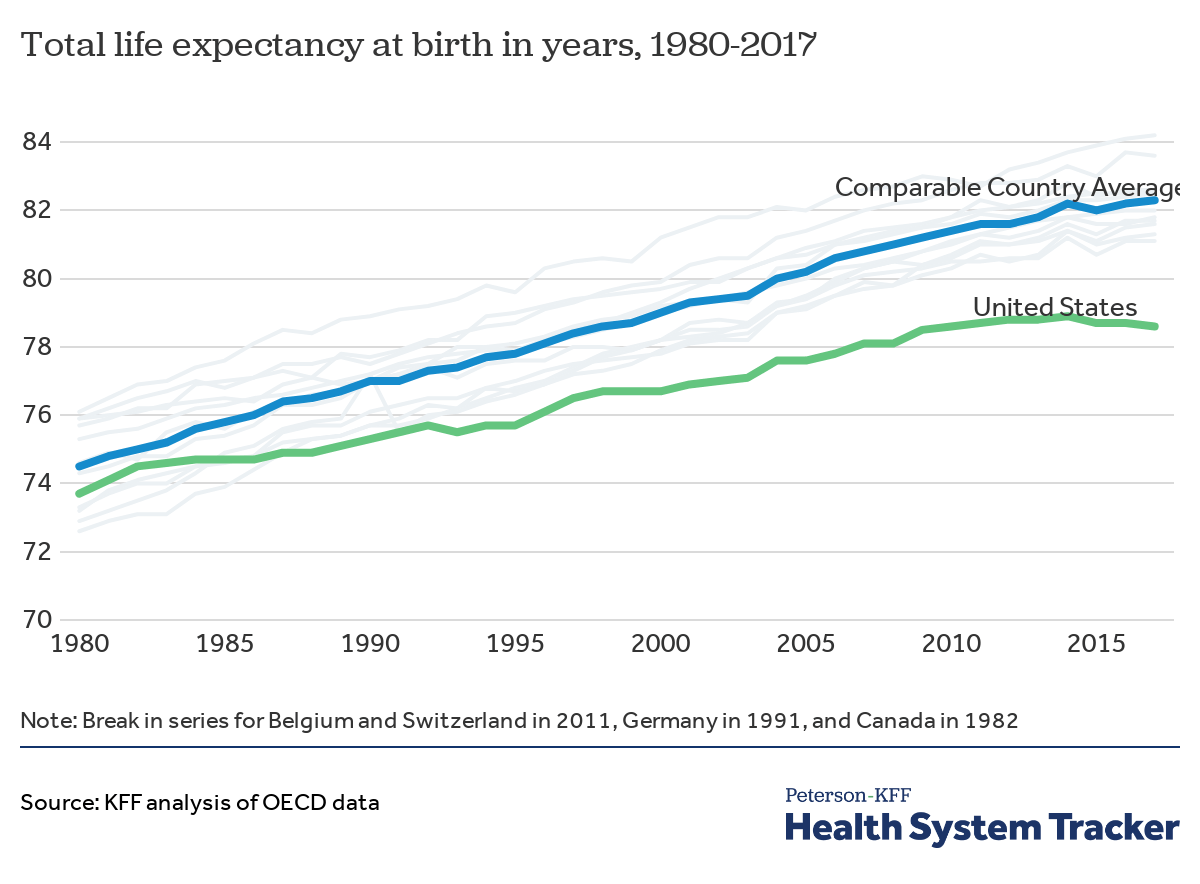
And yet there has been unprecedented life expectancy, total wealth of society, educational offering and attainment, and medical breakthroughs in the past 200 years thanks to markets that optimize for profit.
No surprise you are getting downvoted. Nobody wants to hear anything about personal responsibility these days. The second you highlight that someone’s life position might be due to in part to some of their own decisions, you get downvoted. Today, everyone is seen as infallible by nature and surely their current lot in life is entirely unfair and based on some history of prejudice/luck/system failure.
It’s a completely toxic mindset, but one that has taken hold culturally and only time will illuminate how detrimental it is. Belief that ones circumstances are entirely outside of their control (even if mostly true) is a surefire way to kill the determination and motivation of even the most driven individual.
I know few people that believes that all of the "unfairness" in life is based entirely on history of prejudice/luck/system.
I do know many people who believe that prejudice/luck/system has a very strong influence on one's lot in life. To deny that reality is just as toxic a mindset.
> To deny that reality is just as toxic a mindset.
It's not actually. One produces individuals who constantly complain about any perceived injustice. And another produces people who strive to improve themselves in the face of adversity.
One produces individuals who will fight to fix an unjust system. And another produces people who will sacrifice their health for a job that does not care about them and still end up poor while feeling guilty because it supposedly is their own fault.
Just because a system produces different outcomes doesn't mean it's unjust. For example, people complain about taking out $100k+ loans for some degree, and then they complain that they can't get a job. Meanwhile other degrees or even people coming out of bootcamps are able to get great jobs. Is that an unjust system? Do they bear any responsibility in this case?
> And another produces people who will sacrifice their health for a job that does not care about them and still end up poor while feeling guilty because it supposedly is their own fault.
Does striving to improve yourself only include mindlessly working a job detrimental to your health? Is there any scenario where an individual is responsible for their own lot in life?
Most people I know seem to believe in a mixture of personal responsibility and circumstantial luck.
There is an abundance of evidence that those born into a poor family do not gain the same opportunities as those born into a wealthy family.
Blaming the poor for their condition has a long tradition. Blaming shop-workers for their lack of “personal responsibility” seems to be the current thinking of many selfish people: “it is their choice to be poor”.
Note that I find your writing to be disturbingly black and white thinking - absolutely a signal of a toxic mindset to me. “Nobody wants” and “everyone is” just show your own prejudices and are completely non-factual.
Real life is somewhere in between. Some people are lazy and expect $150k/yr jobs for doing nothing, but many people work their ass off to barely get by because low wages, or cutting hours deliberately to pad the bottom line, and many other nefarious reasons. It's the latter most people are concerned about.
If you don't go through high school and into college in a specific degree, chances are, you're hosed. There are of course outliers, but most people with just a high school degree, or even a college degree in something that isn't in high demand are hosed for life. That wasn't always the case.
Those latter people have avenues to growth they likely just don't know about or don't understand are near sure fire ways to advance. A local fast food chain pains its store managers 1.5x the median household income in my state. Anyone who can run a construction crew can earn real money. In my city you can't find anyone to put up fencing for any price.
And your comment points out the real villain in our economy. Institutions that happily accept 20 year loans from students in exchange for a degree that will never earn them a dime. How evil to sell a degree program as a pathway to a successful career, knowing the opportunities to actually make use of that degree are statistically zero.
>A local fast food chain pains its store managers 1.5x the median household income in my state. Anyone who can run a construction crew can earn real money. In my city you can't find anyone to put up fencing for any price.
What you said is true, but for every manager, there are 20 people under him that don't make a good living and that's just the nature of the pyramid structure. All of those 20 people can't be managers or foreman, so 19 out of 20 are stuck every cycle, until the manager quits or moves or whatever.
It's like the lottery, anyone can win the lottery and be rich, but it doesn't mean everyone will.
It wasn't always like this, but business practices moved to squeeze every dollar out of every resource in the name of efficiency regardless of the human cost in most cases. That's certainly a cause.
I agree completely that the current economy only serves a smaller and smaller subset of the population. Each decade that passes seems to squeeze the middle class tighter and tighter. It’s emblematic of a totally derailed system.
That said, I don’t think we should be downvoting into oblivion everyone who calls for some notion of personal responsibility and growth. You need to believe that life isn’t stacked against you to have any chance of succeeding in this word. We shouldn’t be ostracizing someone because they propose that another’s position is due to their own lack of work ethic. The truth may be somewhere in the middle between character and circumstance.
>That said, I don’t think we should be downvoting into oblivion everyone who calls for some notion of personal responsibility and growth.
Agree. People downvoted mine to oblivion as well. All it does is devalue the voting system, stifle rational discussion, and push groupthink. It's the internet and HN isn't immune to that sort of thing, so it is what it is.
It's not like I get to turn in karma for an eraser or anything, so to hell with the down voters.
> Belief that ones circumstances are entirely outside of their control (even if mostly true) is a surefire way to kill the determination and motivation of even the most driven individual.
Wait, so people shouldn't believe something that is mostly true? Genuinely asking. I agree that we we shouldn't absolve people of all personal responsibility, but rhetorically the quoted statement appears to suggest people shouldn't believe things that are true.
There are countless examples in life where choosing optimism over pessimism will serve you well. Sometimes, being pessimistic is the “realistic” and “right” outlook, but entirely destructive to personal growth.
So yes, there are times when you should choose ideals that support a healthy mind, like believing for example that life is not entirely random, that your circumstances ARE malleable, and that despite whatever histories suggest your disadvantage you can’t let it control your destiny.
As a collective culture we have swung way too far toward this idea of explaining away everyone’s situation based on factors outside of their control. I’ve heard it used to justify some truly disgusting behavior. The truth is that someone’s lot in life is some blend of chance and self determination.
Your fallacy is in your statement “choosing optimism over pessimism”.
Have you ever tried to help somebody “choose” optimism? Have you ever struggled yourself to choose to have some trait you desire in yourself?
Have you ever had an intimate friend struggle with low self-esteem, and did you manage to help them? If you succeeded, do you think that the majority of us have that ability to help others?
I watch my friend teaching/helping the unwell, and I understand just how difficult it is to change what appear to be the most simple and obvious patterns of damaging behaviour. We all have our own flaws that we struggle with.
I think you're using phrases like "sometimes" and "mostly" and "some blend of" to advocate for a position that fundamentally promotes toxic positivity.
I agree with certain aspects of what you say, such as that it's inappropriate to justify disgusting behavior (which I assume you mean assaulting/harming others) and attribute it purely to circumstance as a way of avoiding consequences. I however vehemently disagree with the notion that a healthy mind is a mind that ignores basic facts of reality, such as how much influence randomness and luck have on our quality of life.
There are going to be circumstances in which people's lives objectively suck in a way that isn't their fault and they can still be optimistic about it in a way that acknowledges basic facts of one's living circumstances. There are going to be circumstances in which people's lives are objectively awesome in a way that they didn't do very much work to achieve and acknowledging that has nothing to do with whether or not they're an optimist.
You’re either intentionally avoiding the point or you’ve missed it yet again so I’m going to side step and say this: the amount of army won’t change regardless of which currency is used. There’s no path to reducing the size by changing the currency. It’s a separate, unrelated social policy decision. Either way I don’t think you’re arguing in good faith so I’m gonna cut this off here. Have a great evening!
Of course! If the US Army switched to massively inflating Venezuelan Bolivars for use and its share of tax collection, it would have no impact whatsoever on the army or its size!
Clearly the one arguing in good faith is the person leading off calling all crypto a ponzi scheme because of several myths you misunderstand. Or given your financial literacy, probably intentional disingenuous portrayal.
I understand perfectly well which is why I’ve made the points. Your retorts are argumentative for the sake of argument, and you’re not actually making any sort of case that would address my overarching narrative.
Even if I conceded all of your points, which I don’t, my position would remain totally in tact.
Clearly you do not. You continually peddle lies and myths about crypto-CURRENCY (not crypto-investments, which you seem to think they are). You continually make the false presumption that cryptocurrencies are investments, and then proceed to berate a currency because you expect it to behave as an investment when there is no requirement anyone consider them as one (I certainly do not, and think only a moron would consider cryptocurrency is an investment. I wouldn't "Invest" in yuan or euros either, although I would happily use them as a currency.)
When I buy crypto, I EXPECT to lose at the very least the exchange fee(~0.25%). Why on earth would I expect any gains on a currency, or expect there to be little or no risk on something so new and relatively untested versus something like gold?
>> High returns with little or no risk.
This is not a requirement of cryptocurrency. And there is no guarantee they will have a high return. There is certainly no guarantee in anything like the bitcoin whitepaper that you will have no risk to fluctuations in exchange rate with fiat. [1]
>> Unregistered investments.
Currencies are not synonymous with investments. Cryptocurrencies do not have to be peddle as investments, and only a moron would use them that way. [1, look anywhere for the word investment, interest, or appreciation -- you will not find it].
>> Unlicensed sellers.
Whether the government approves of something has no bearing on whether it is a ponzi scheme or not.
>> Secretive, complex strategies.
The implementation of a number of cryptos are both open implementation and open white paper [1]. Hardly secretive. I do agree the closed source ones could certainly be ponzi schemes, and perhaps you could also make an open source ponzi scheme.
>[edit2] So with that in mind, it meets many (but not all) of the classic definition elements.
>1. All returns are generated by bringing new money into the system. The only way someone can make money on Bitcoin is if a new person invests. That money is then distributed to the earlier participant, net of miner fees.
Currencies aren't meant to provide a return. Some people even consider currencies more useful if they're slightly inflationary. But lets examine your statement anyway. All other bitcoin holders appreciate their asset when someone loses their keys (deflation). An individual can make a return at the expense of the others by mining (inflationary creation). Or I could make fiat money on bitcoin by arbitrage and work, like selling coffee for bitcoin in a circumstance where people want it and few others are offering it except in fiat.
>2. There is no actual business underlying.
Just as there is no actual business underlying commodity money? This doesn't make commodity money a ponzi scheme either.
>3. The constant flow of new money is required to keep the price from collapsing because miners extract something like $50M in welfare from the system per day.
Not at all. A constant confidence in the crypto we examine is required to keep the price from collapsing. If no transactions are happening, then we are simply slowly inflating. Some currencies have infinite tail emission (infinite slow inflation) like monero. For bitcoin most coins have already been mined, so the amount of remaining inflation is finite. Even under the fiction that 50 million per day were extracted, it would take about 54 years for the price to collapse (care to imagine how much you would lose on USD if you stuck it in a mattress for 54 years?)
>4. The entire space is unregistered investments hawked by unlicensed sellers.
Crypto-currencies are not generically investments. Yes I know some scam artists promise returns, but this is not a necessary feature of cryptocurrency. For instance, bitcoin and litecoin do not promise any sort of returns, and thus cannot be considered investment vehicle by anyone but speculators (speculators can call anything an investment, including USD).
>It's a negative sum wealth redistribution scheme the takes money from new entrants and gives it to miners and to old entrants. The miner portion is what makes it negative-sum.
The same is said of gold, all the way up to gold miners paying for electricity and workers by liquidating some of their gold which makes it negative sum. Yet gold has been a legitimate store of value, and often currency, for thousands of years -- certainly no ponzi scheme.
You misunderstand my point. What the tax money is spent on is irrelevant and doesn’t create the demand. The demand is created by the obligation to pay the taxes and subsequent enforcement of non-payment. The same demand structure exists for instance in Japan without an army. Does that clarify for you?
> What the tax money is spent on is irrelevant and doesn’t create the demand.
The maintenance of the army doesn't create demand for taxes? Are you aware this is one of the most significant historical reasons for the collection of taxes?
Could you remind me again of when the Army was abolished in Japan and why, and whether the US military (which drives part of our demand for taxes) had any role in that?
That's an interesting and totally irrelevant statement that ignores the fact that taxation to pay for the army in your own words creates "base demand for dollars." Change in demand on the supply-demand curve means change in value, or perhaps I'm not up to date on your version of economics.
Only from the view of the universe, not from the view of humans. It cost less energy to drill for oil than the energy you get out of the gasoline. It takes less energy to create a solar panel than what you can get out of it. It takes less energy to labor at the factory for an hour than the energy you get from the 150KwH of power you can buy for your house from that hour of motion you performed at the factory.
If I use some electricity to run PoW on an electronic litecoin transaction from me to my friend in Kenya, that's a hell of a lot lower energy than building and operating a Western Union in Kenya isn't it?
> If I use some electricity to run PoW on an electronic litecoin transaction from me to my friend in Kenya, that's a hell of a lot lower energy than building and operating a Western Union in Kenya isn't it?
On an aggregated pre transaction basis we know this isn’t true. Crypto is not more energy efficient than existing financial infrastructure. Additionally you’re comparing a small part of a financial transactions (I.e. and database update) to a complete end-to-end transaction, including turning those digital funds into spendable cash.
Unless you friend in Kenya is also capable of spending that crypto, without turning it into fiat, then example is meaningless, because your ignoring all the infrastructure need to do that fiat conversion.
Additionally Kenya has digital banking infrastructure. Send a SEPA payment instead, no need to Western Union.
>including turning those digital funds into spendable cash.
Crypto can be spendable cash. You can buy a coffee or a bar of gold with it, even bullets. Sounds like it can be used as a currency to me. It only takes a willing counterparty.
> Crypto is not more energy efficient than existing financial infrastructure.
That depends on the place and circumstance. I concede that Kenya was a poor example and I should have used someplace like Central African Republic instead.
>Additionally Kenya has digital banking infrastructure. Send a SEPA payment instead, no need to Western Union.
Assuming you are one of the one third of Kenyans who have a bank account. And assuming the one sending the money has a bank account. Both of which involve documentation and KYC, something not necessary in most crypto transactions.
>because your ignoring all the infrastructure need to do that fiat conversion
Not really, crypto to fiat can be done informally. There's several people in my city who buy and sell it and all they need is a cellphone and local currency.
It's only from the perspective of someone that thinks like a loser, always trying to find something wrong, that you can find zero uses where using crypto is more energy efficient than other financial options. And not all cryptos use the same energy or transaction cost as others.
For an example of transaction efficiency, I can buy a bar of gold from some established bullion vendors in litecoin much cheaper than with a visa card due to lower transaction risks for the merchant and lower transaction fees. If you can't wait multiple days for an ACH transaction and have to buy precious metals online, crypto is actually the cheapest way in the US.
> Crypto can be spendable cash. You can buy a coffee or a bar of gold with it, even bullets. Sounds like it can be used as a currency to me. It only takes a willing counterparty.
All true, but the same also applies to chickens, screwdrivers, oranges, dogs, cats etc. Just because you can barter with something doesn’t make it a currency.
Currencies are better identified by their fungibility (which crypto has), their value stability (which crypto currently doesn’t), and their wide acceptance for use in everyday transaction (also not true of crypto in the vast majority of the world).
> It's only from the perspective of someone that thinks like a loser, always trying to find something wrong, that you can find zero uses where using crypto is more energy efficient than other financial options. And not all cryptos use the same energy or transaction cost as others.
I’ll remind you of the guidelines, as you’ve clearly forgotten them.
> Be kind. Don't be snarky. Have curious conversation; don't cross-examine. Please don't fulminate. Please don't sneer, including at the rest of the community.
Ad hominem attacks undermine your arguments and suggest that you don’t actually have very strong argument, instead you’re forced to attack the character of the person your discussing with, due to an inability to attack their argument. Try harder.
I used be a fan of crypto, did plenty of trading, bought plenty of pizza etc with it. When to meetups, evangelised crypto to friends and family. Back then it looked realistic that crypto could be a genuine currency, and the concept of DAG was incredibly.
Unfortunately crypto has descended into little more than get rich quick schemes that take advantage of naïve investors, or produce profit by externalising all of the negative consequences of crypto mining (such as CO2 emissions). Forcing the rest of us to bear that long term cost, for a grifters short term profit.
I admit there are coins out there that potential address these issues, and still possibly have a future as a genuinely useful currency. One not manipulated by a small number of extremely large coin holders. But unfortunately that doesn’t change the damage caused by other coins.
> For an example of transaction efficiency, I can buy a bar of gold from some established bullion vendors in litecoin much cheaper than with a visa card due to lower transaction risks for the merchant and lower transaction fees. If you can't wait multiple days for an ACH transaction and have to buy precious metals online, crypto is actually the cheapest way in the US.
This is just an example of how slow and backwards the US financial system is. Most other countries have far quicker and cheaper payment rails. Here in the U.K. I can send an instant Faster Payment for free from my bank account, and the money moves faster than the app UI (I get a push notification from the receiving bank, before the UI in my banks app has had time to display the confirmation). The whole of Europe has similar payment systems that also work cross border.
The money moves so fast that when trading crypto the slowest part of buying or selling was always the confirmations. The fiat part was instant.
>Ad hominem attacks undermine your arguments and suggest that you don’t actually have very strong argument, instead you’re forced to attack the character of the person your discussing with, due to an inability to attack their argument. Try harder.
I did attack your arguments, including many other points and I never called you a loser. Quit being so defensive. I said those who continually look for ways to make something not work, rather than finding the ways they do, think like losers. And I back that 100%! The only of the two of us who had made an ad hominem against the other is you, by saying I have an "inability to attack their (your) argument." Thanks hypocrite!
>Unfortunately crypto has descended into little more than get rich quick schemes that take advantage of naïve investors, or produce profit by externalising all of the negative consequences of crypto mining (such as CO2 emissions). Forcing the rest of us to bear that long term cost, for a grifters short term profit.
I'm not a fan of stable coins, but how many people you reckon are buying DAI or USDT with the idea of striking it rich? I hear this sad sad false diatribe over and over, completely ignoring that crypto-currencies are currencies and not investment, with people getting mad that crypto is not an investment that is going to provide returns for naive "investors." And then they go on to attack crypto for not living up to being an investment!
>I used be a fan of crypto, did plenty of trading, bought plenty of pizza etc with it. When to meetups, evangelised crypto to friends and family. Back then it looked realistic that crypto could be a genuine currency, and the concept of DAG was incredibly.
So you were a dogmatist for, and then apparently now a dogmatist against. Try being a neutral pragmatist that doesn't believe crypto is an investment utility but rather one possible financial engine that allows electronic transactions without KYC or centralized authority.
> The only of the two of us who had made an ad hominem against the other is you, by saying I have an "inability to attack their (your) argument." Thanks hypocrite!
Re-read my comment, that’s not what I said. It’s difficult to have a discussion with someone who selectively quotes text, and deliberately ignores the wider context.
> I'm not a fan of stable coins, but how many people you reckon are buying DAI or USDT with the idea of striking it rich?
One of the original stated goals of USDT was to provide an on-ramp to other crypto, and do an end run around KYC and AML laws. People don’t buy these coins to get rich, they buy them to either purchase other coins, or to temporarily insulate themselves from crypto volatility, without having to resort to fiat. Additionally the fundamentals to USDT have been called in to question may times, with plenty of evidence that whole things scam and someone’s stolen the backing fiat.
> Try being a neutral pragmatist that doesn't believe crypto is an investment utility but rather one possible financial engine that allows electronic transactions without KYC or centralized authority.
I’m not sure how you’ve ended up deciding that you think I treat crypto as an investment, not a currency, after I’ve explicitly said the opposite.
As I said I believed that crypto could be a very interesting and useful currency, unfortunately it’s not panned out that way. Saying we should treat crypto like a currency when it doesn’t behave like one, and when most people don’t treat it like one, is hardly pragmatic. A more pragmatic approach is to observe how others are using it, observe how it behaves, and treat it like that. If it looks like an value gaining asset, and people treat it like a value gaining asset, then it’s a value gaining asset. Not a currency.
To cover your eyes and ignore the reality of the situation is just foolish. It certainly does nothing to advance the cause of crypto being a currency.
Why are you wasting so many 'watts' sending this out? Every watt you use for debating on HN is a watt not used for something more productive. [ Personally I prefer units of energy like joule, power is not a measurement of wasted energy. If I wasted 10 kW for 1 minute it's not as bad as wasting 1 W for 11,000 minutes]
>If it looks like an value gaining asset, and people treat it like a value gaining asset, then it’s a value gaining asset. Not a currency.
>I’m not sure how you’ve ended up deciding that you think I treat crypto as an investment, not a currency, after I’ve explicitly said the opposite.
Again you go on contradicting yourself whenever you find it convenient. You are possibly the most disingenuous, contradictory, hypocritical person I've met on HN. Fine to waste 'watts' on social media news sites but not to send a payment to your unbanked cousin in El Salvador. Have fun thinking like a person who only looks for ways to fail, rather than ways to succeed.
Not a biblical person myself, but I'm going to take a note out of the bible on this one : " Answer not a fool according to his folly, lest you be like him yourself."
One is not like the other. But please continue to pretend otherwise.
> Again you go on contradicting yourself whenever you find it convenient.
Please be explicit and show we’re I’ve contradicted myself. I don’t believe I have, but happy to be proven otherwise.
> Not a biblical person myself, but I'm going to take a note out of the bible on this one : " Answer not a fool according to his folly, lest you be like him yourself."
You make a good point. Why have I bothered to talk to someone who is so clearly disconnected from reality.
Why do I have to apply the idea to dollars? Nobody is telling me that I will become incredibly rich, without having to put any effort, work or invent anything, if I just buy dollars. Yet the same claim is made about bitcoins, and this is why we must examine whether this claim about bitcoin is true.
Read the white paper about bitcoin. Does it say anything about it being an investment, guaranteeing stability of exchanging rates to fiat, providing interest, or any appreciation? I'll be waiting for you to cite that.
There's a lot of disingenuous people out there, that for some reason believe bitcoin or other cryptos are "investments." I guess they missed that they are called crypto-CURRENCIES and not crypto-investments. And then they get upset that they are not, and go on to berate a currency for not being an investment. It's fine to be upset at any swindlers calling a zero-sum or negative-sum game like most crypto an investment, but if you actually read the white papers many cryptos make no such claims.
And there are certainty people telling you that you can get rich off dollars, just look at the FOREX trading peddlers telling you to get rich by trading fiat and leveraging fiat exchanges. I don't attack dollars for that!
And yeah, you can apply your idea to dollars, because one of the biggest way for the government to profit off of dollars is to print more out of thin air, therefore debasing the "investment" of the rest of the dollar holders. You can choose to not apply the idea to dollars, and rather bury your head in the sand if you like, that's your prerogative.
Again, there are no dollar influencers, with millions of followers, urging people to mortgage their homes to buy more dollars. That's because everybody knows you can't get rich by buying dollars, because dollars are not an investment. And something that isn't an investment can't be a pyramid scheme, because a pyramid scheme is a type of investment scheme. Therefore we must dismiss the idea that the dollar is a pyramid scheme. Bitcoin on the other hand is a pyramid scheme wrapped in a cult.
Of course you can get rich by buying dollars. Ever seen a street money changer? It's big business in places like Iraq, Argentina, and other places where dollars are desired. You can make a cut out of every dollar you sell for less desirable local currency, and then another cut when you use the less desirable currency to buy dollars from people who need local currency. Does that mean dollars are an investment?
There are certainly influencers as well influencing you to start FOREX trading changing dollars back and forth to get rich, or leveraging dollar exchanges in a zero sum game attempt to strike it big. This blog boasts a man made $6M trading USD and NZD [1].
You use circular logic that bitcoin is an investment because it is a pyramid scheme which is by your definition an investment. Then you say dollars are not an investment because "everybody knows you can't make money off dollars" (which is patently false.)
Some people may view bitcoin as an investment. Some people may view dollars as an investment. There is no requirement it be treated as one. Again the bitcoin whitepaper, and open implementation of it which you can readily acquire the source code to, makes no promises of returns, stability in exchange rate, or appreciation. Any pyramid scheme is the fault of some swindlers who could create a pyramid scheme in any number of currencies -- not "Bitcoin: A Peer-to-Peer Electronic Cash System." You seem bitter at bitcoin because you chose to take the word of swindlers rather than the actual white paper and public implementation which made no such promise of profits.
You seem to have a fairy tale level of knowledge about how dollars are created. One of the Fed's favored way of created more money is simply buying treasury bonds with newly created money. Care to explain what work is done there (other than the work done by individuals at the Federal Reserve)?


Having people with bad, hateful ideas out in the open I would argue is preferable to concentrating all these bad thoughts together with people that will reinforce that it is normal.