Hacker Newsnew | past | comments | ask | show | jobs | submit | ofrzeta's commentslogin

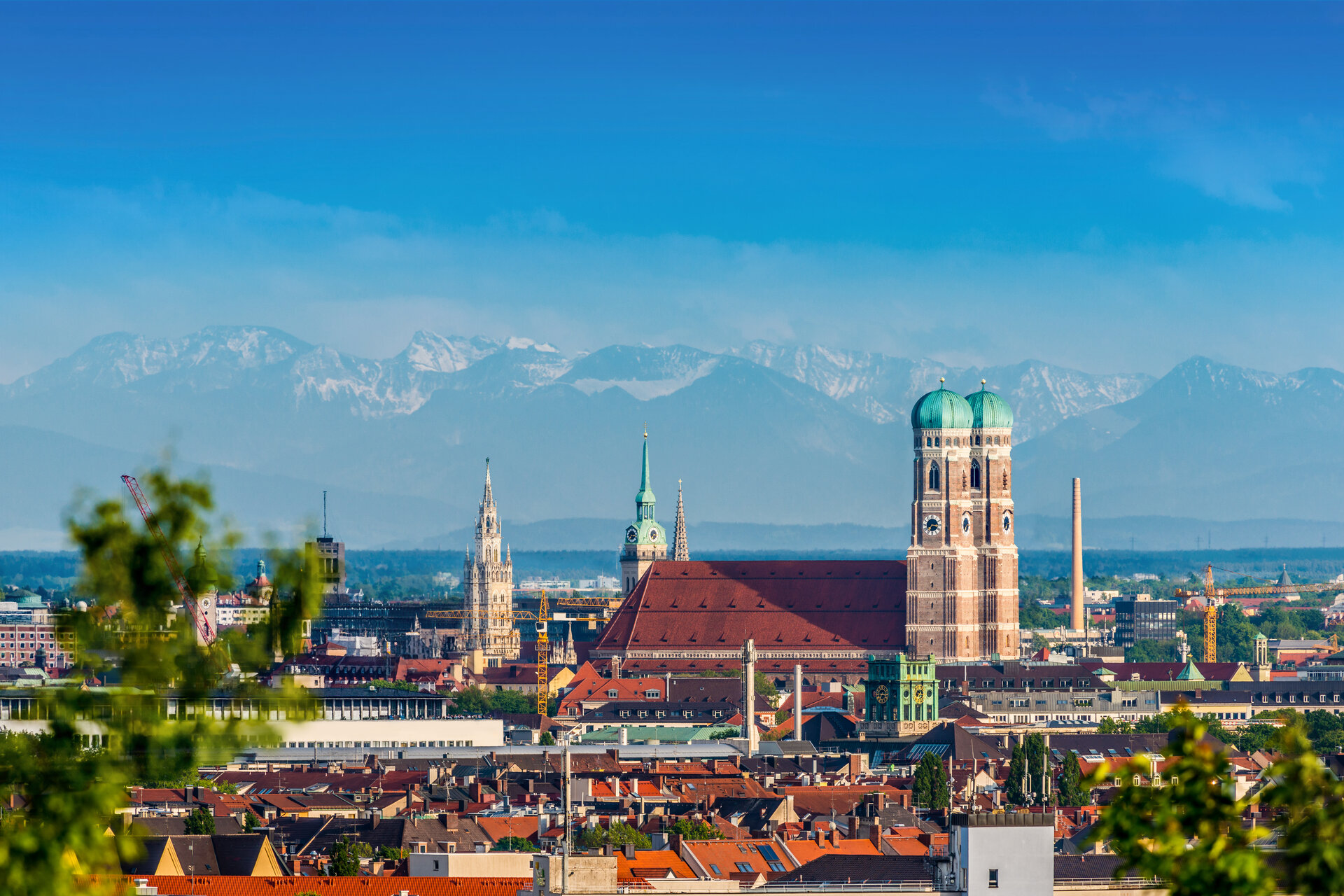
In the northwest of Munich we can see the alps quite often (around 100km from there), and sometimes they appear quite huge. It's due to the Föhn that makes the atmosphere act as a magnifying lens. Interestingly the explanation is not in the English Wikipedia

https://de.wikipedia.org/wiki/F%C3%B6hn#Optischer_Vergr%C3%B...

Sure, you can see the mountains only as "slightly darker shapes" as the parent put it but you could identify individual summits I think.


I think that "magnification effect" is what tombh (one of the authors) means when he mentions "refraction" in his comment above?

Here's the English Wikipedia article (although it doesn't mention the Föhn specifically): https://en.wikipedia.org/wiki/Atmospheric_refraction

Of course, there is another "magnification effect" which photographers like to use: perspective distortion (https://en.wikipedia.org/wiki/Perspective_distortion#Example...). The reason why the mountains seem to be right behind the Frauenkirche in those publicity photos I mentioned (e.g. https://www.technik-testen.net/wp-content/uploads/2023/01/Ad...) might have a little bit to do with the Föhn, but most of it is because the photo is taken from far away and zoomed in.


Not they guy you asked but here's a free book https://book.systemsapproach.org (they have more free books on other topics like SDN)

You mean like ... a compiler engineer that has learned from books and code samples?

Is it? It's more like "you can't succeed with any political system if your powerful bullies dislike it". What do you think about Vietnam? Everything destroyed as well?

I don't think anything about Vietnam, I was just making a joke.

Related: the artist Thomas Demand who builds paper models of all kinds of situations https://thomasdemand.net/selected-work

I only found out relatively recently his models are life size.

Puya? First time I hear of these things .. (having used ESP32, RPI Pico, Nordic and STM). Googling led me to OpenPuya https://py32.org/en/

Puya is a major flash manufacturer who ventured into ARM chips.

> Big tech has decided on Rust for future infrastructure projects.

as they say "citation needed"


I don't know ... it's impressive and all but the result always looks kind of dead.

This reminds me of the comments by programmers roughly two years ago:

"Sure it can write a single function but the code is terrible when it tries to write a whole class..."


You say that as if those programmers aren't still right

It's super cool but I see it as a much more flexible open ended take on the idea of procedurally generated worlds where hard-coded deterministic math and rendering parameters are replaced by prompt-able models.

The deadness you're talking about is there in procedural worlds too, and it stems from the fact that there's not actually much "there." Think of it as a kind of illusion or a magic trick with math. It replicates some of the macro structure of the world but the true information content is low.

Search YouTube for procedural landscape examples. Some of them are actually a lot more visually impressive than this, but without the interactivity. It's a popular topic in the demo scene too where people have made tiny demos (e.g. under 1k in size) that generate impressive scenes.

I expect to see generative AI techniques like this show up in games, though it might take a bit due to their high computational cost compared to traditional procedural generation.


You can use a CDE lookalike https://github.com/NsCDE/NsCDE

The real thing is open source since 2012 https://sourceforge.net/projects/cdesktopenv/

Time to port this to Wayland using Claude code, right?

points finger you son of a bitch, I'm in.

In case it's not known, "kairos" is ancient Greek for "the exact or critical time", cf. https://en.wikipedia.org/wiki/Kairos

Guidelines | FAQ | Lists | API | Security | Legal | Apply to YC | Contact

Search: