I opened Excel today to view a spreadsheet and just out of curiosity, I decided to use the Copilot integration for the first time to ask it about a column's content. Copilot was clueless. The spreadsheet was open, the Copilot button is right there in the UI, as a user, the affordance of that button for me is that Copilot should already have the context (which is the spreadsheet content). But it didn't, and it kept asking me for the spreadsheet like it's open in a browser window.
I wanted to do something complex in google sheets. We had just gotten Gemini in gsheet. I assumed they'd have used some fancy mcp and enabled us to do a lot of things but all gemini in gsheet could do was summarize
It sounds like that's still a step up from Copilot.
I know Gemini has more advanced features in Docs and they rolled something out for Sheets. I would bet GWorkspace keeps gaining ground on the functionality battle.
I always find myself recalibrating if copilot understands what I am doing. I get mixed results. cannot seem to come up with a consistent rule of thumb.
The way I see it is that a 50g piece of 3D printed PLA could be used to fix a 5kg item that would have otherwise gone to the landfill. I for example have a broken hook for the door tray in my fridge, it's a tiny piece but it being broken rendered the entire 1kg tray useless, it's sitting on top of the fridge waiting for me to buy a 3D printer and fix it.
> but of the (very potential) rise of China as the premier automotive super power.
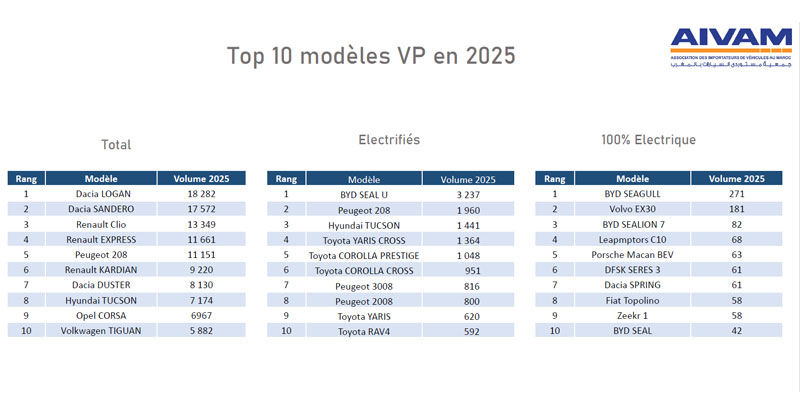
It's done. They're already the premier automotive superpower now. It might not seem like it in Europe and USA, but anywhere else in the world they are dominating. I live in Morocco and I am not exaggerating when I say that every week I see a new Chinese brand on the road. Not just cars of the same brand, completely new brands. Dacia and a lot of PSA cars are built in Morocco, so naturally they always had a strong positioning here, but now I'm seeing more BYDs than DACIA's most popular car, the Duster. It's anecdotal but it's quite telling considering the foothold French brands have always had here.
Here's a chart showing the sheer dominance of Chinese brands on the EV market in Morocco. 6 out of 10 models are Chinese.
And I think the difference is going to be apparent 15-20 years from now when new parts are needed for these models.
With the big boys like Ford, Toyota etc I can trust that they manufactured (and still manufacture) parts with warehouses full of them and I can always find the part I need to repair a vehicle.
I very much doubt that we will see the same thing with Chinese auto companies, even premier ones like BYD.
> And I think the difference is going to be apparent 15-20 years from now when new parts are needed for these models.
Perhaps unstated, but this is going to be like trying to find parts for my Nokia 3210 (current age: 27). EVs are still in the "rapid improvement" phase, and by the time the battery warranty expires (5-7 years) the cars available on the current market will be significantly better in all respects.
On the other hand, they just have far fewer "parts" in the first place. Early indication is very good for lifetimes of the non-battery parts.
I expect the median EV of today to have a shorter life than a corresponding ICE, but the EV of 10 years time to have a much longer one. Which is going to make all the stupid issues around infotainment and subscription issues more acute.
Tbf batteries last quite a while...current ones maybe not 20 years of hard driving, but near-future battery tech seem like they'd be able to handle it.
I'd be more concerned about the underlying skateboard of the car; all the mechanical bits & bobs that are still required for an electric car i.e. the "car" part. I feel like new Chinese manufacturers' skateboard will be hugely inconsistent over time, whereas you find that consistency with established manufacturers - for example many EVs started out built on top of a manufacturer's existing platform.
That seems to be a myth. Real world data is showing most EV batteries are still in their first use (powering cars) at the 20 year mark. Once you have removed early model years of Nissan's Leaf and Tesla's everything before they began actively managing battery temperature (and removed the high totaled by accident rate of Teslas), EVs are generally lasting 15-20 years.
(The other direction: the costs of battery replacements haven't gone down because the demand mostly doesn't exist. The "range degradation" of EV batteries at 20 years isn't noticeable to the owners at 20 years.)
In Europe there's plenty of Chinese cars to be honest.
And they often outsell European cars price-to-price, even through tariffs. It's crazy.
The whole topic of tariffs on their cars is also very complicated that European automakers aren't in favour of, because large parts of their sales come from outside Europe.
> The Hamas Charter explicitly called for the “annihilation” of the Jewish state.
See, this is what grinds my effing gears. On one hand you have a party "calling" for the "annihilation" of Israel. On the other hand, you have a part who is calling for the annihilation of palestinians AND they are ACTIVELY doing it. But no, you have to draw an equivalence somehow ...
> you have a part who is calling for the annihilation of palestinians
No you don't.
You have a democratically elected government aiming for the dismantling of Hamas.
Hamas is the proscribed terror organisation that is currently leading Gaza.
Israel is not calling for the annihilation of Palestinians.
The death of Palestinians is entirely the fault of Hamas, whose blatent and attrocious terrorism led Israel with no choice other than to respond with force and defend Israeli citizens from the further attrocities that Hamas have promised.
Starting his post by "I hate corporations and Google is yet another disgusting example of it" is a great way to have no issue resolution. Assuming good intention (at least in writing) may help if this post gets traction.


reply