Hacker Newsnew | past | comments | ask | show | jobs | submit | ashishuthama's commentslogin

'lobbing things' i.e launching things, OP didnt mean it would reach there in 30 days.


You couldn't start launching things in 30 days, you need to wait for a launch window, which happens every ~2 years. The transit times are on top of that.


The launch windows are for the most fuel efficient transfer. You can still launch outside of the window if you’re willing to pay the cost elsewhere.


Higher energy transfers can widen the launch windows, but their frequency remains unchanged. The frequency is due to the synodic period of Earth and Mars. It doesn't matter how fast you can get to a point in Mars' orbit if Mars doesn't happen to be there when you arrive. Any given trajectory will only work when the planets are in one specific configuration relative to one another; having more delta-V to play with means you can choose from a broader range of possible trajectories.

In the limit, there are hyperbolic trajectories that would basically give you such wide launch windows that you could launch whenever, but you're not doing that with chemical rockets.


@ExAr - A treasure trove of information, thanks for putting in the effort!

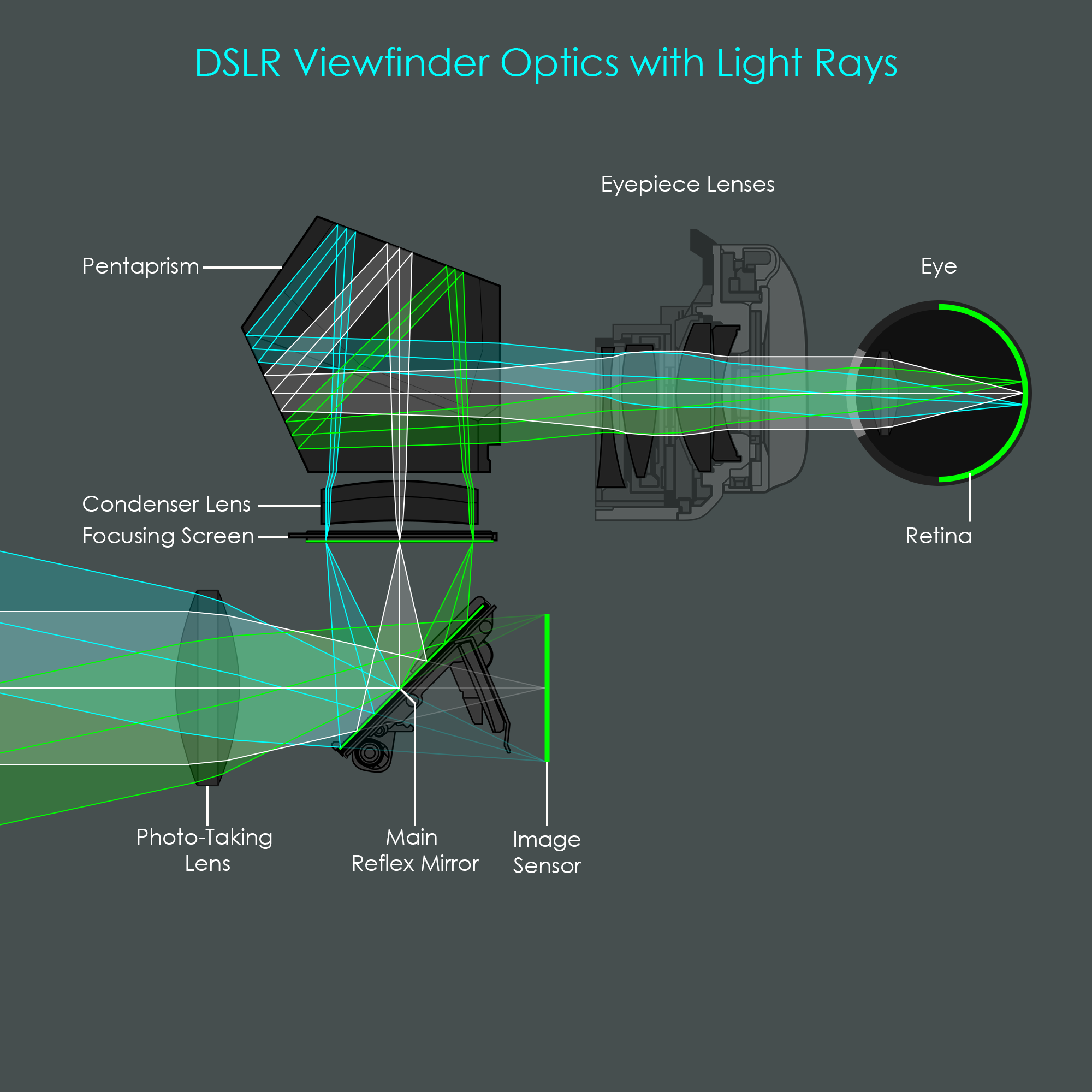
Do you blog about how you go about creating these graphics? For example, this view finder image: https://exclusivearchitecture.com/images/technical-articles/... looks very impressive!

How do you simulate the rays+eye?


Thanks for your feedback. Until now I have never blogged about the creation of these illustrations, but it's a nice idea, there is tons of "behind-the-scenes" material. With regards to the viewfinder image, the actual path of light was drawn with the help of a Japanese optical engineer who was able to provide professional raytracing simulations.


same here. Was excited to see "Knot of the Day", thought I could add that to my RSS reader and look at one each day..could not find a way to do that.


A new engineer can learn a lot from being on code reviews earlyon. Anything from the team coding style to the application architecture.


A reviewer is not there to learn. If anything, they're there to teach. What good is a reviewer that can't grade others on their adherence to the coding style and application architecture of the project? They're supposed to determine what goes in or not.


They wouldn't be the only one reviewing or reviewing at all. It would help them understand the process if they see it in action.


Reviewers not willing to learn anything during a code review is probably an easy tell for a crappy code review culture


This discussion is about newcomers that know basically nothing of the project. When I say they're not there to learn, I mean their primary function as reviewers isn't to learn from what gets submitted. They can learn depending on what gets submitted, but if 90% of the time their ignorance doesn't permit them to properly determine if what's submitted to them is good or not, then what's the point of their review?


Another data point: MATLAB, glnxa64 AVX2, 12 core

>> maxNumCompThreads(1);

>> im = randi(255, [2560, 1600, 3],'uint8');

>> timeit(@()imresize(im,[320,200],'bilinear','Antialiasing',false))

ans =

    0.0083
>> timeit(@()imresize(im,[320,200],'bilinear'))

ans =

    0.0301
>> maxNumCompThreads(6);

>> timeit(@()imresize(im,[320,200],'bilinear','Antialiasing',false))

ans =

    0.0062
>> timeit(@()imresize(im,[320,200],'bilinear'))

ans =

    0.0113

Oh, missed that lanczos2 part:

>> maxNumCompThreads(1);

>> timeit(@()imresize(im,[320,200],'lanczos2','Antialiasing',false))

ans =

    0.0146
>> maxNumCompThreads(6);

>> timeit(@()imresize(im,[320,200],'lanczos2','Antialiasing',false))

ans =

    0.0049

Since MATLAB tries to do most of the computation in double precision, its harder to extract much from SIMD.


Guidelines | FAQ | Lists | API | Security | Legal | Apply to YC | Contact

Search: